Artwork
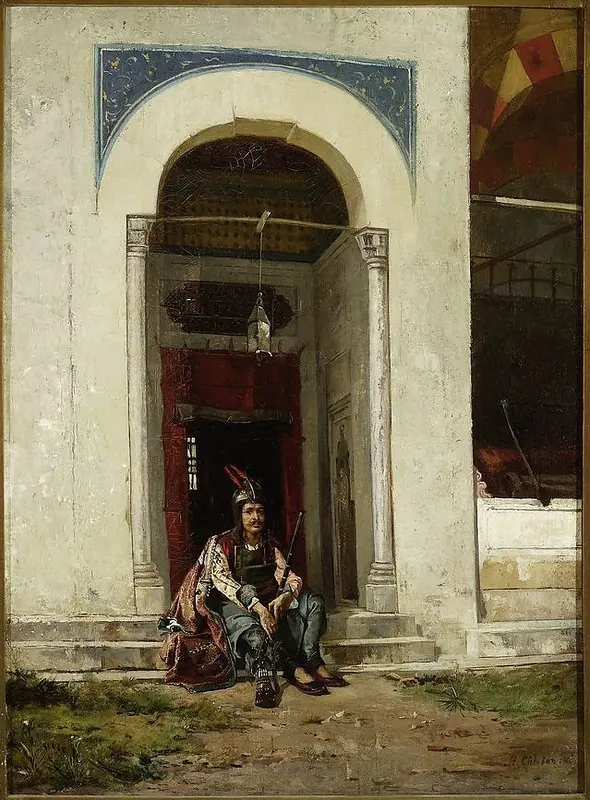
Guard at the entrance to the seraglio
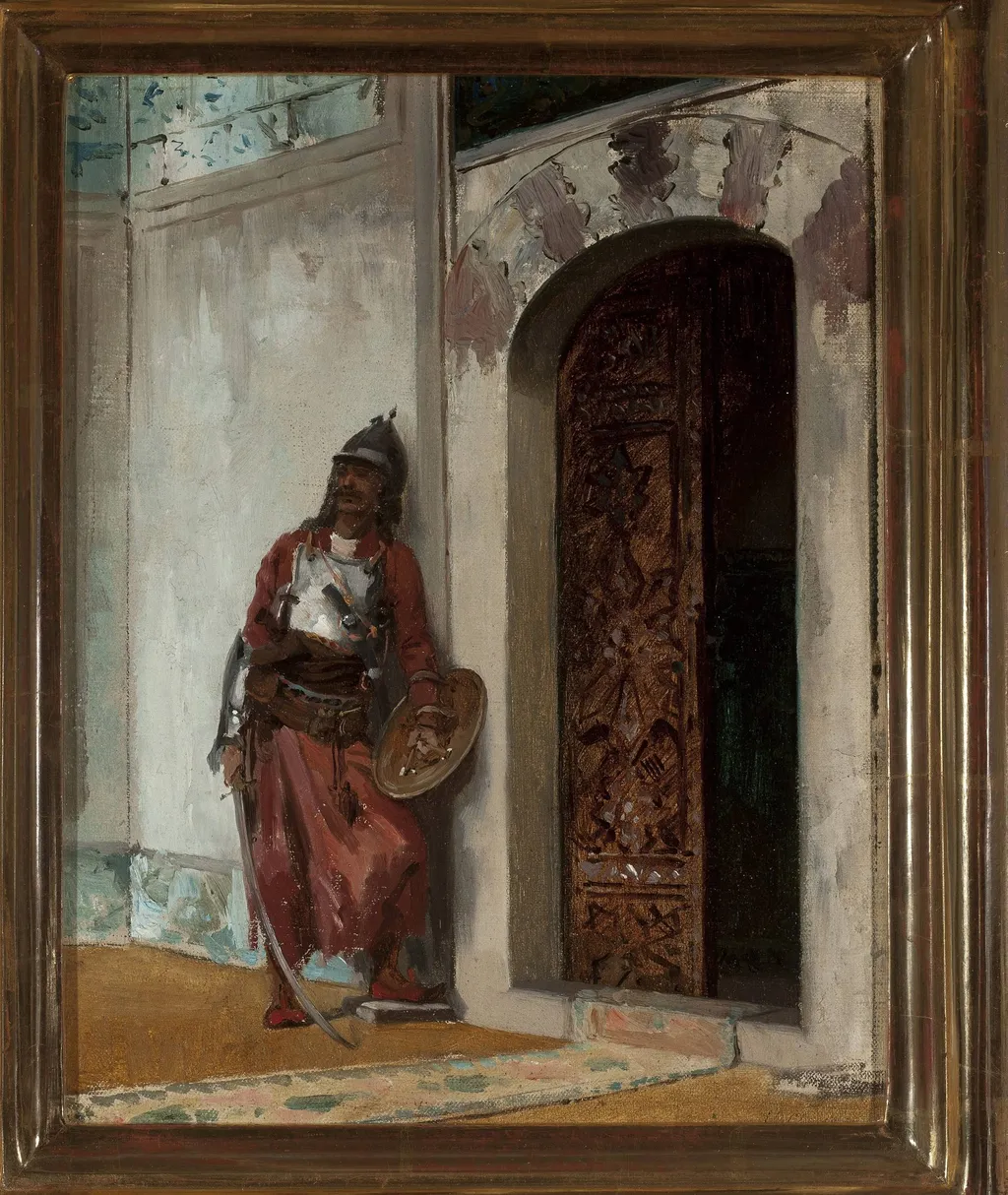
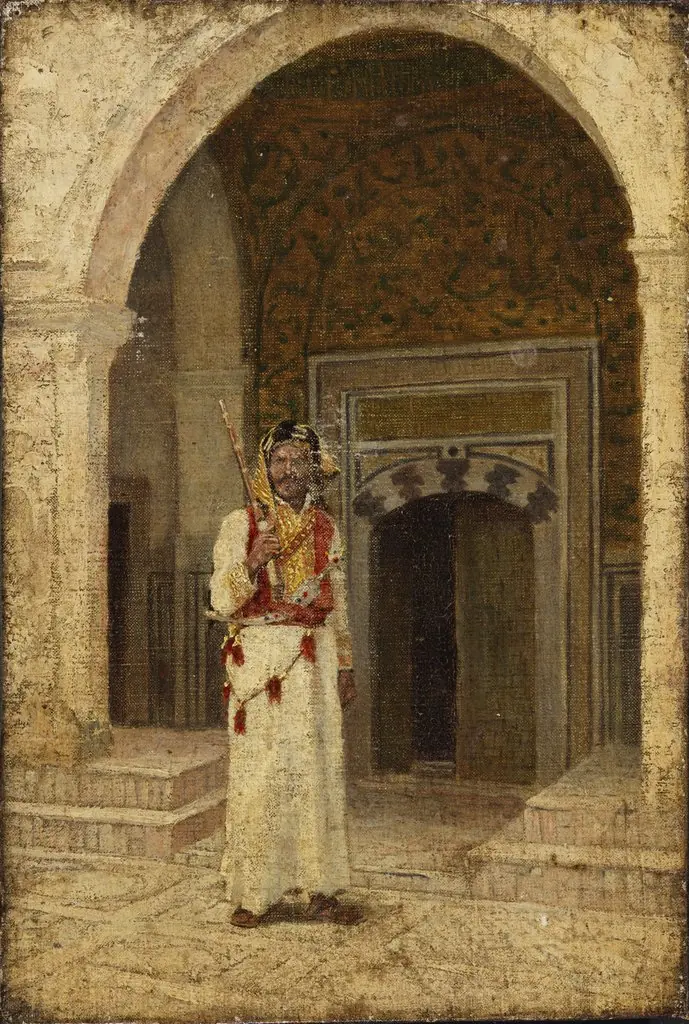
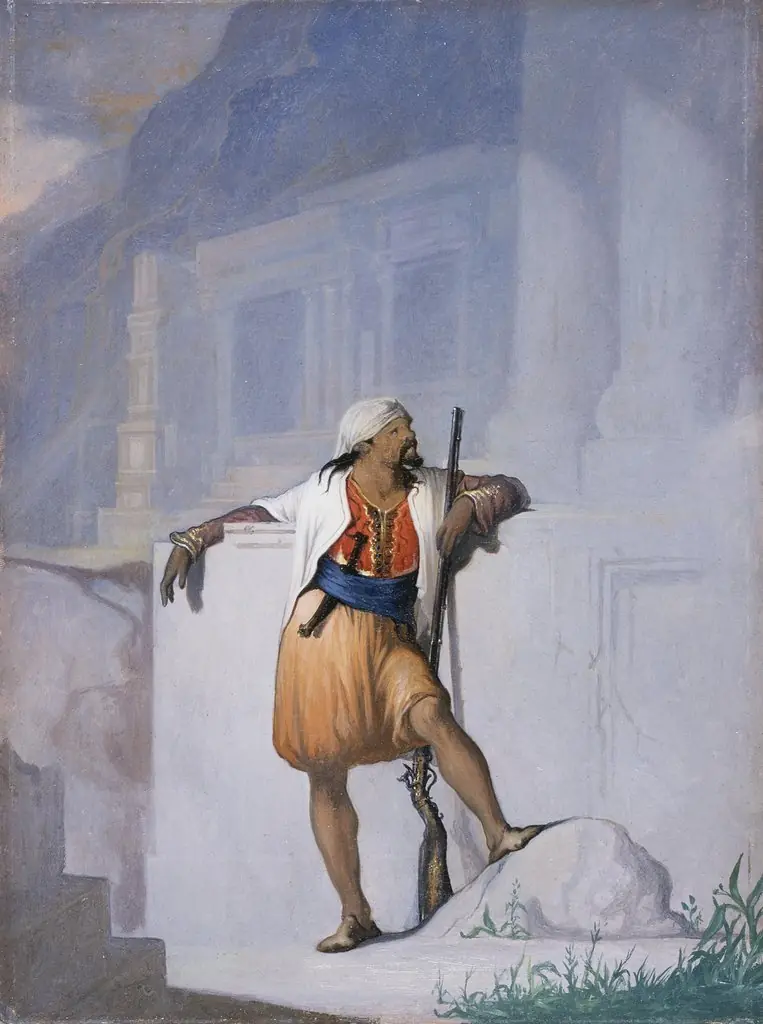
Guard at the entrance to the seraglio is an oil painting by the Orientalist artist Stanisław Chlebowski. It dates from 1873 and is held in the collection of the National Museum in Warsaw.
About this work
If you're interested in learning more about this style, you might want to explore the work of artist Stanisław Chlebowski.
This painting shows a man in a red robe and armor, holding a sword and shield, standing in front of an arched doorway. The man's attire suggests a Middle Eastern or North African influence. The doorway is ornate, with intricate carvings on the door.
The painting's use of chiaroscuro creates a sense of depth and drama, with the man's figure emerging from the shadows. The artist's attention to detail in the man's armor and the doorway's carvings adds to the overall sense of realism.
The painting's style and subject matter are reminiscent of Orientalist art, which was popular during the 19th century. If you're interested in learning more about this style, you might want to explore the work of artist Stanisław Chlebowski.
Overview
Stanisław Chlebowski’s 1873 oil painting Guard at the entrance to the seraglio is part of the National Museum in Warsaw’s collection. Executed during the height of 19th‑century Orientalism, the work portrays a solitary figure stationed before an elaborately carved doorway, reflecting the artist’s interest in historic and exotic subjects.
Subject & Meaning
The central figure, a man clad in a red robe and armor, brandishing a sword and shield, stands as a sentinel at the threshold of a seraglio, a term for a harem or palace interior. The composition suggests themes of protection and the ceremonial entry into a secluded, culturally specific space.
Technique & Style
Chlebowski employs strong chiaroscuro, allowing the guard to emerge from deep shadows while the illuminated details of his armor and the doorway’s intricate carvings convey a tactile realism. The palette and precise rendering align the piece with the broader Orientalist aesthetic that prized vivid, exotic detail.
History & Provenance
Created in 1873, the painting entered the National Museum in Warsaw’s holdings, where it remains on display. Its acquisition reflects the museum’s commitment to representing Polish artists who engaged with popular European artistic currents of the period.
Context
The work belongs to a tradition of 19th‑century European art that imagined Eastern settings through a romanticized lens. Chlebowski, a Polish painter noted for historical and Oriental subjects, contributed to this discourse by depicting a scene that blends architectural fantasy with a sense of narrative drama.
Own this work as a print
Artist & collection
Artist
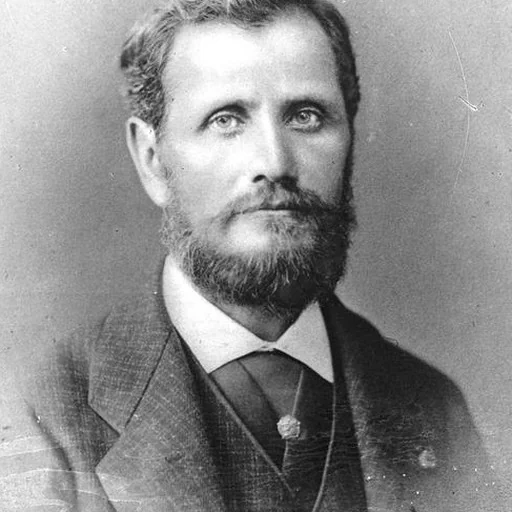
Stanisław Chlebowski (1835–1884) was a Polish painter. He was a renowned specialist in Oriental themes and history painting.