Artwork
Narcissus
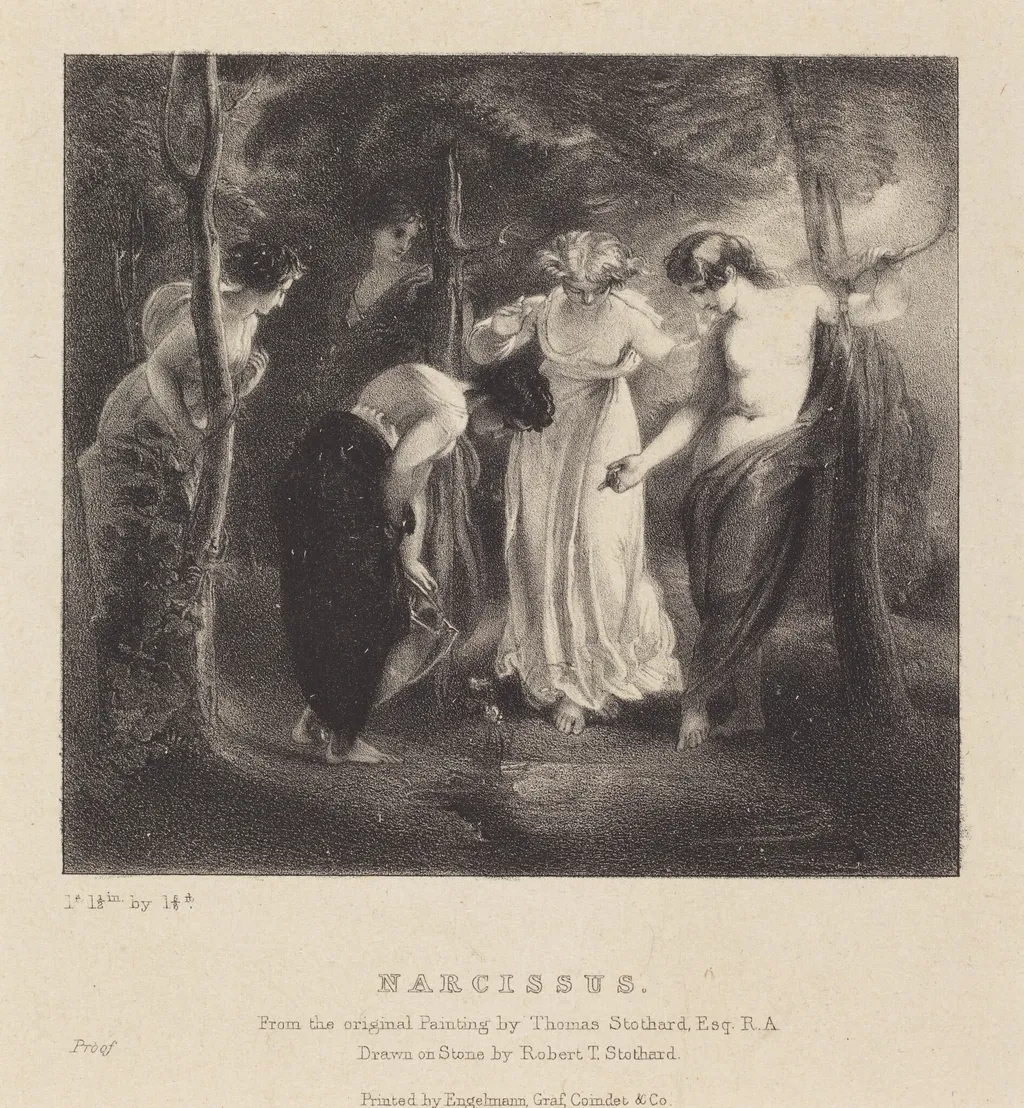
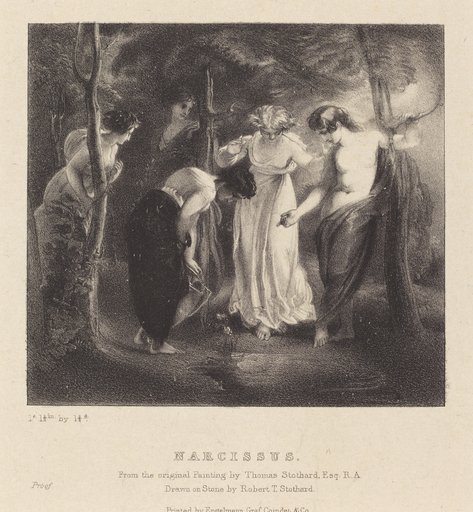
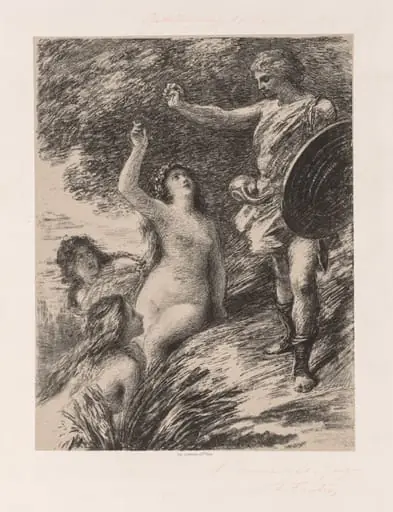
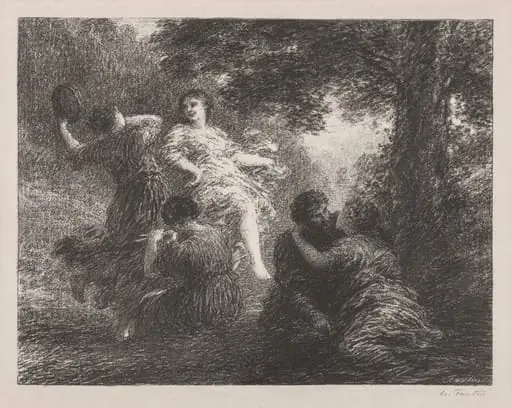
Narcissus is an ink print by the Romanticist artist Robert T. Stothard. It dates from 1829 and is held in the collection of the National Gallery of Art. Robert T.
About this work
Overview
Stothard produced this lithograph in 1829, using the emerging printmaking technique to explore mythological themes through atmospheric composition.
Robert T. Stothard produced this lithograph in 1829, using the emerging printmaking technique to explore mythological themes through atmospheric composition. The work presents a solitary central figure amid shadowy, indistinct forms, evoking a mood of quiet isolation rather than narrative clarity. Its delicate tonal gradations and blurred edges distinguish it from more sharply defined prints of the period.
Subject & Meaning
The title references the myth of Narcissus, who became entranced by his own reflection. Here, the central figure in white, arms outstretched, may suggest self-absorption or a moment of recognition. Surrounding figures, partially obscured and reaching upward, imply external forces or fragmented aspects of identity, reinforcing themes of introspection and psychological distance rather than literal storytelling.
Technique & Style
Stothard employed lithography to achieve a soft, smudged aesthetic, manipulating the stone surface to create hazy transitions between light and dark. The lack of sharp contours and the muted palette contribute to an ethereal quality, as if the scene exists in a liminal space between dream and memory. This approach prioritizes emotional resonance over precise detail.
History & Provenance
Created during the early years of lithography’s adoption in Britain, this print reflects Stothard’s engagement with contemporary print culture. Though not widely exhibited in his lifetime, it survives in a limited number of institutional collections, suggesting modest circulation among private collectors and art societies interested in experimental graphic work of the 1820s.
Context
In the 1820s, British artists increasingly turned to myth and allegory as vehicles for psychological exploration, moving beyond classical idealism. Stothard’s work aligns with this trend, using the medium’s capacity for tonal subtlety to convey inner states. The print’s ambiguity contrasts with more didactic illustrations of the era, reflecting a growing interest in subjective experience.
Legacy
While Stothard is not a major figure in art history, this lithograph stands as a quiet example of early 19th-century experimentation with lithographic potential. Its emphasis on mood over clarity influenced later artists exploring symbolic and psychological themes in printmaking, particularly those drawn to the medium’s capacity for atmospheric suggestion.
Own this work as a print
Artist & collection