
Subject
Mirror
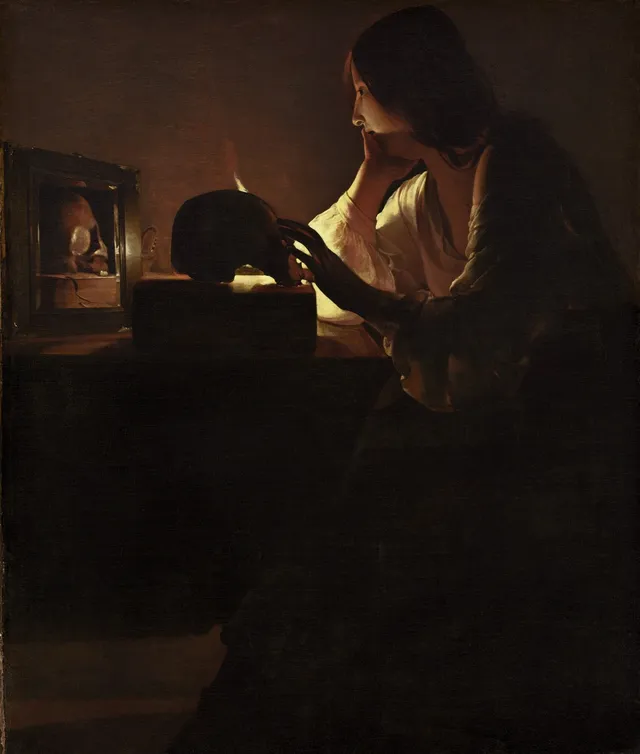
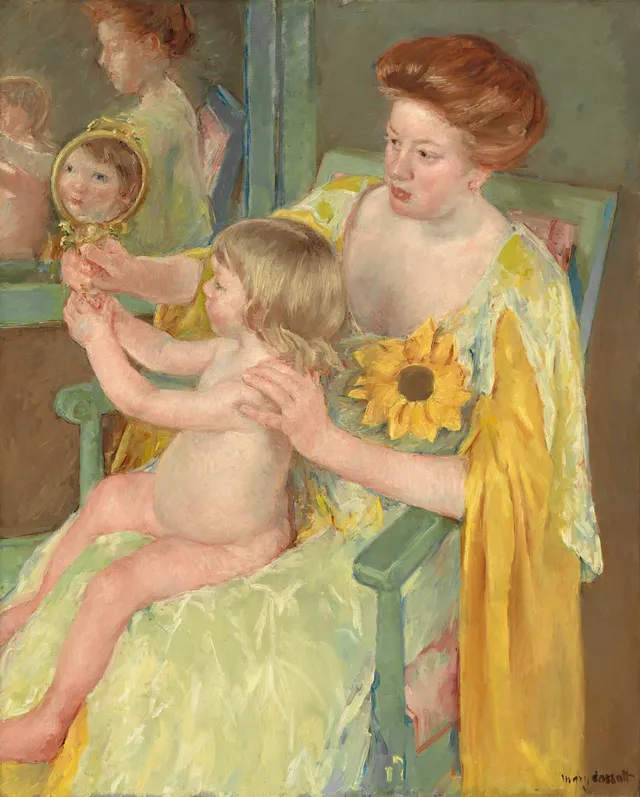
Mirror is a subject in art. The gallery holds 96 works in this subject in art, including works by Titian, Gustave Courbet and Edgar Degas.
Few objects have carried as much symbolic freight in Western art as the mirror. Long before glass made faithful reflection possible, the looking glass was bound up with the myths of Narcissus and Medusa and, in medieval thought, with the *speculum*—the mirror as an instrument of truth, self-knowledge, and divine contemplation, but equally of vanity and lust. The mirror's prestige rose with its technology: Venetian glassmakers of the sixteenth century guarded their silvering secrets so jealously that disclosure could be punished by death, and Louis XIV's Hall of Mirrors at Versailles, lined with 357 plates, made the mirror an emblem of wealth and mastery. Painters seized on it as both a luxurious prop and a vehicle for ideas about seeing itself.
To depict a reflection is to solve a problem of optics and a problem of meaning at once. Jan van Eyck's *Arnolfini Portrait* (1434) set the standard: its convex mirror gathers the whole room in miniature, reversing the couple and revealing two figures—one likely the painter—entering the door, so that the mirror extends the picture's space beyond its frame. Diego Velázquez transformed the device in *Las Meninas* (1656), where a back-wall mirror reflects the king and queen and folds the viewer into the scene. Both turn the mirror into a meditation on presence, absence, and the act of beholding.
The mirror's most enduring role was in the toilet of Venus, where it served the goddess's beauty while quietly warning against it. Titian's *Venus with a Mirror* (c. 1555) and Tintoretto's mythologies present the reflective glass as a celebration of ideal form and a reminder of fleeting time. The same object turns penitential in religious painting: Georges de La Tour's Magdalen pictures (c. 1635–40) pair the mirror with a skull and a guttering candle as *vanitas* symbols of mortality.
That tension—beauty versus transience—carried into the Rococo boudoir scenes of Jean-Frédéric Schall and into Edgar Degas's mirrored rehearsal rooms, where reflection became a tool of modern, dispassionate observation. In the twentieth century the mirror was emancipated from depiction to become the artwork's actual material: Michelangelo Pistoletto's mirror paintings (begun 1961) implicate the viewer's own image, while Yayoi Kusama's *Infinity Mirror Rooms* (from 1965) dissolve the self into endless reflected space.
Key artists
Overview
A mirror, also known as a looking glass, is an object that reflects an image by reversing the direction of light at an angle equal to its incidence. The motif of the mirror recurs throughout art history because of its dual nature as both a practical tool for self-inspection and a powerful symbolic device. In the collection under discussion, the mirror appears in 129 works, ranging from mythological scenes to intimate domestic interiors. Its persistence across periods and cultures stems from its capacity to evoke themes of vanity, truth, self-knowledge, and illusion, while also serving as a sophisticated compositional device that allows artists to manipulate space, reflection, and the gaze.
Iconography & meaning
The iconography of the mirror encompasses multiple layers of meaning. In its most direct sense, the mirror signifies self-knowledge and personal grooming, as evidenced by its old-fashioned name "looking glass." Theologically, mirrors carried moral weight: the New Testament reference in 1 Corinthians 13 to seeing "as in a mirror, darkly" associated imperfect mirrors with spiritual obscurity, while the superstition that breaking a mirror brings seven years of bad luck invested the object with talismanic significance. In mythological contexts, the mirror became the attribute of Venus, goddess of love and beauty, transforming it into an emblem of vanity and erotic self-awareness. The mirror also functions as a symbol of truth and deception simultaneously, it reveals appearances yet produces a reversed, virtual image that swaps front and back rather than simply left and right, a phenomenon hu00e4ndigkeit paradox that fascinated philosophers and artists alike. In penitential imagery, as with Mary Magdalen, the mirror converts from an instrument of vanity to a tool of meditation and repentance, its reflective surface now turned toward spiritual rather than physical inspection.
Across movements & periods
The treatment of the mirror evolved substantially across movements and periods, shaped by technological developments and shifting cultural priorities. Prehistoric humans used pools of still water or polished obsidian; manufactured mirrors emerged around 6000 BCE in Anatolia, followed by polished copper mirrors in Mesopotamia from 4000 BCE and ancient Egypt from around 3000 BCE. Bronze mirrors appeared in China from approximately 2000 BCE, and metal mirrors remained standard through Greco-Roman antiquity and the Middle Ages, though their low reflectivity and poor color rendering made them materially limited as depicted objects. The Renaissance brought crucial innovation: Venetian glassmakers on Murano developed superior tin-mercury amalgam mirrors in the sixteenth century, keeping the technique secret for decades before it spread across Europe. This technological leap coincided with increased mirror depiction in art, as clearer reflections became available to painters as both physical props and visual metaphors. The German chemist Justus von Liebig's invention of silvered glass mirrors in 1835 enabled mass production, democratizing the object and transforming its social significance. By the late nineteenth century, even rural populations gained access, and by the twentieth century, full-length mirrors became standard bedroom and bathroom fixtures, altering self-perception and fashion consciousness.
Legacy
The mirror's cultural afterlife extends far beyond its material form. As an optical device, its principles, specular reflection, plane and curved surfaces, virtual imaging, underpinned scientific instruments from Isaac Newton's 1668 reflecting telescope, which used speculum metal, to modern telescopes and lasers. The mirror's psychological dimension proved equally enduring: its integration into daily self-fashioning accelerated the evolution of personal identity and aesthetic consciousness, particularly as full-length mirrors became ubiquitous in the twentieth century. In art theory, the mirror has served as a foundational metaphor for representation itself, from Plato's cave to Lacan's mirror stage, the act of reflection models how images construct subjectivity. The collection's 129 works testify to this persistent fascination, demonstrating how a simple physical object became one of Western art's most flexible and resonant motifs, capable of signifying divine truth, mortal vanity, scientific inquiry, and psychological depth across millennia of image-making.
Works
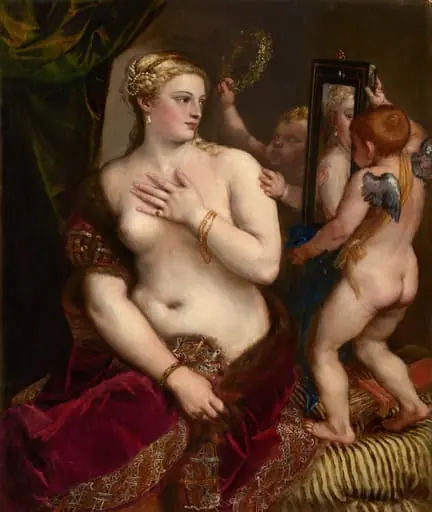 Venus with a Mirror
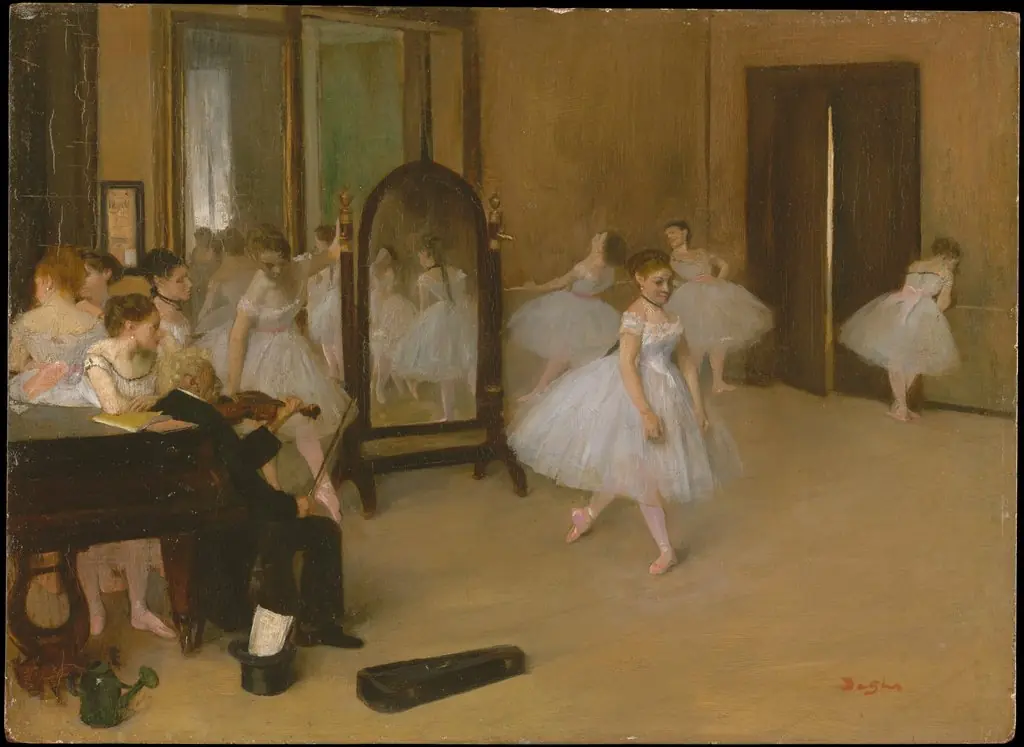 The Dancing Class
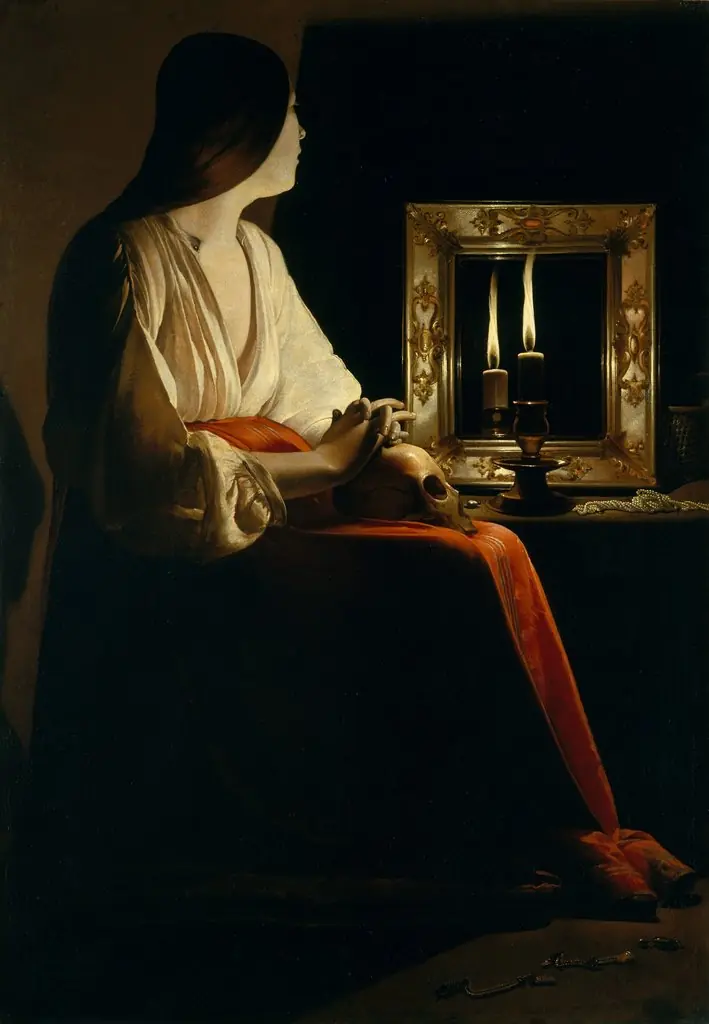 The Penitent Magdalen
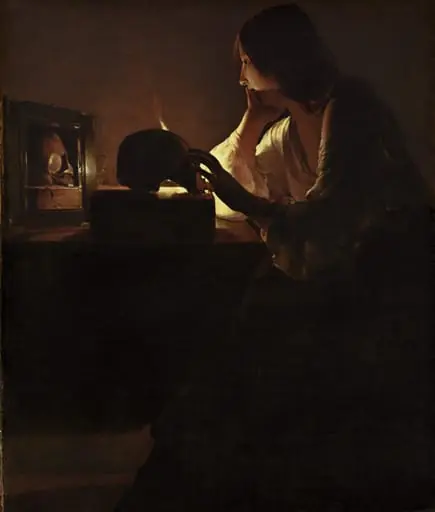 The Repentant Magdalen
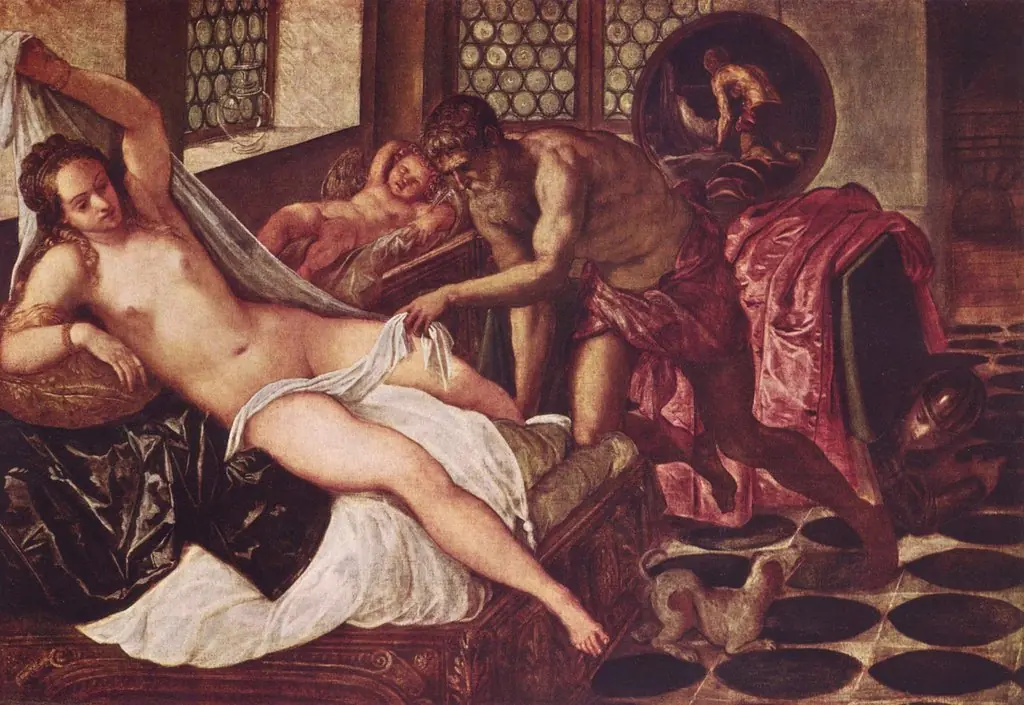 Venus and Mars Surprised by Vulcan
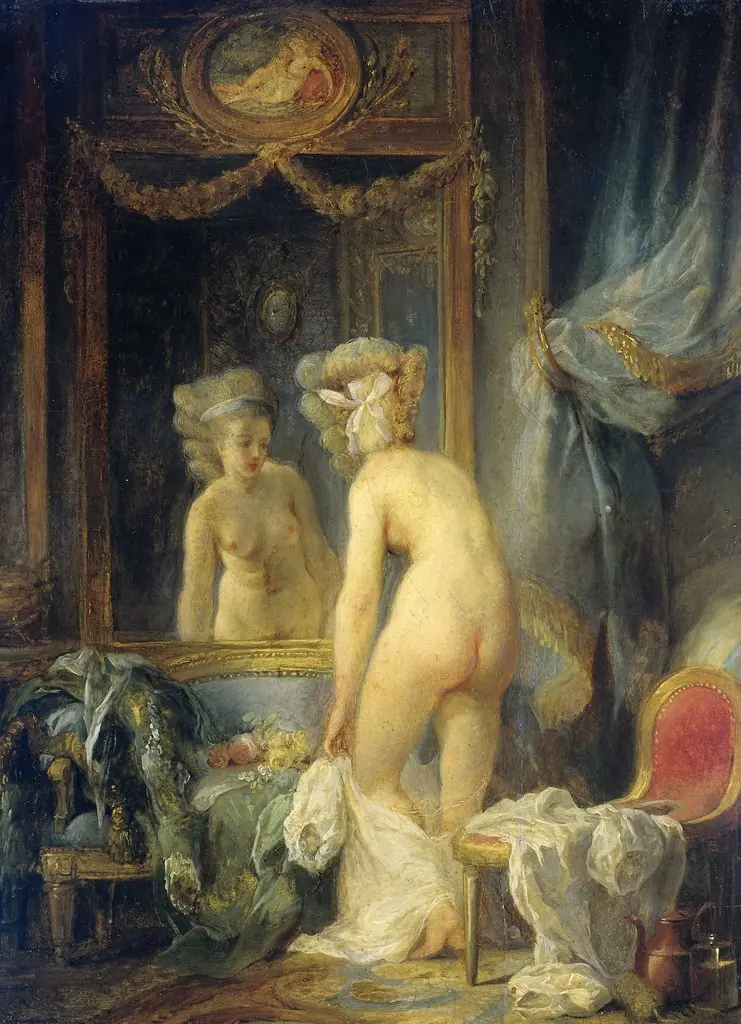 Morning Toilet
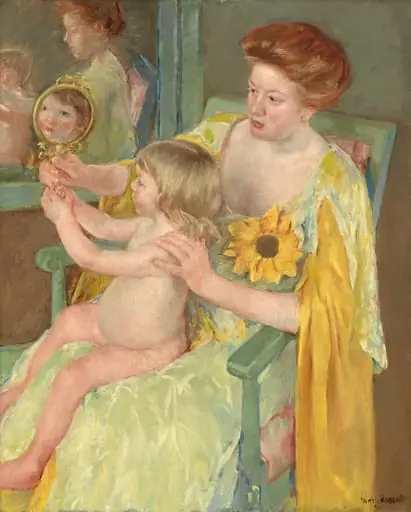 Woman with a Sunflower
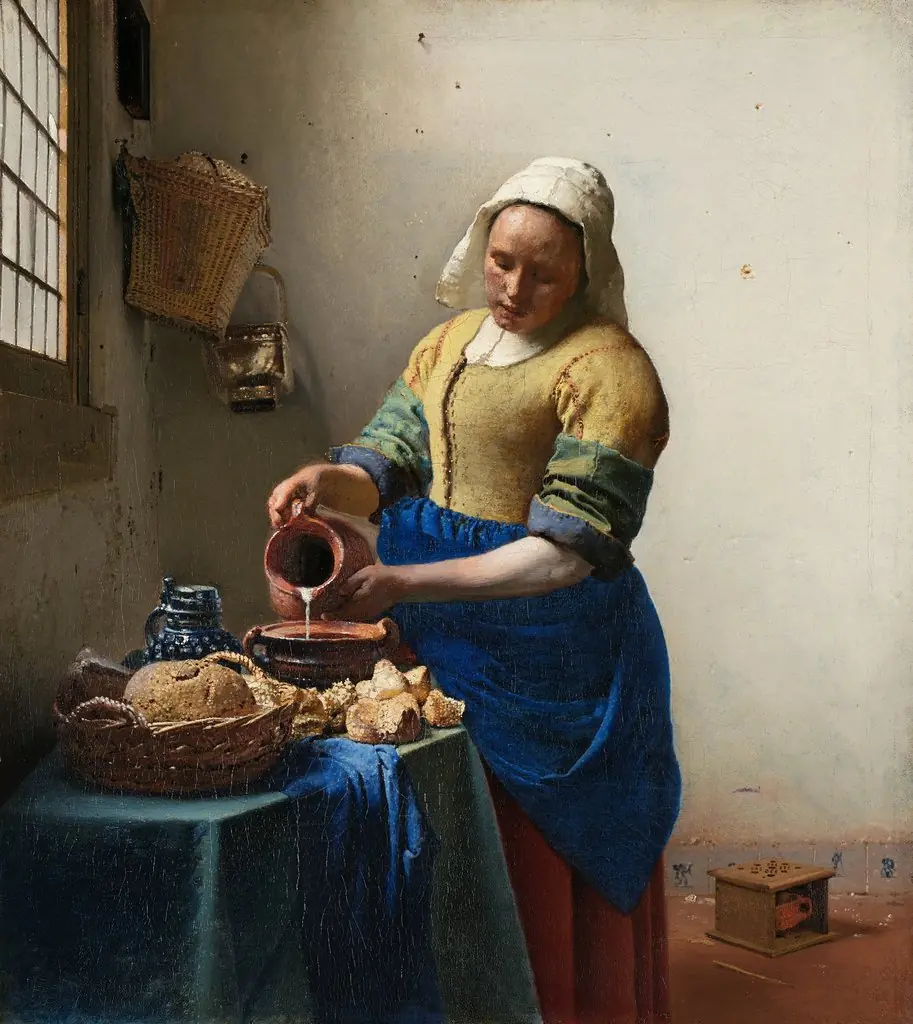 The Milkmaid
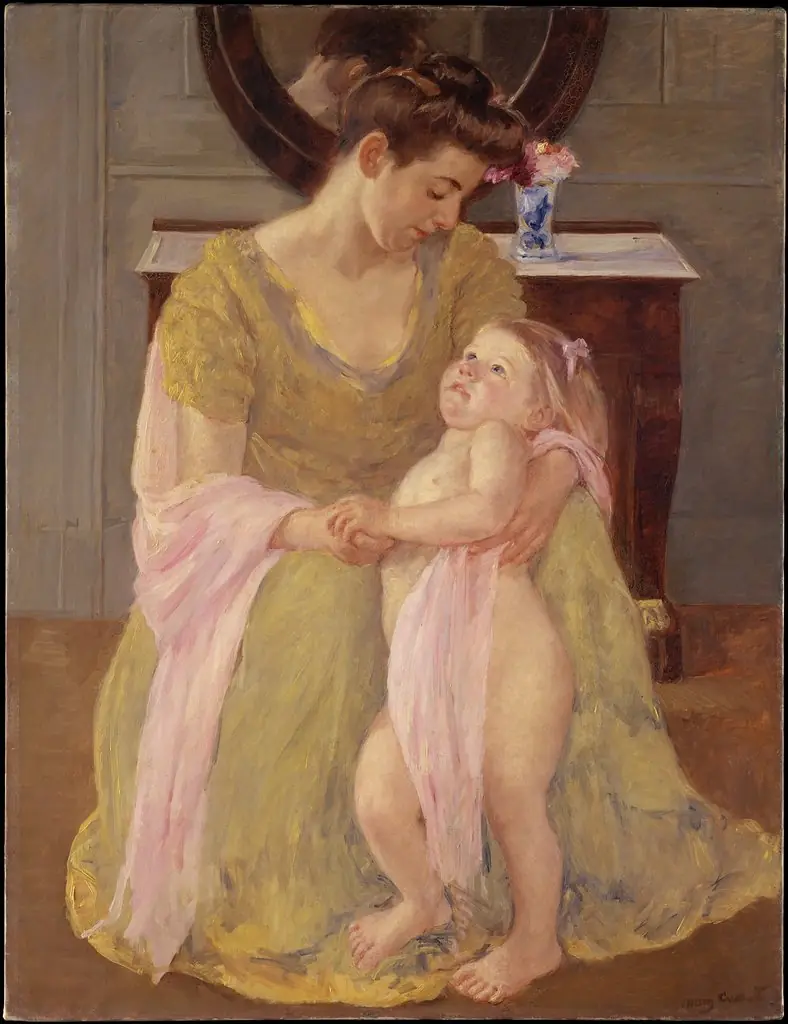 Mother and Child with a Rose Scarf
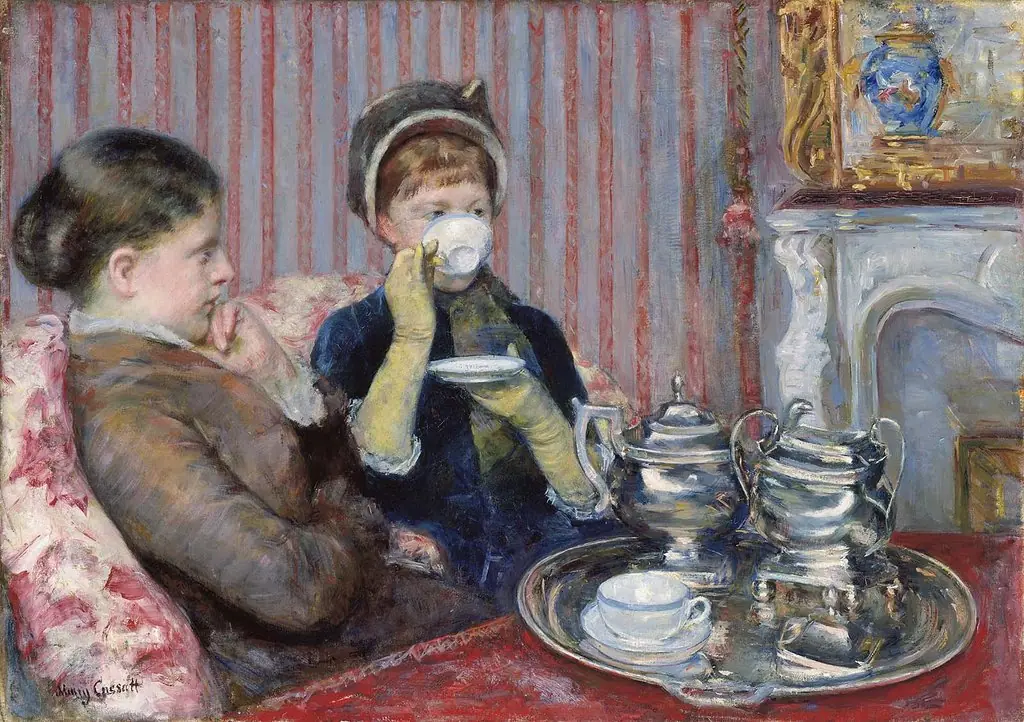 Five O'Clock Tea
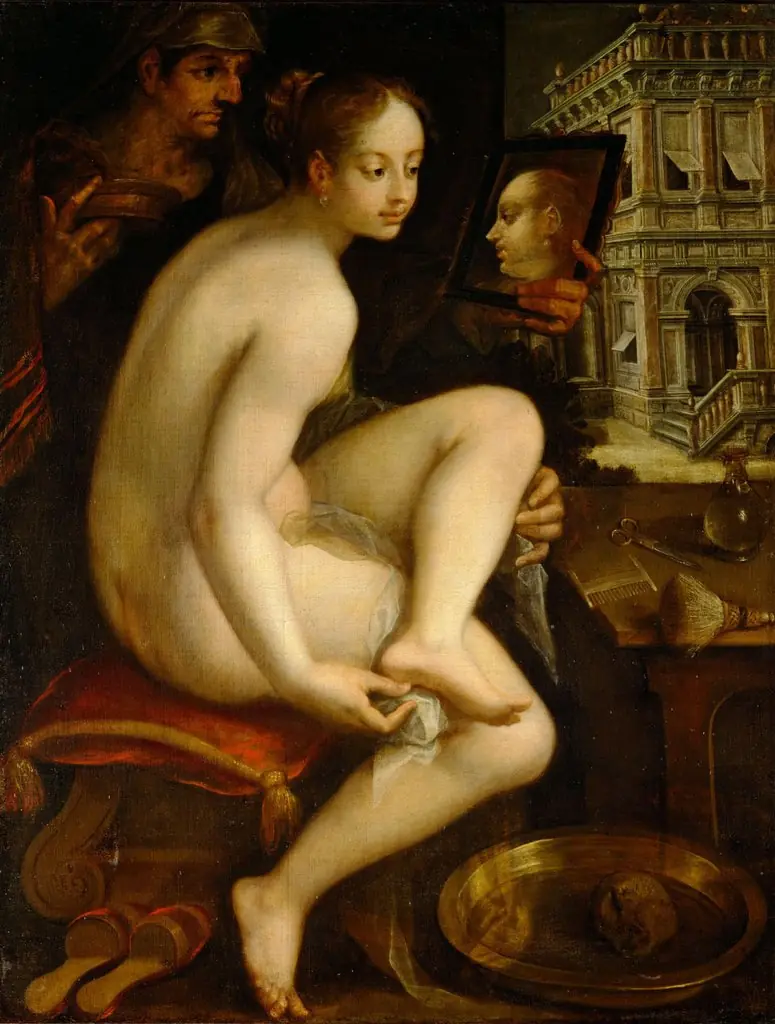 David and Bathsheba
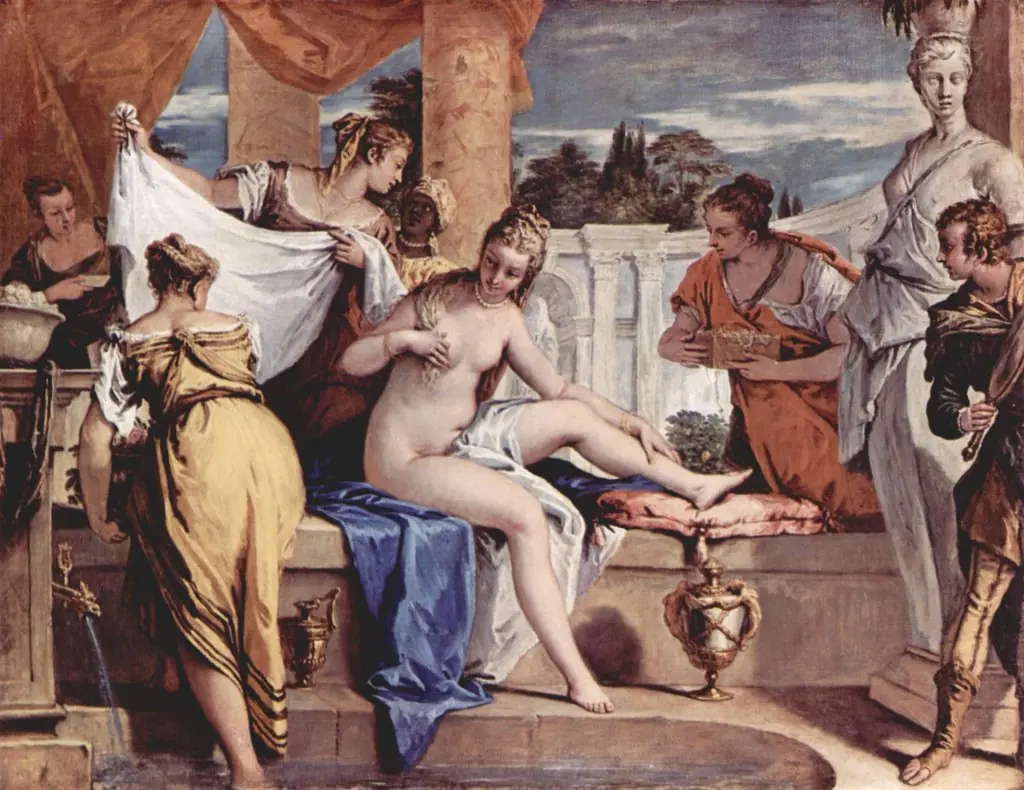 Bathsheba at her bath
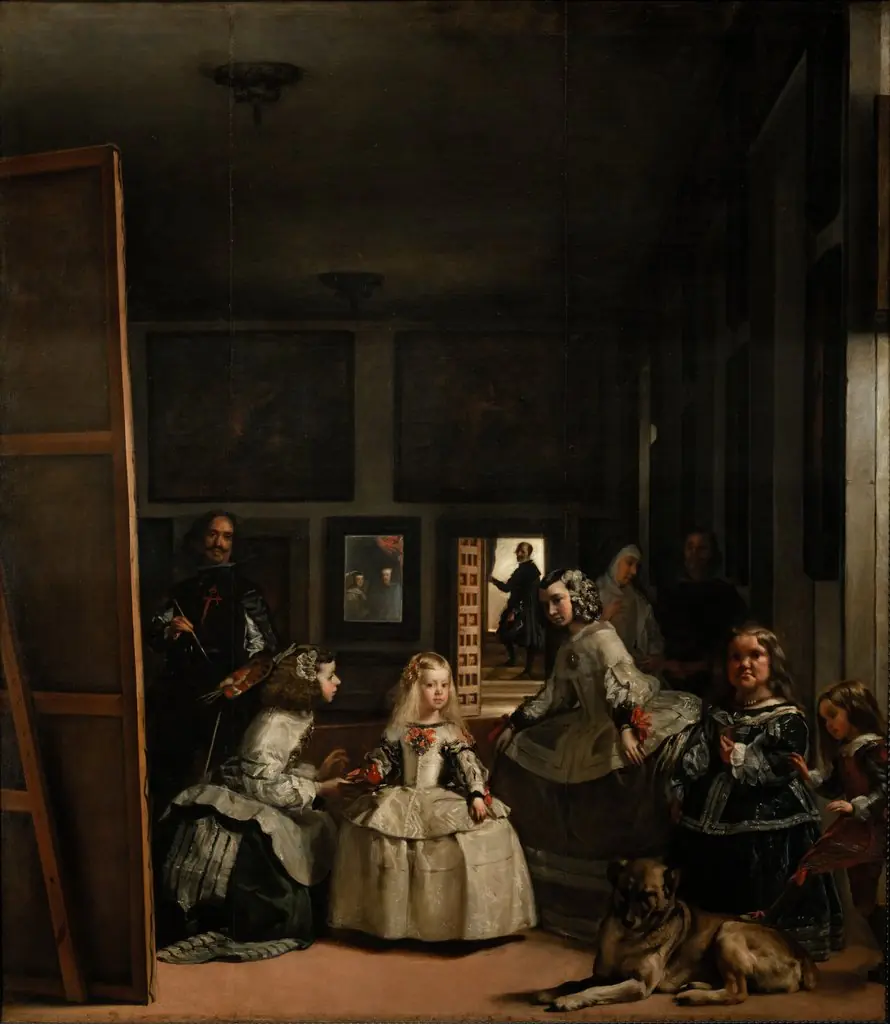 Las Meninas
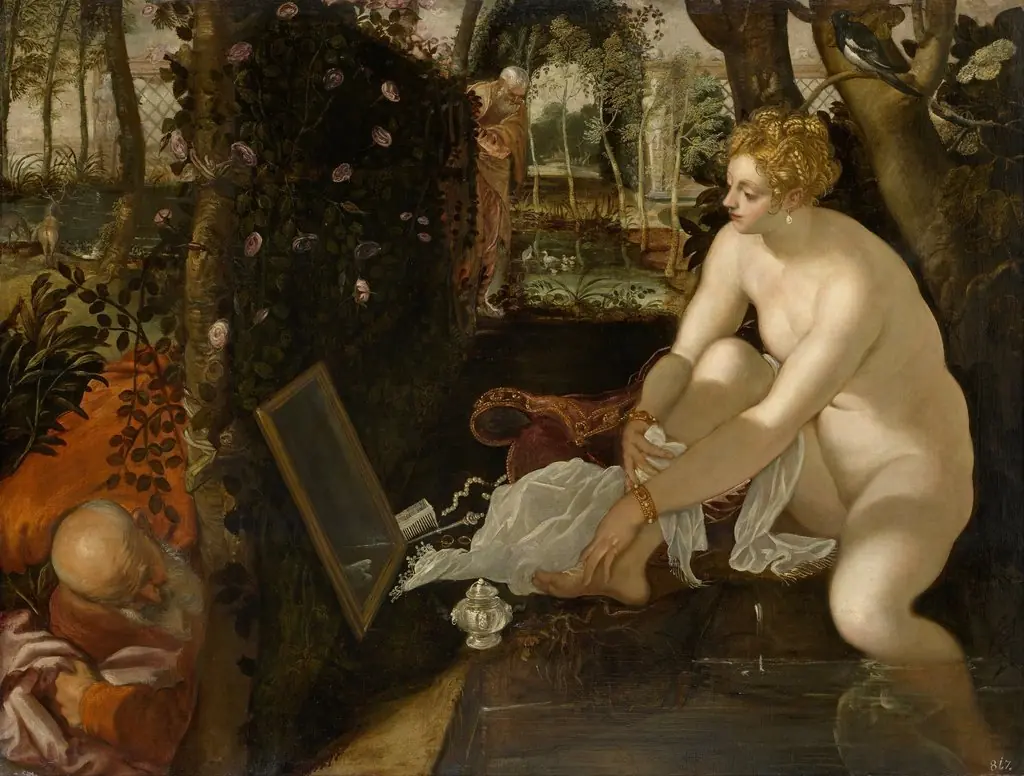 Susanna and the Elders
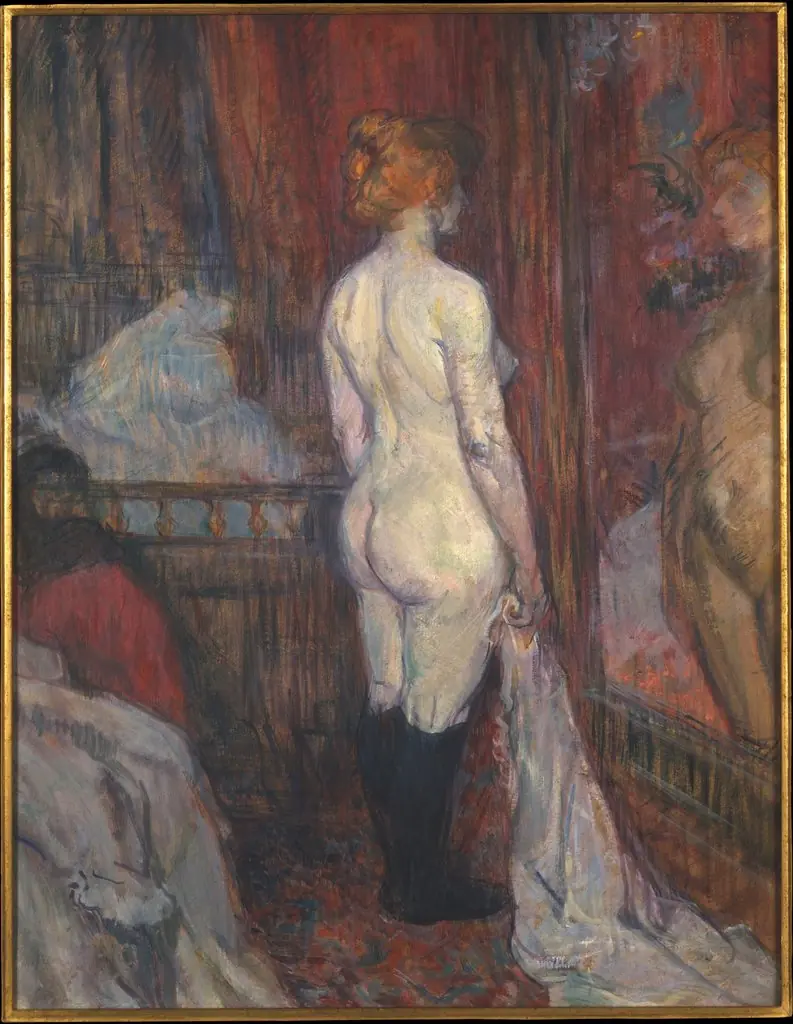 Woman before a Mirror
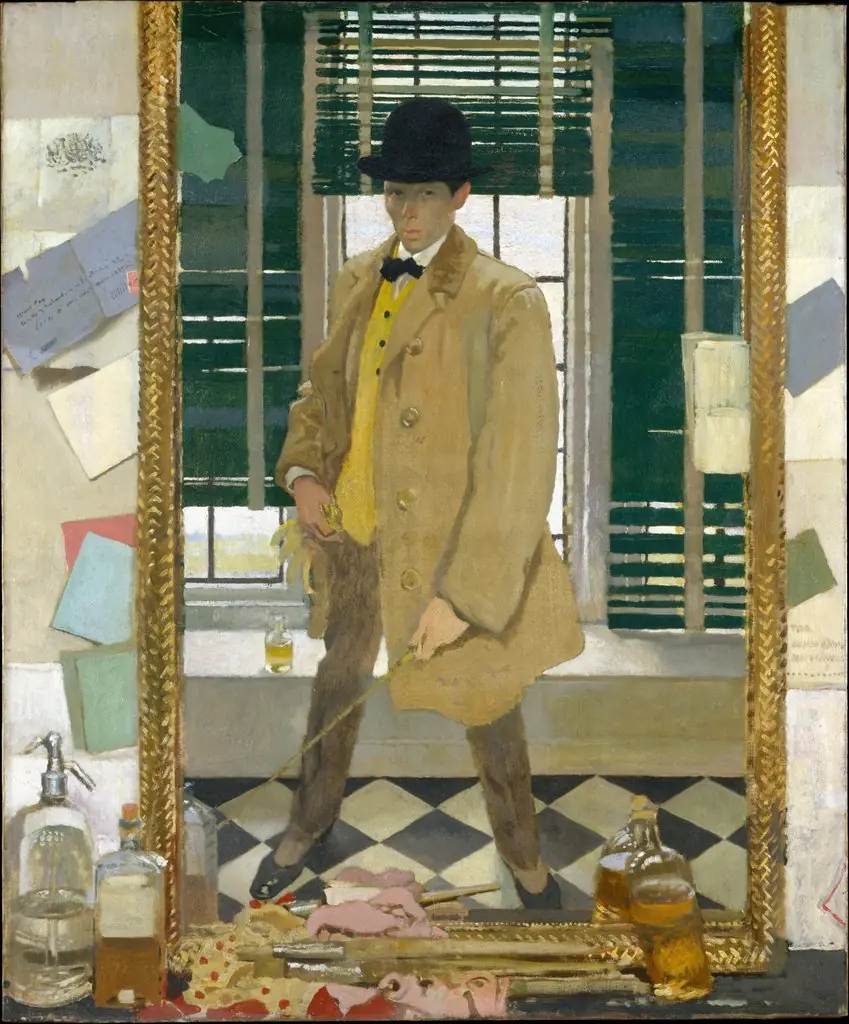 Self-Portrait
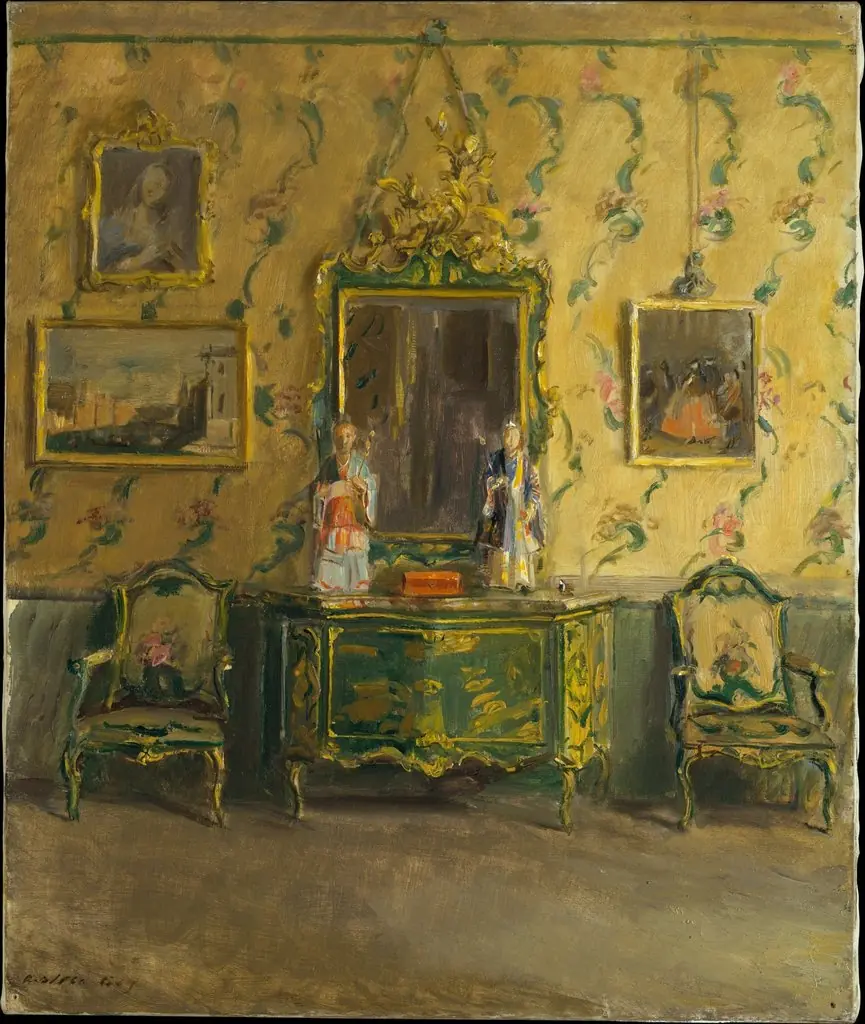 The Green Lacquer Room, Museo Correr, Venice
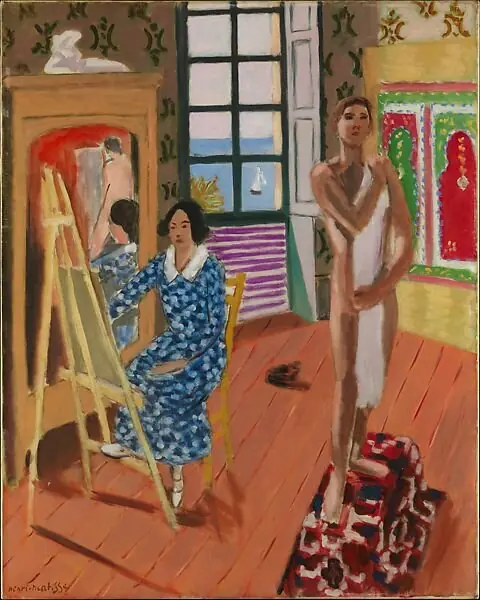 The Three O'Clock Sitting
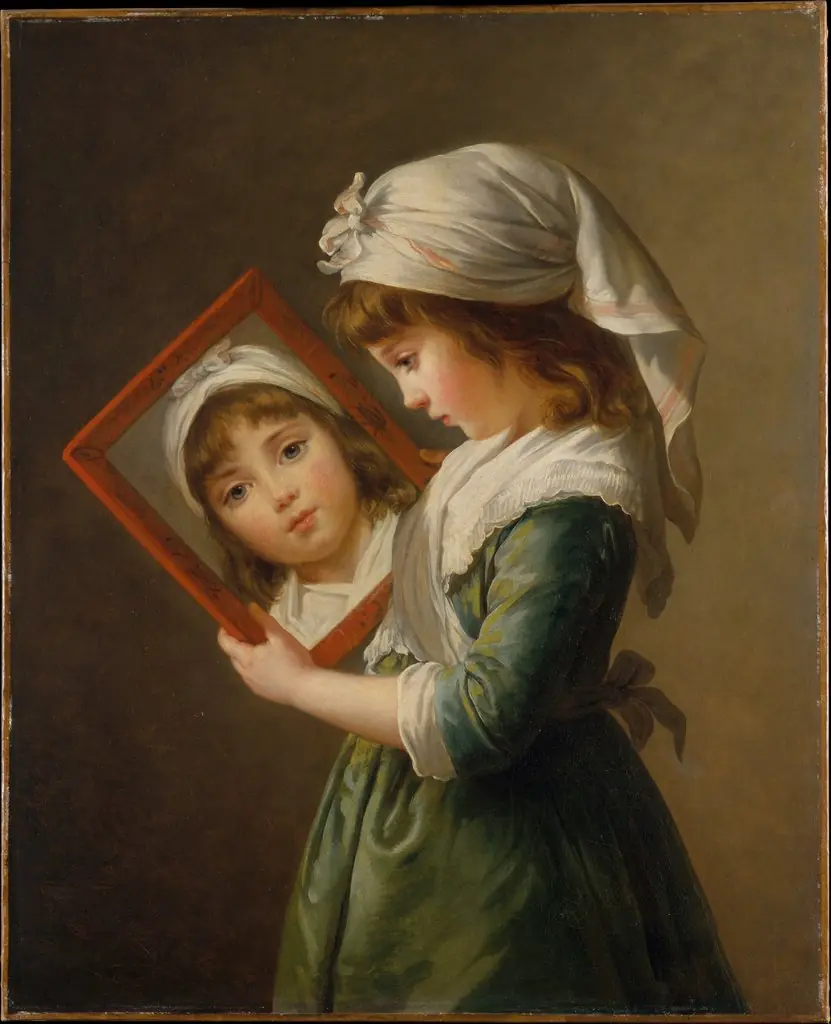 Julie Le Brun (1780–1819) Looking in a Mirror
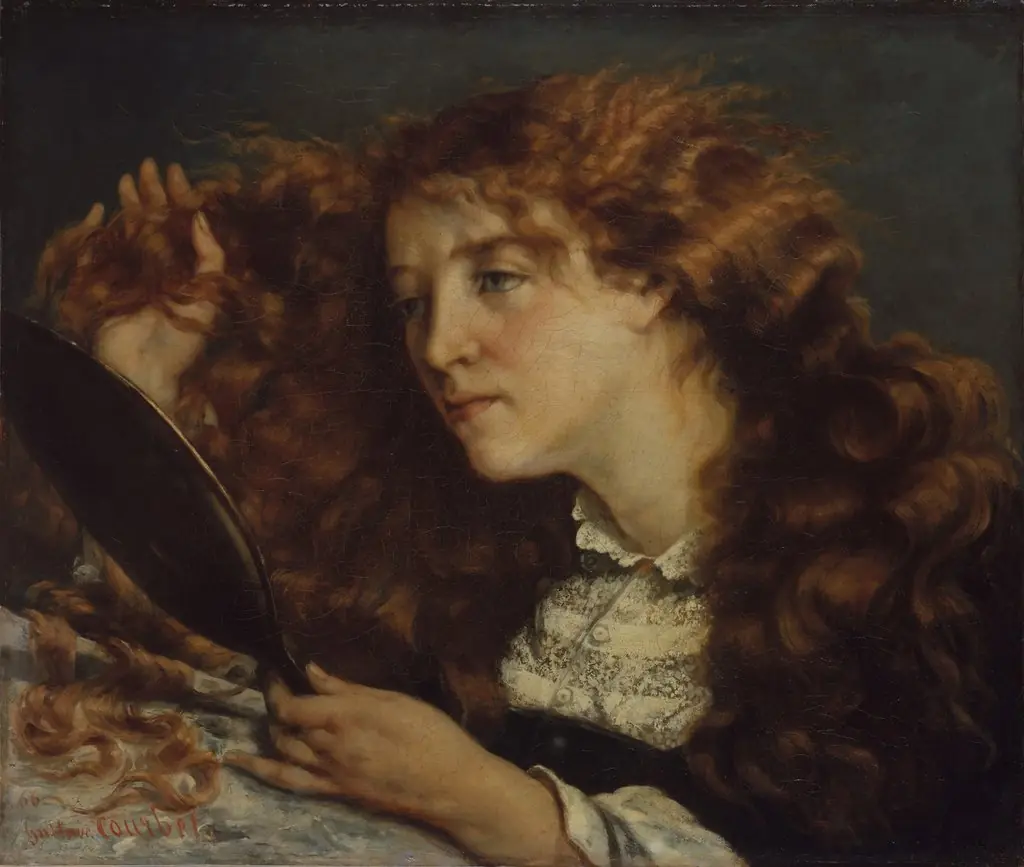 Jo, the beautiful Irish Girl
 Untitled
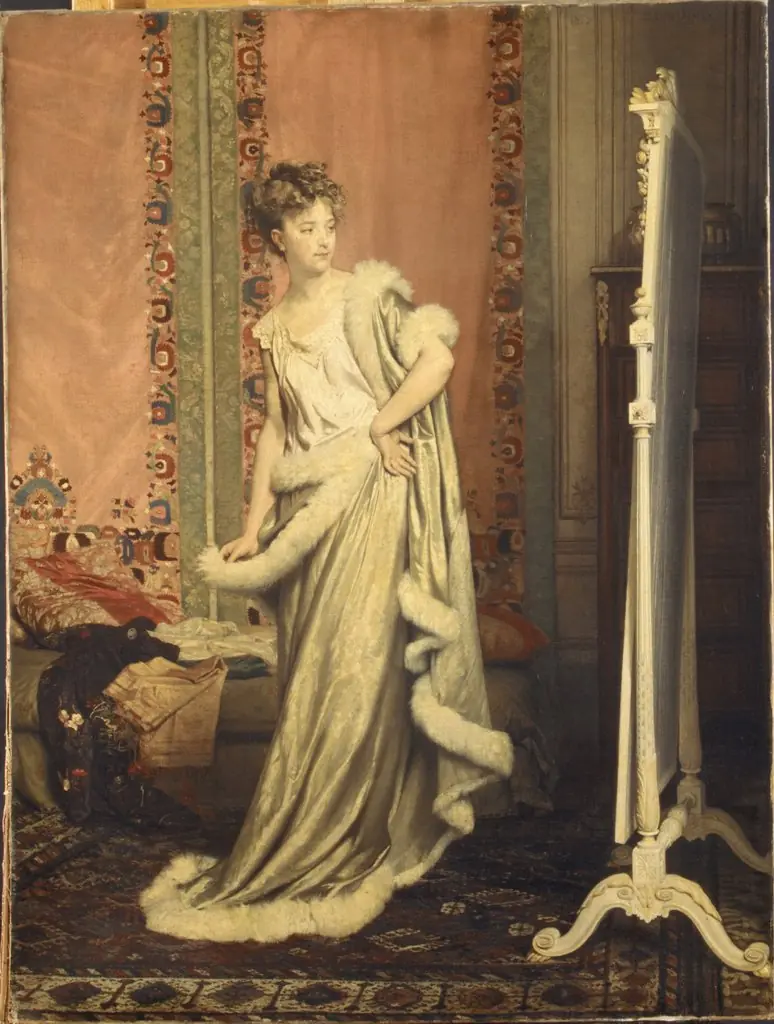 Before the Mirror
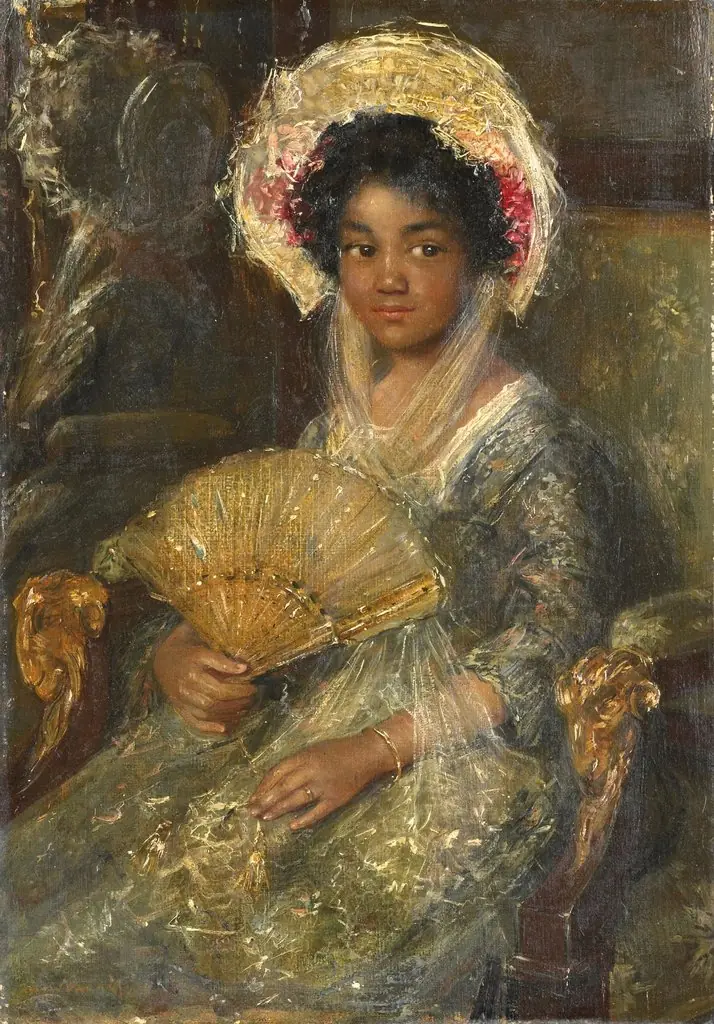 Isabella
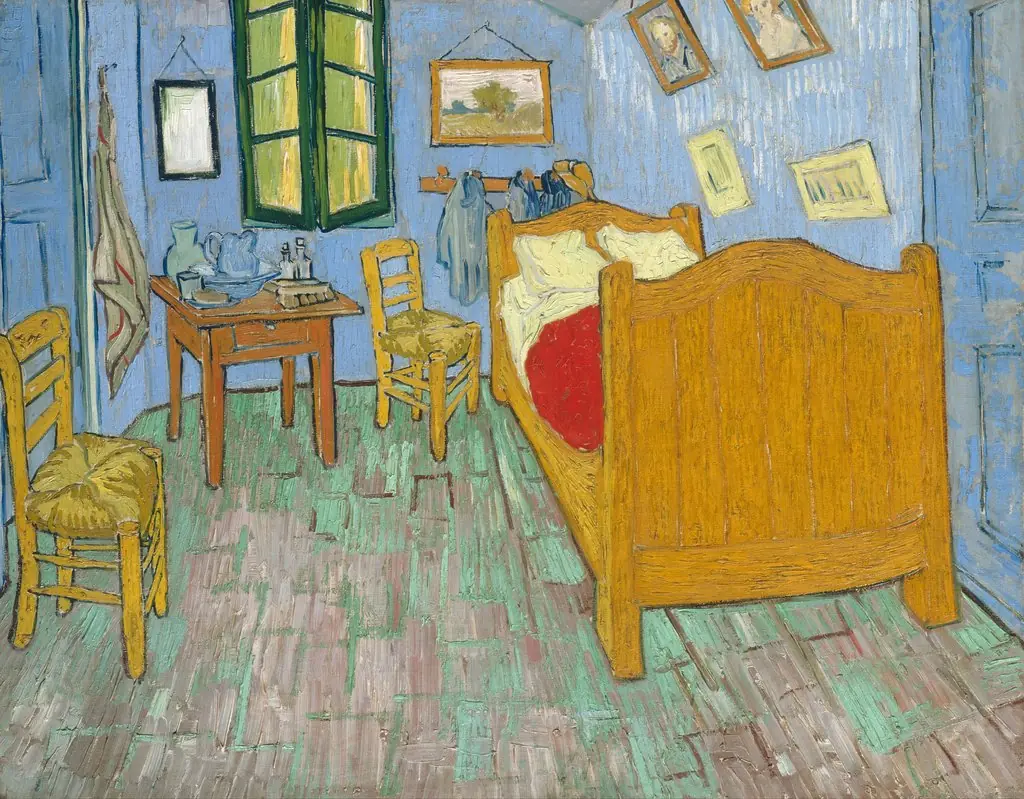 Bedroom in Arles
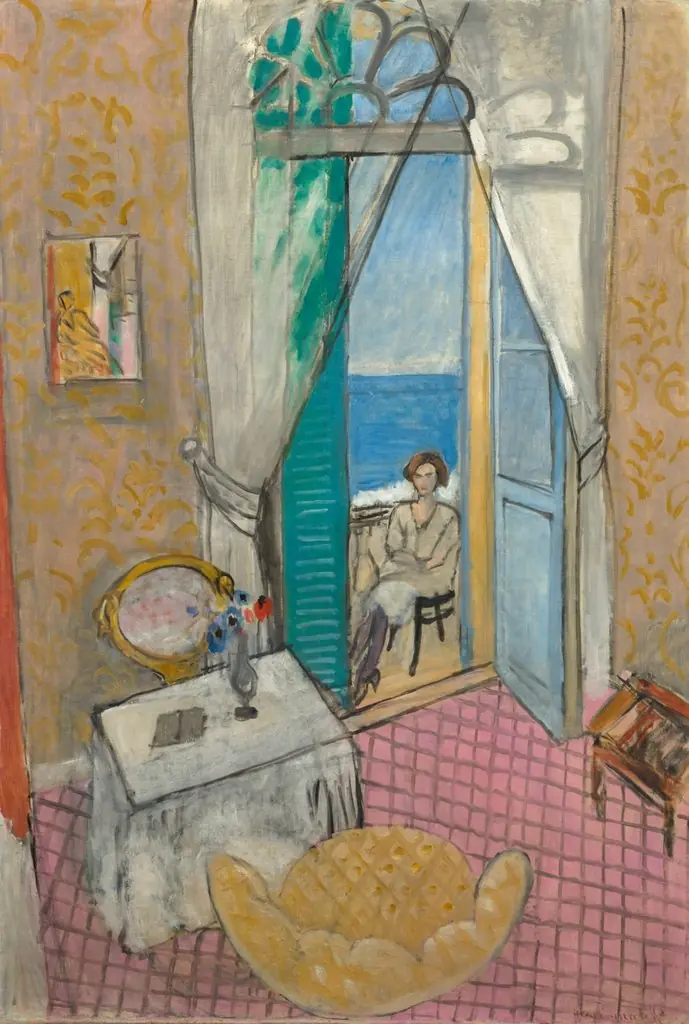 Interior at Nice
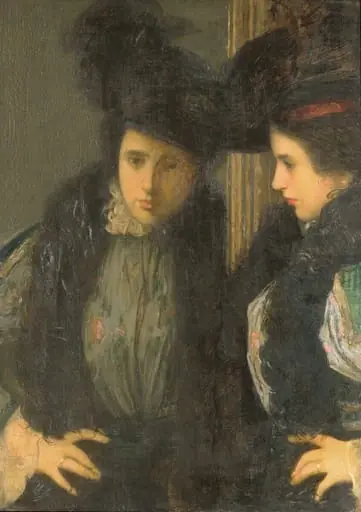 The Green Bodice
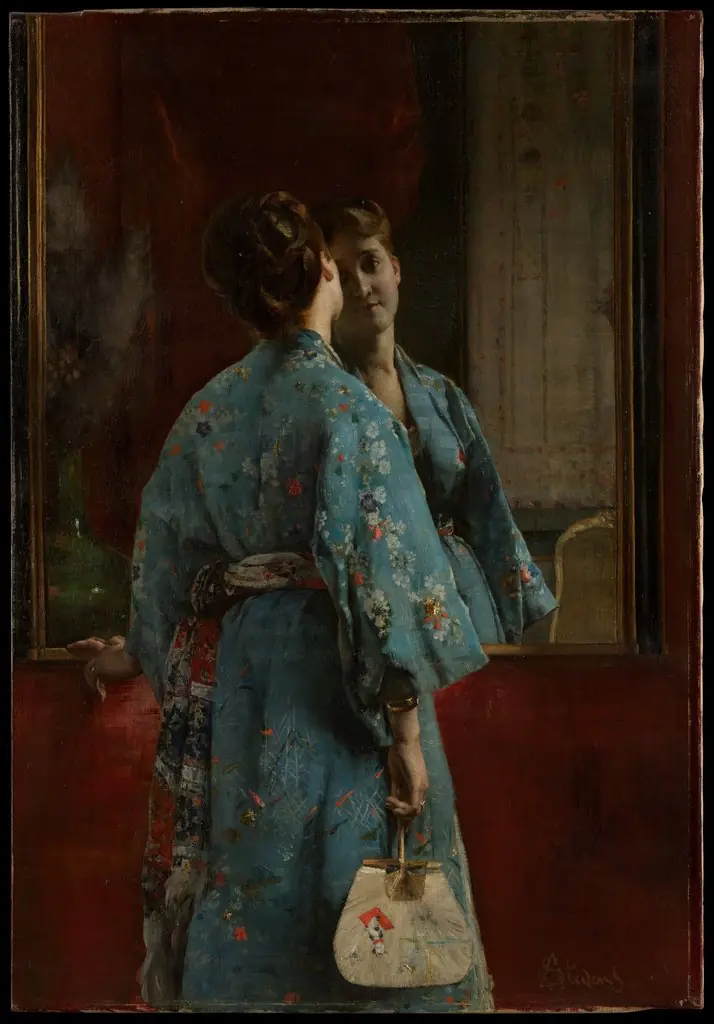 The Japanese Robe
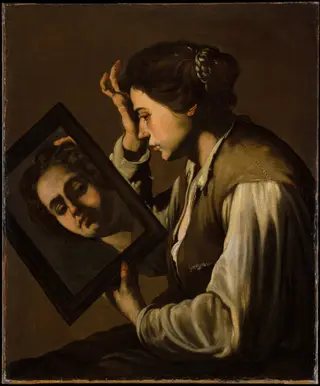 The Sense of Sight
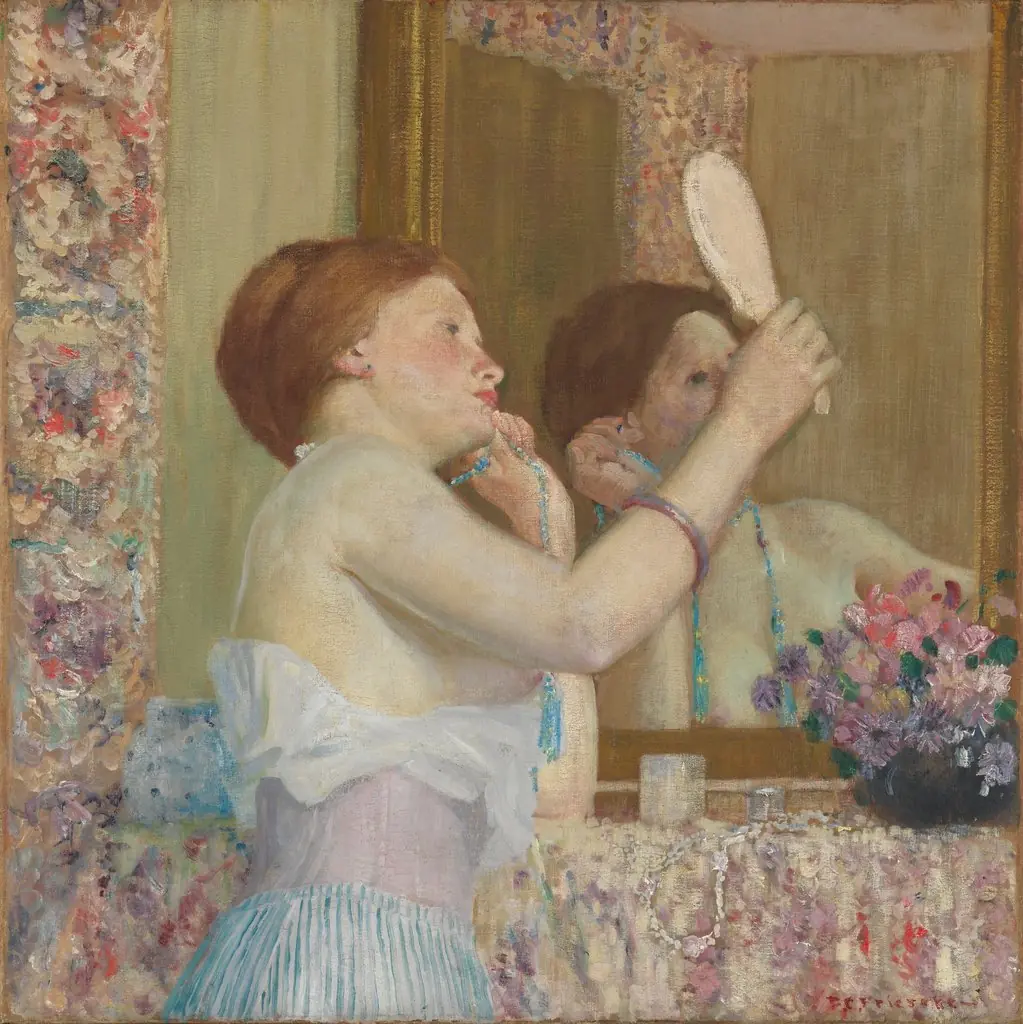 Woman with a Mirror (Femme qui se mire)
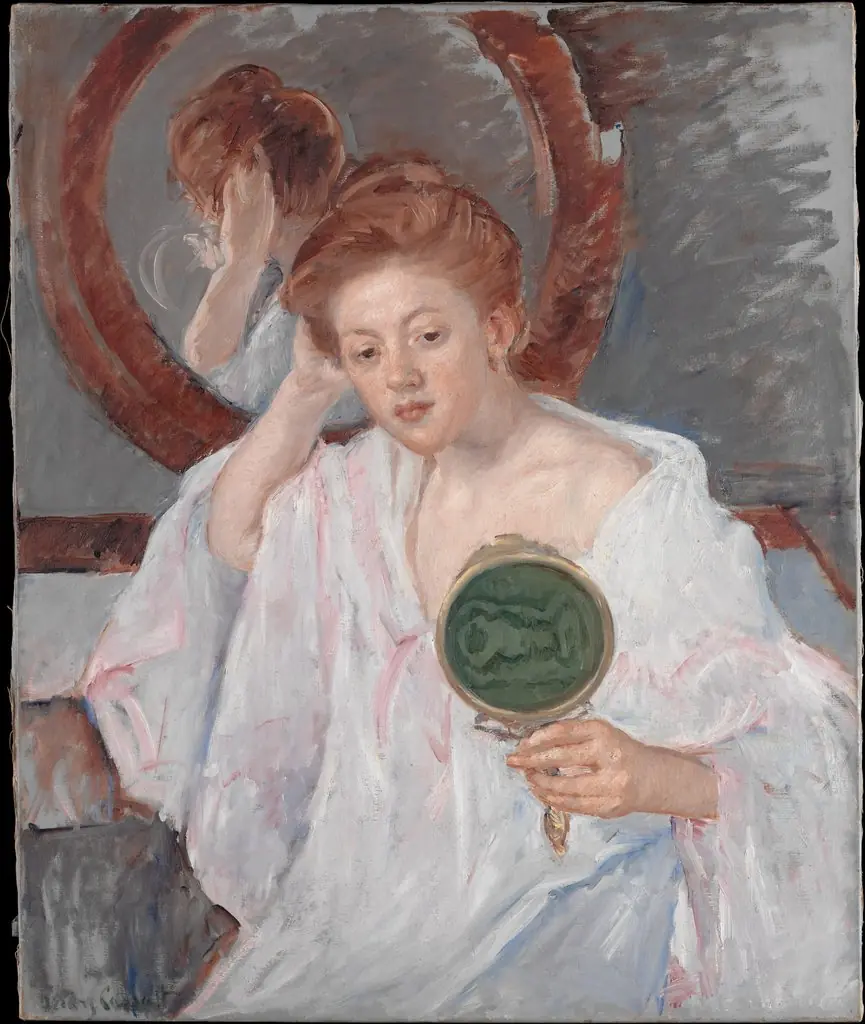 Denise at Her Dressing Table
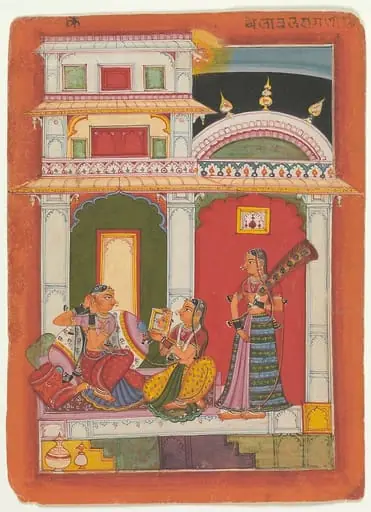 Untitled
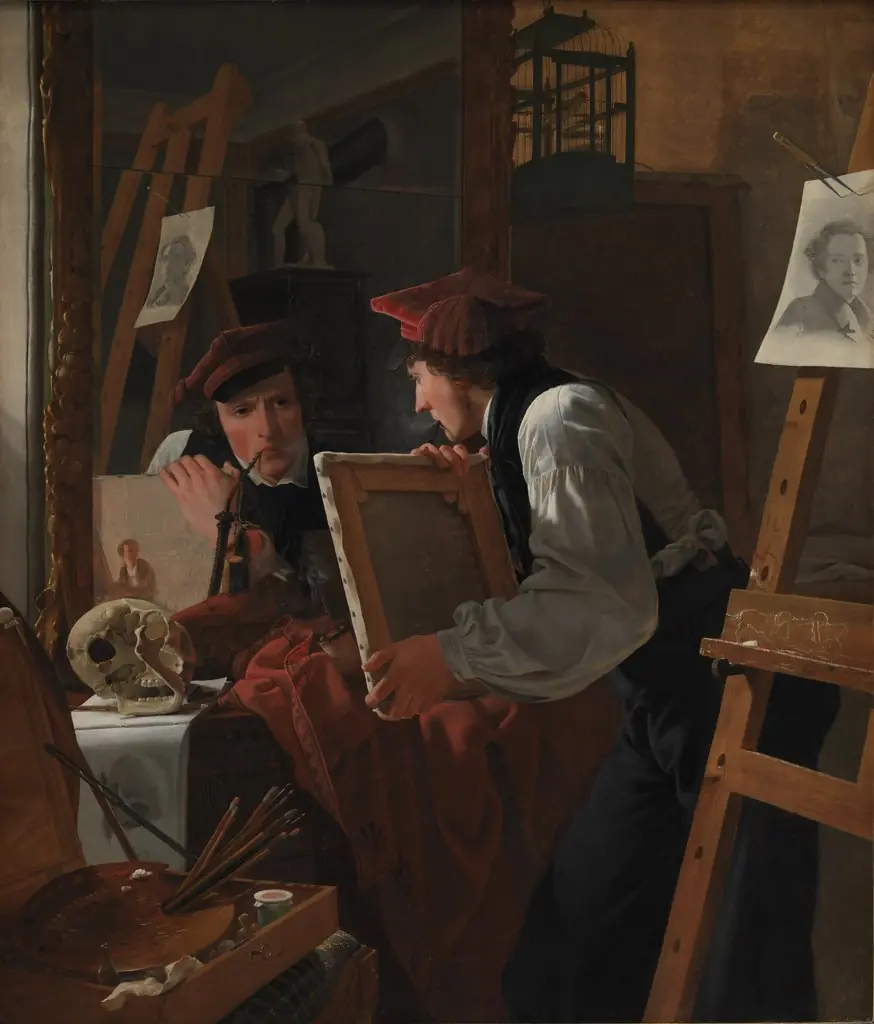 A Young Artist (Ditlev Blunck) Examining a Sketch in a Mirror
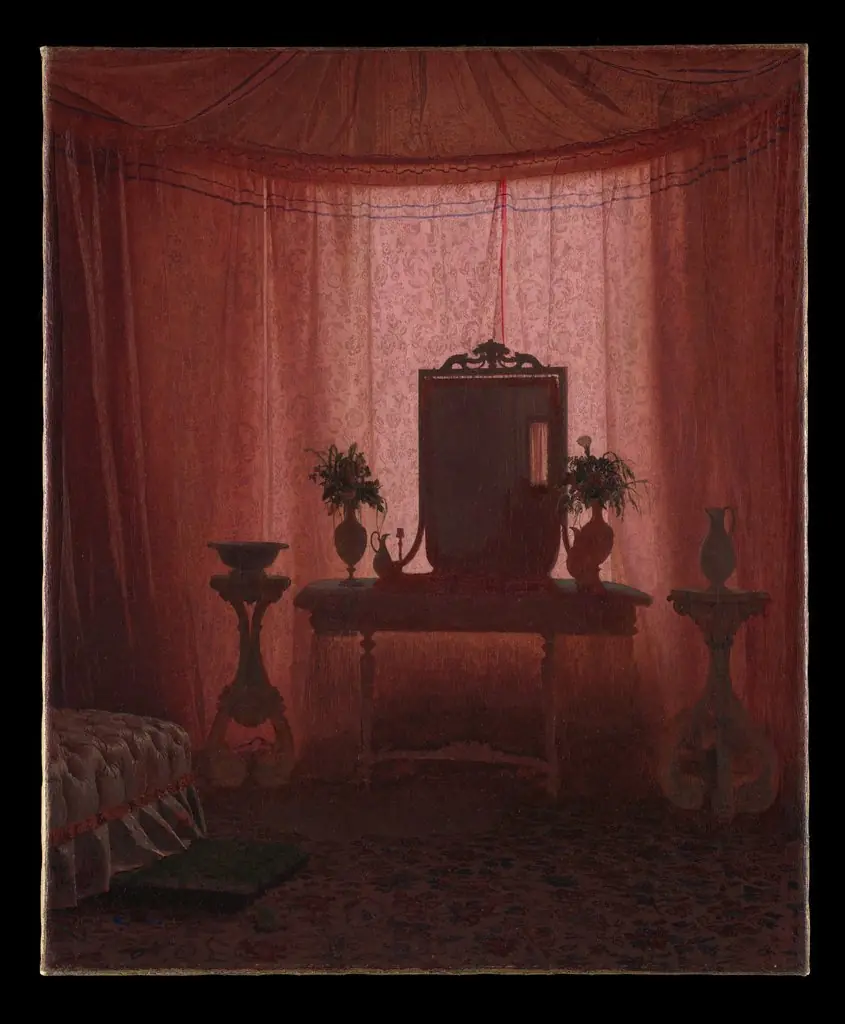 A Bedroom in Bernstorff Palace near Copenhagen
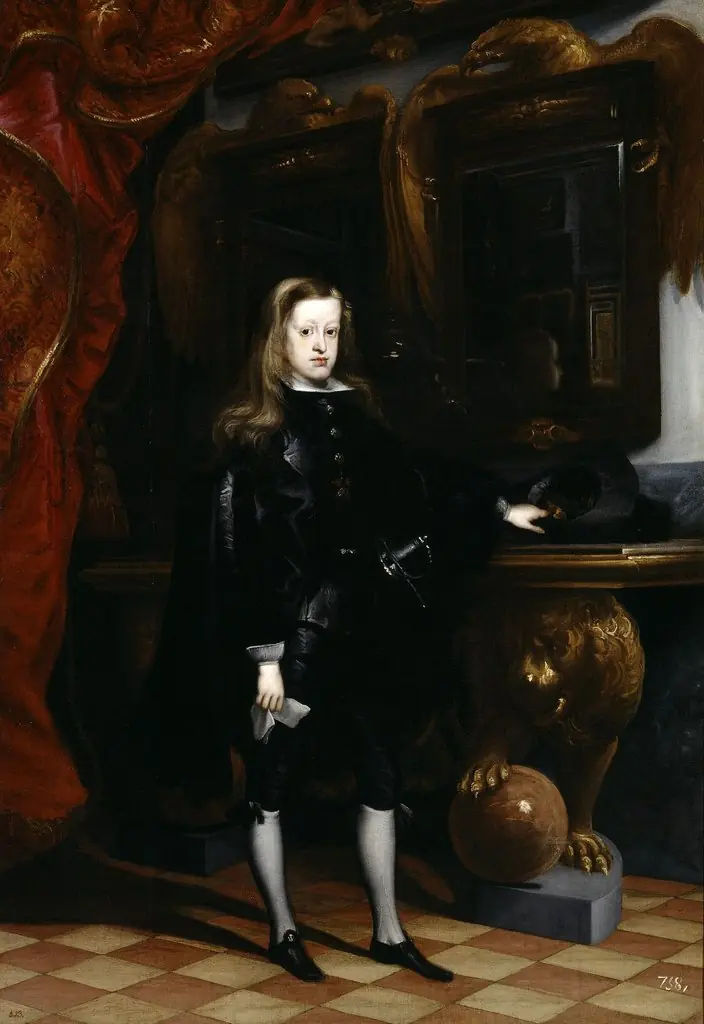 Charles II as a child
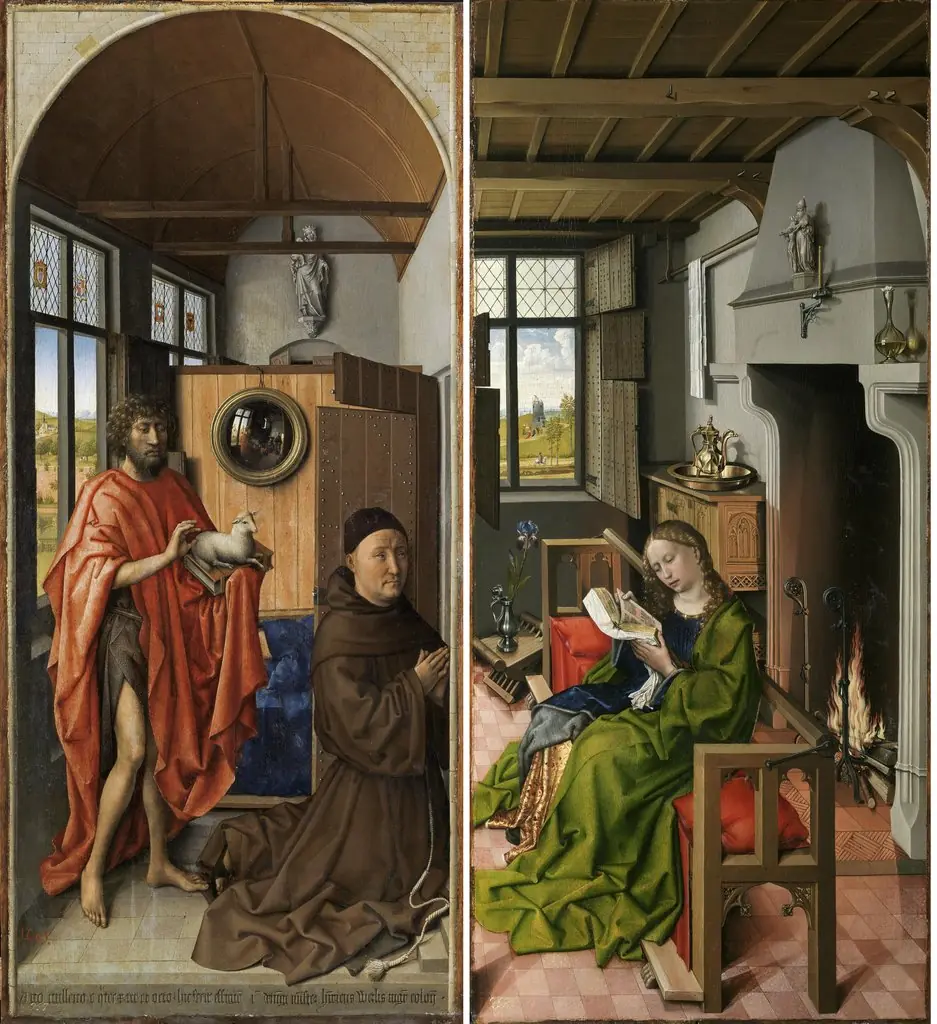 Werl Triptych
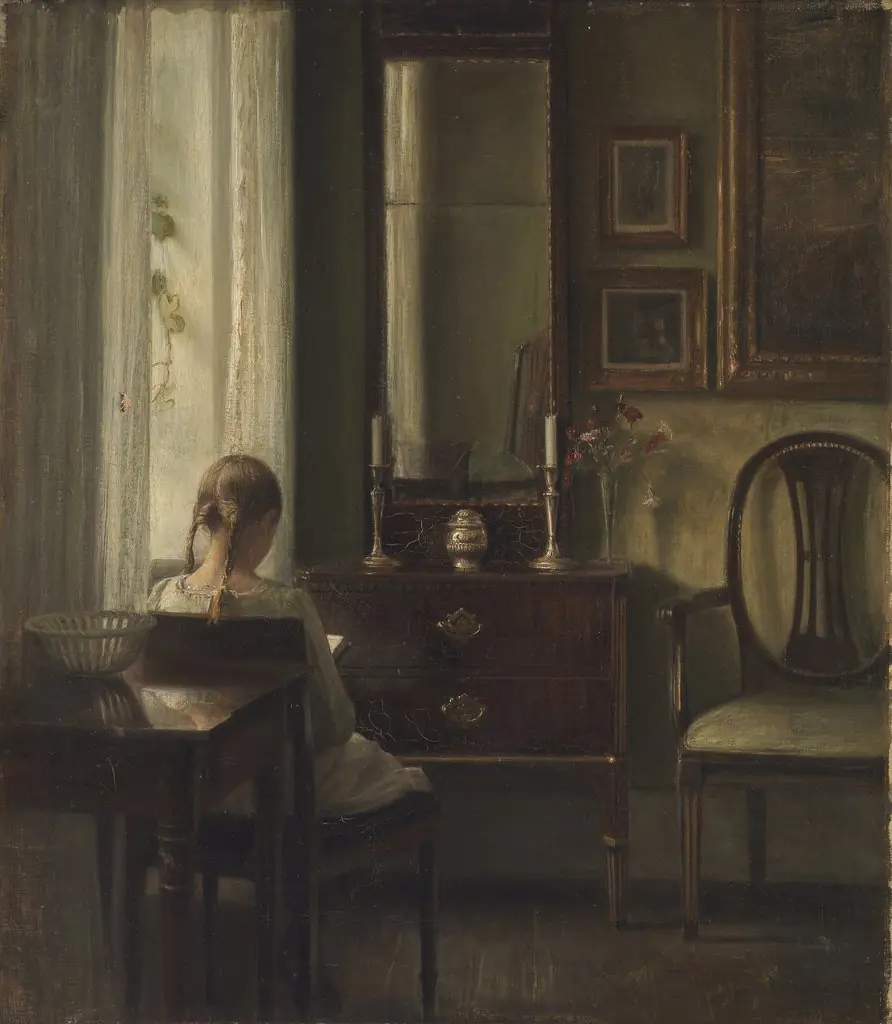 Interior with a Girl Reading
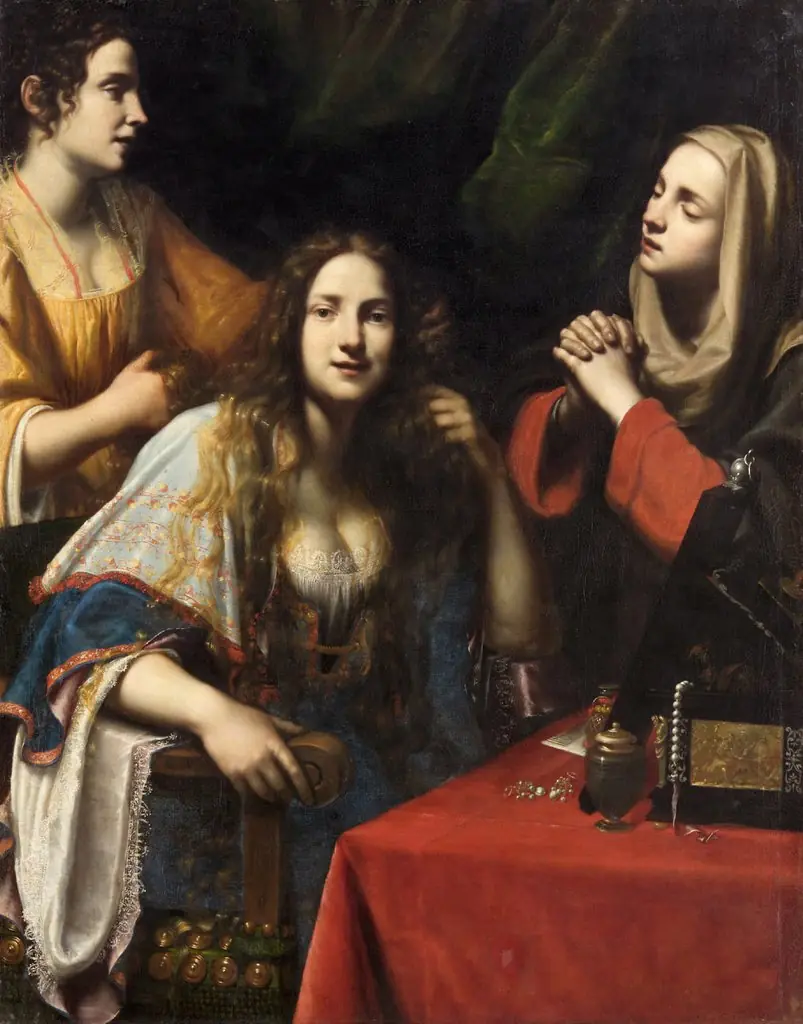 Martha scolding her vain sister Mary Magdalene
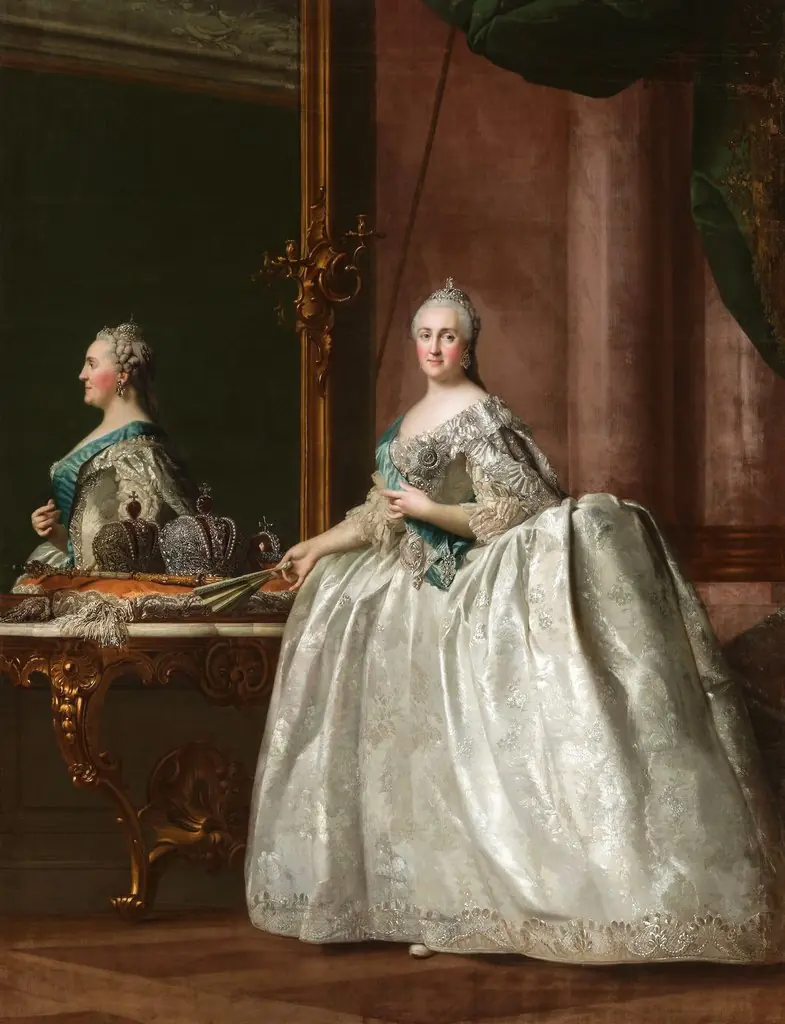 Portrait of Catherine II in front of a Mirror
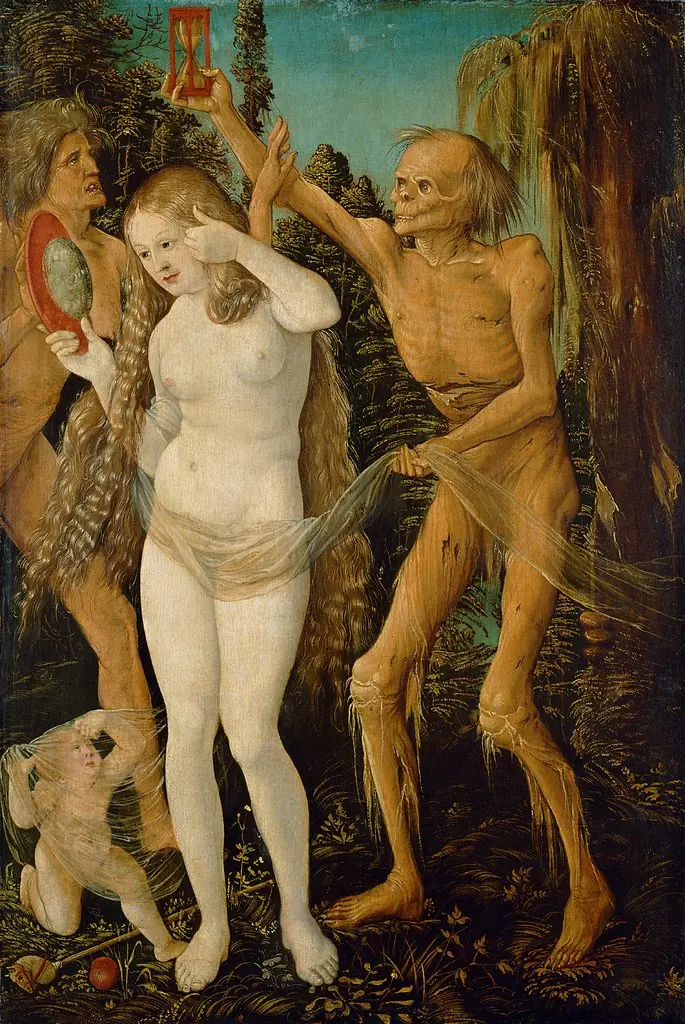 The three ages and death
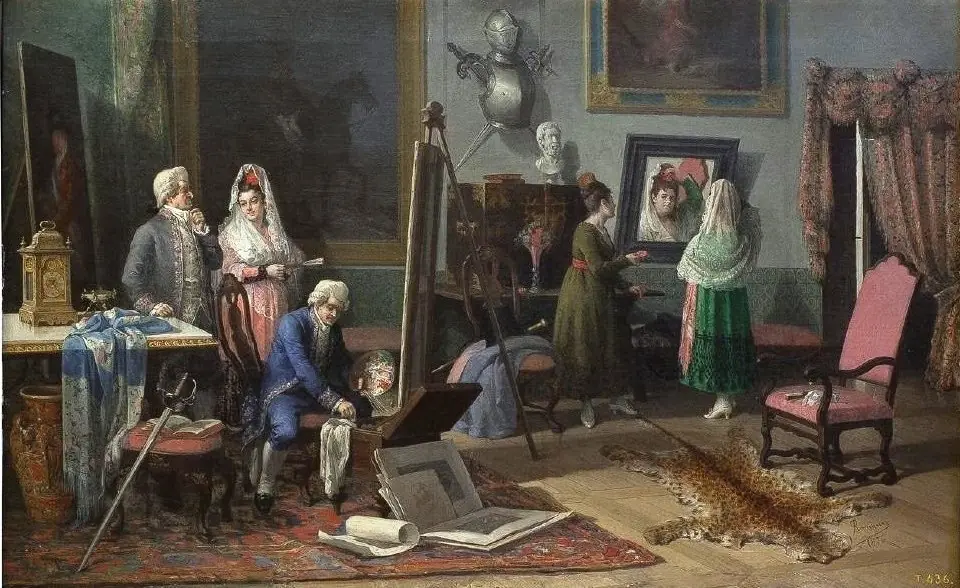 Antes de continuar el retrato
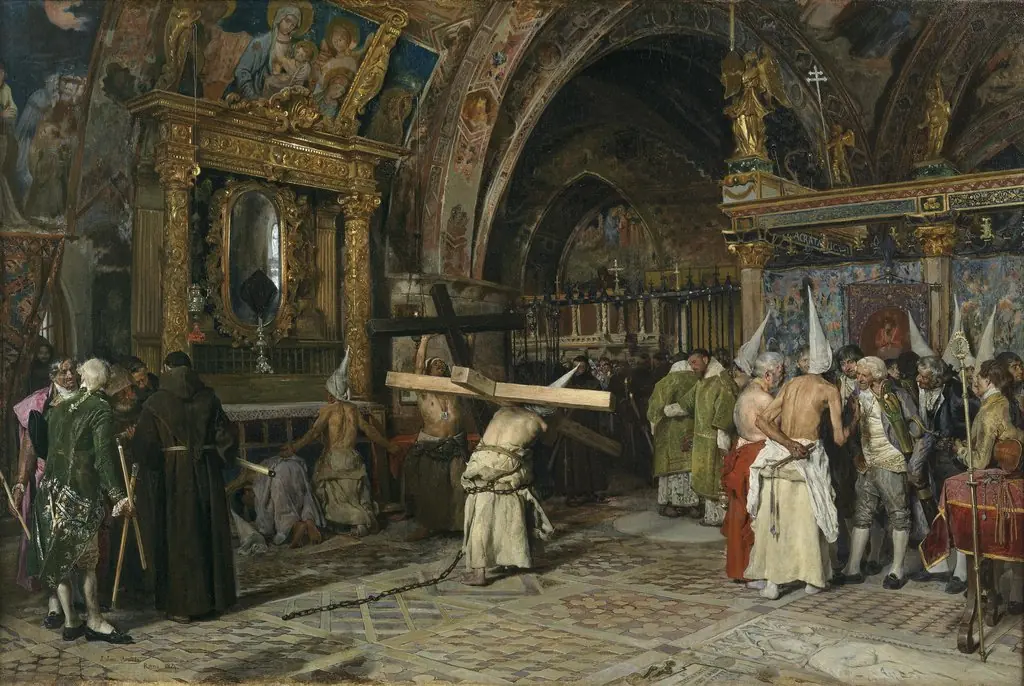 Penitents in the Lower Basilica of Assisi
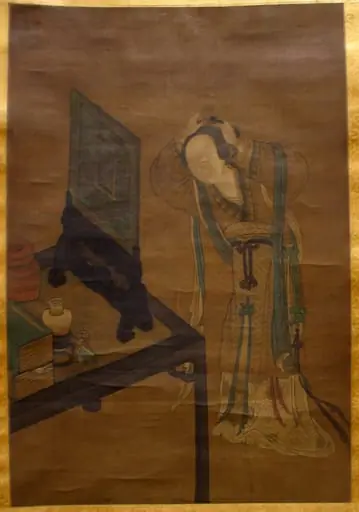 Untitled
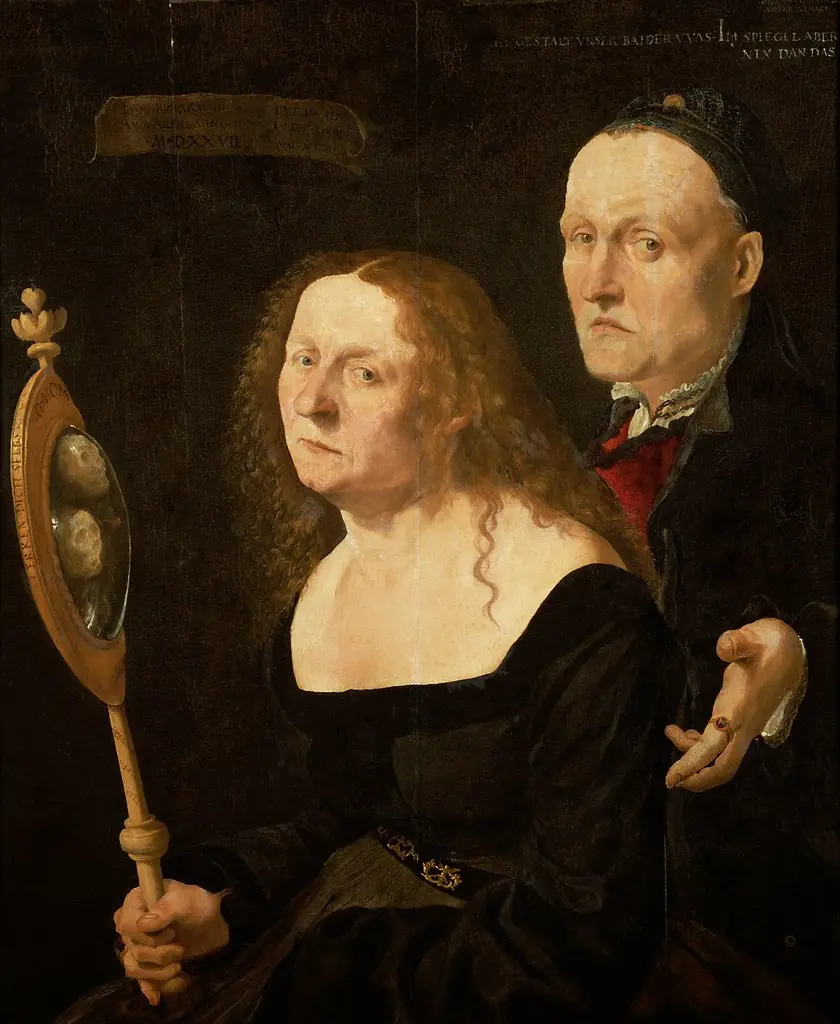 Portrait of the painter Hans Burgkmair (1473) and his wife Anna
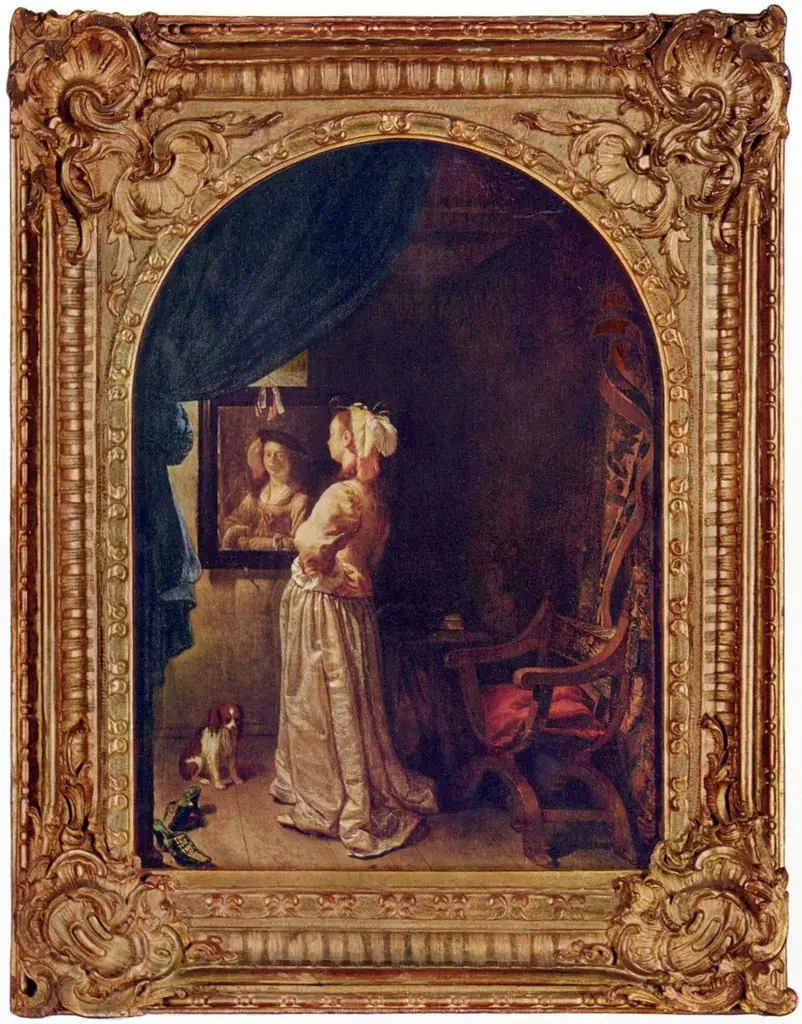 Woman before the Mirror
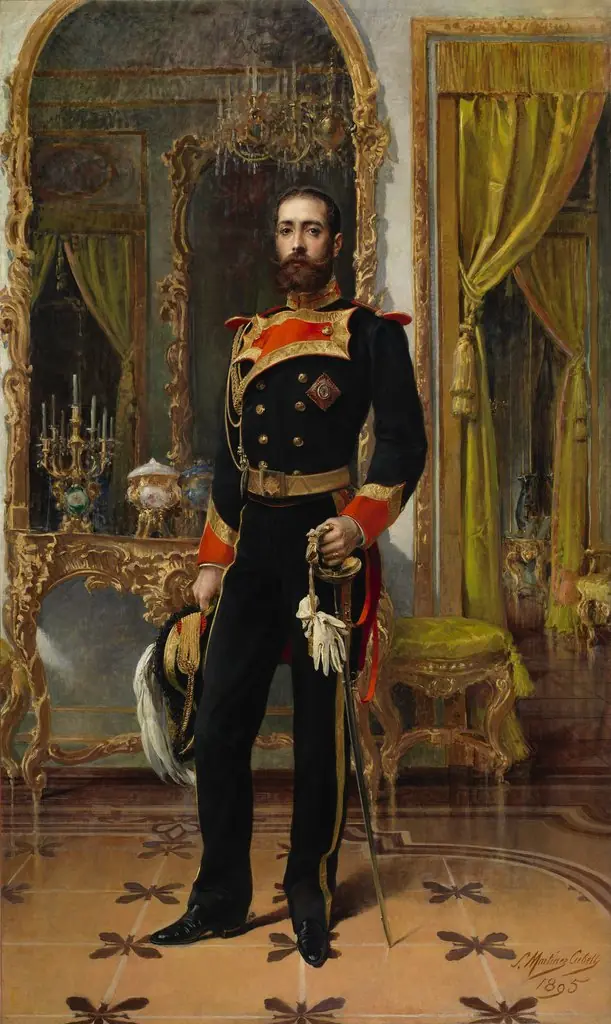 José Martínez de Roda luego marqués de Vistabella
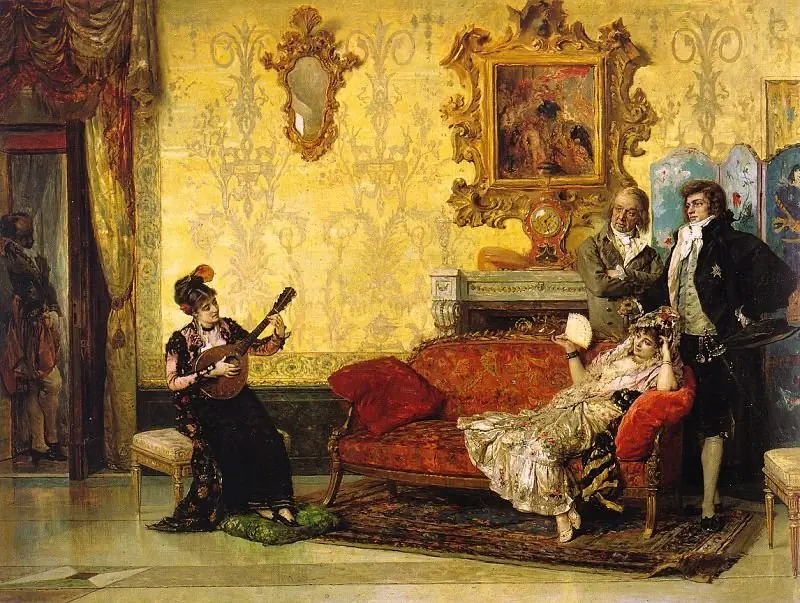 The Concert
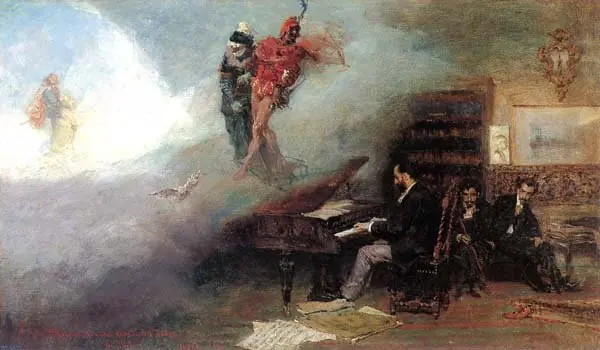 Fantasy on Faust
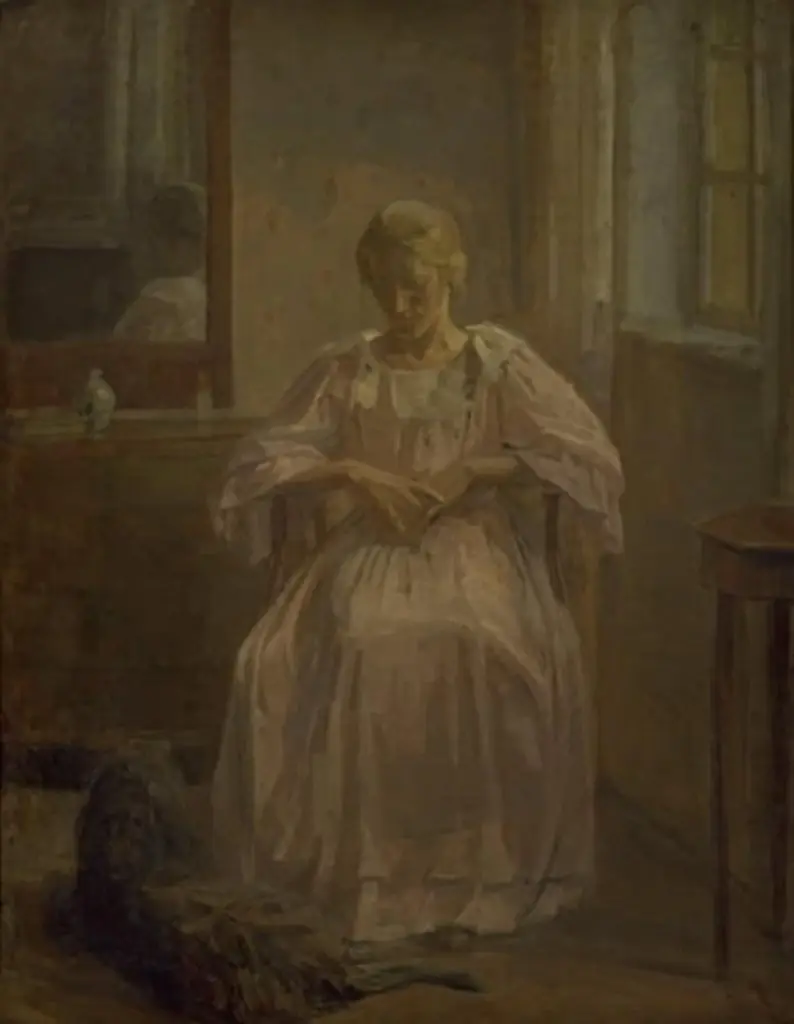 En ung pige, Sophie Lofthus, med en hund
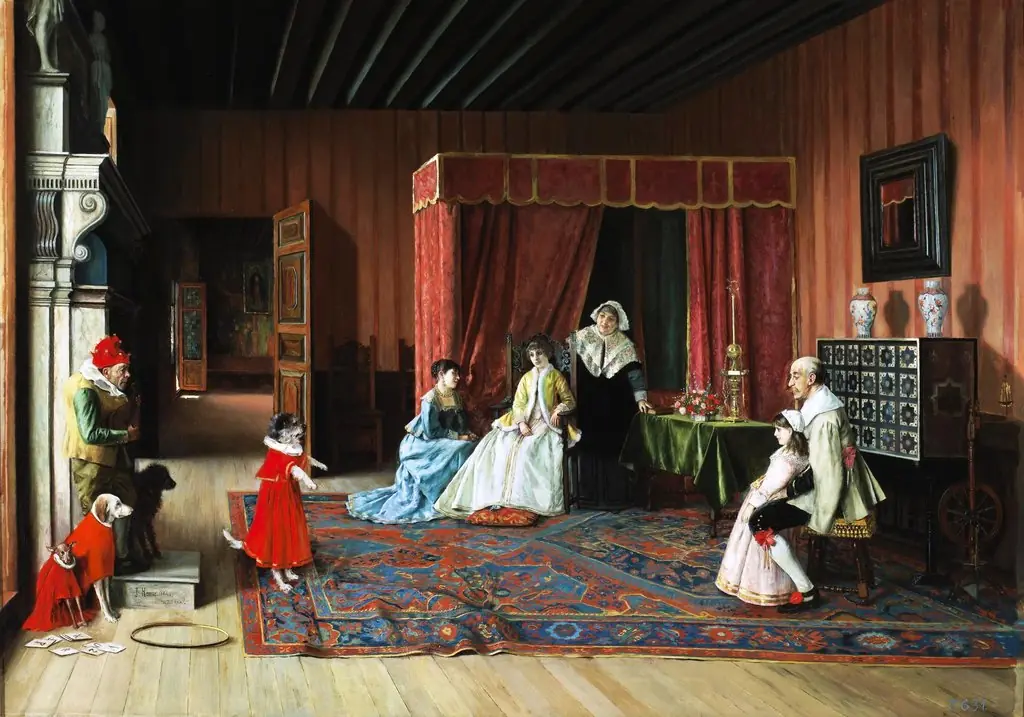 El pasatiempo
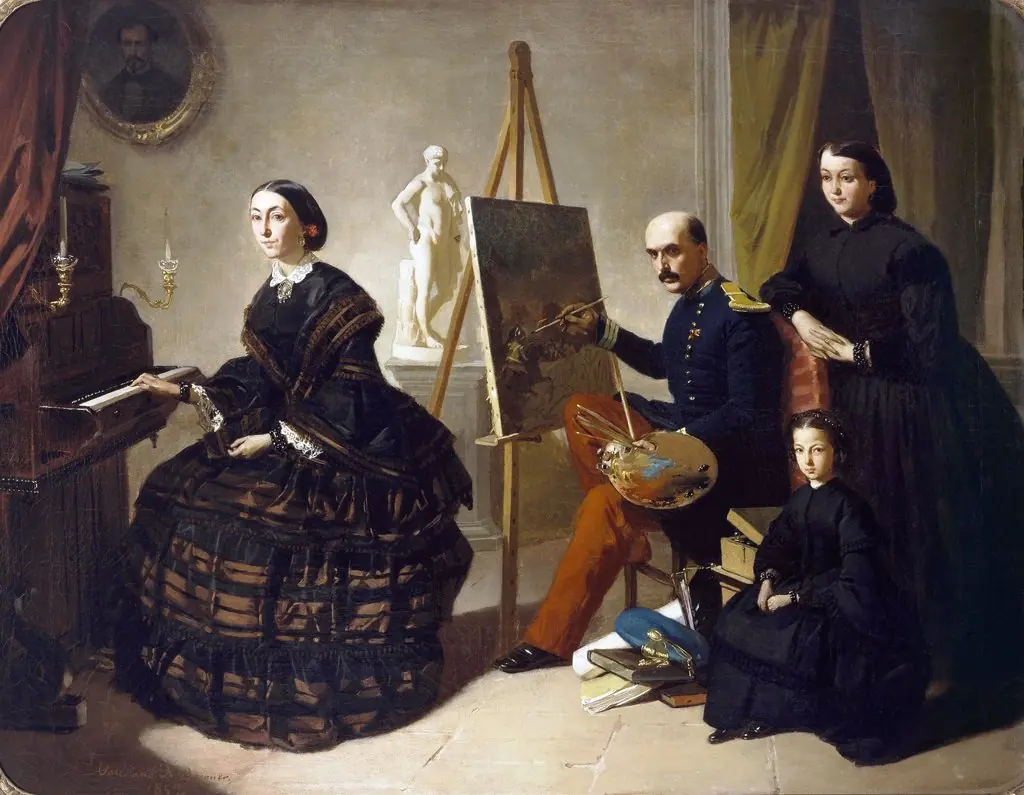 El pintor carlista y su familia
 Trapping a Leopard
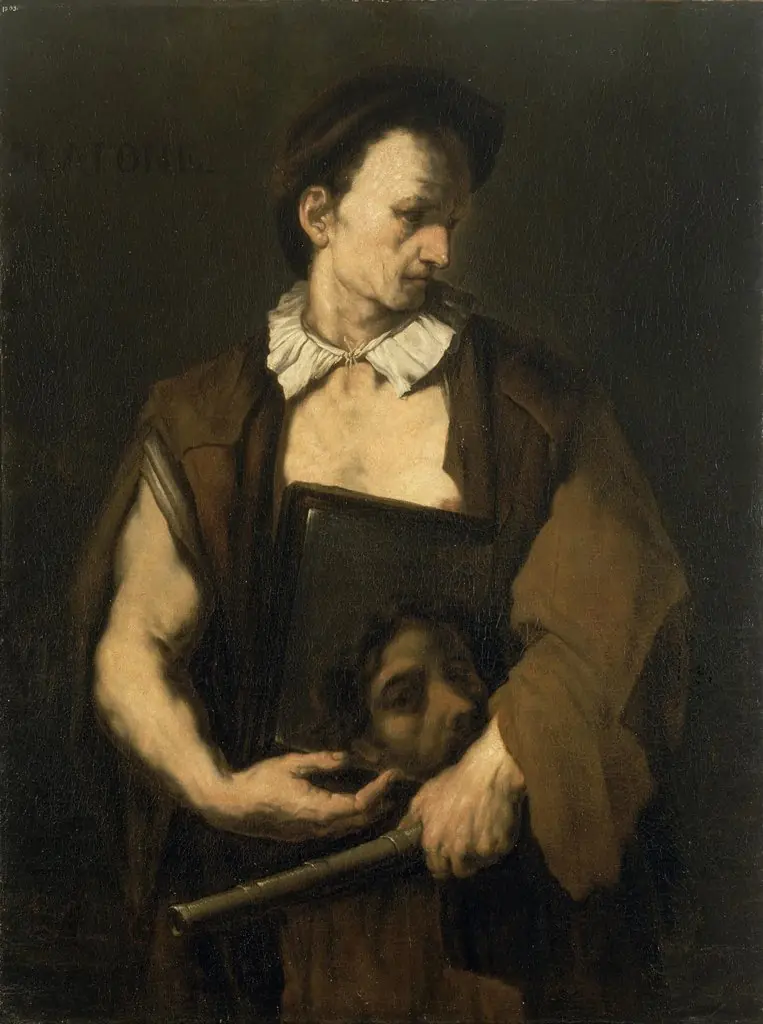 Philosopher
 名君 閨中の粧ひ|The Oiran Yoso-oi Seated at Her Toilet
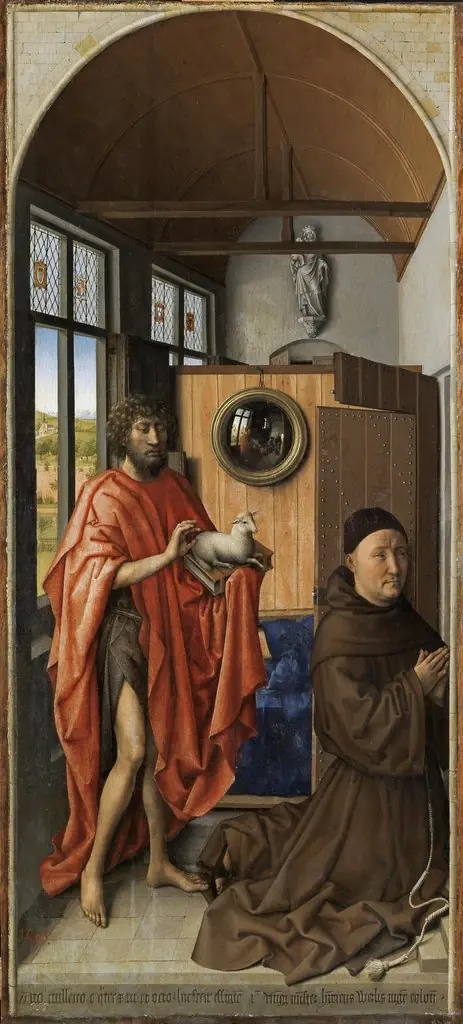 Donor Henri de Werl, protected by St. John the Baptist
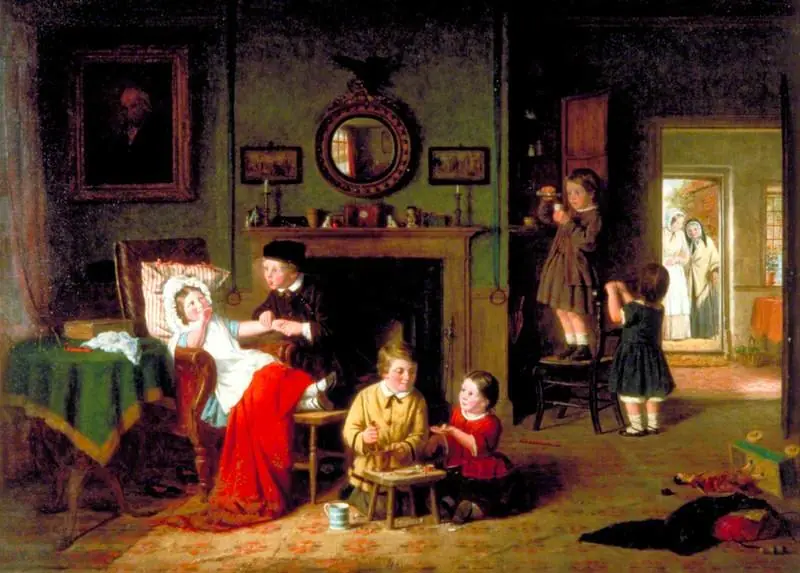 Children Playing at Doctors
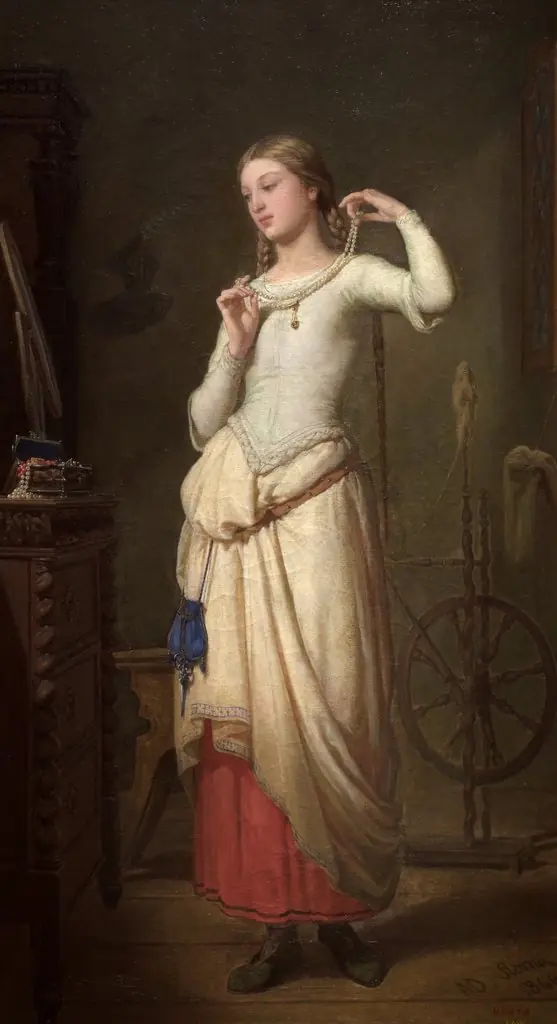 Margaret before the Mirror
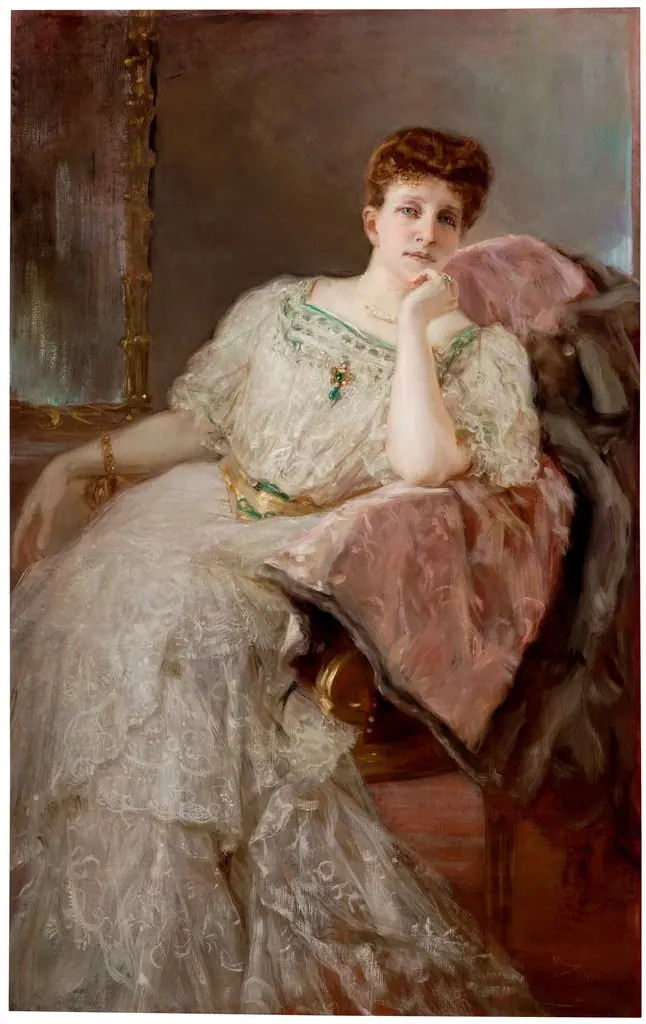 Matilde Noever de Vogel
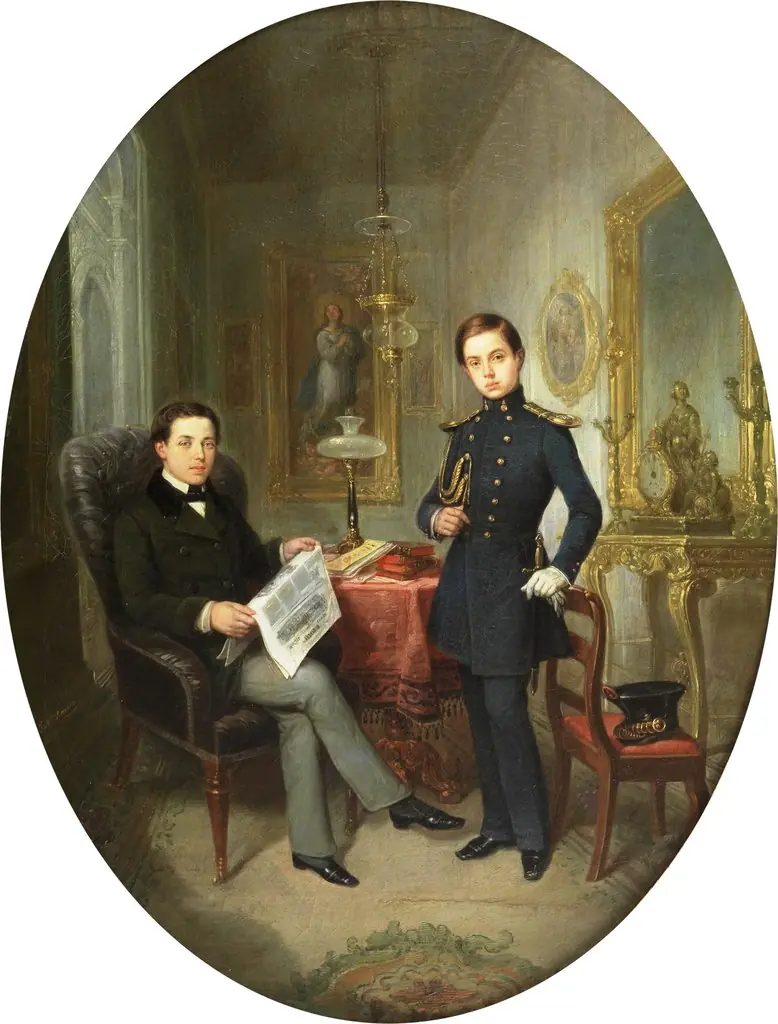 Ricardo y Federico Santaló
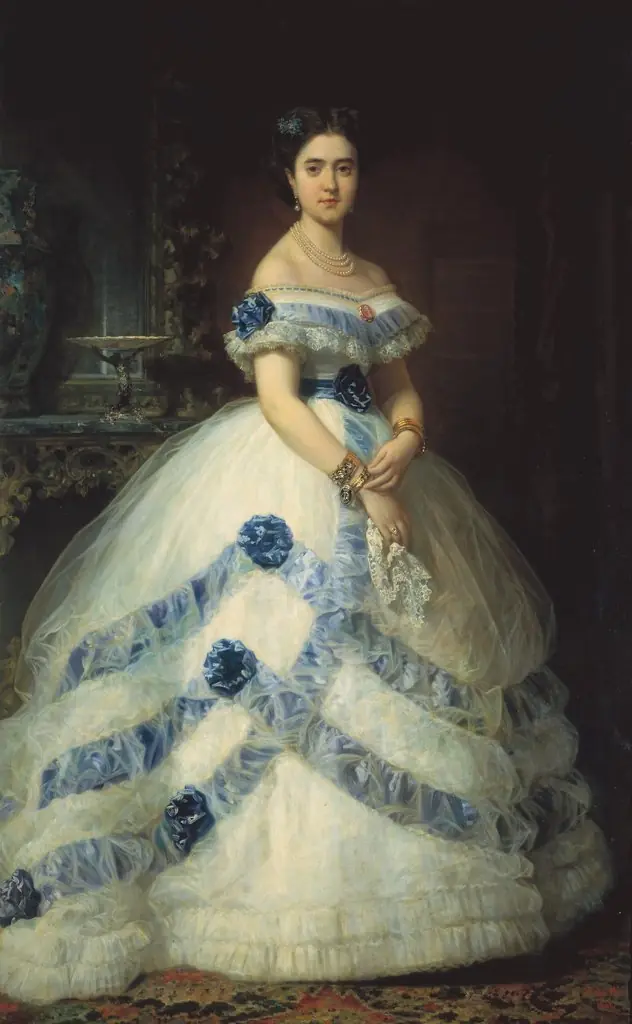 Isabel Álvarez Montes, II Marchioness of Valderas and II Duchess of Castro Enríquez
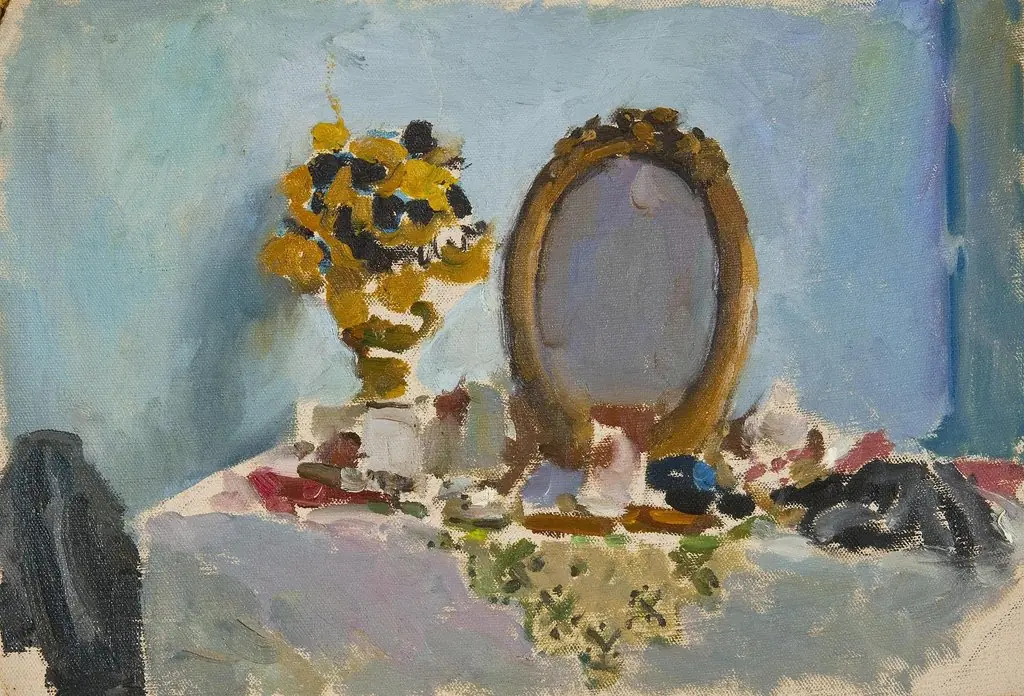 Still Life with a Mirror. Sketch
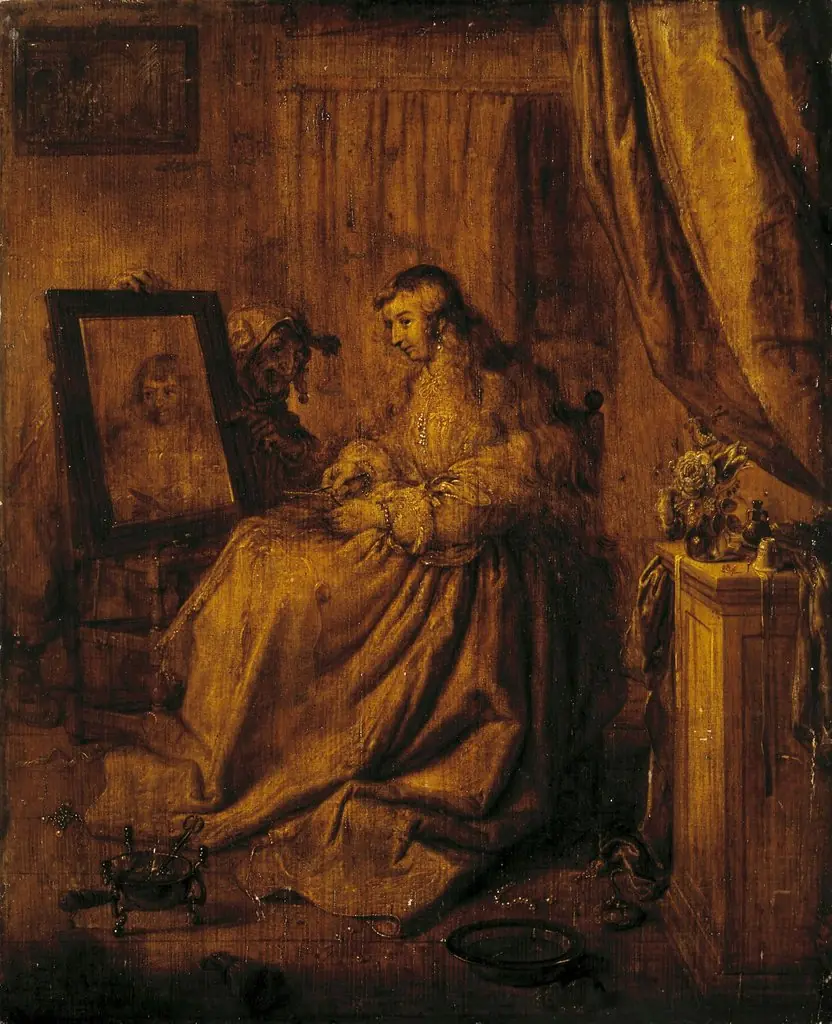 Young Woman in front of a Mirror (Allegory of the Vanity)
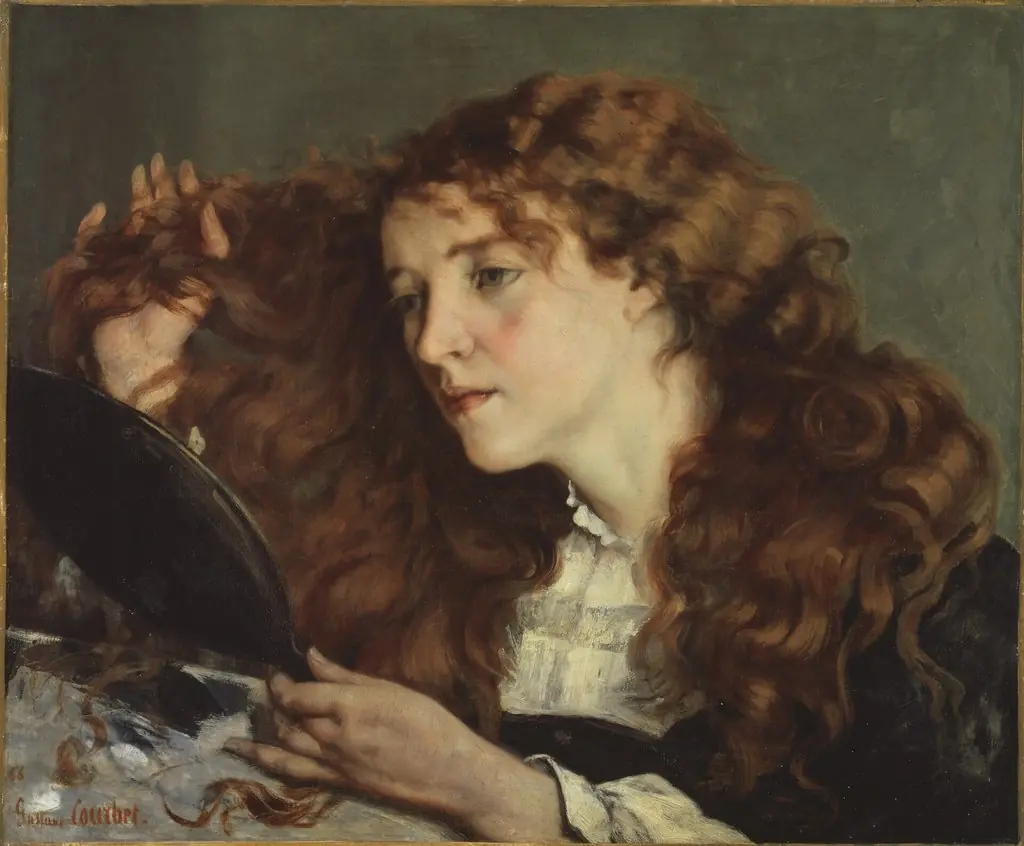 Jo, the Beautiful Irish Girl
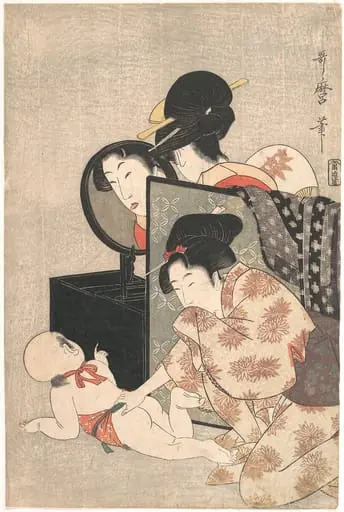 Untitled
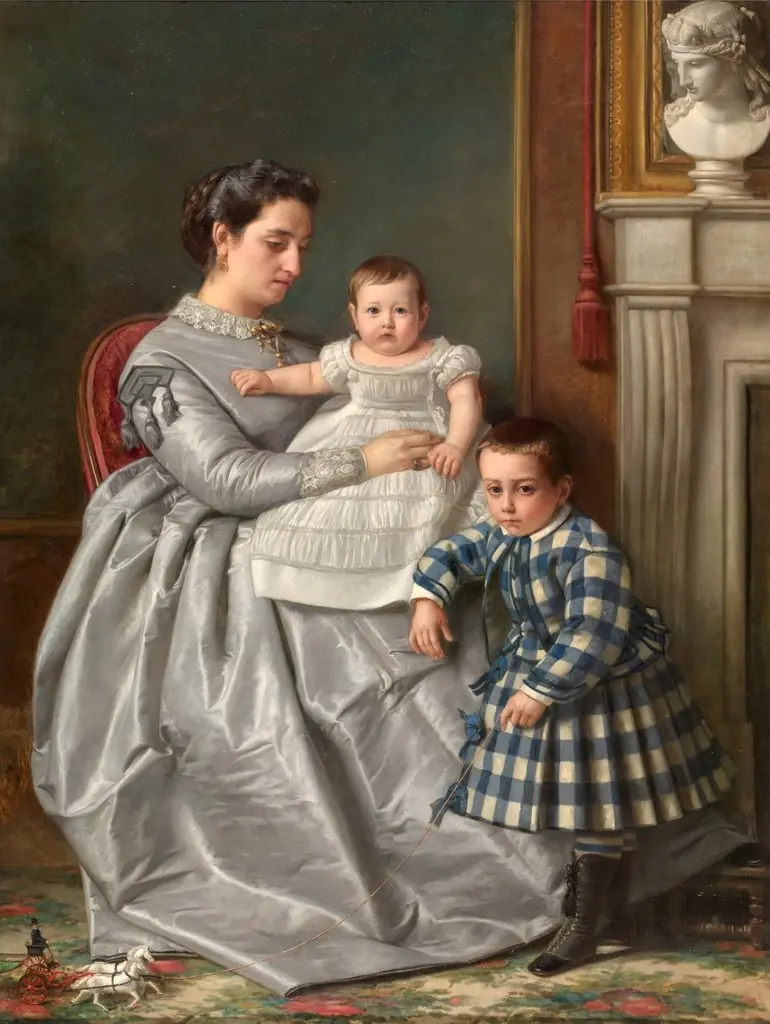 La esposa e hijos del pintor
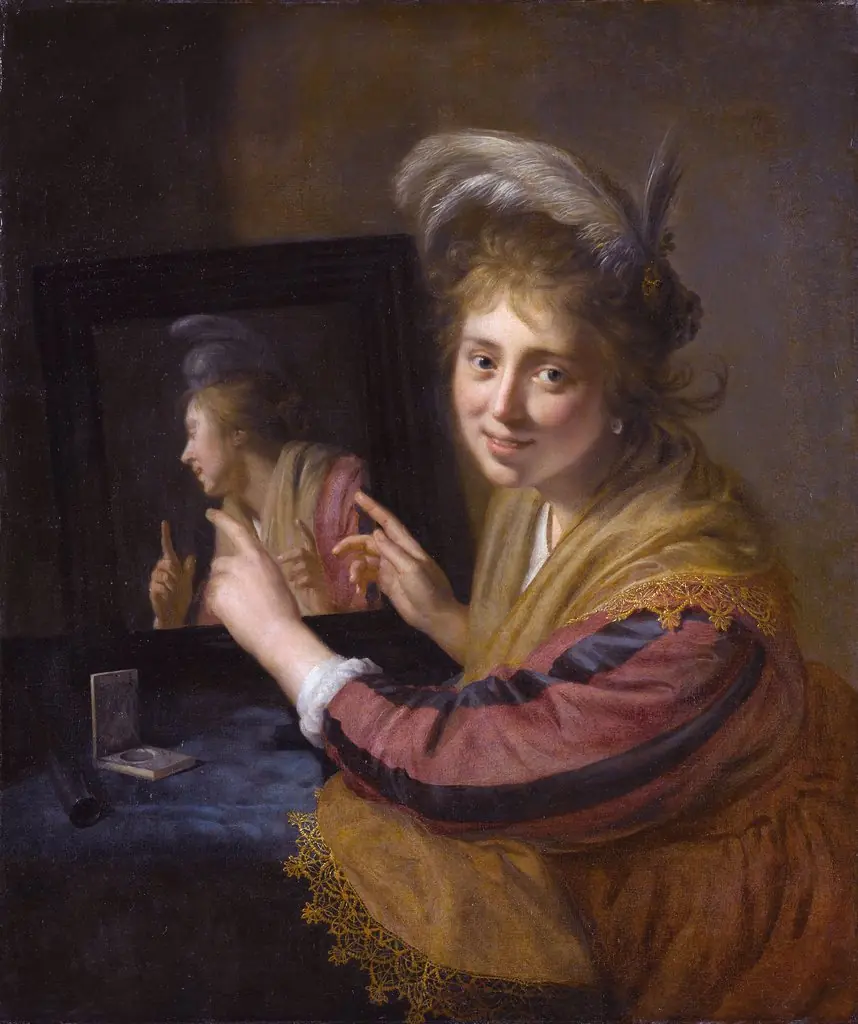 Girl at the mirror
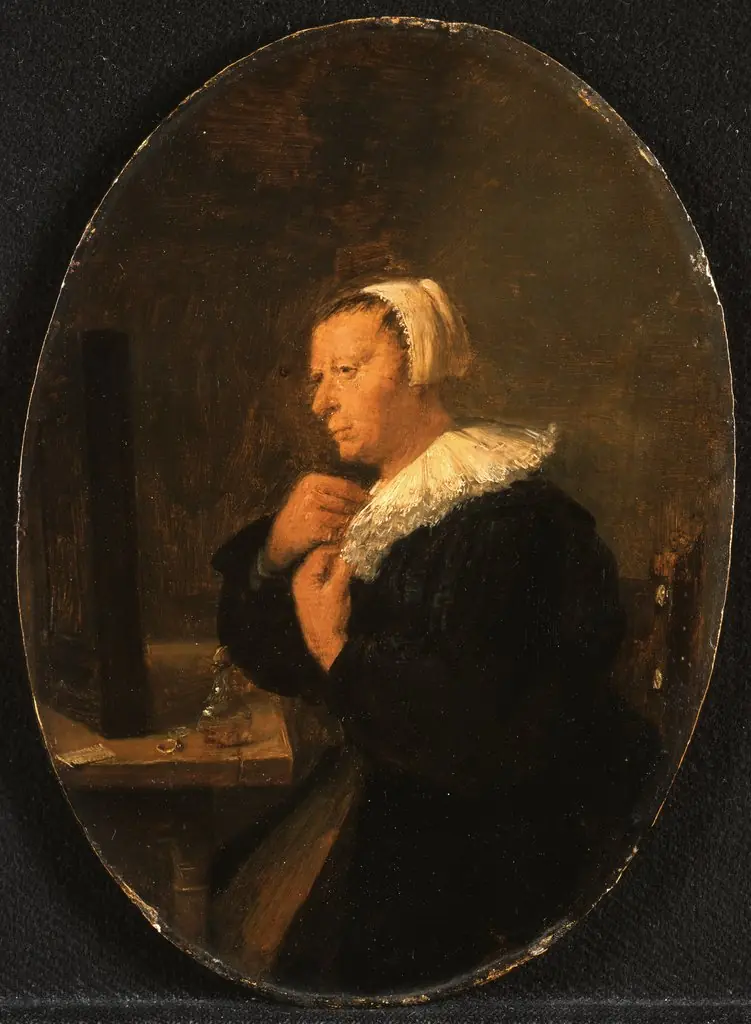 Woman seated at a tabel before a mirror (Dressing up)
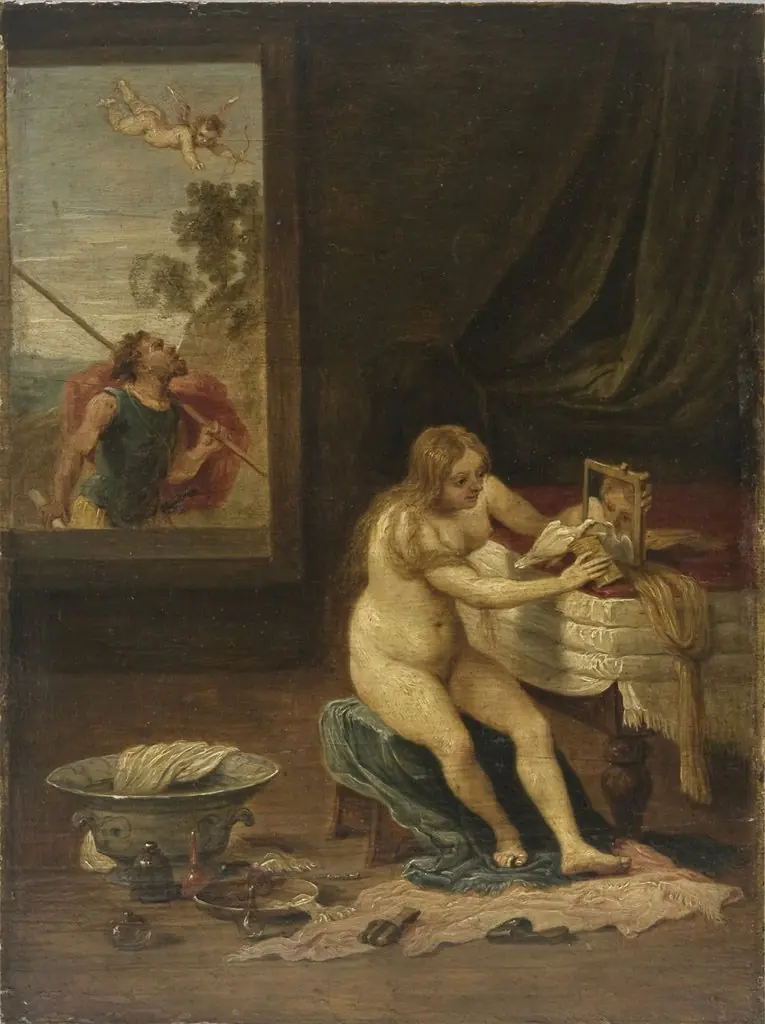 Toilet of Venus
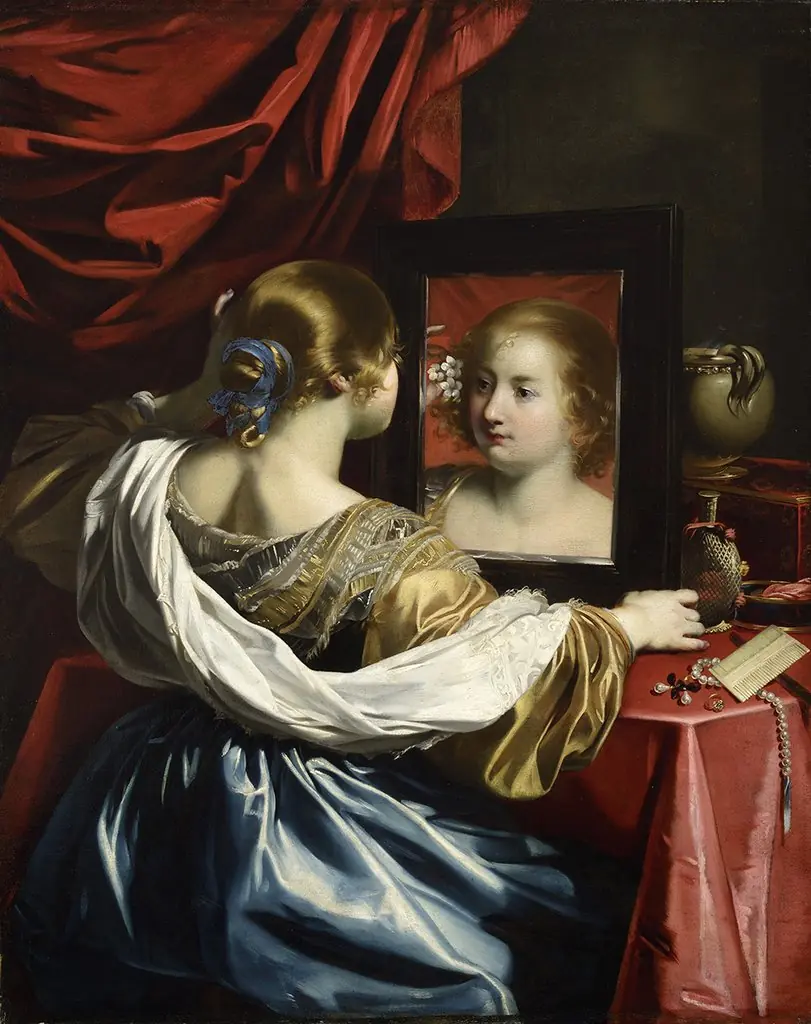 Vanity
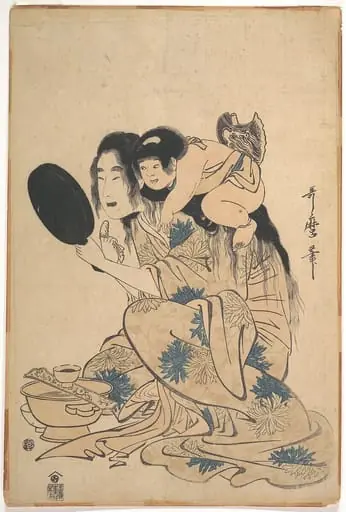 Untitled
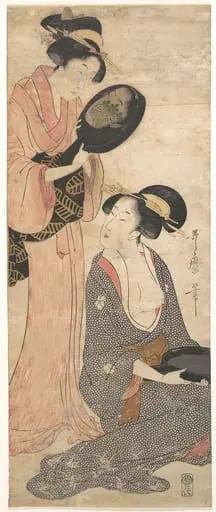 Untitled
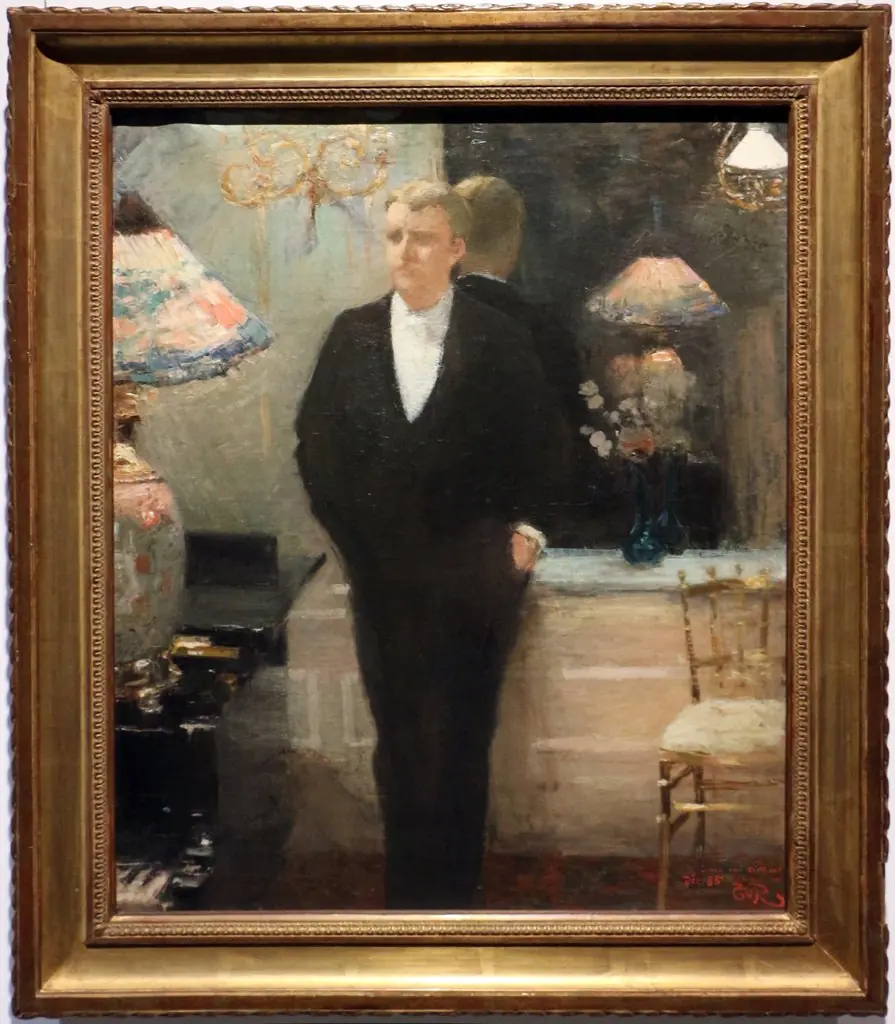 Portrait of Octave Maus
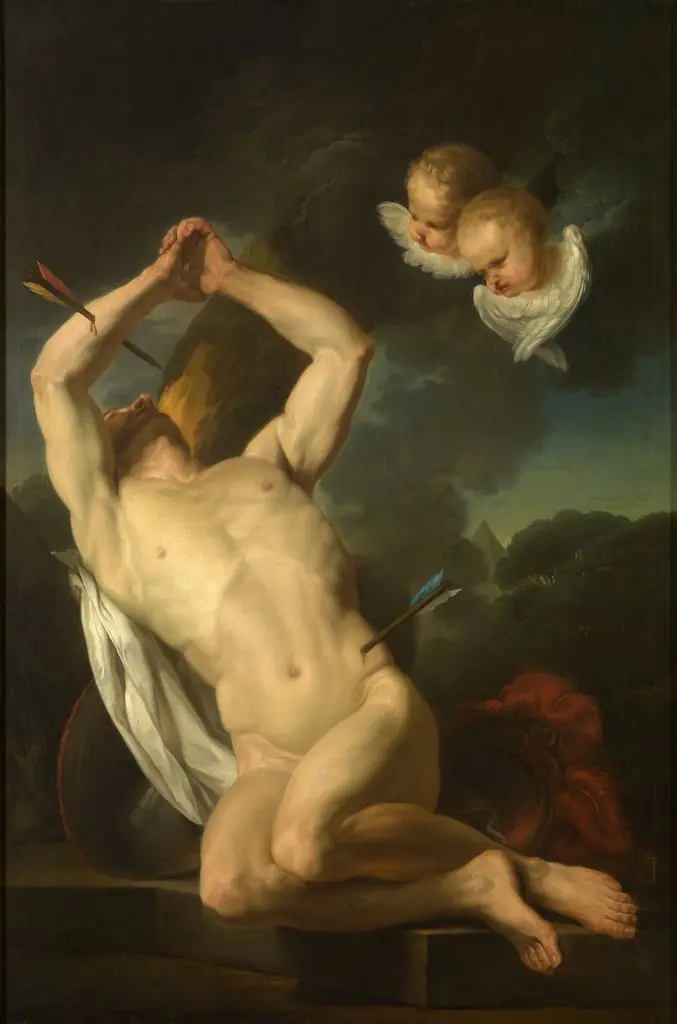 Saint Sebastian
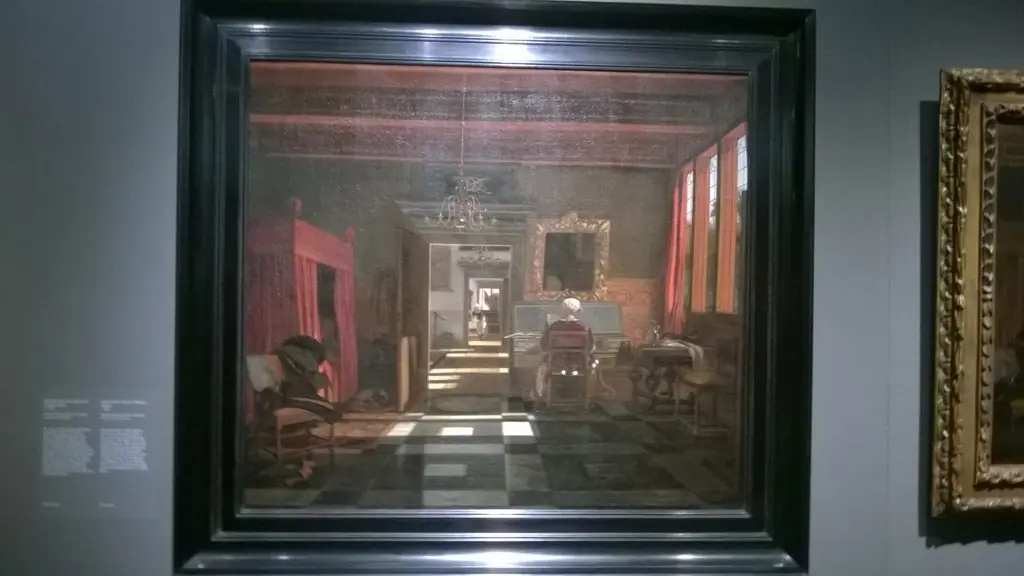 Interior with a Woman playing a Virginal
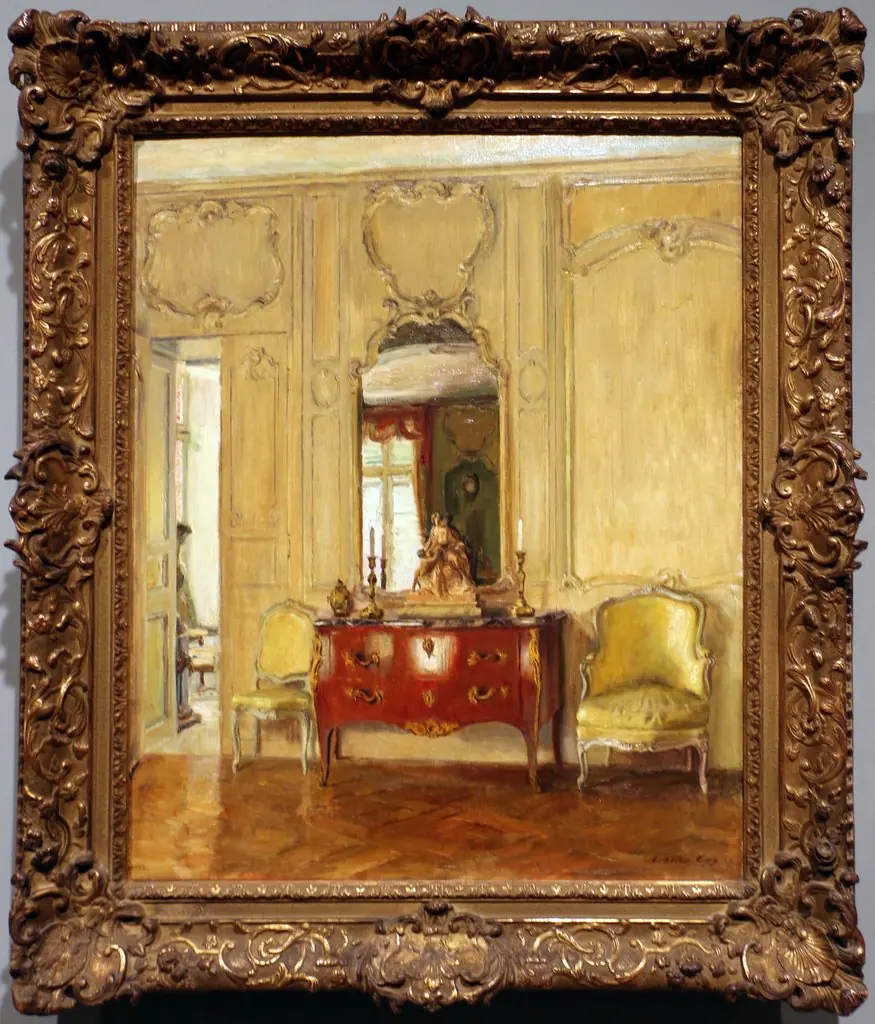 The Commode
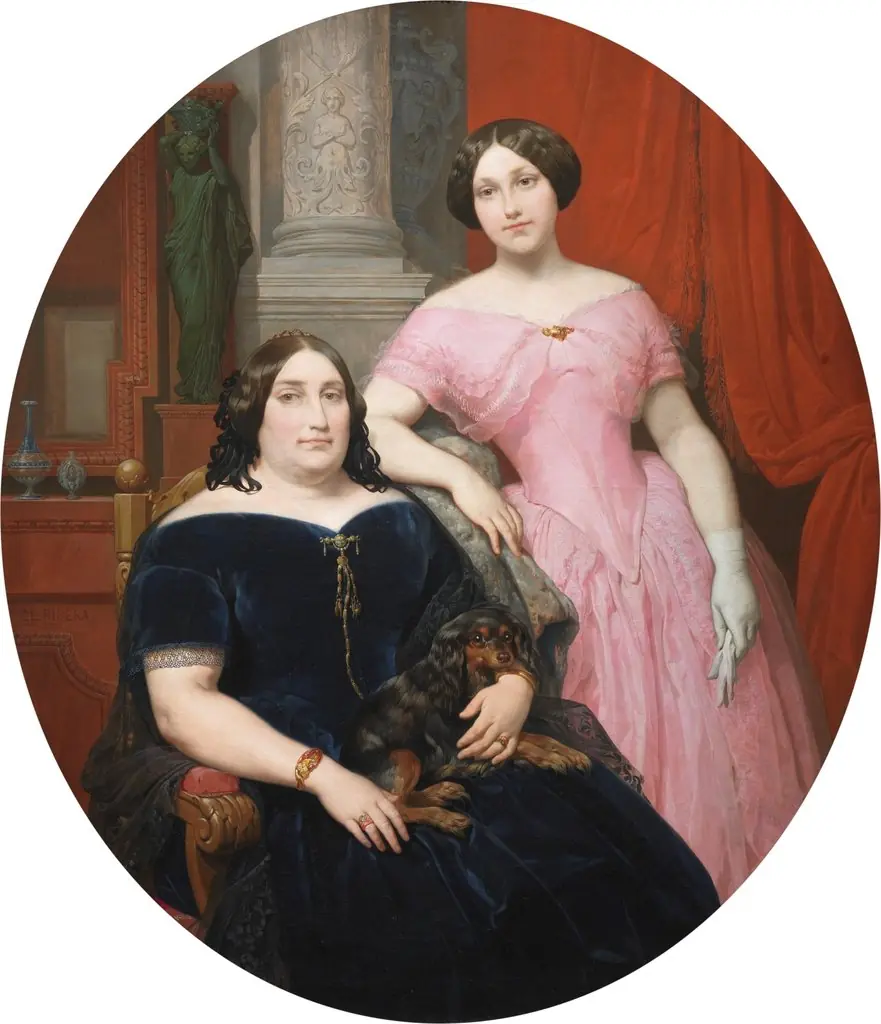 Magdalena Parrella y Urbieta and her Daughter, Elisa Tapia y Parrella
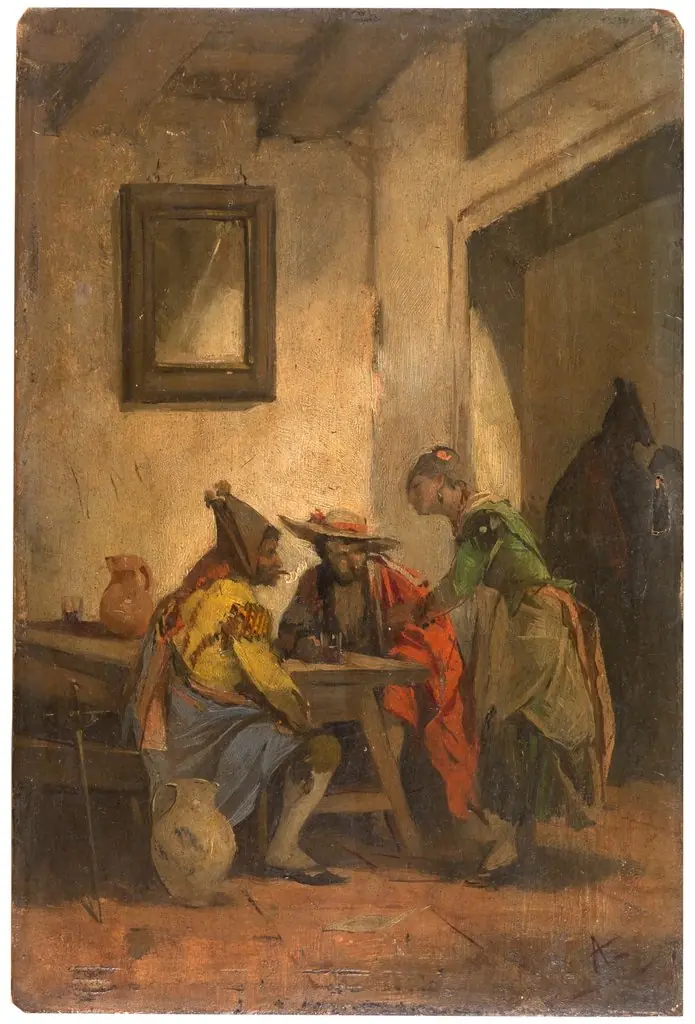 Bebedores en un mesón
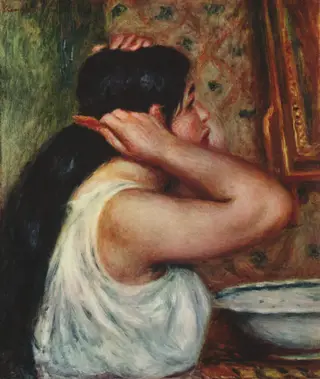 La Toilette
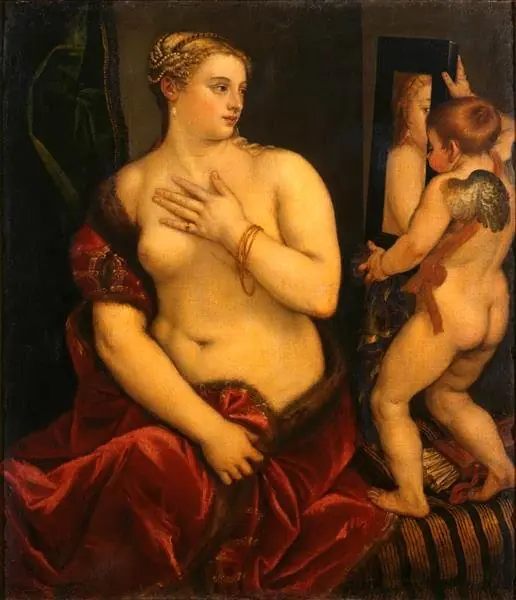 Venus looking in the mirror
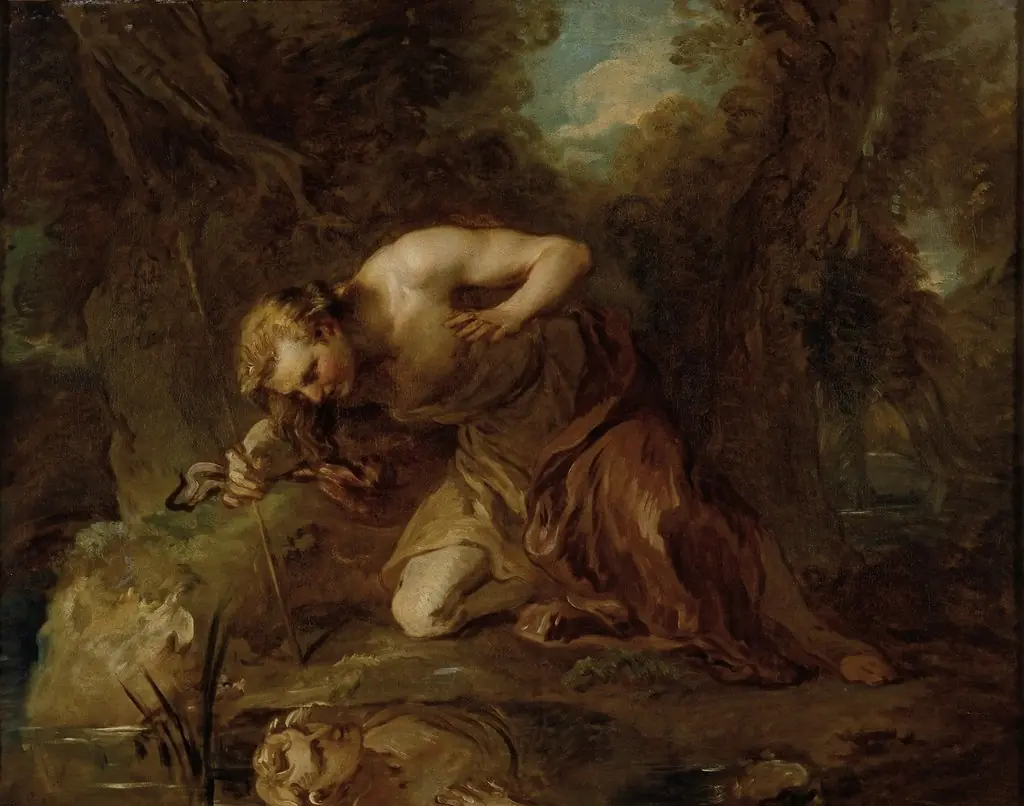 Narcissus
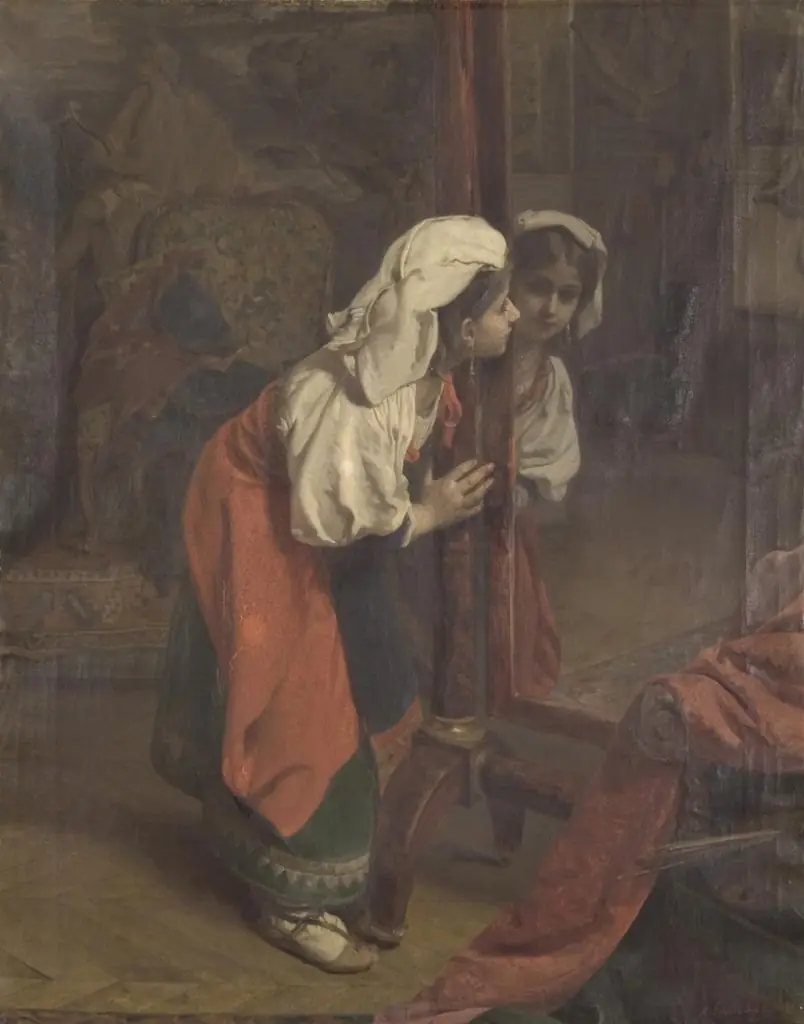 Alone at the Atelier
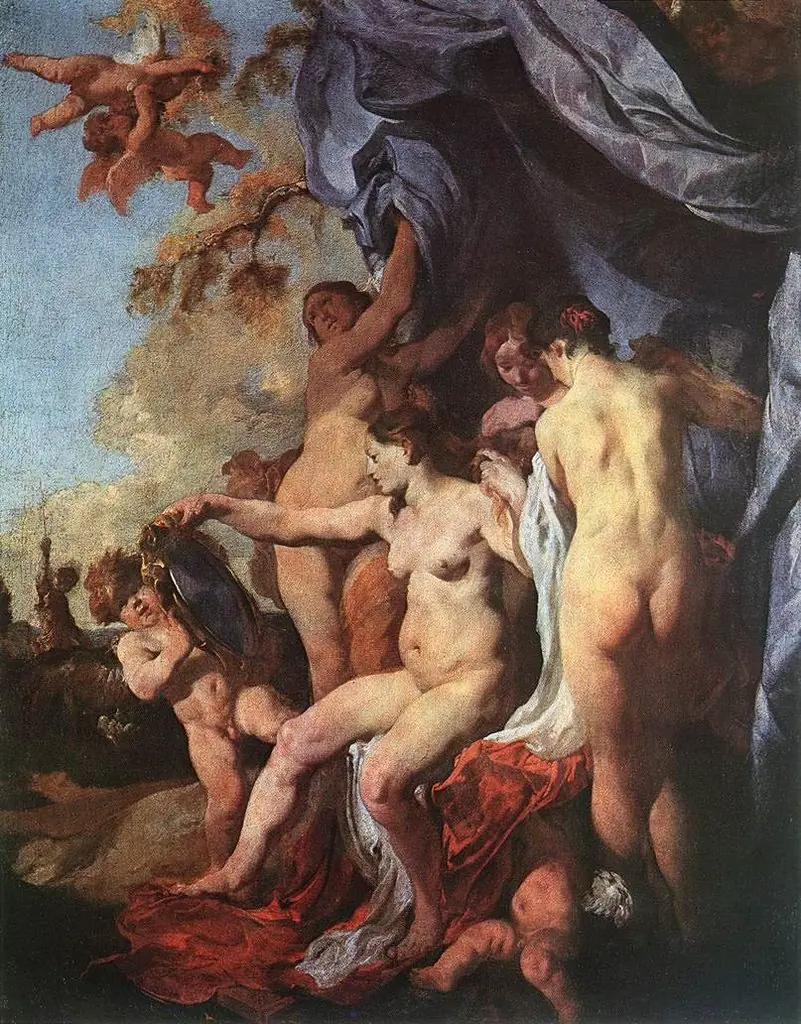 Venus in front of the Mirror
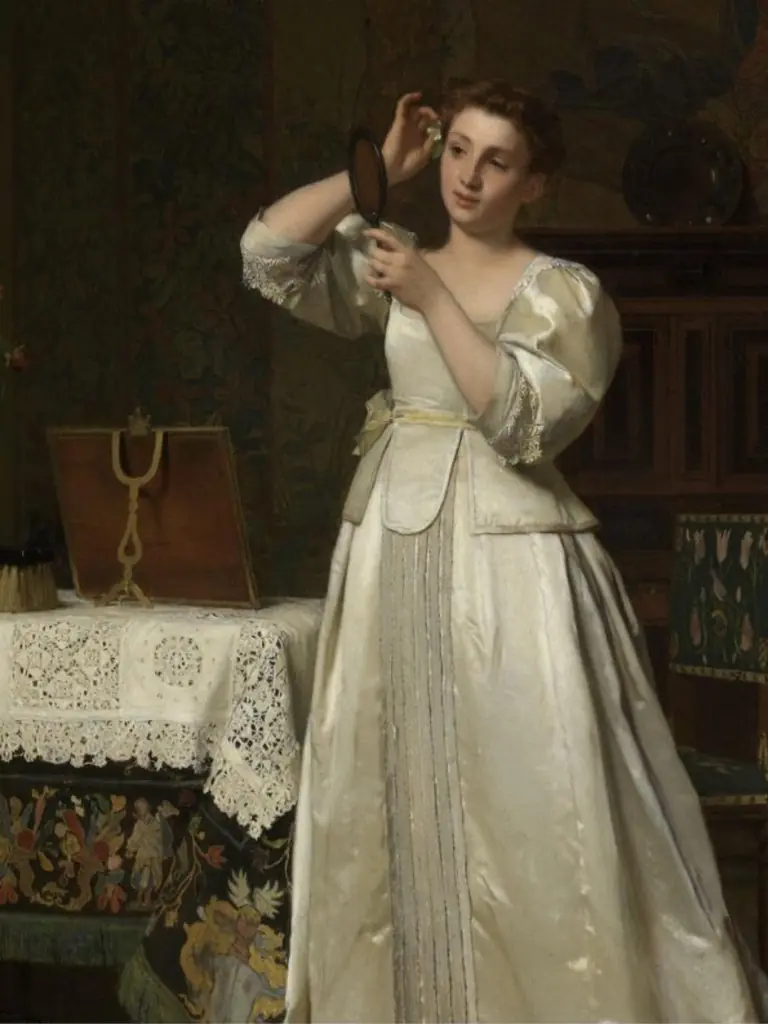 Vrouw met spiegel
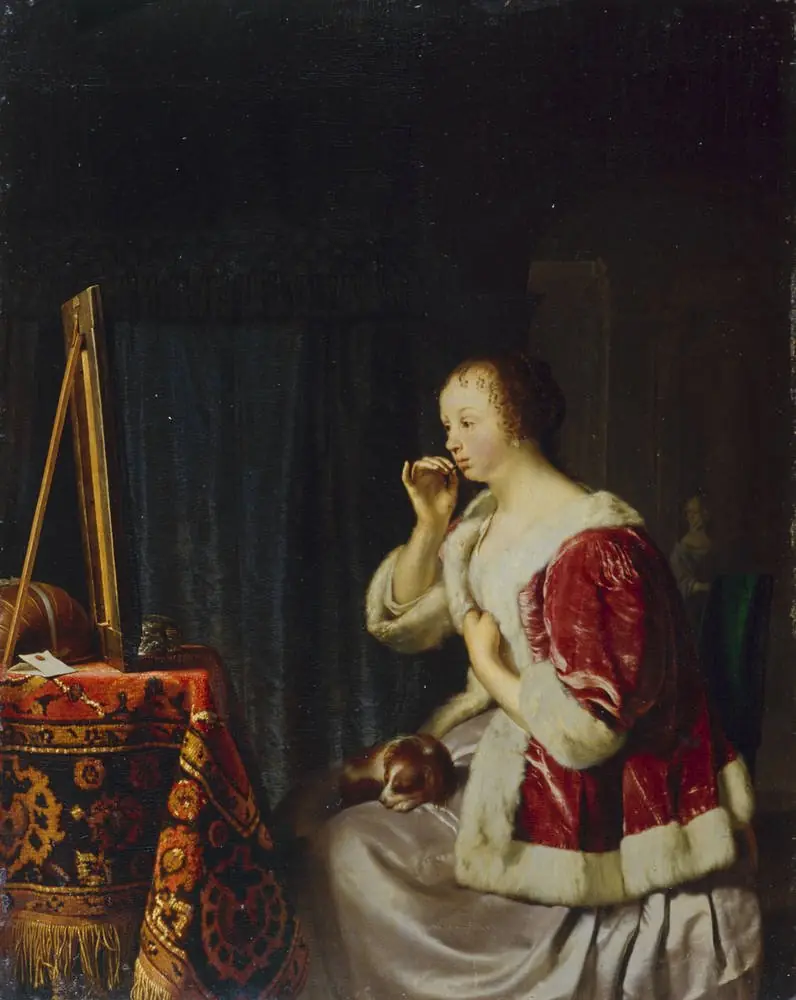 Young Woman at her Toilet
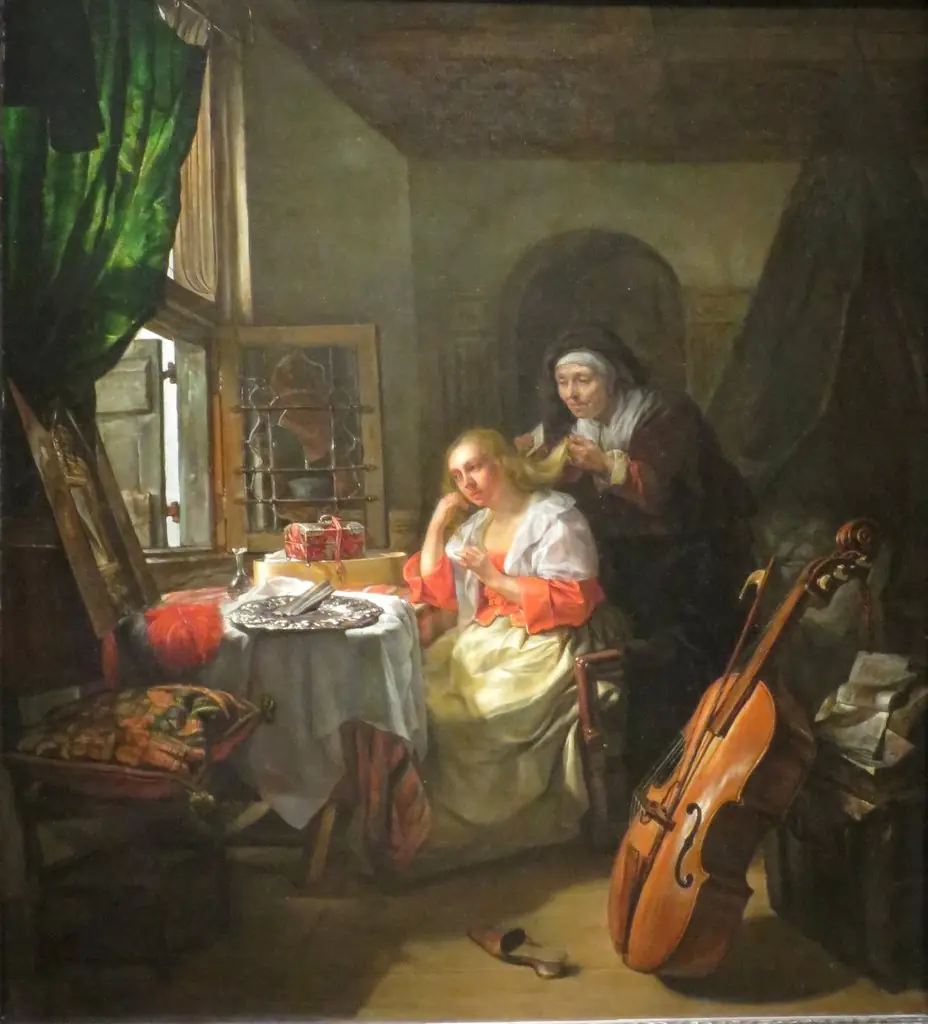 Woman at her Toilette
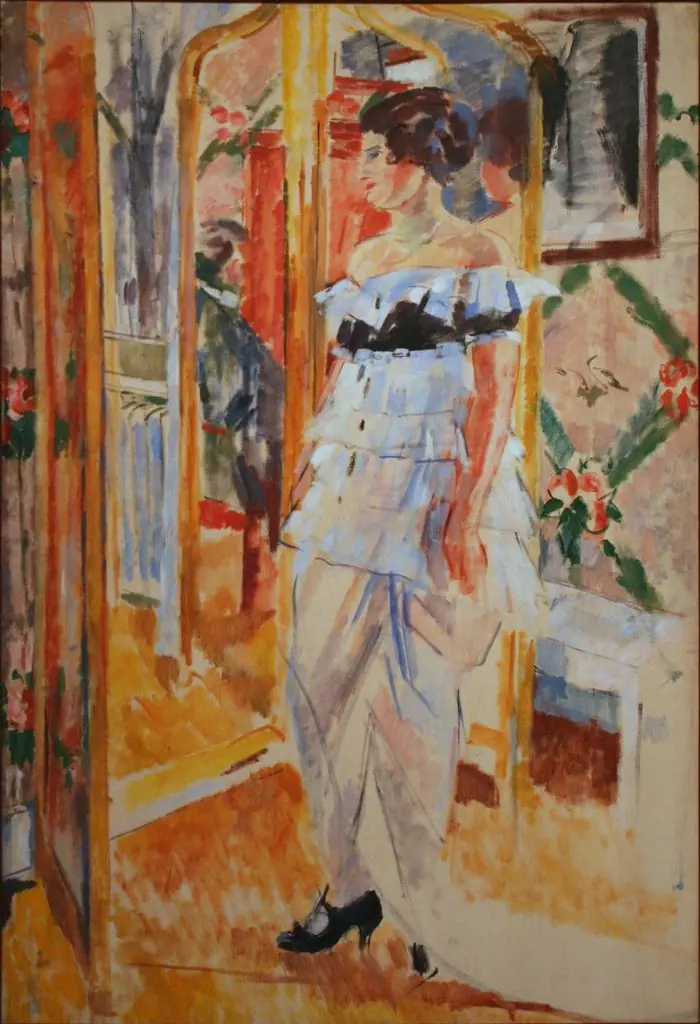 Portret van mevrouw Giroux
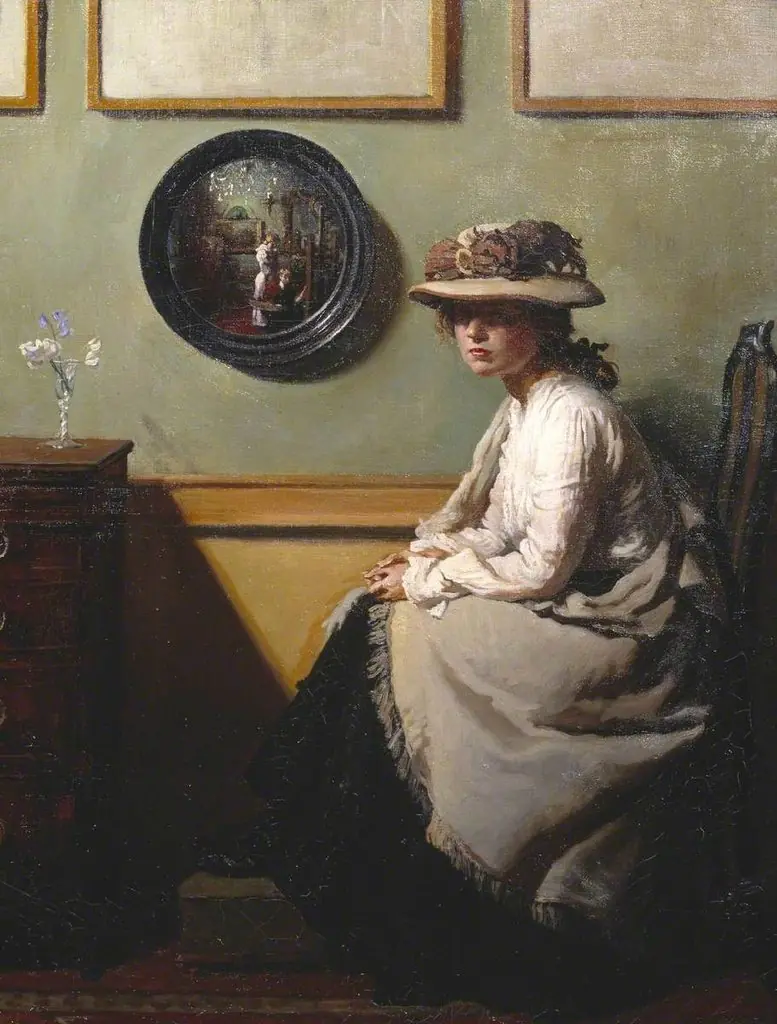 The Mirror
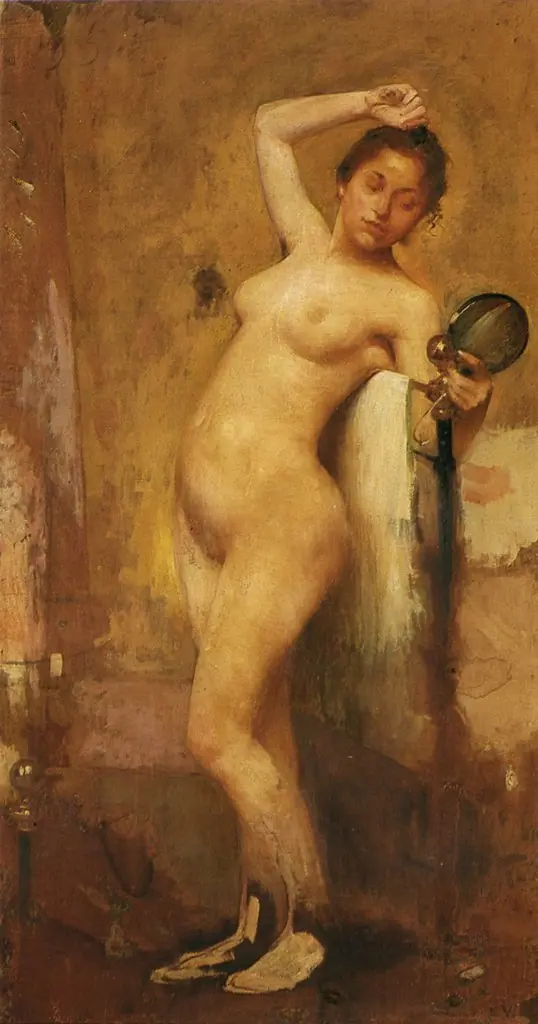 Nude
Nude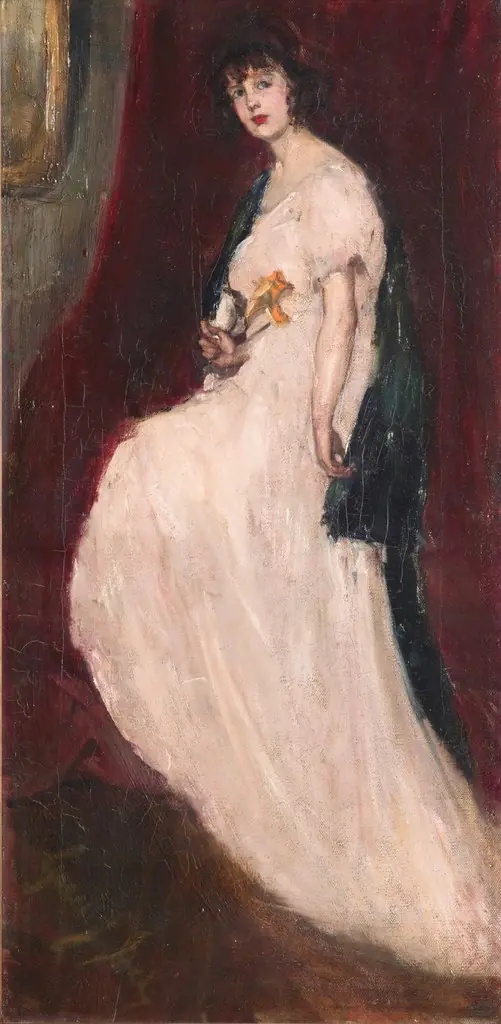 Girl in a pink dress
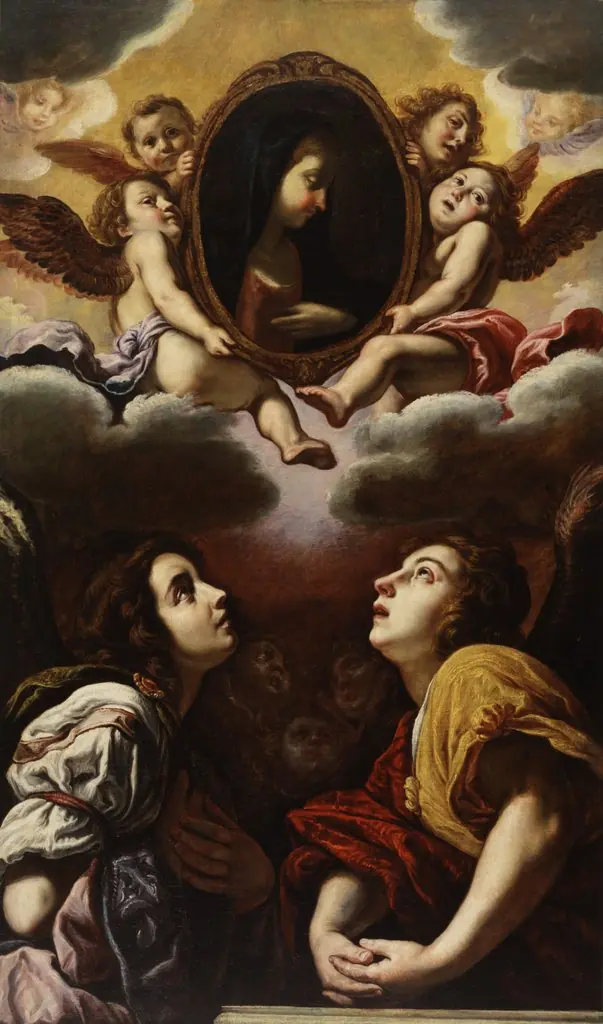 Flying and Adoring Angels
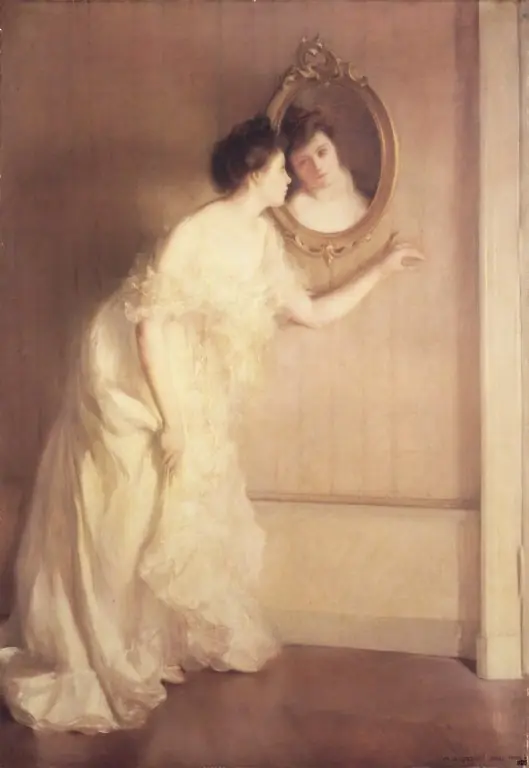 Un Regard Fugitif
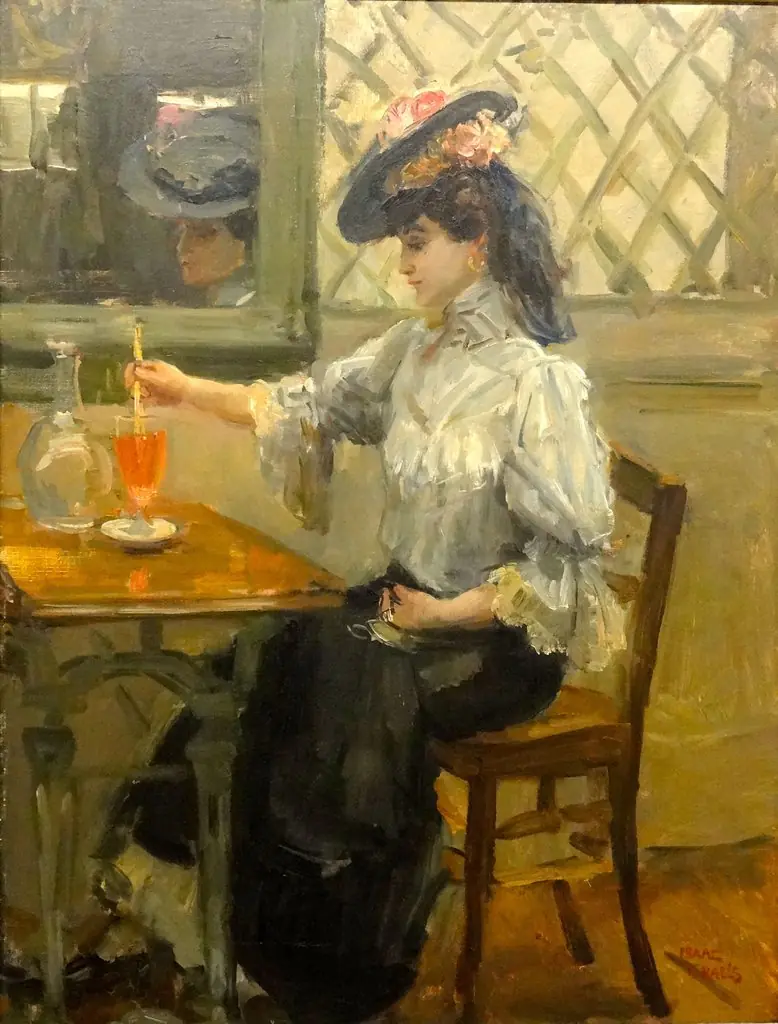 In het café
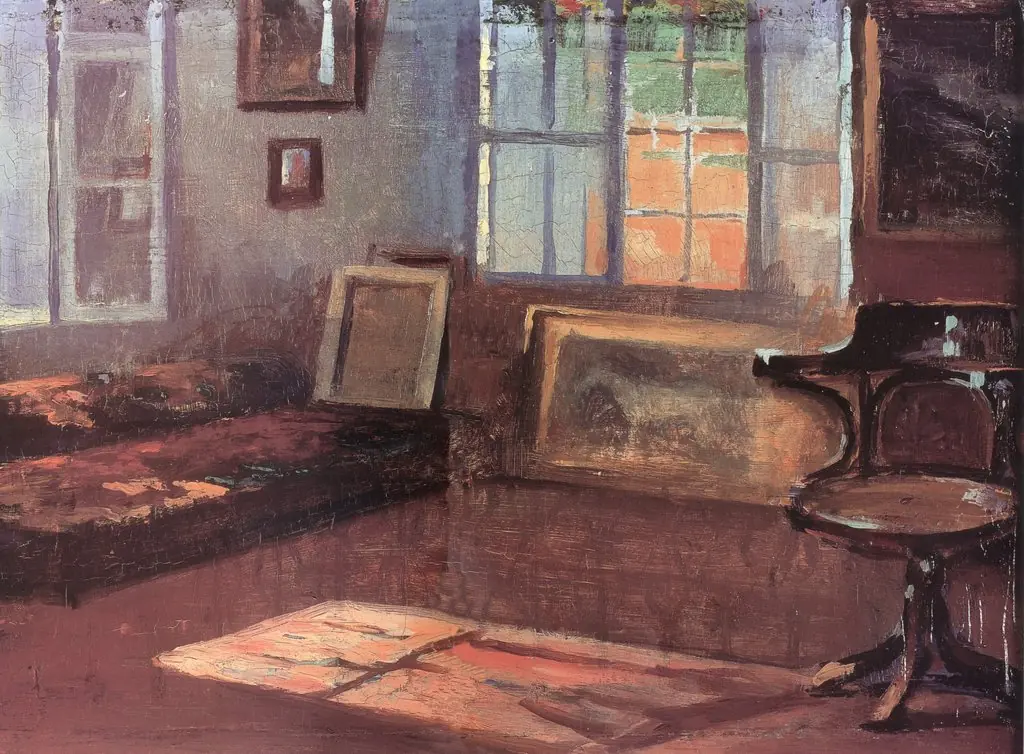 The Artist's Atelier at Basta
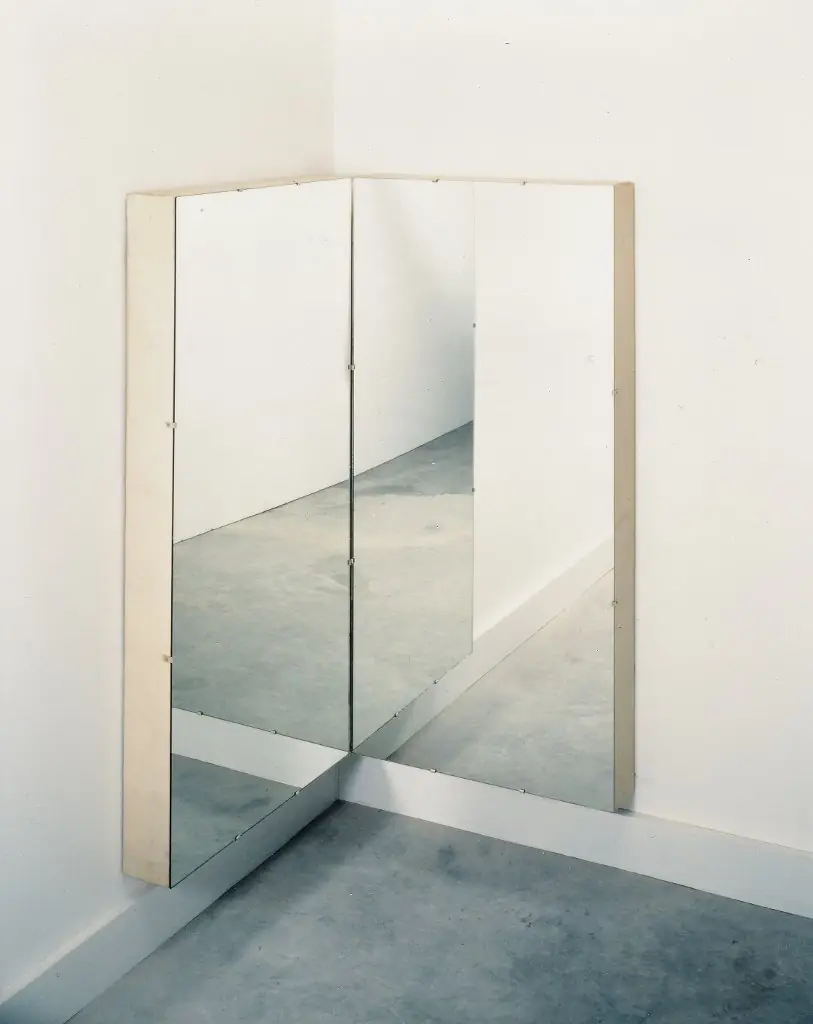 Mirror Piece (Art & Language)
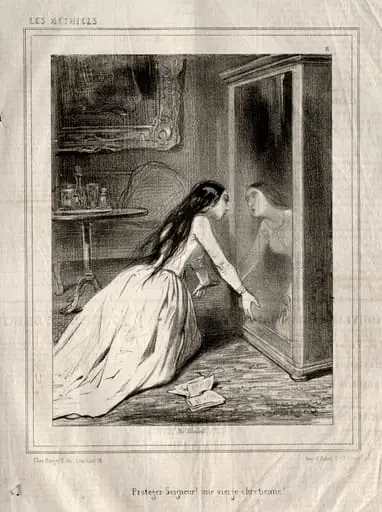 Les Actrices: Protegez Seigneur! un vierge chrétienne
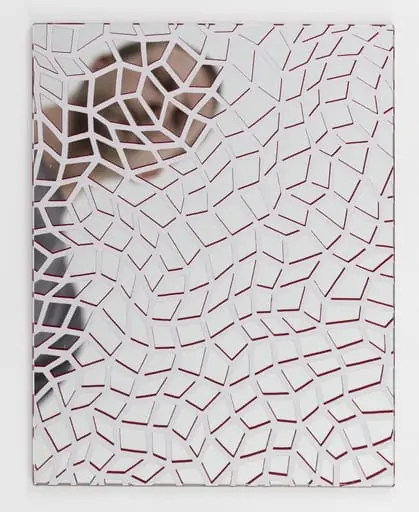 Untitled
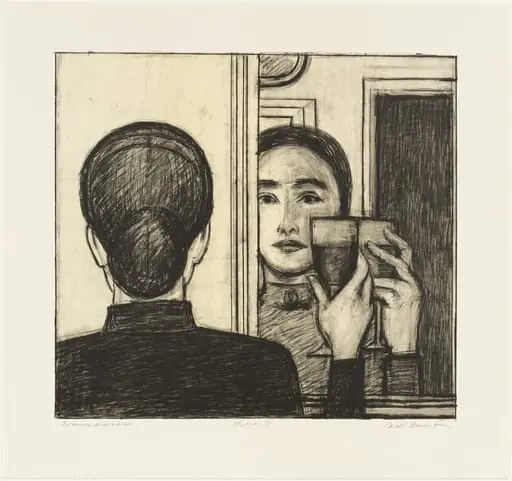 Untitled
Frequently asked questions
What is Mirror?
Mirror is a subject in art. A mirror, also known as a looking glass, is an object that reflects an image.
How many Mirror works does Artifact World Gallery have?
Artifact World Gallery holds 96 public-domain Mirror works, all free to view and download.
Who are the key Mirror artists?
Key Mirror artists in the collection include Titian, Gustave Courbet and Edgar Degas.
Where can I see Mirror works?
Mirror works in the collection are held by Metropolitan Museum of Art, Museo del Prado and Kunsthistorisches Museum.