Artwork
The Widow
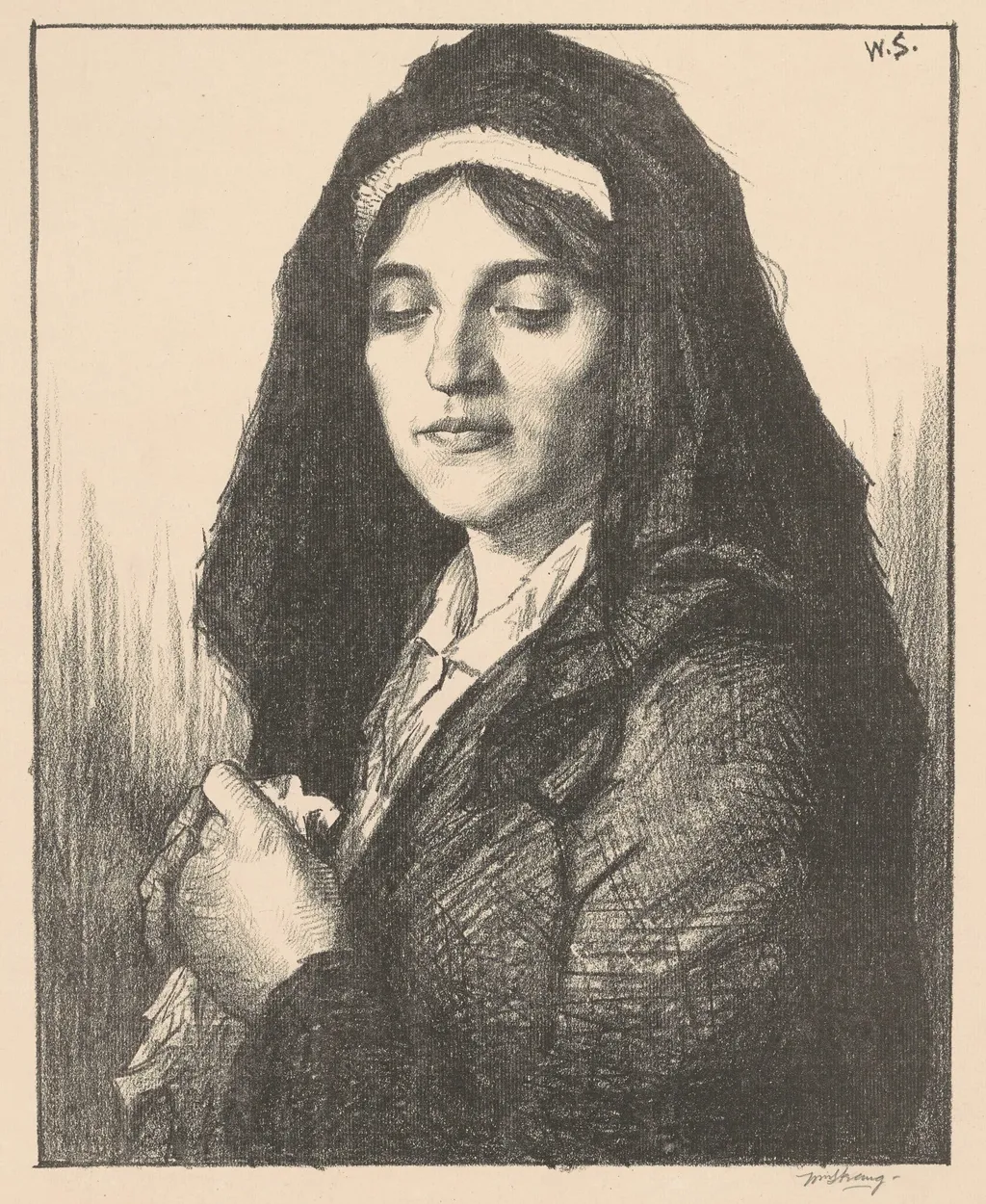
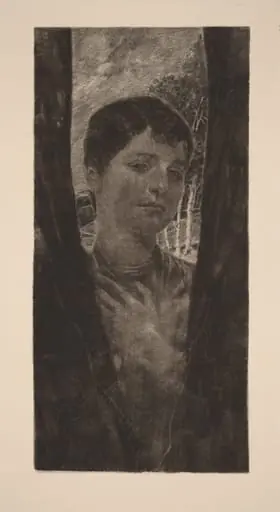
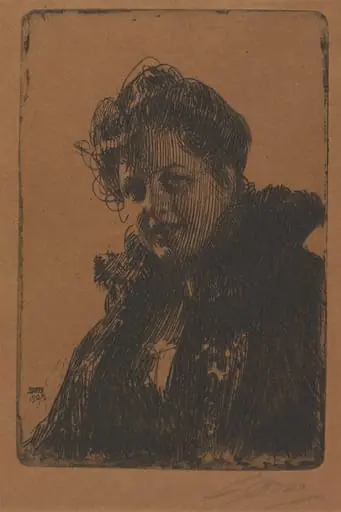
The Widow is an ink print by William Strang. It dates from 1900 and is held in the collection of the National Gallery of Art.
- Inscription
- Inscribed:upper right in stone: W. S.; lower right in graphite: Wm Strang
About this work
Overview
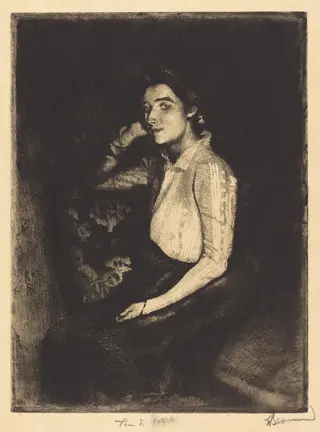
The Widow is a lithograph created by Scottish artist William Strang around 1900. Characterized by rough, smudged lines and dark tones, the print presents a somber, introspective portrayal of a solitary female figure in mourning.
Subject & Meaning
The subject of The Widow is a woman in mourning attire, depicted with eyes closed and hands clasped over her chest, accompanied by a locket or pendant. The image conveys themes of solitude, grief, and contemplation, consistent with Strang's exploration of solemn subjects in his graphic work.
Technique & Style
Strang executed The Widow in a quick, sketchy lithographic style, resulting in a soft, unfinished appearance. The contrast between dark, expressive lines and a lighter background draws attention to the widow's face, emphasizing her emotional state.
History & Provenance
Created circa 1900, The Widow is part of William Strang's body of work as a printmaker and illustrator. Strang's broader oeuvre includes illustrations for literary classics by authors like Bunyan, Cervantes, and Kipling.
Own this work as a print
Artist & collection
Artist
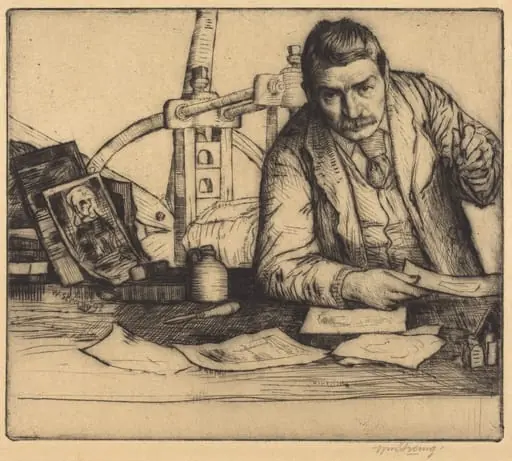
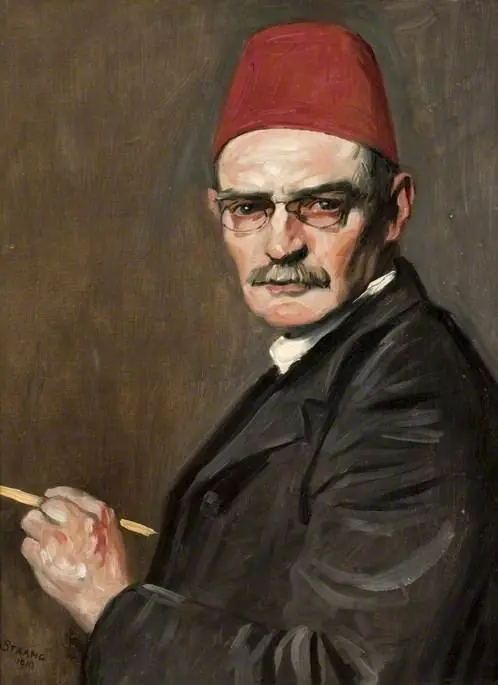
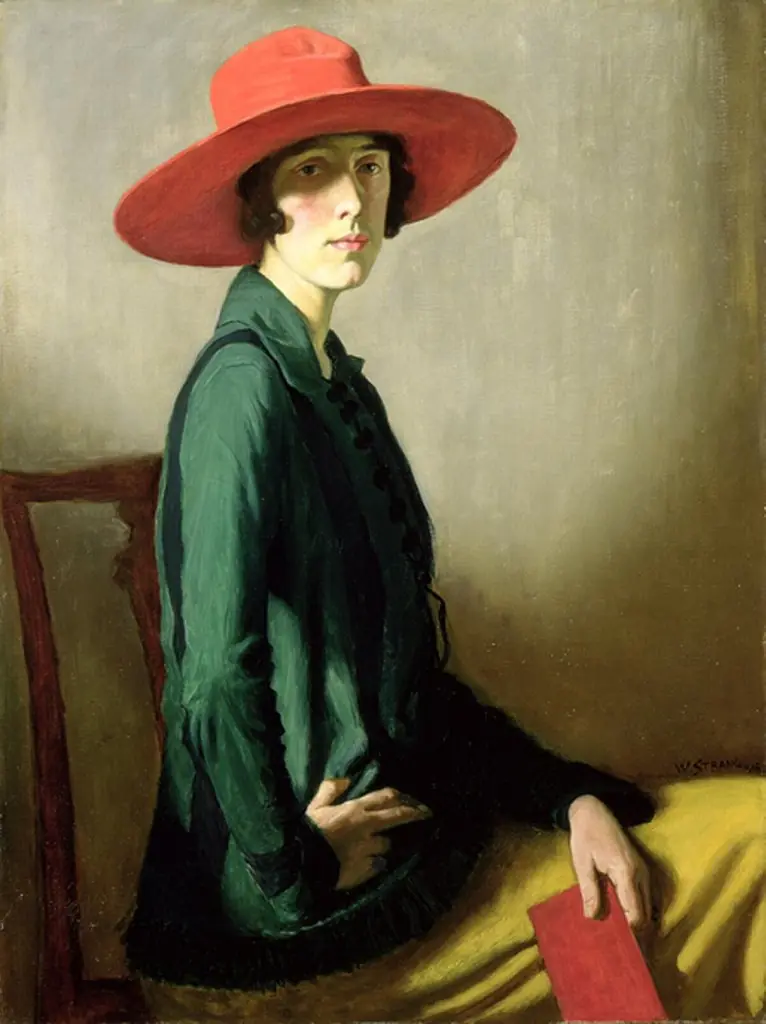
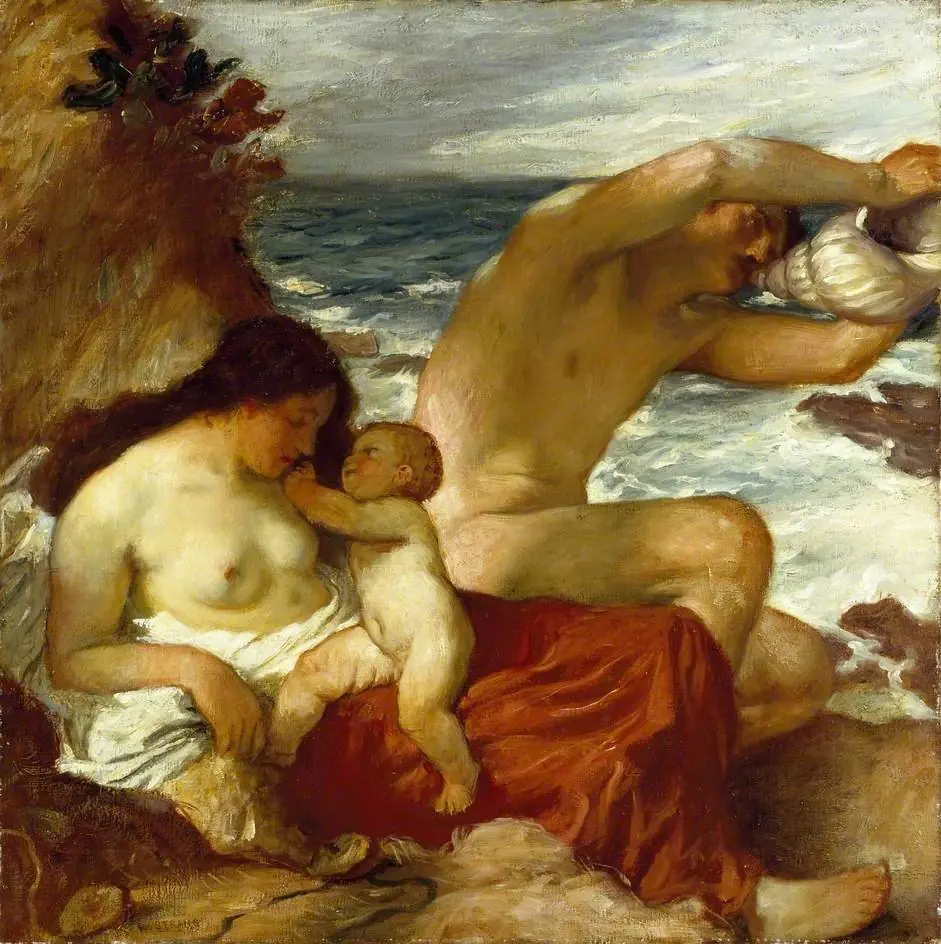
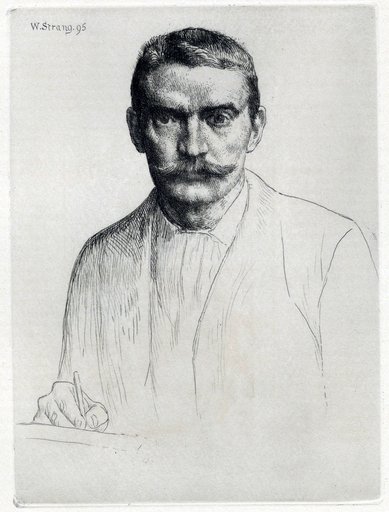
William Strang was a Scottish painter and printmaker, notable for illustrating the works of Bunyan, Cervantes, Coleridge, Kipling, and others.