Artwork
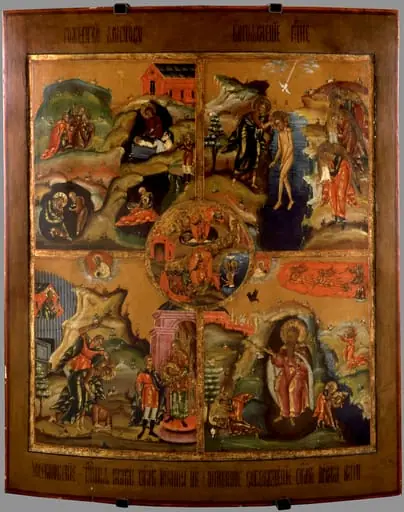
Teofania - Herran kaste (Jeesuksen kaste), venäläinen ikoni
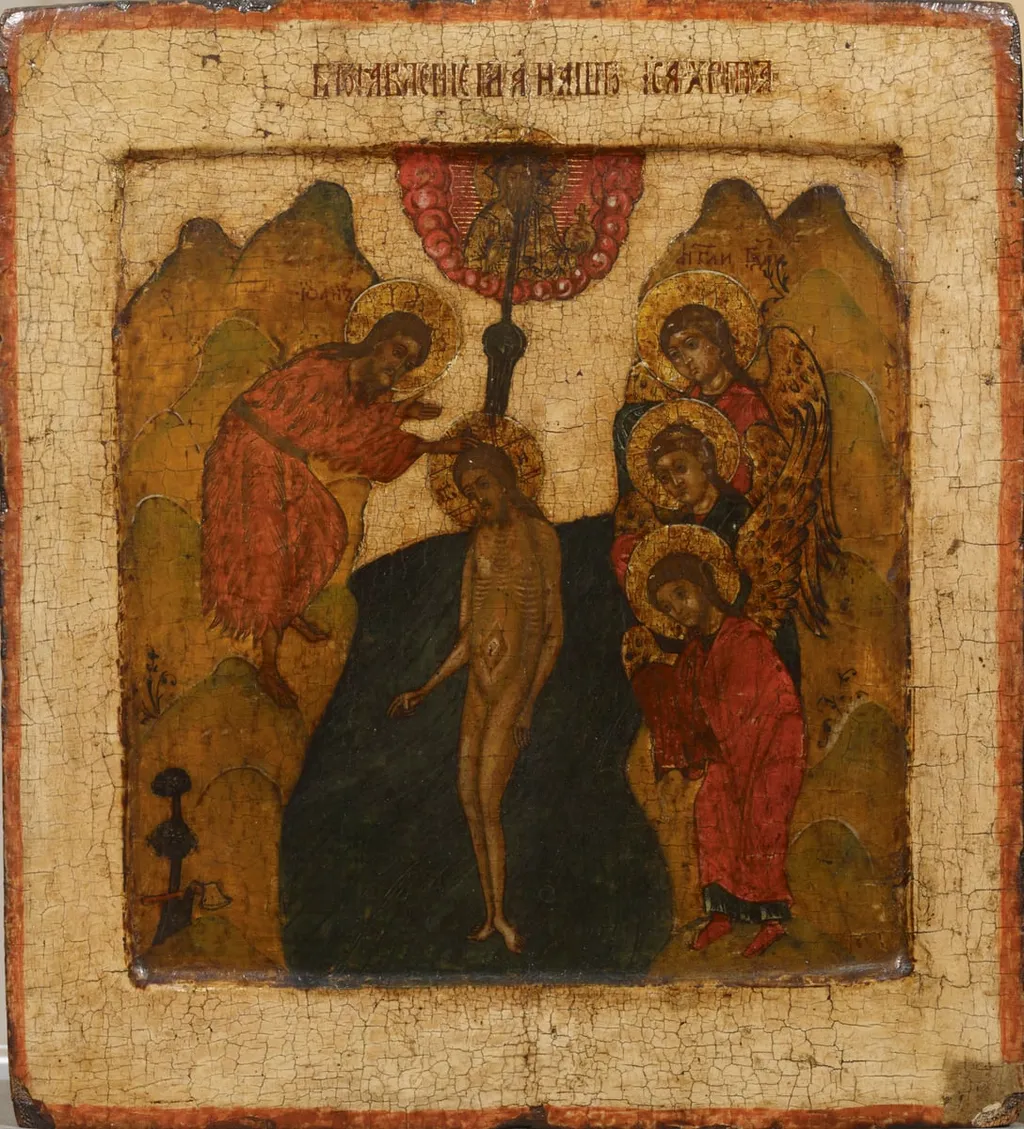
Teofania - Herran kaste (Jeesuksen kaste), venäläinen ikoni is an unspecified painting by the Russian Icon artist tekijä ei tiedossa. It is held in the collection of the Finnish National Gallery. This Russian icon depicts the Baptism of Christ, a scene from the Gospels where John the Baptist immerses Jesus in the Jordan River.
About this work
Overview
This Russian icon depicts the Baptism of Christ, a scene from the Gospels where John the Baptist immerses Jesus in the Jordan River. Executed in tempera on wood, it follows the traditional Byzantine style prevalent in medieval Orthodox Christianity. The flat gold background signifies divine space rather than a physical landscape, emphasizing spiritual presence over naturalism.
Subject & Meaning
The scene captures the moment of Christ’s baptism, a key event affirming his divine identity. John the Baptist, often shown slightly smaller, performs the rite as a servant of God’s plan. The stillness of the figures and their frontal orientation invite contemplation, reinforcing the sacred nature of the act rather than dramatizing it.
Technique & Style
Tempera paint, made from egg yolk and ground pigments, produces luminous, durable colors applied in thin layers. Forms are rendered without modeling or depth; robes and faces appear stylized and two-dimensional. This deliberate abstraction prioritizes symbolic clarity over illusionistic realism, aligning with theological aims of the tradition.
History & Provenance
Created in the medieval Russian Orthodox tradition, such icons were made for private devotion or church altars. Though the exact origin and artist are unknown, the style suggests production in a monastic workshop, likely between the 14th and 16th centuries. These objects were treated as sacred vessels, not mere artworks.
Context
In a time of low literacy, icons served as visual catechisms, conveying biblical narratives through standardized imagery. The absence of perspective and chiaroscuro reflects a theological choice: divine truth was not to be rendered through earthly optics but through symbolic form. Gold backgrounds recalled heavenly realms, separating sacred time from ordinary experience.
Legacy
This icon exemplifies a visual language that endured for centuries across Eastern Orthodox communities. Its aesthetic influenced later religious art and remains a touchstone for understanding how faith shaped artistic expression. Modern viewers encounter it not as a historical curiosity but as a continuing object of veneration.
Artist & collection
Artist
This unknown artist left behind work that feels like a hushed conversation in a candlelit chapel.

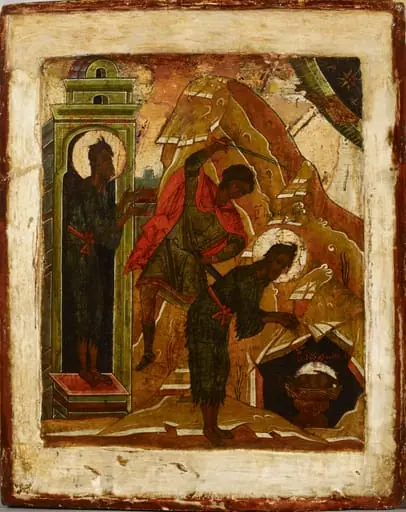
- Johannes Kastajan mestaus, venäläinen ikoni
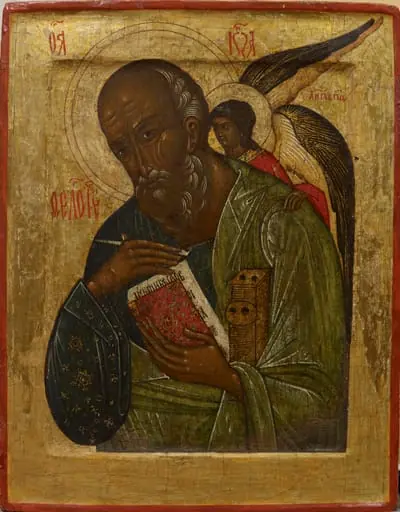 Johannes Evankelista, venäläinen ikoni
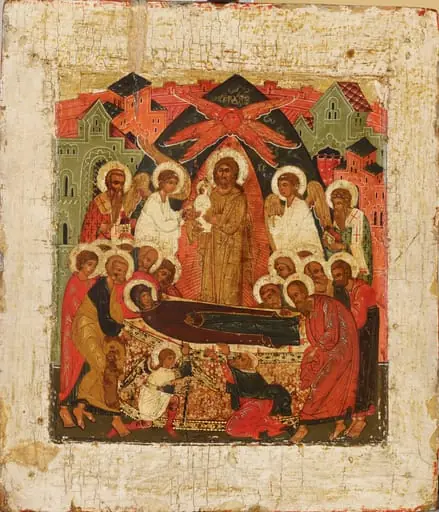 Jumalanäidin kuolonuneen nukkuminen, venäläinen ikoni
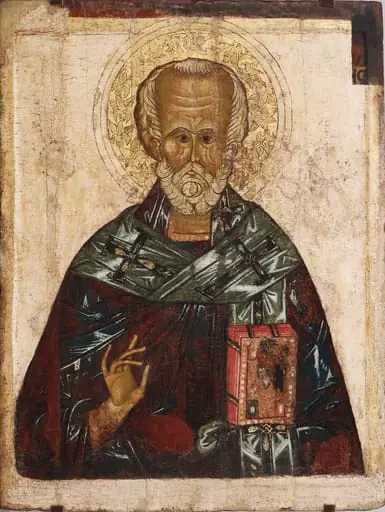 Pyhä Nikolaus, venäläinen ikoni
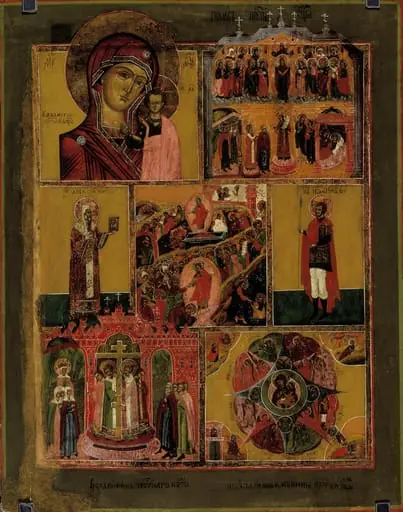 Pääsiäinen ja kirkkovuoden juhlia, venäläinen ikoni
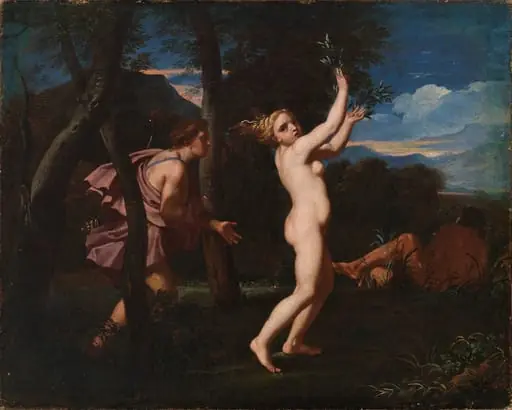 Apollo ja Dafne
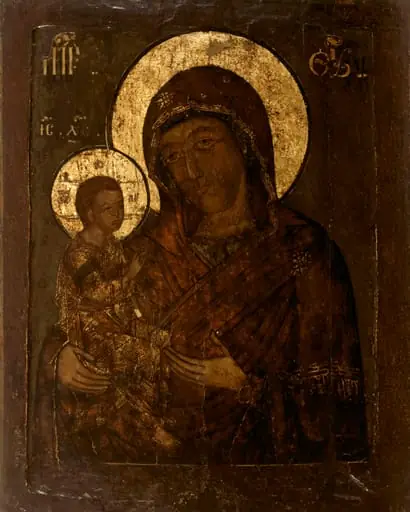 Jerusalemin Jumalanäiti, (Hodigitria), venäläinen ikoni
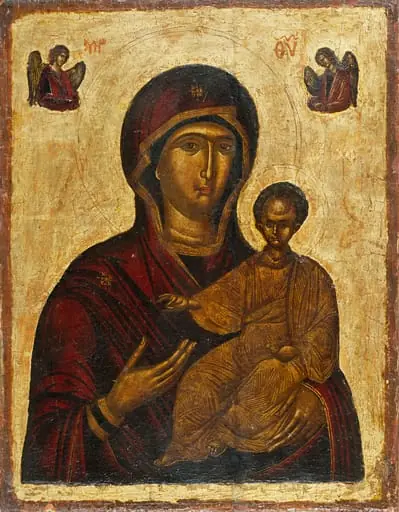 Jumalanäiti, Hodigitria - Tiennäyttäjä, bysanttilainen ikoni