Artwork
芦雁図|Reeds and Geese
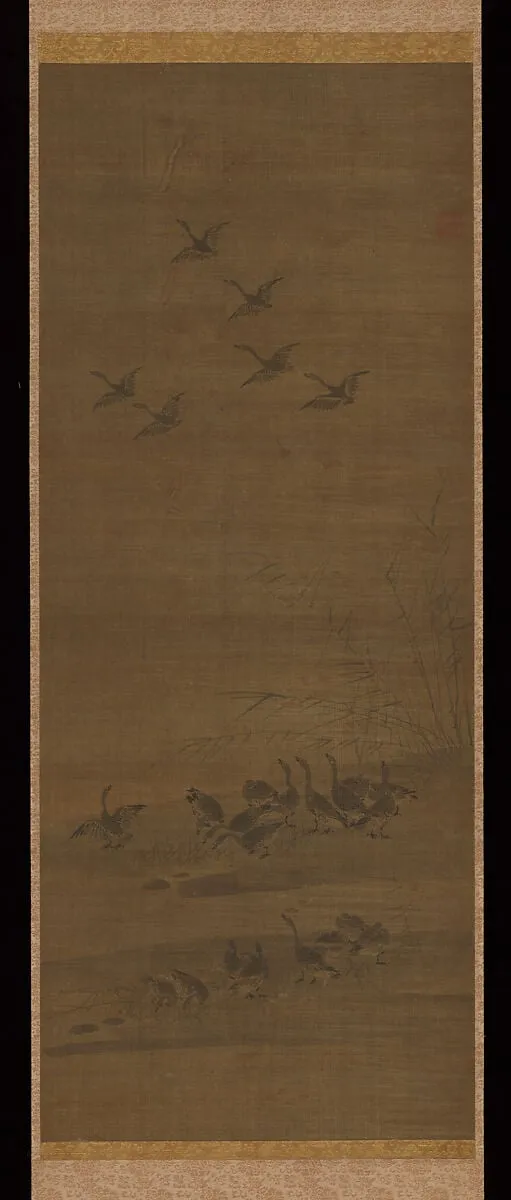
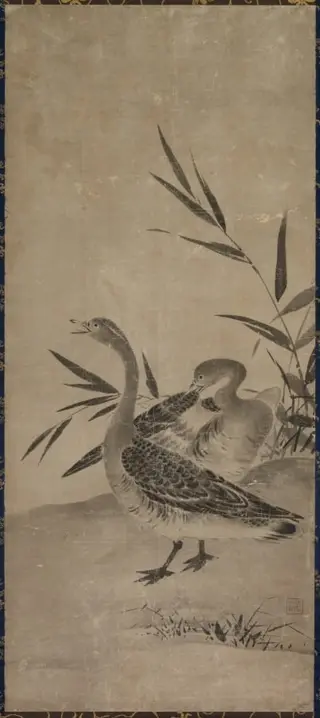
芦雁図|Reeds and Geese is an ink painting by the Tosa School artist Tesshū Tokusai. It dates from 11 and is held in the collection of the Metropolitan Museum of Art.
About this work
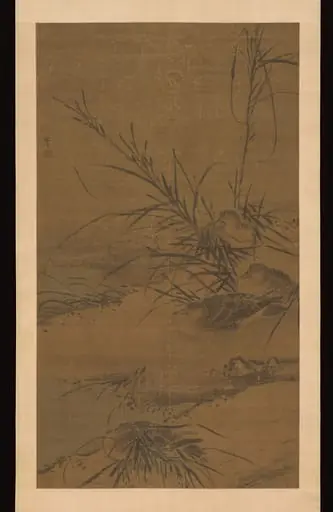
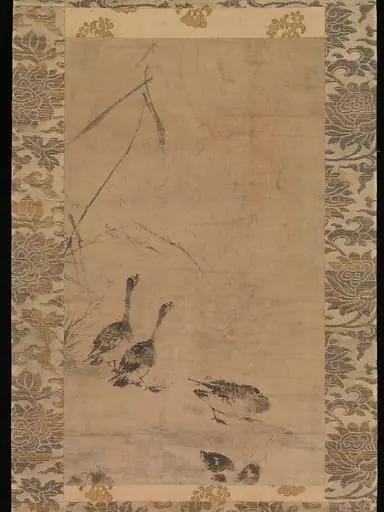
You see two geese standing in tall reeds, one bending its neck to preen, the other watching the sky.
This scroll is one of the oldest surviving Japanese ink paintings. The artist used only black ink, but the strokes make the feathers look soft and the water shimmer. The date, 1343, is hidden in the reeds like a secret.
If you like quiet nature scenes, look up geese.
Subject & Meaning
The hanging scroll Reeds and Geese by Tesshū Tokusai, dated to the eleventh month of 1343, depicts a single goose within a landscape setting.
The hanging scroll Reeds and Geese by Tesshū Tokusai, dated to the eleventh month of 1343, depicts a single goose within a landscape setting. Executed in ink on silk, the work focuses on the bird as its primary subject, capturing it amidst reeds. As a genre painting classified under landscape, the piece utilizes the goose as the central iconographic element.
The composition presents the bird in a naturalistic context, emphasizing the relationship between the animal and its environment.
Technique & Style
Executed in the mid-14th century, this work is a hanging scroll painted with ink on silk. The composition features geese situated among reeds, adhering to landscape conventions of the period. The support material is silk, which serves as the ground for the monochromatic ink application.
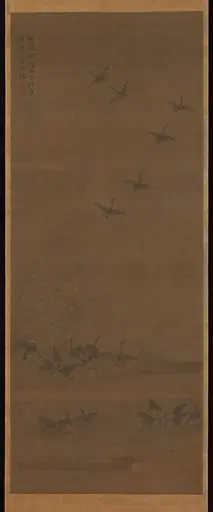
Physically, the scroll measures 110.4 cm in height and 44 cm in width. The piece functions as one half of a paired set, a format typical for such decorative displays. The artist employed ink wash techniques to render the naturalistic forms of the birds and vegetation within the vertical format.
History & Provenance
The hanging scroll Reeds and Geese was created by the artist Tesshū Tokusai and bears a specific date of the 11th month in 1343. Executed in ink on silk, the work is one half of a paired set depicting a landscape scene with geese. The painting originated in Japan and is currently held in the collection of the Metropolitan Museum of Art.
The hanging scroll Reeds and Geese by Tesshū Tokusai is held in the collection of the Metropolitan Museum of Art in New York. The work, created in Japan, measures 110.4 cm in height and 44 cm in width. While the artwork is dated to the eleventh month of 1343, the provided records confirm its current institutional location but do not list specific inventory accession numbers or details regarding past exhibitions.
Overview
"Reeds and Geese" (Ashigari-zu) is an ink on silk hanging scroll by the artist Tesshū Tokusai, dating to 1343. This painting is significant as one of the oldest surviving examples of Japanese ink painting, providing a rare glimpse into the early development of this artistic practice in Japan. It constitutes one part of a pair of scrolls, illustrating a common presentation format for such works.
Artist & collection