Artwork
蘆雁図|Geese and Reeds
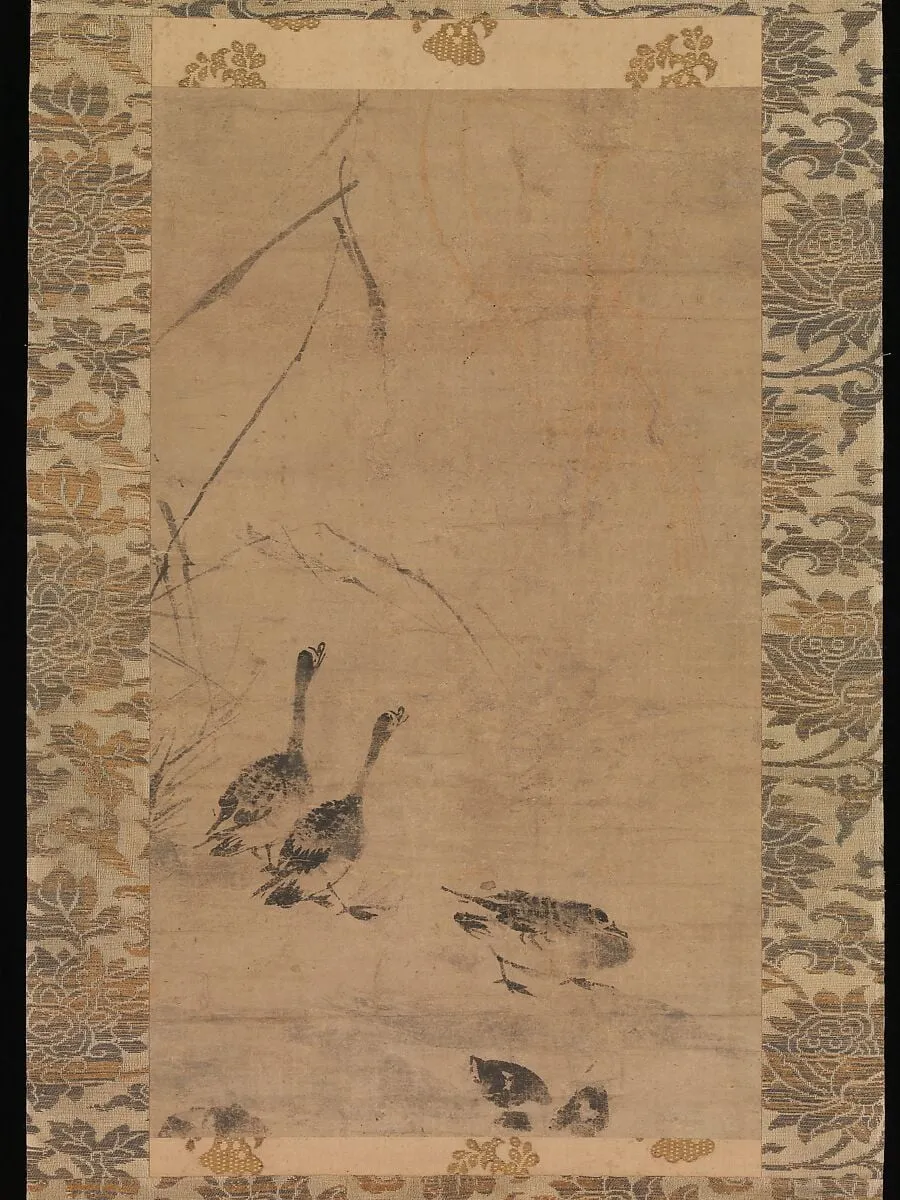
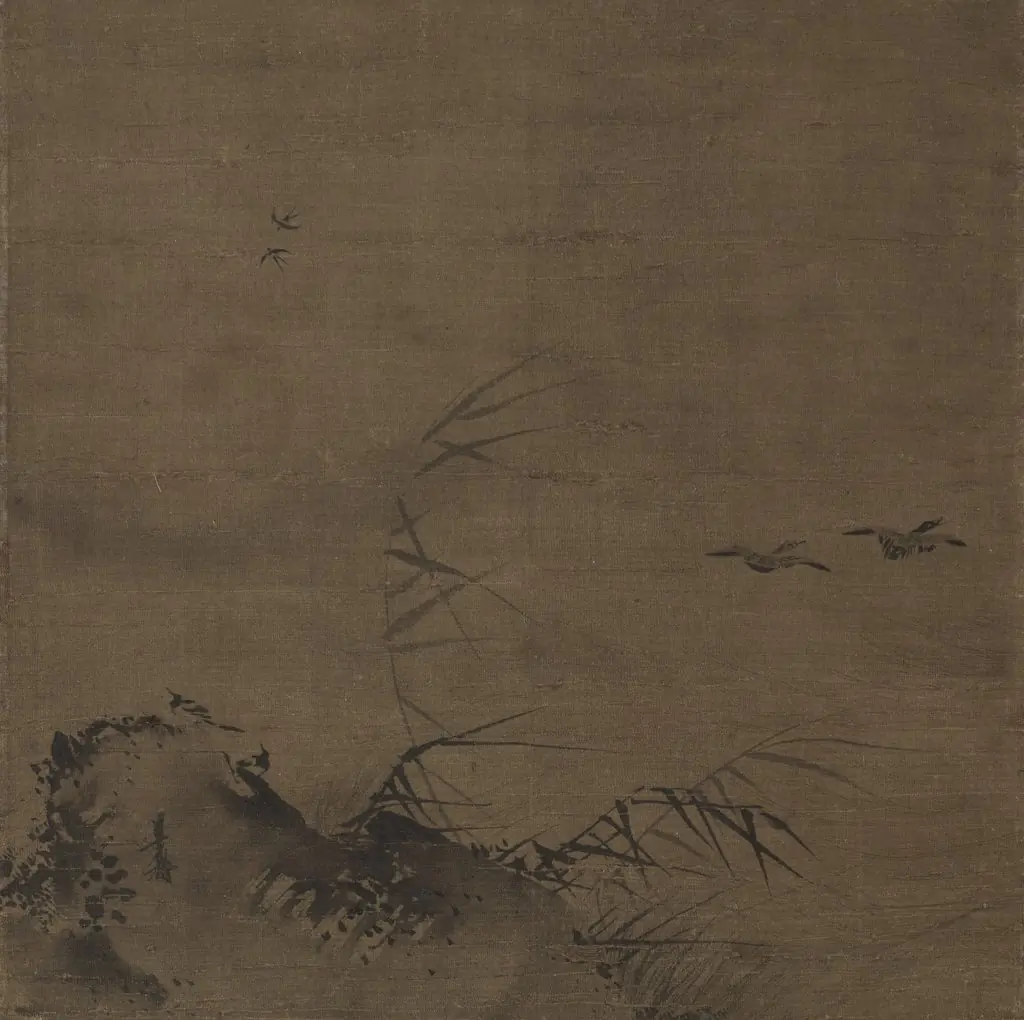
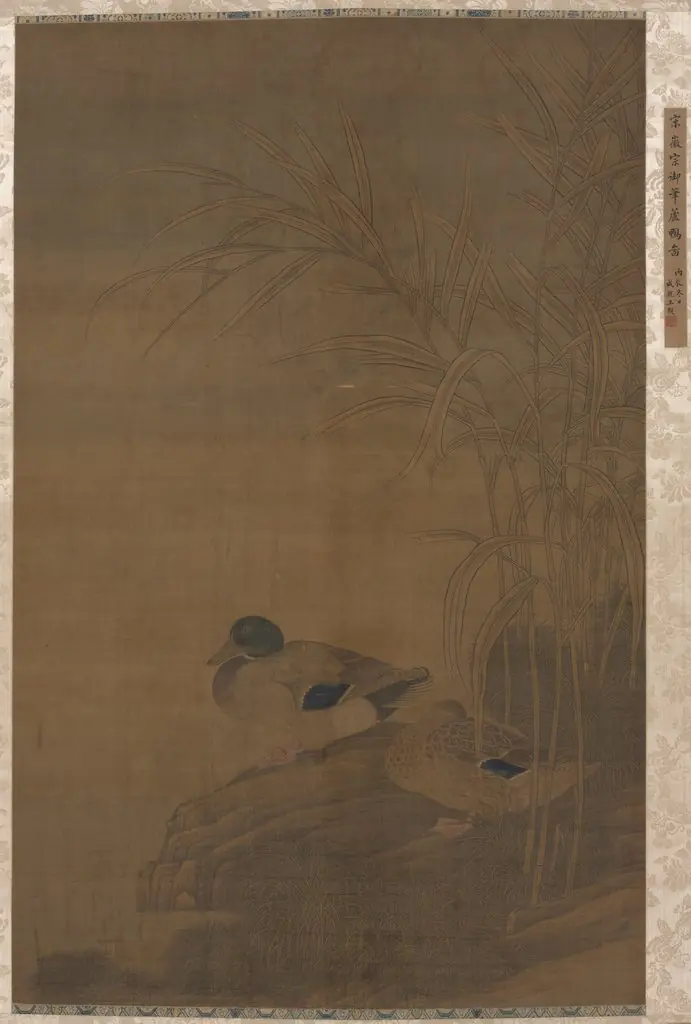
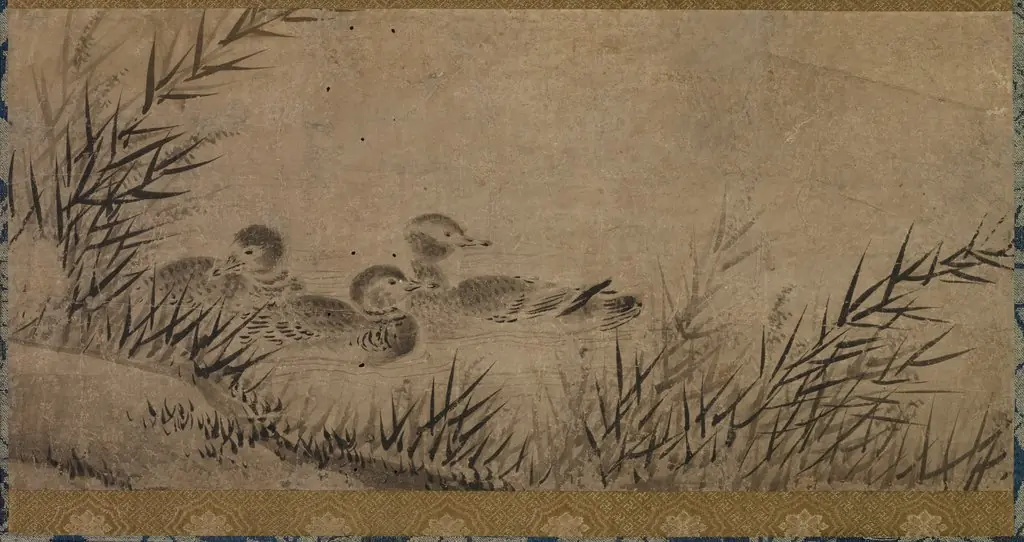
蘆雁図|Geese and Reeds is an ink painting. It dates from 1350 and is held in the collection of the Metropolitan Museum of Art. This hanging scroll, titled Geese and Reeds, is an ink painting on paper.
About this work
Subject & Meaning
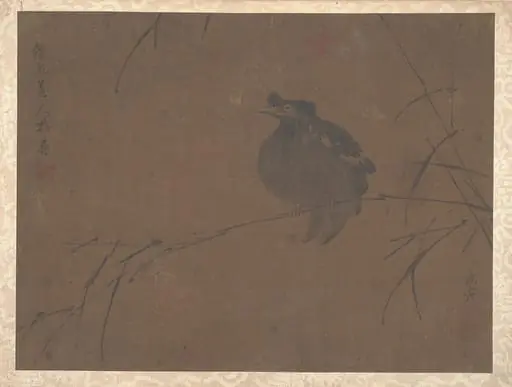
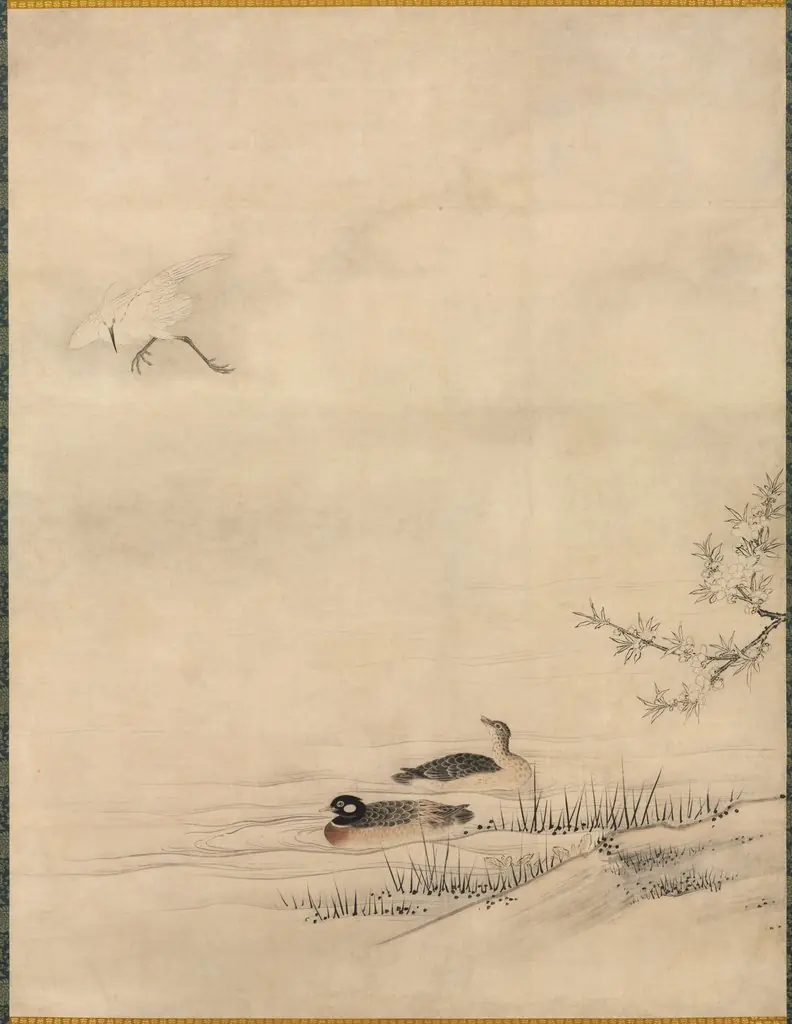
The painting depicts a goose amid dense reeds, a pairing drawn from the East Asian literary and visual tradition of wild-geese imagery.
The painting depicts a goose amid dense reeds, a pairing drawn from the East Asian literary and visual tradition of wild-geese imagery. In such works, the goose often symbolizes autumn, migration, or the solitary traveler, while the reeds evoke seasonal change and the quiet persistence of nature. The pairing of bird and plant together conveys themes of transience and endurance, common to the broader genre of bird-and-flower painting in Japanese and Chinese art.
History & Provenance
The hanging scroll titled Geese and Reeds, executed in ink on paper, was created in Japan in 1350. The work is attributed to an anonymous painter, with no specific artist name recorded in the available records. It is currently held in the collection of the Metropolitan Museum of Art. The painting depicts geese amidst reeds, reflecting a traditional subject matter for the period.
The hanging scroll titled “Geese and Reeds” is housed in the Metropolitan Museum of Art in New York. According to the museum’s collection records, the work belongs to the Asian Art department, but the specific inventory or accession number is not provided in the available documentation. No exhibition history for this piece is documented in the cited sources. The entry simply lists the work as part of the museum’s holdings without further provenance details.
Legacy
Geese and Reeds, a 14th‑century hanging scroll attributed to an anonymous Yuan painter, entered the collection of the Metropolitan Museum of Art and has been studied as a representative example of early Chinese bird‑and‑reed imagery. Its precise rendering of a solitary goose among reeds influenced subsequent depictions of waterfowl in East Asian painting and is frequently cited in scholarship on anonymous masters of the period. The work’s attribution to the 1350 date and its ink‑on‑paper technique provide a benchmark for understanding the evolution of landscape‑bird motifs in Chinese art.
Overview
This hanging scroll, titled Geese and Reeds, is an ink painting on paper. It captures a serene moment in nature, depicting a flock of geese in flight above a cluster of reeds. The artwork exemplifies the subtle expressiveness achievable through monochrome ink, where variations in brushwork and tone convey movement and atmosphere without the use of color.
Technique & Style
Executed entirely in ink on paper, this painting demonstrates a mastery of monochrome technique. The artist employs a range of brushwork, from the rapid, decisive strokes that define the geese's forms to the almost ethereal lines used for the reeds. The absence of color highlights the expressive potential of ink, relying on tonal variations and the quality of the line to create depth, texture, and a sense of vitality.
Context
Created in Japan, this scroll reflects a period when ink painting was a refined artistic practice, valued for its understated elegance rather than its public prominence. Such works often circulated among connoisseurs and practitioners who appreciated the subtle complexities of ink wash and calligraphic brushwork. It represents a continuation of East Asian ink traditions adapted to Japanese aesthetic sensibilities.
Artist & collection