Artwork
The Marriage of the Virgin, with the Expulsion of Saint Joachim from the Temple, the Angel Appearing to Saint Joachim, the Meeting at the Golden Gate, the Birth of the Virgin, and the Presentation of the Virgin
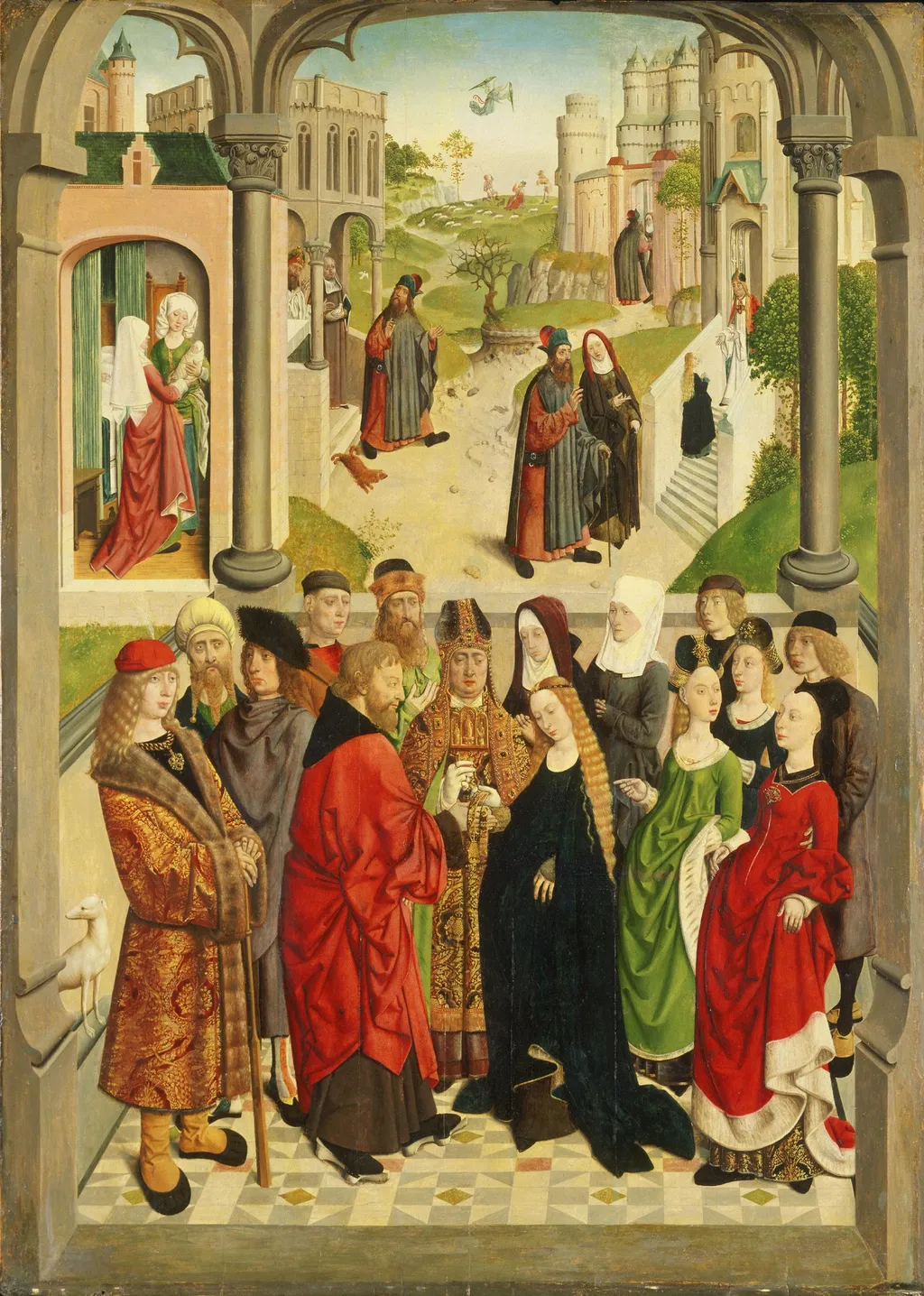
The Marriage of the Virgin, with the Expulsion of Saint Joachim from the Temple, the Angel Appearing to Saint Joachim, the Meeting at the Golden Gate, the Birth of the Virgin, and the Presentation of the Virgin is an oil painting by the Early Renaissance artist Master of the Tiburtine Sibyl. It dates from 1493 and is held in the collection of the Philadelphia Museum of Art.
About this work
Subject & Meaning
Together these scenes convey the theological emphasis on Mary’s purity, her divine calling, and the fulfillment of prophecy within the sacred narrative.
The composition illustrates a sequence of events from the apocryphal Protoevangelium of James that narrates the life of Mary, mother of Jesus. It shows the marriage of Mary to Joseph, the expulsion of her father Joachim from the temple, the angel’s announcement of Mary’s birth to Joachim, the meeting of Joachim and Anne at the Golden Gate, the birth of Mary, and the Presentation of Mary in the Temple. Together these scenes convey the theological emphasis on Mary’s purity, her divine calling, and the fulfillment of prophecy within the sacred narrative. The work thus functions as a visual sermon on the sanctified lineage of Christ.
Technique & Style
The work is executed in oil paint on panel, a medium consistent with late fifteenth-century Iberian practice. The panel support measures 144.8 cm in height by 102.9 cm in width, giving it a tall, vertically oriented format suited to a multi-tiered narrative composition. The artist, known as the Master of the Tiburtine Sibyl, arranged the scenes in stacked registers, a formal device that organizes the sequential episodes of Joachim and Anne's story into a single legible field.
The use of oil allowed for the layered handling of color and detail across these registers. The painting is held in the collection of the Philadelphia Museum of Art.
The sources do not provide further specific information on condition, surface handling, or stylistic details beyond the medium, support, dimensions, and compositional arrangement.
History & Provenance
The Marriage of the Virgin, with the Expulsion of Saint Joachim from the Temple, the Angel Appearing to Saint Joachim, the Meeting at the Golden Gate, the Birth of the Virgin, and the Presentation of the Virgin is an oil on panel painting created in 1485 by the Master of the Tiburtine Sibyl. It entered the collection of John G. Johnson, who later bequeathed his artworks to the Philadelphia Museum of Art, where it remains in the institution's collection today.
Legacy
The Marriage of the Virgin, attributed to the Master of the Tiburtine Sibyl and completed in 1485, has been recognized as a significant example of early High Renaissance religious painting. Its complex narrative composition and integration of devotional scenes, such as the Expulsion of Saint Joachim, the Angel Appearing to Saint Joachim, the Meeting at the Golden Gate, the Birth of the Virgin, and the Presentation of the Virgin, have contributed to its enduring reputation in art historical discourse. The work was owned by John G. Johnson, whose collection formed the foundation of the Philadelphia Museum of Art's holdings, ensuring its preservation and continued scholarly attention.
Overview
This oil painting, created in 1493 by the Master of the Tiburtine Sibyl, is a multi-panel work depicting a series of scenes from the life of Saint Joachim and the Virgin Mary.
Own this work as a print
Artist & collection
Artist
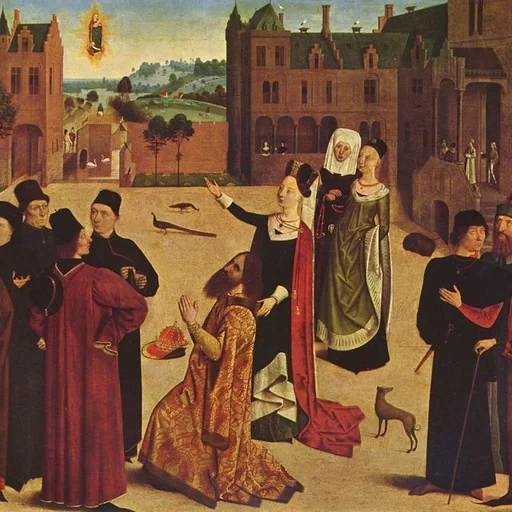
The Master of the Tiburtine Sibyl (fl. 1475–1495) was an unidentified Early Netherlandish painter, probably from Haarlem, named after The Tiburtine Sibyl meets Augustus, a work in the Städel in Frankfurt.

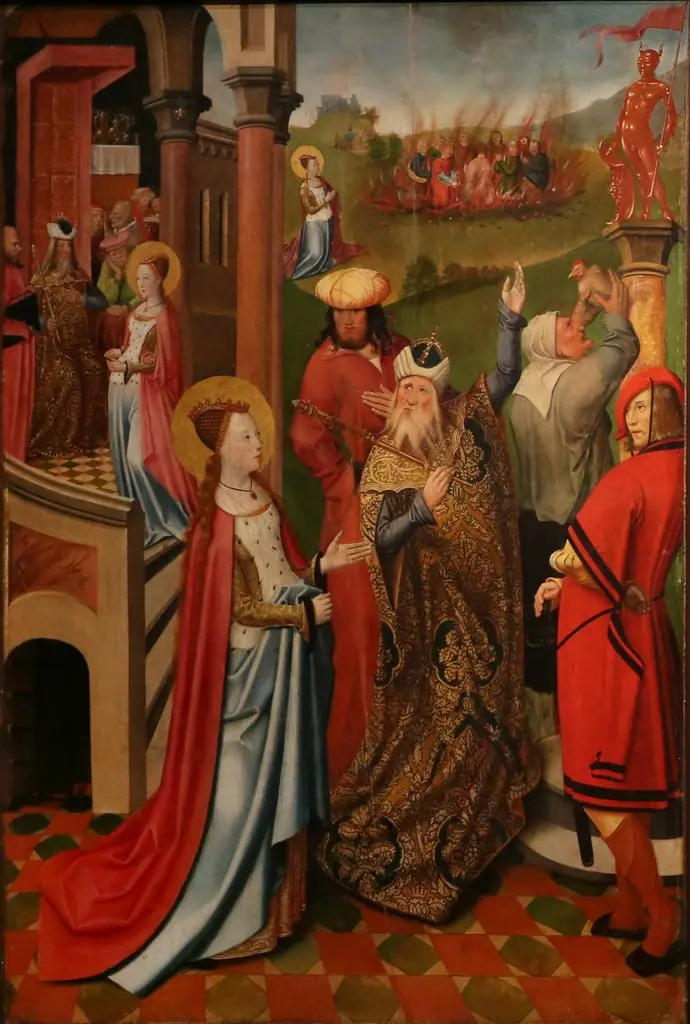 Saint Catherine refuses idolatry
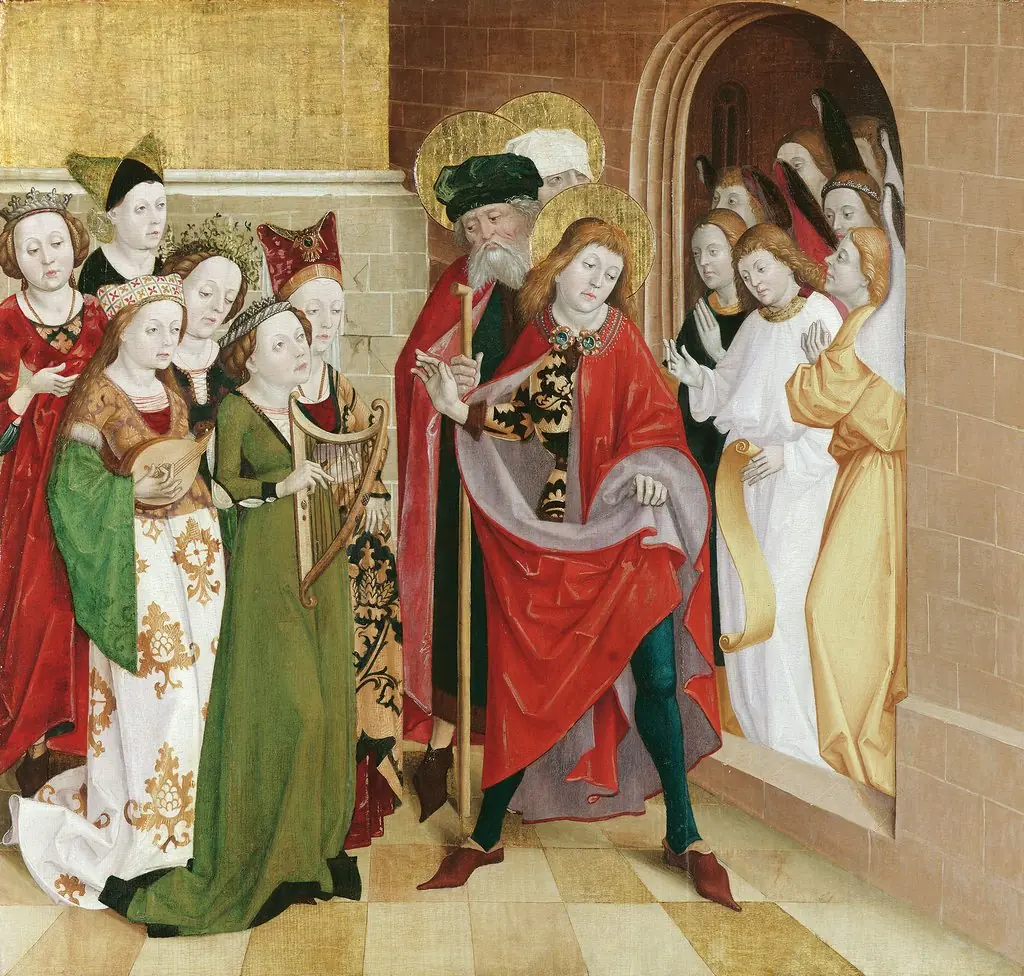 Der hl. Veit entsagt den Freuden der Welt
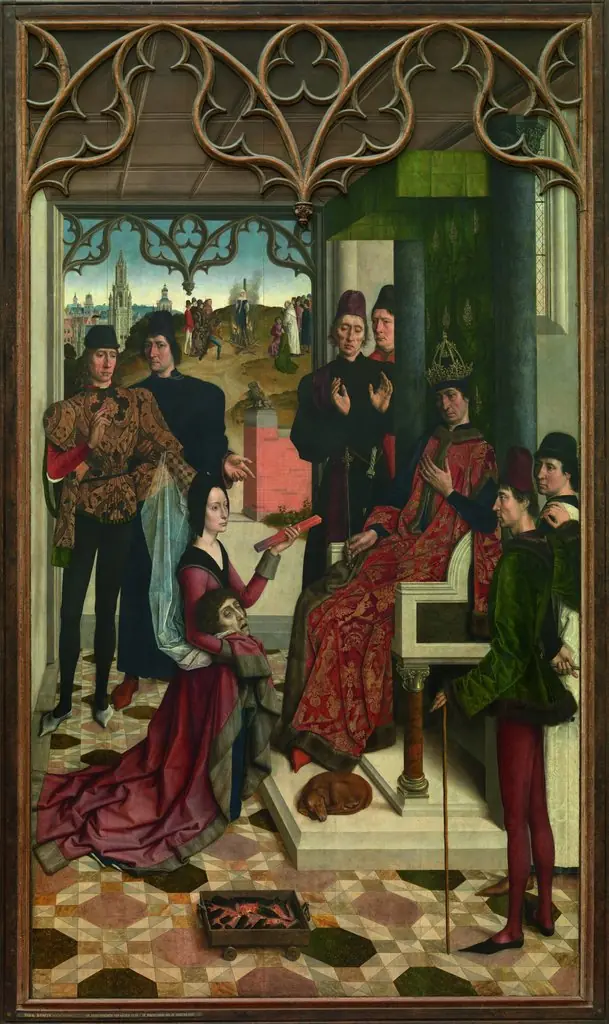 Justice of Emperor Otto III: The Trial by Fire
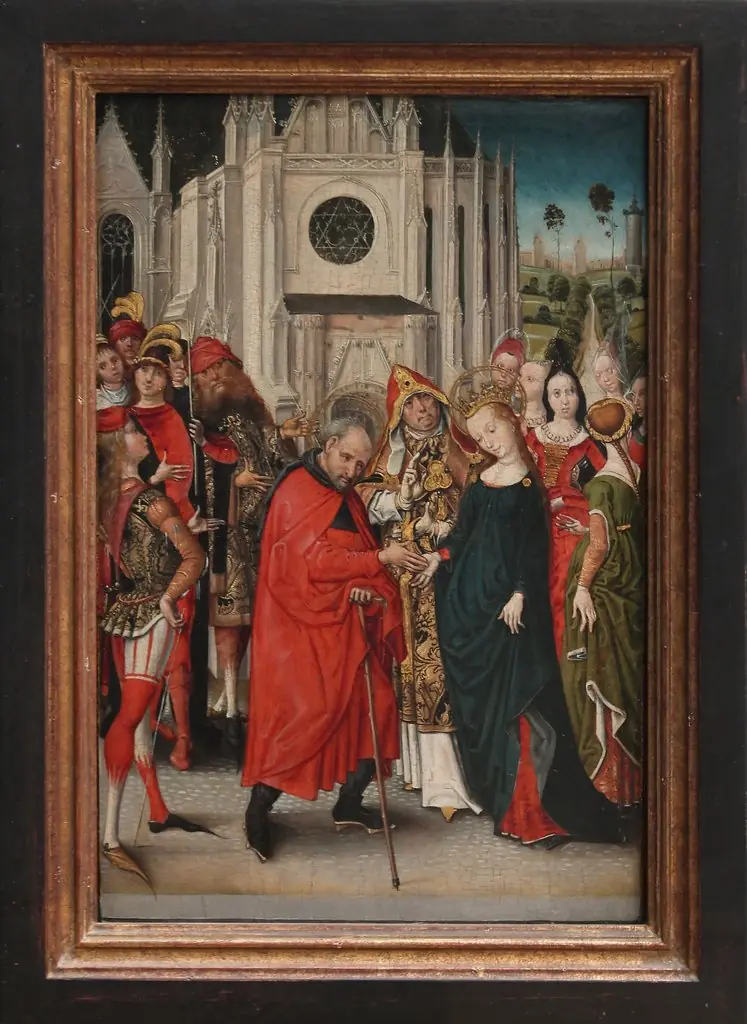
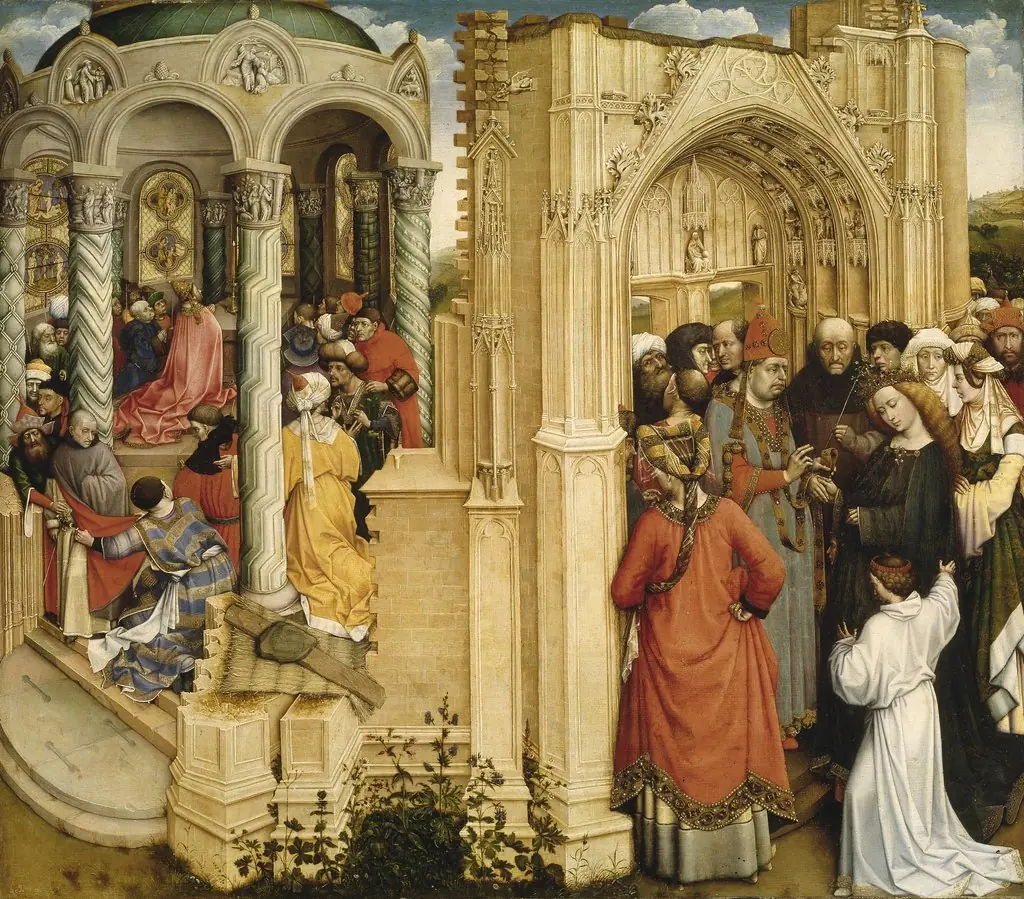 Marriage of the Virgin
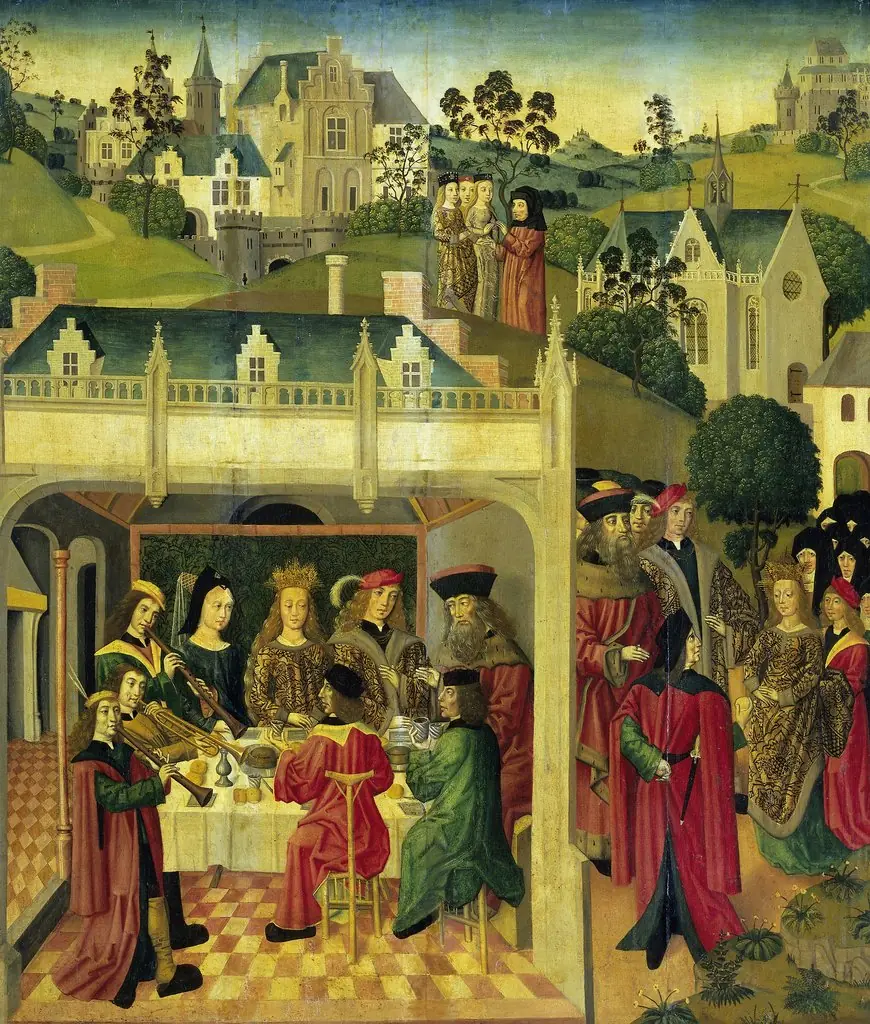 Inner left wing of an altarpiece with the wedding feast of St Elizabeth and Louis of Thuringia in the Wartburg
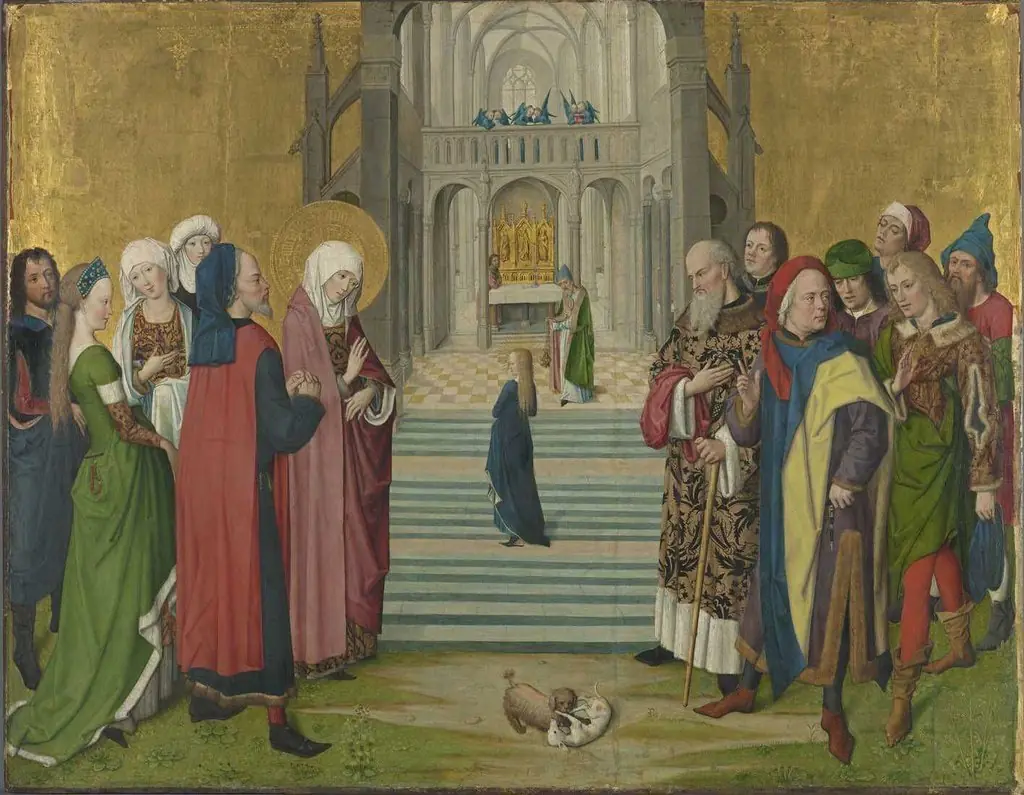 The life of Mary: the presentation of Mary in the temple
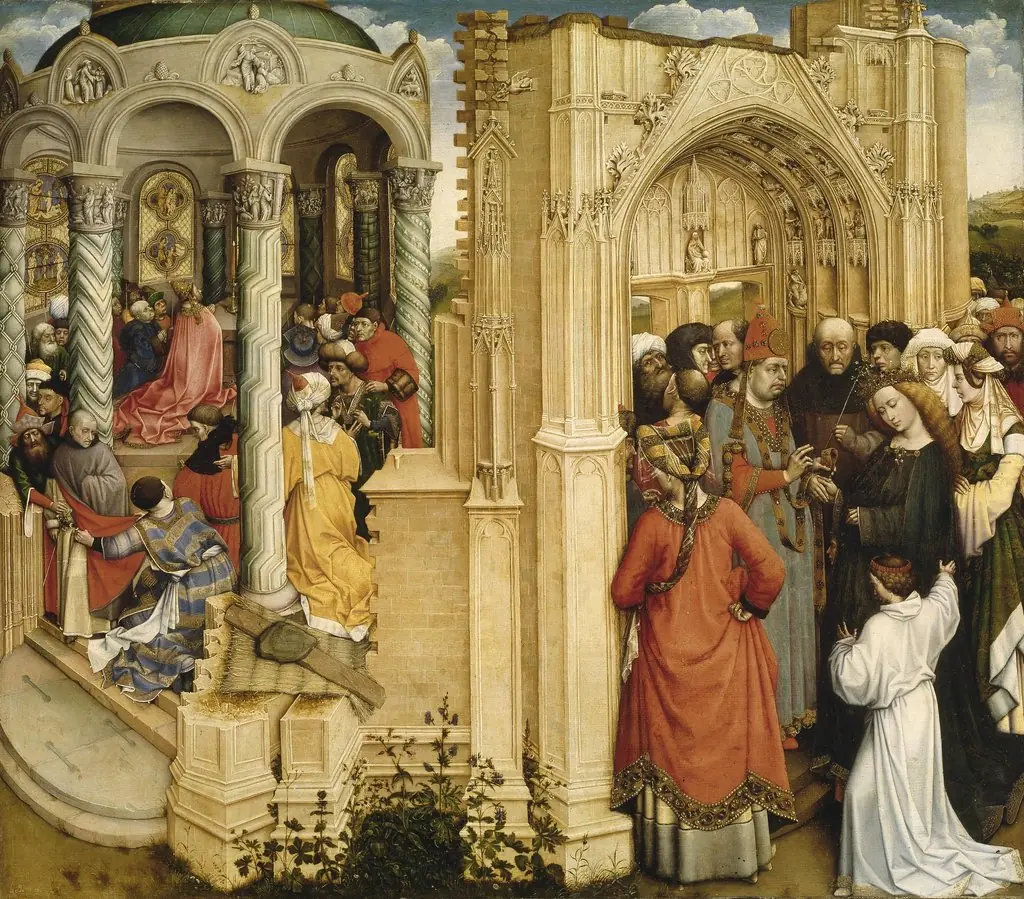 The miracle of the flowering rod (left); the marriage of Mary and Joseph (right)
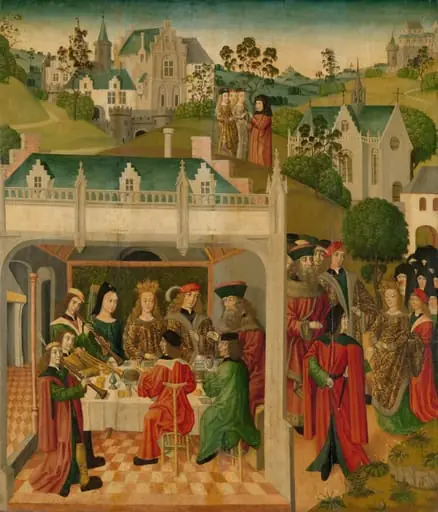 Wedding Feast of Saint Elizabeth of Hungary and Louis of Thuringia in the Wartburg, inner left wing of an altarpiece made for the Grote Kerk in Dordrecht
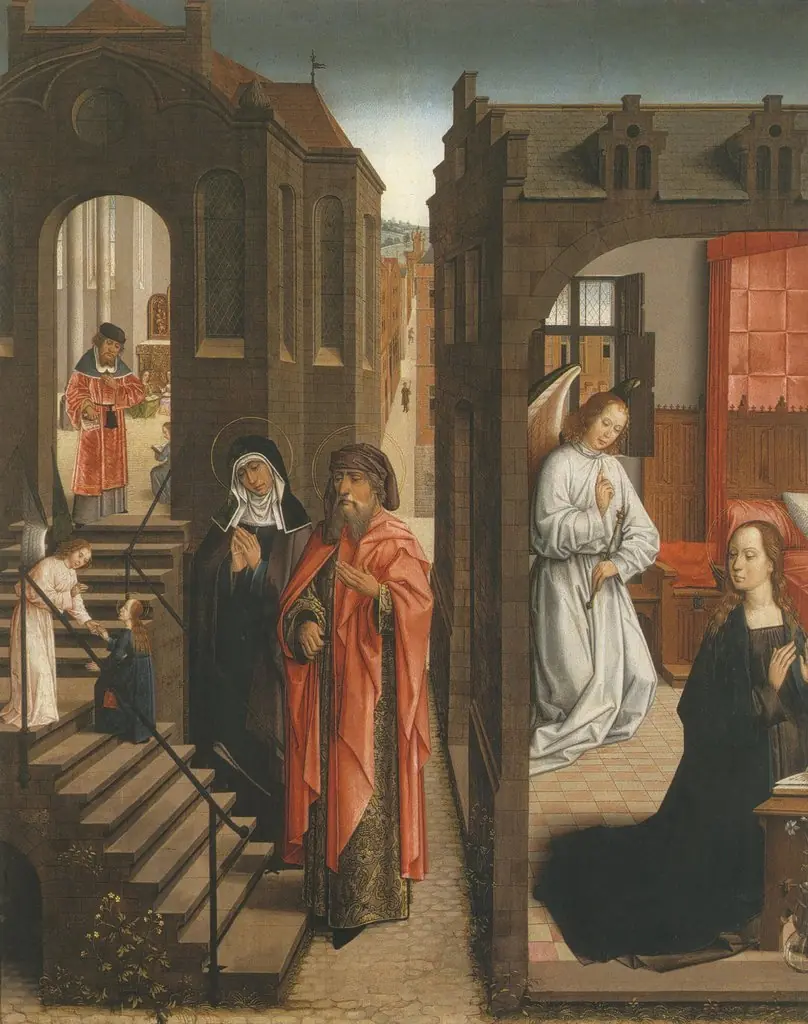 Opdracht van Maria en Annuntiatie
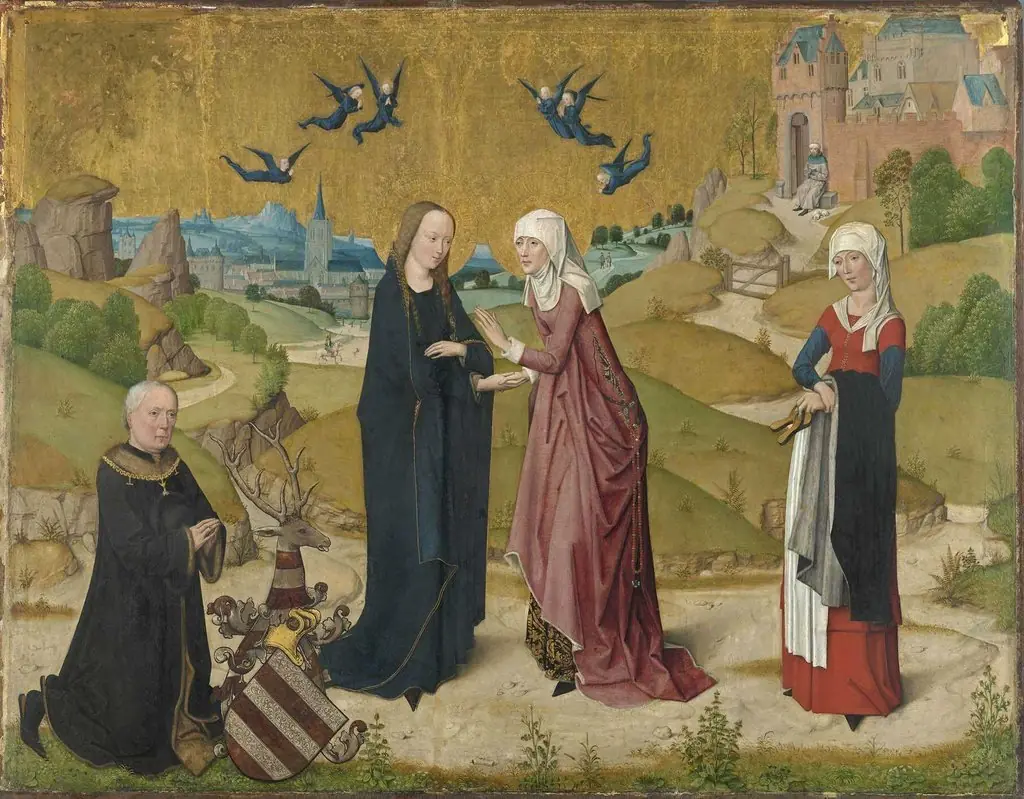 The Visitation with a portrait of donor Johann von Hirtz (?-?)