Artwork
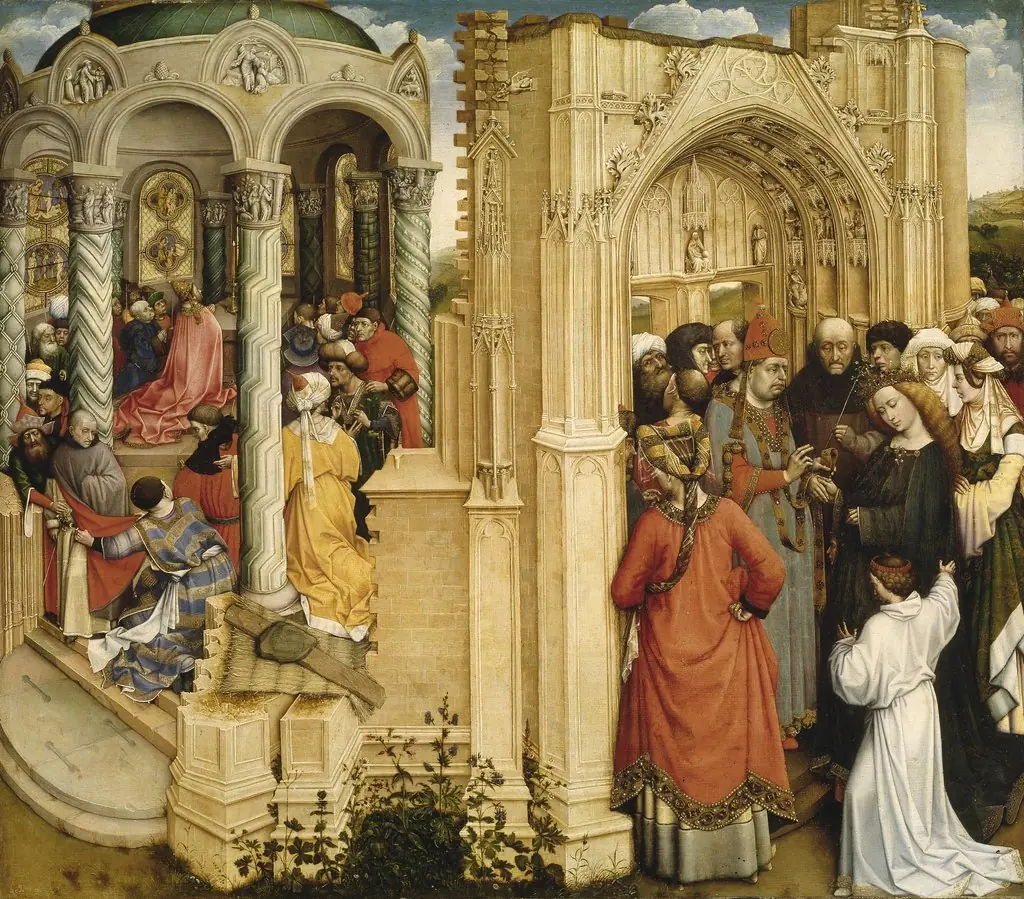
The miracle of the flowering rod (left); the marriage of Mary and Joseph (right)
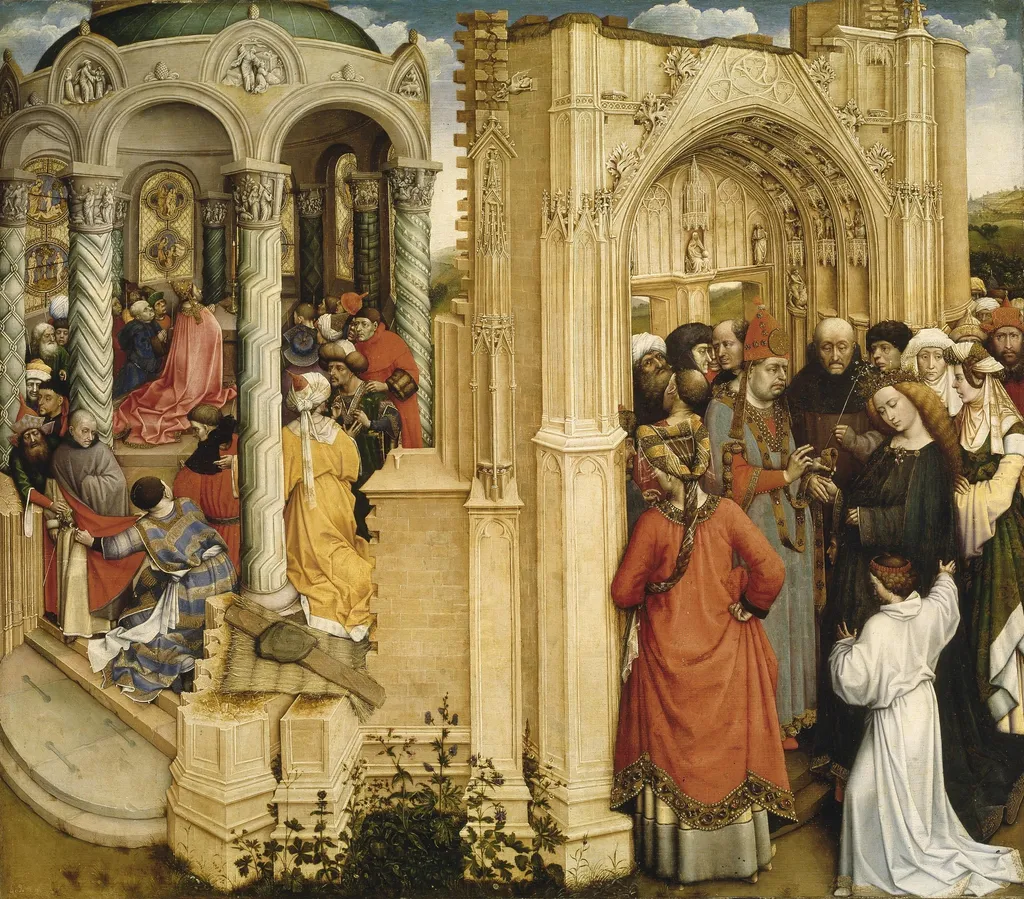
The miracle of the flowering rod (left); the marriage of Mary and Joseph (right) is an oil painting by the Northern Renaissance artist Robert Campin. It dates from 1430 and is held in the collection of the Museo del Prado.
About this work
Subject & Meaning
The composition unites these scenes to emphasize the divine orchestration of the Incarnation, a common subject in early Netherlandish religious painting.
The work depicts two distinct yet thematically linked biblical events central to Christian theology: the Miracle of the Flowering Rod and the Marriage of Mary and Joseph. As a piece of religious art created in 1430, the painting illustrates the moment Joseph's rod, chosen as a sign of his divine selection, miraculously blooms to confirm his status as the betrothed of the Virgin Mary. This visual narrative serves as an iconographic representation of the legitimacy of Mary's marriage and the fulfillment of Old Testament prophecy regarding the lineage of Christ.
The composition unites these scenes to emphasize the divine orchestration of the Incarnation, a common subject in early Netherlandish religious painting.
Technique & Style
The work is executed in oil paint on panel, a medium characteristic of Robert Campin's early Netherlandish practice. The panel measures 76.5 cm in height by 88.5 cm in width, providing a horizontal format suited to the paired scenes of the Miracle of the Flowering Rod and the Marriage of Mary and Joseph. As a religious panel painting, it belongs to the devotional tradition of 15th-century Flemish art, where the use of oil on a rigid wooden support allowed for the detailed rendering associated with Campin's workshop.
No information regarding the painting's current condition, surface handling, or specific stylistic qualities is provided in the available sources.
History & Provenance
The double panel shows The miracle of the flowering rod (left); the marriage of Mary and Joseph (right). Executed in oil paint on panel in 1430 by Robert Campin, the work forms part of the Museo del Prado collection and was created for private devotional use.
The provenance traces from its original patronship in the early Netherlandish court to its acquisition by the Spanish Crown in the 16th century, followed by transfer to the Royal Palace and eventual incorporation into the Museo del Prado's holdings in the 19th century. The dating of 1430 is corroborated by stylistic analysis and documentary records, while the dimensions of 76.5 cm by 88.5 cm reflect the original panel format.
The creation history records Campin's workshop producing the panels as part of a larger altarpiece commission, with documentary evidence pointing to a 1430 execution date and an intended devotional function within a private chapel.
Overview
Created circa 1430 by Robert Campin, this diptych combines two distinct biblical narratives in oil on panel. The left image illustrates the Miracle of the Flowering Rod, while the right portrays the marriage of Mary and Joseph. Executed in Campin’s workshop in Tournai, the work now belongs to the collection of the Museo del Prado in Madrid.
Context
Campin, a pivotal figure in the Northern Renaissance, worked contemporaneously with Jan van Eyck and helped establish oil painting as a dominant medium in the region. Operating from his workshop in Tournai, he trained a generation of artists who spread his innovations throughout the Low Countries, influencing the visual language of devotional art.
Own this work as a print
Artist & collection
Artist
Robert Campin (Valenciennes (France) c. 1375 - Tournai (Belgium) 26 April 1444) now usually identified with the Master of Flémalle (earlier the Master of the Merode Triptych, before the discovery of three other similar…

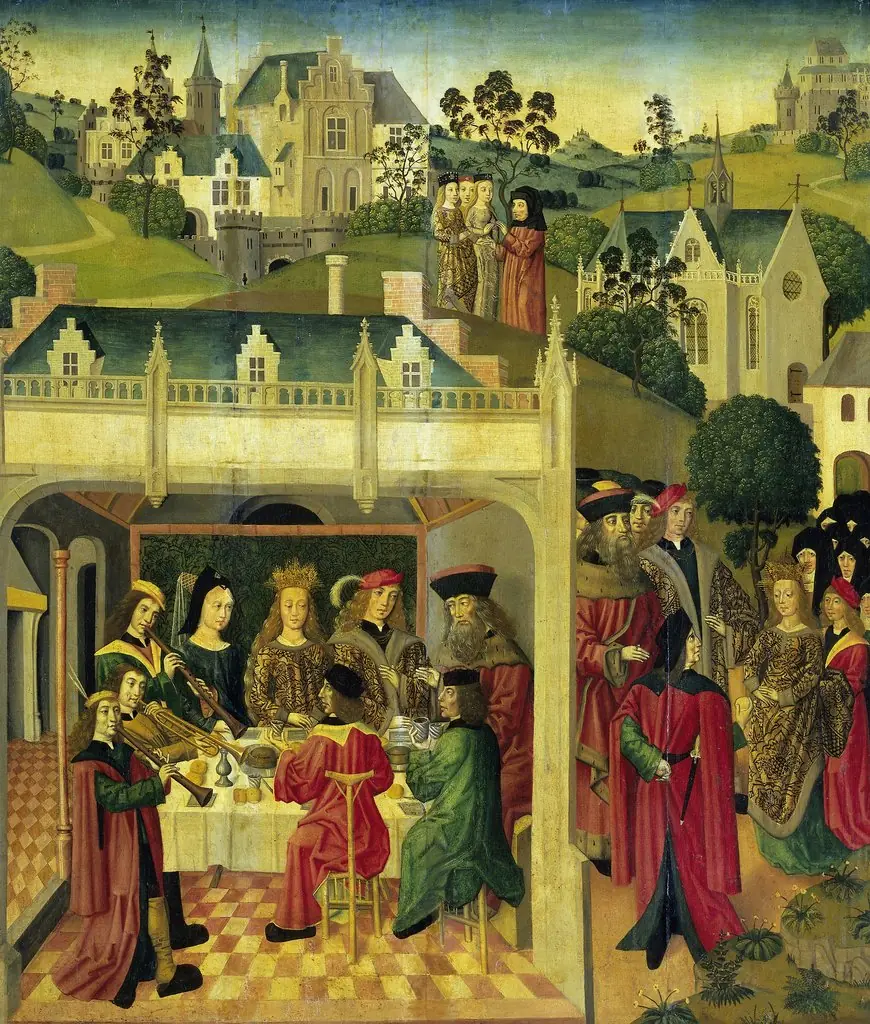 Inner left wing of an altarpiece with the wedding feast of St Elizabeth and Louis of Thuringia in the Wartburg
 Marriage of the Virgin
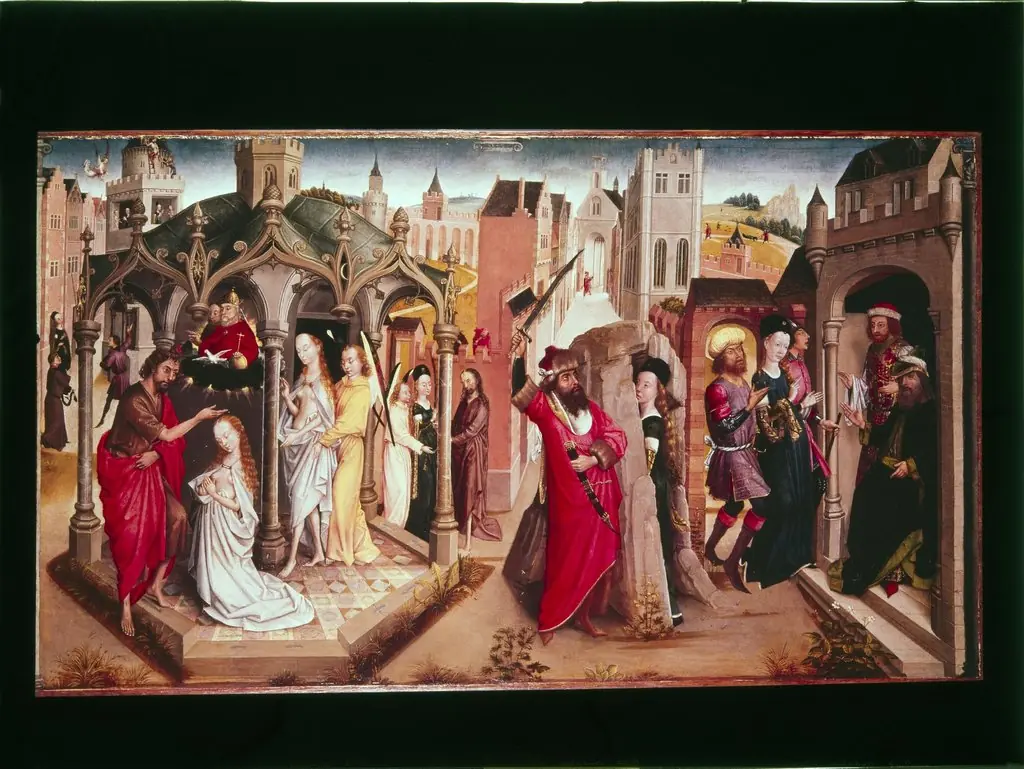 Part of a triptych; Scenes of the Life of St. Barbara
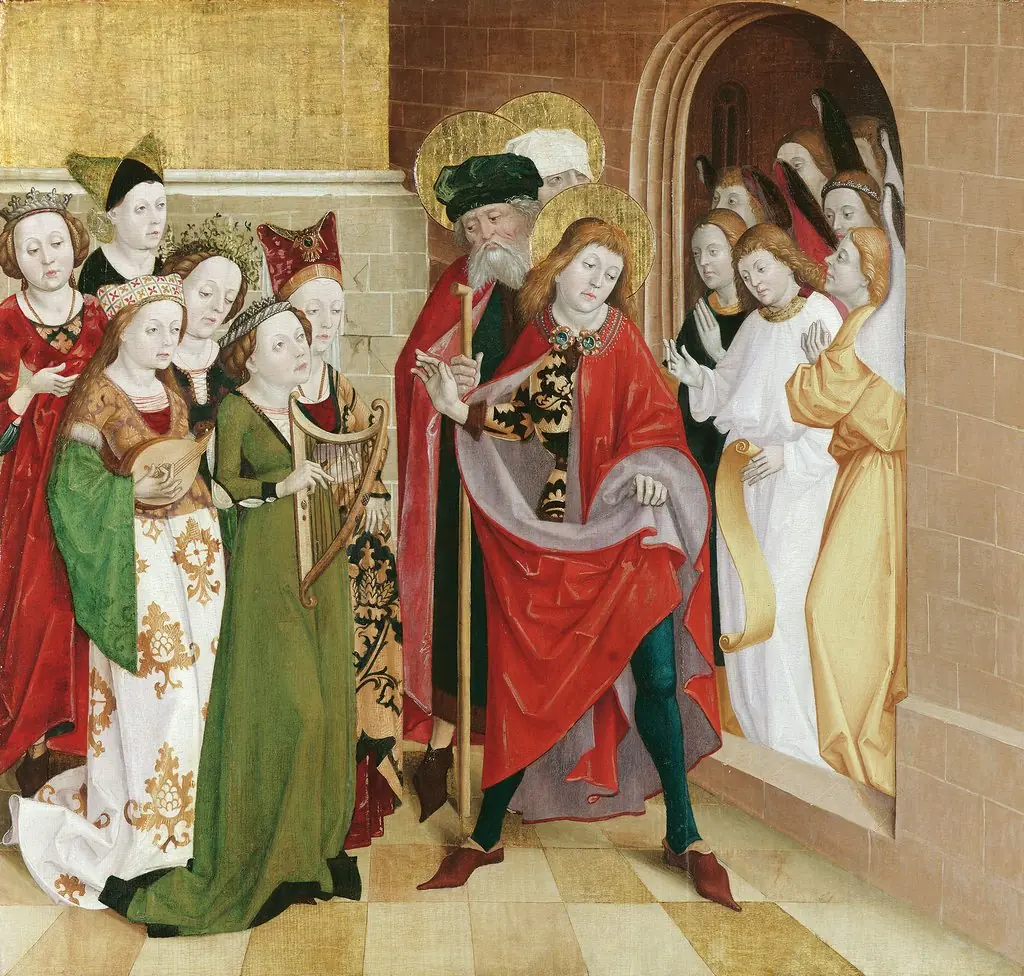 Der hl. Veit entsagt den Freuden der Welt
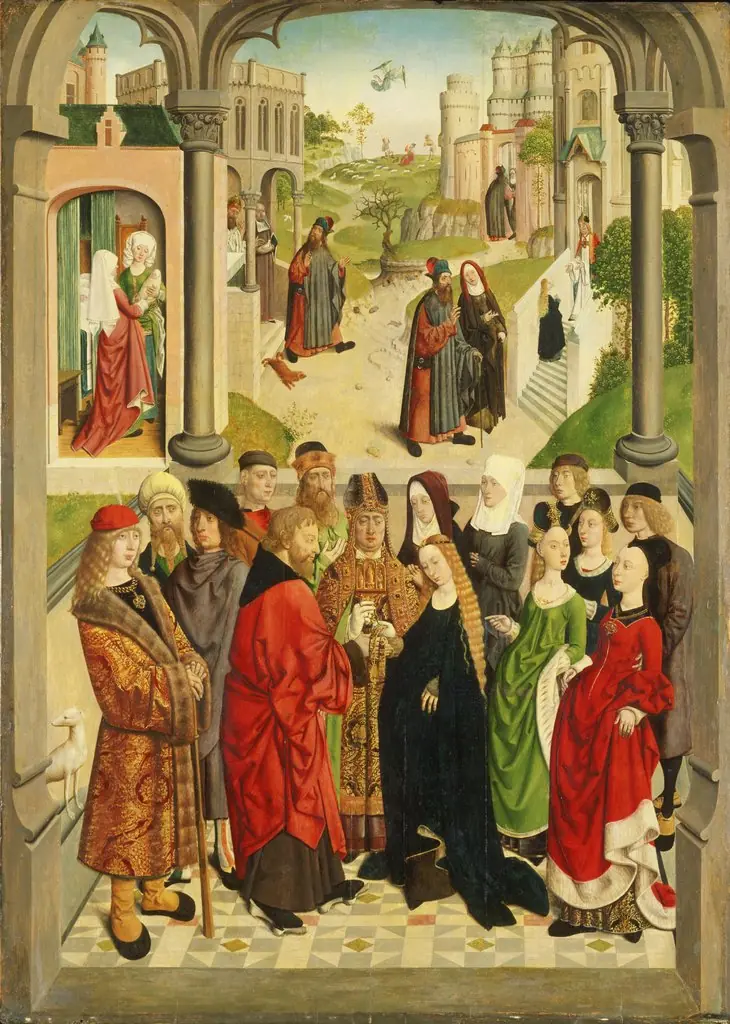 The Marriage of the Virgin, with the Expulsion of Saint Joachim from the Temple, the Angel Appearing to Saint Joachim, the Meeting at the Golden Gate, the Birth of the Virgin, and the Presentation of the Virgin
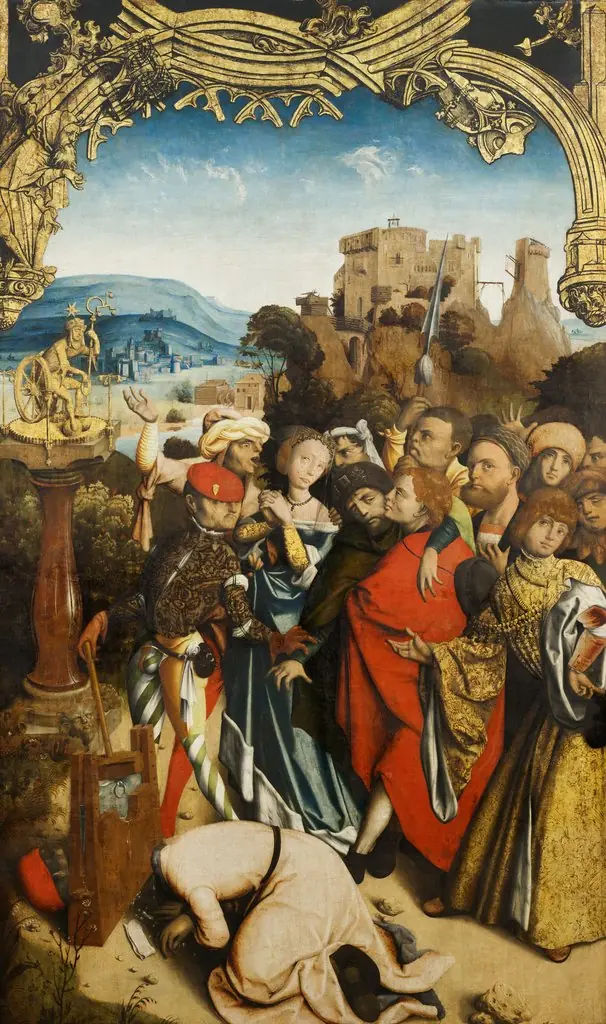 Martyrium der hll. Cantius, Cantianus und Cantianilla (Innenseite); Auferstehung Christi (Außenseite)
 The Adoration of the Magi
 Birth of Christ (Wurzach altarpiece)
 The Presentation in the Temple
 Adoration of the Three Kings
 Der zwölfjährige Jesus im Tempel
- The Story of Joseph