Artwork
The unsuccessful English attack against the returning Dutch fleet in the harbor of Bergen, Norway, 12 August 1665: episode from the Second Anglo-Dutch War (1665-67)
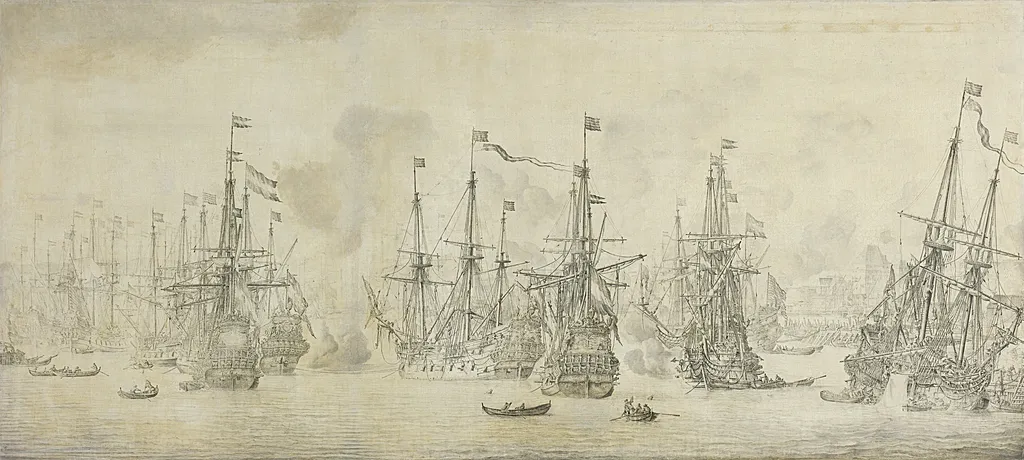
The unsuccessful English attack against the returning Dutch fleet in the harbor of Bergen, Norway, 12 August 1665: episode from the Second Anglo-Dutch War (1665-67) is an unspecified painting by the Dutch Golden Age artist Willem van de Velde the elder. It dates from 1669 and is held in the collection of the Rijksmuseum.
About this work
Subject & Meaning
The work represents a documented moment of naval warfare where the English attack proved unsuccessful against the defended Dutch vessels.
The painting depicts a specific naval engagement from the Second Anglo-Dutch War: the failed English assault on the returning Dutch fleet sheltered in the harbor of Bergen, Norway, on August 12, 1665. As a work of marine history painting, the composition focuses on the arrangement of boats and ships involved in this military episode. The imagery serves as a historical record of the conflict between England and the Dutch Republic during the mid-17th century, capturing the tactical situation of the fleets within the Norwegian harbor.
The work represents a documented moment of naval warfare where the English attack proved unsuccessful against the defended Dutch vessels.
Technique & Style
The painting was executed in oil on canvas, a technique characteristic of 17th-century marine history painting. Willem van de Velde the Elder employed delicate brushwork and precise detailing to render the naval scene, emphasizing the dynamic movement of ships and the atmospheric effects of sea and sky. The composition balances dramatic narrative with meticulous attention to the rigging and hull forms, reflecting the formal conventions of marine art.
The work measures 84 cm in height by 188 cm in width, as documented in the Rijksmuseum collection.
The canvas support was primed and painted with layered pigments that have retained their original vibrancy, though minor craquelure is visible across the surface, indicating age-related handling. The formal style combines realistic depiction with compositional harmony, typical of Dutch marine painting of the period.
History & Provenance
The painting was produced by Willem van de Velde the Elder in 1669, executed on canvas as a history painting documenting the English attack on the Dutch fleet at Bergen in 1665. The work is held in the collection of the Rijksmuseum, where it remains located. Dimensions are recorded as 84 cm in height by 188 cm in width.
No further details regarding an earlier ownership chain, specific commissioner, or intermediate provenance prior to its accession by the Rijksmuseum are documented in the available sources.
The painting is held in the collection of the Rijksmuseum, as indicated by the Wikidata record for the work. It is catalogued as a canvas painting by Willem van de Velde the Elder, dated 1669, with recorded dimensions of 84 cm in height and 188 cm in width. No specific inventory or accession number is provided in the available sources, and no exhibition history is documented.
Overview
Willem van de Velde the Elder’s 1669 oil on canvas records the failed English assault on a Dutch fleet anchored in Bergen, Norway, on 12 August 1665. The composition captures a turbulent harbor scene in which warships exchange cannon fire, their masts and rigging rendered with meticulous attention. The painting belongs to the Rijksmuseum’s collection and exemplifies the artist’s reputation for accurate maritime representation.
Context
The painting belongs to the broader tradition of Dutch Golden Age history paintings that blend documentary purpose with artistic ambition. Set against the backdrop of the Second Anglo‑Dutch War (1665‑67), it reflects the period’s preoccupation with naval power, trade protection, and the rivalry between England and the Dutch Republic for control of European sea lanes.
Artist & collection

Artist
Willem van de Velde the Elder (1610/11 – 13 December 1693) was a Dutch Golden Age seascape painter, who produced many precise drawings of ships and ink paintings of fleets, but later learned to use oil paints like his son.

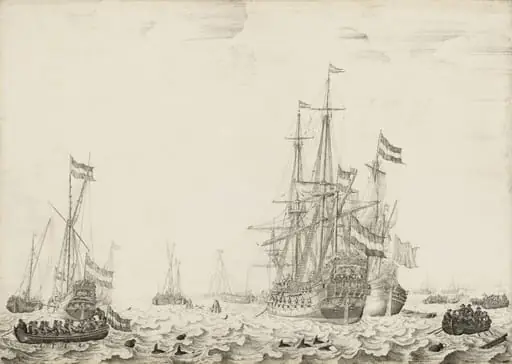 Dutch Ships near the Coast
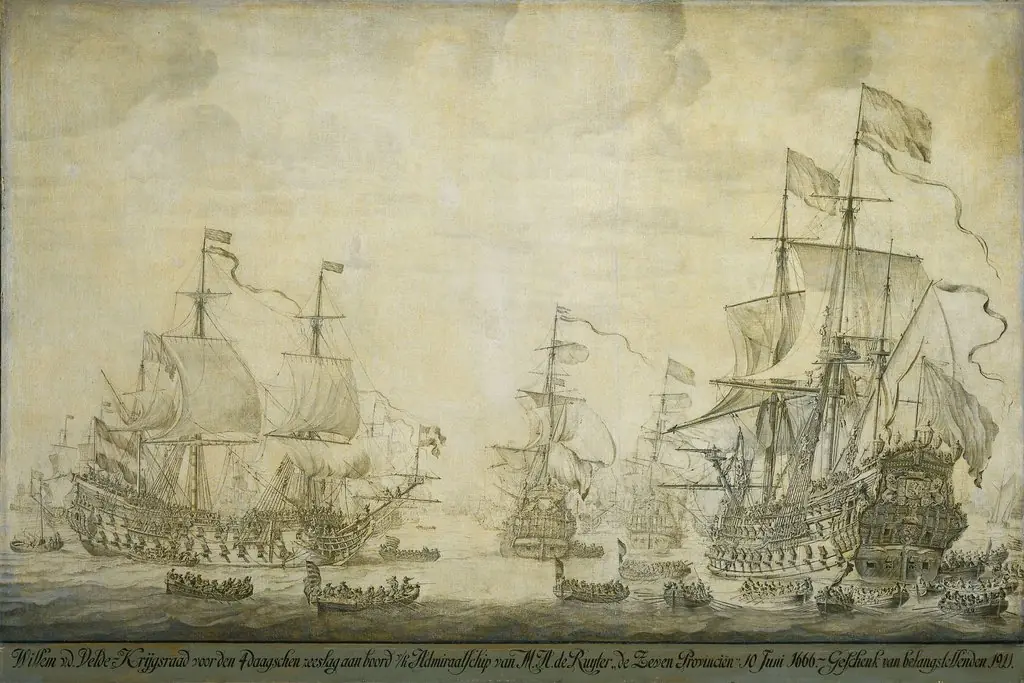 "Council of War aboard 'The Seven Provinces' the Flagship of Michiel Adriaensz de Ruyter, 10 June 1666, preceding the Four Days' Battle
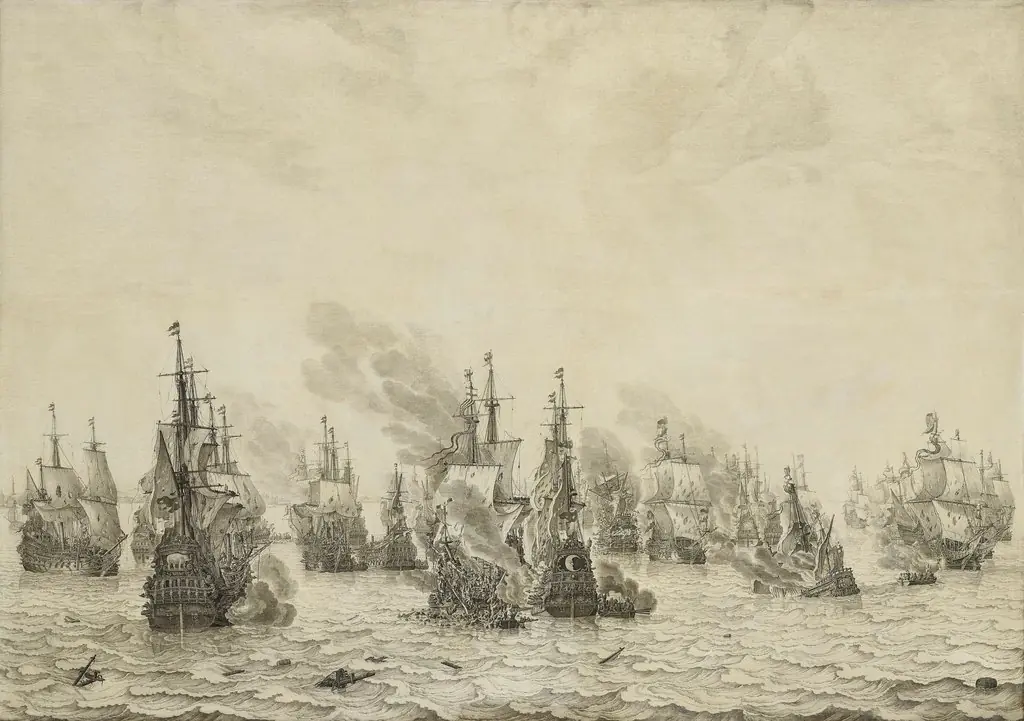 The Batlle of Livorno, 14 March 1653: episode from the First Anglo-Dutch War (1652-54)
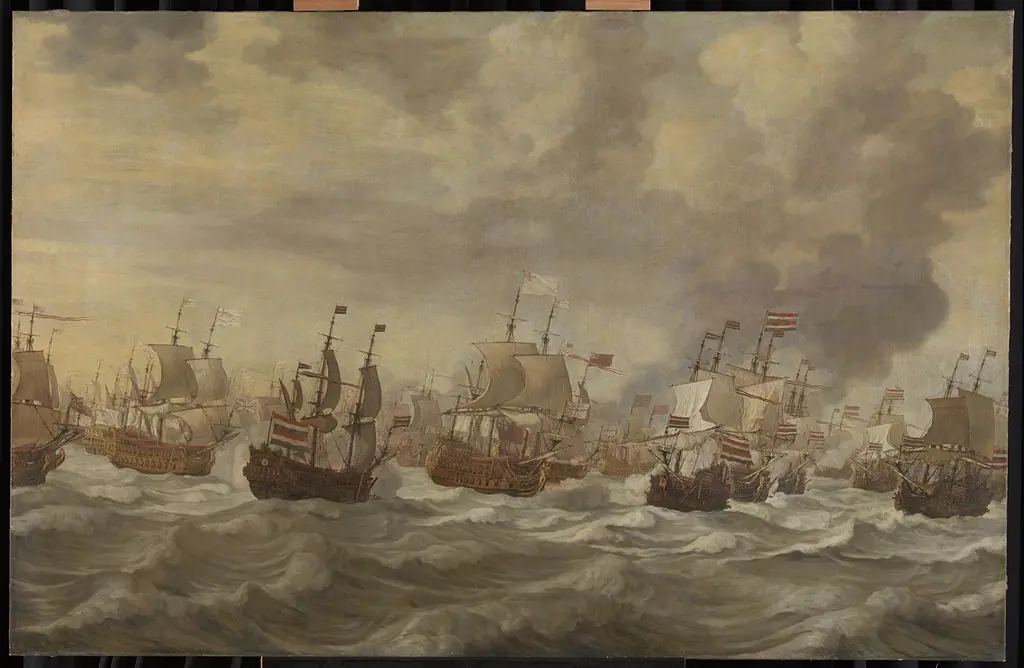 Episode from the Four Day Battle at Sea, 11-14 June 1666, in the second Anglo-Dutch War (1665-67)
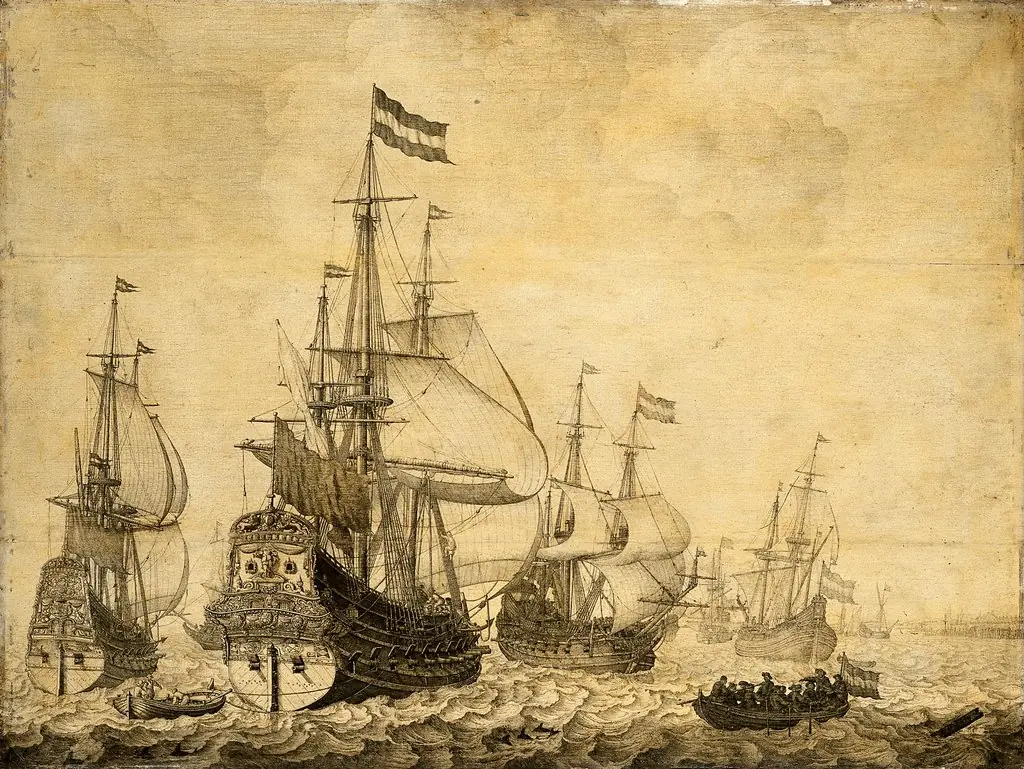 Seascape with Dutch men-of-war
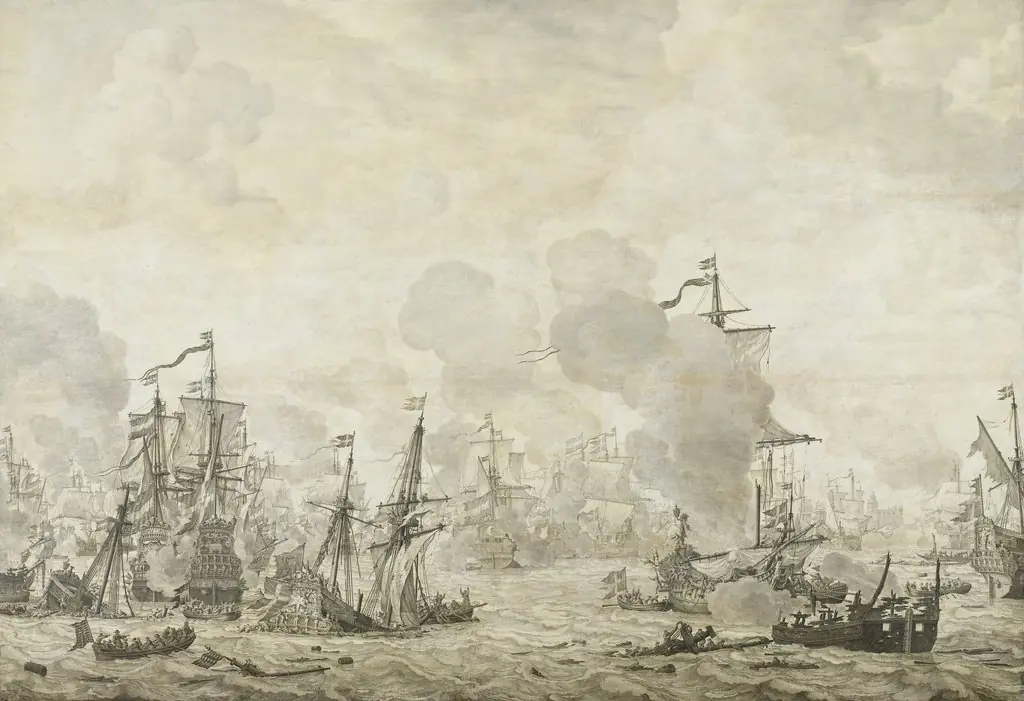 Episode from the Battle of the Sound between the Dutch and Swedish fleets, 8 November 1658
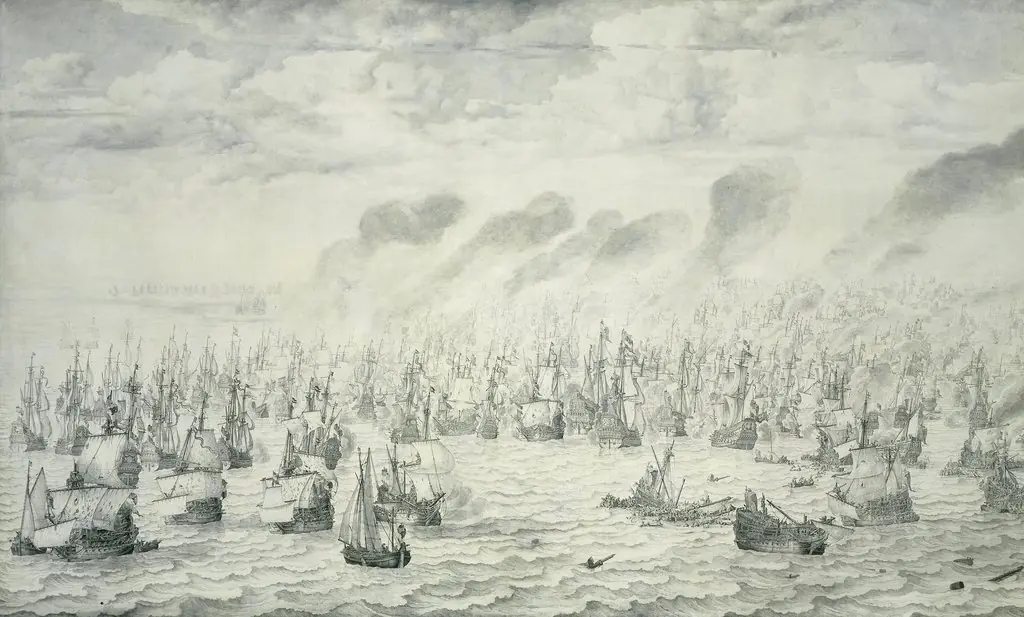 The Battle of Terheide
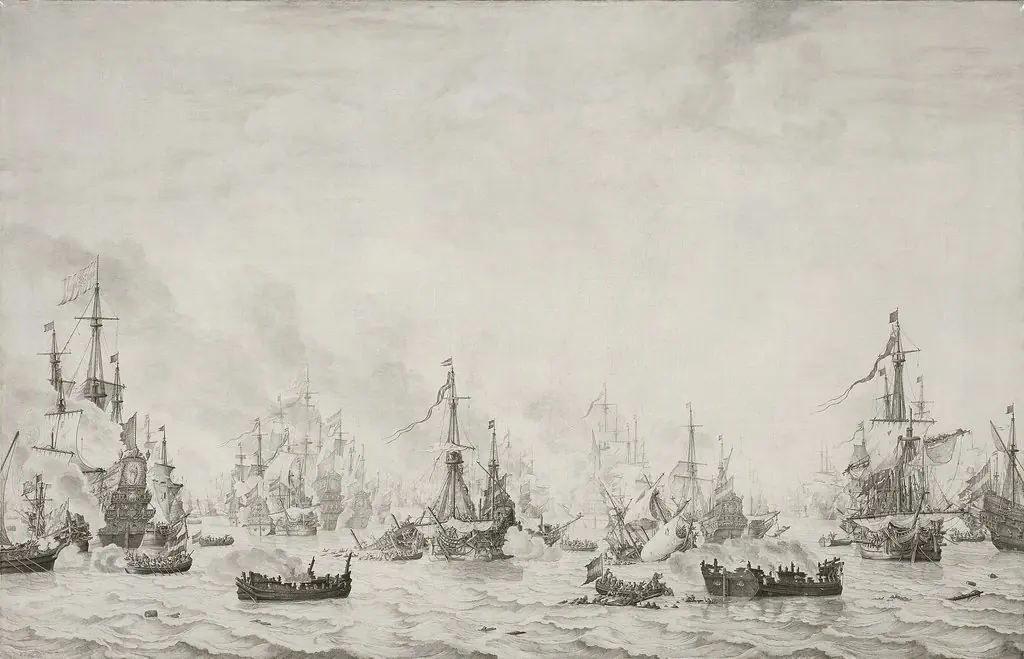 The Battle of the Downs
- Battle between the Dutch and Swedish Fleets, in the Sound, 8 November 1658
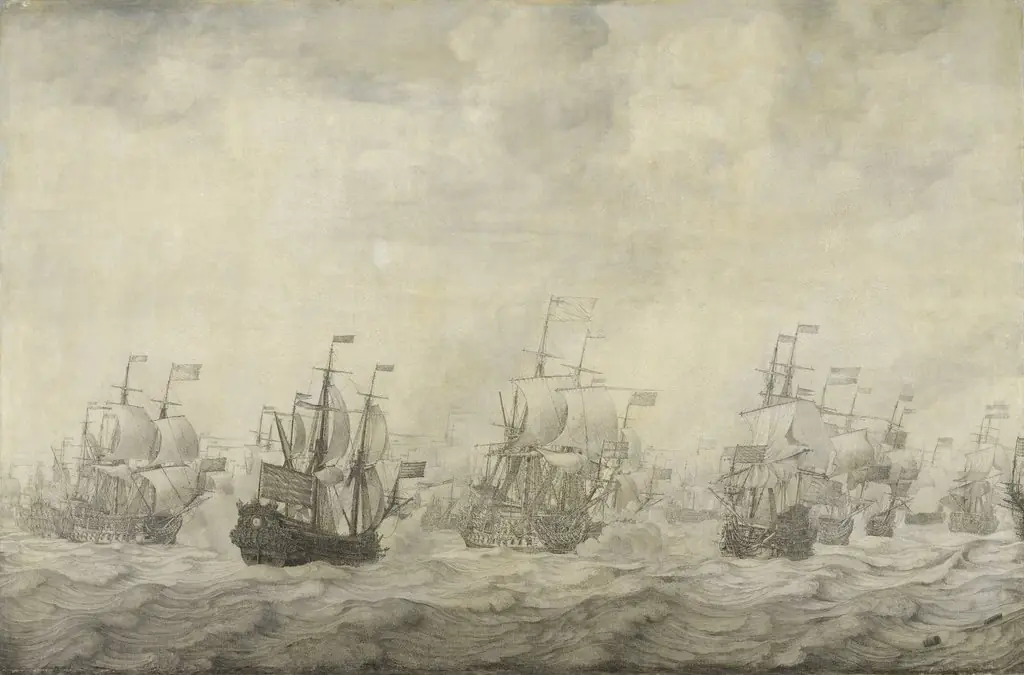 Episode from the Four Days Battle at Sea, 11-14 June 1666, in the Second Anglo-Dutch War (1665-67)
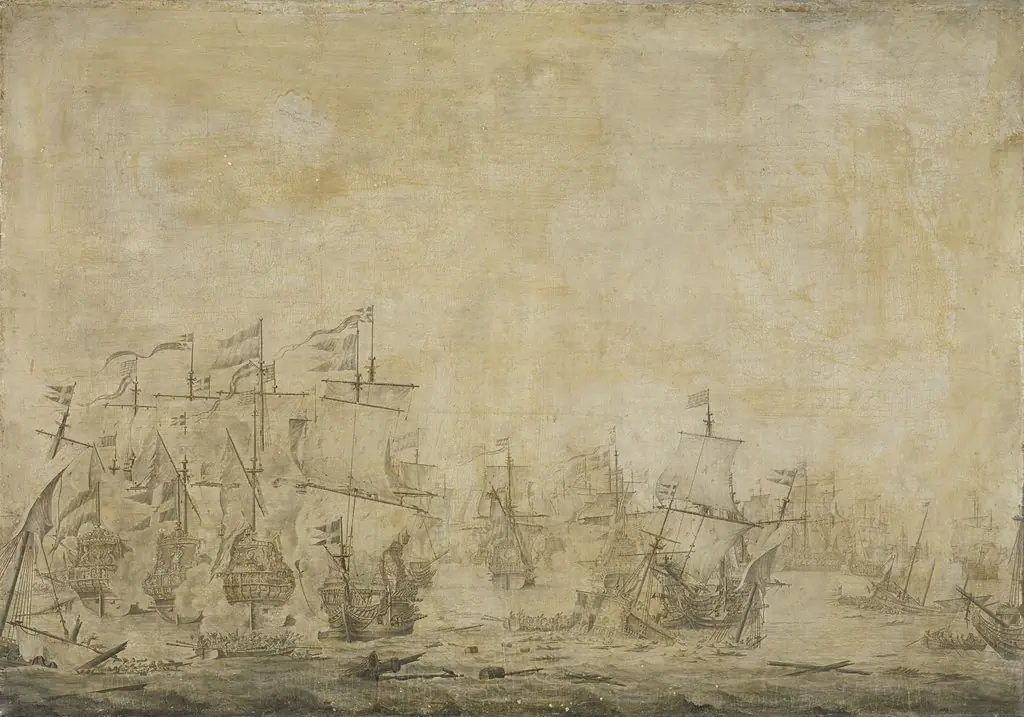 Episode from the Battle of the Sound between the Dutch and Swedish fleets, 8 November 1658
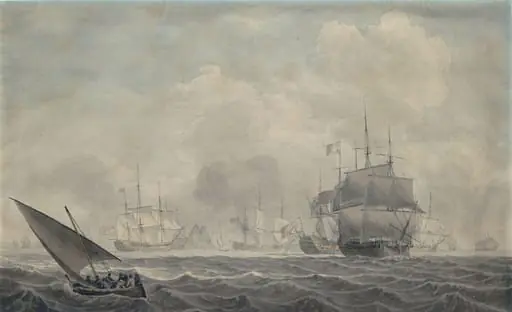 English Ships of War
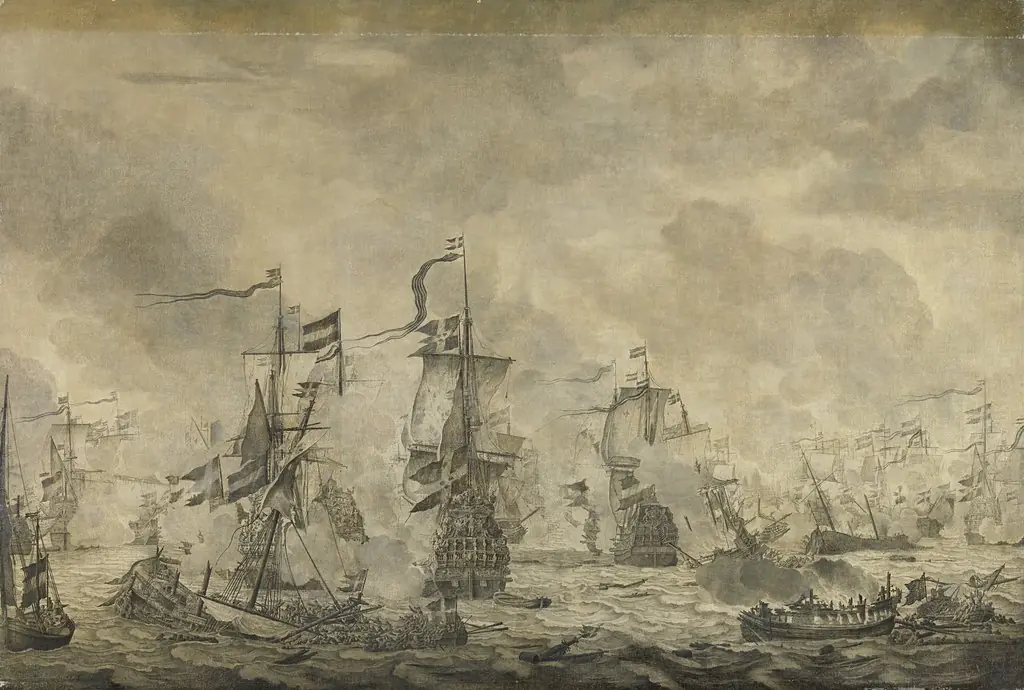 Episode from the Battle of the Sound between the Dutch and the Swedish fleets, 8 November 1658
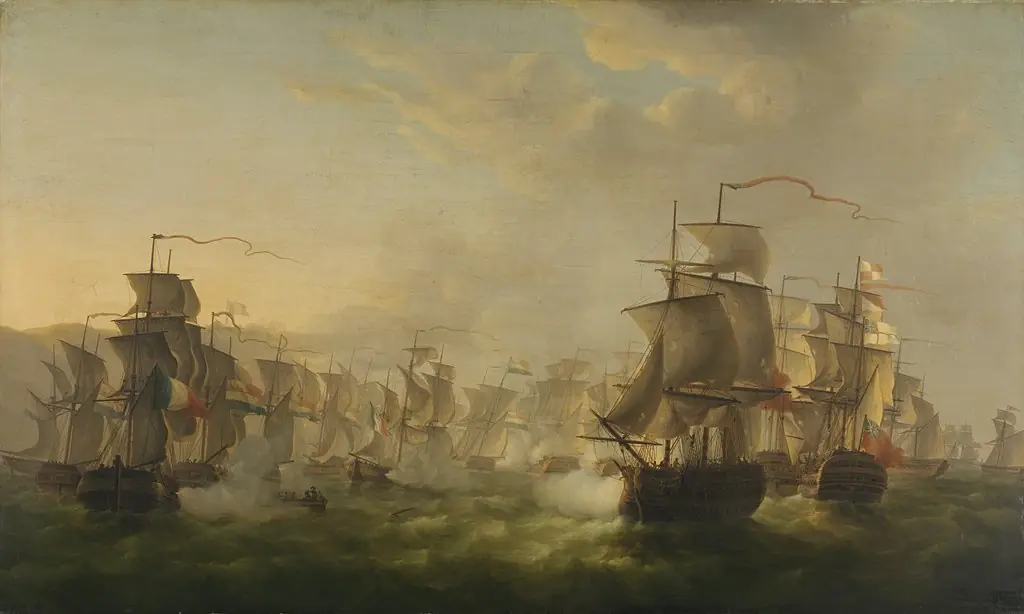 The Encounter of the Dutch and the English Fleet during the Voyage of the Dutch Flotilla to Boulogne, 1805
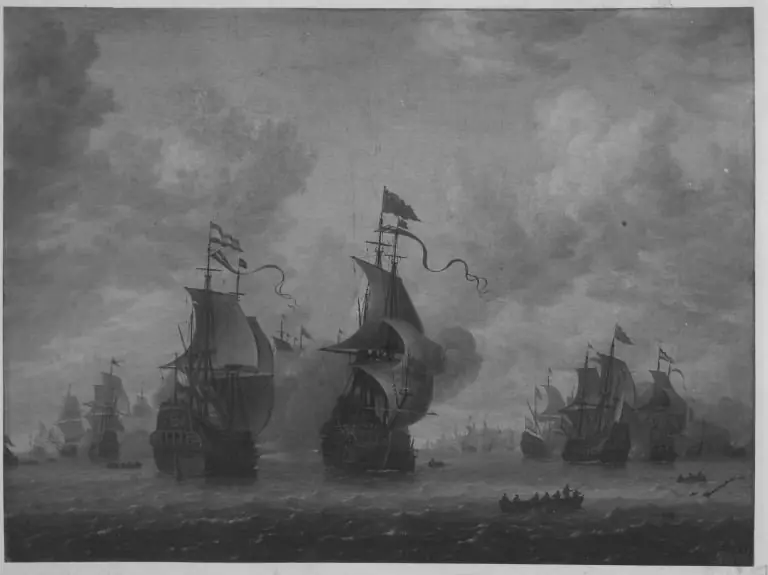 Sea battle between English and Dutch ships
 The Second Naval Battle
 Naval Battle