Artwork
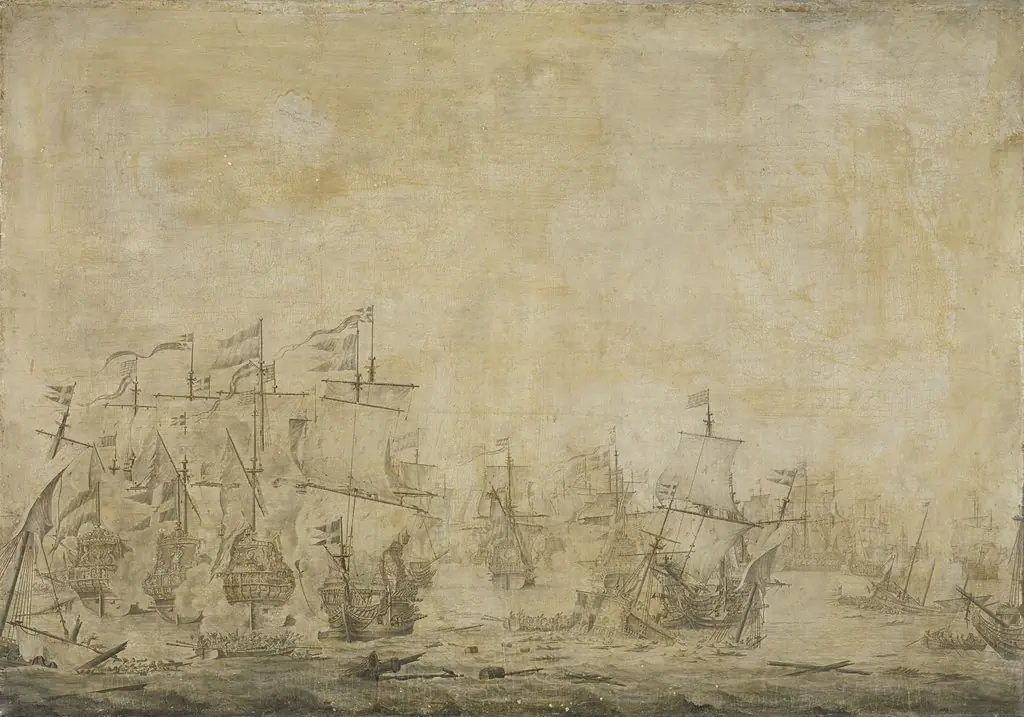
The Batlle of Livorno, 14 March 1653: episode from the First Anglo-Dutch War (1652-54)
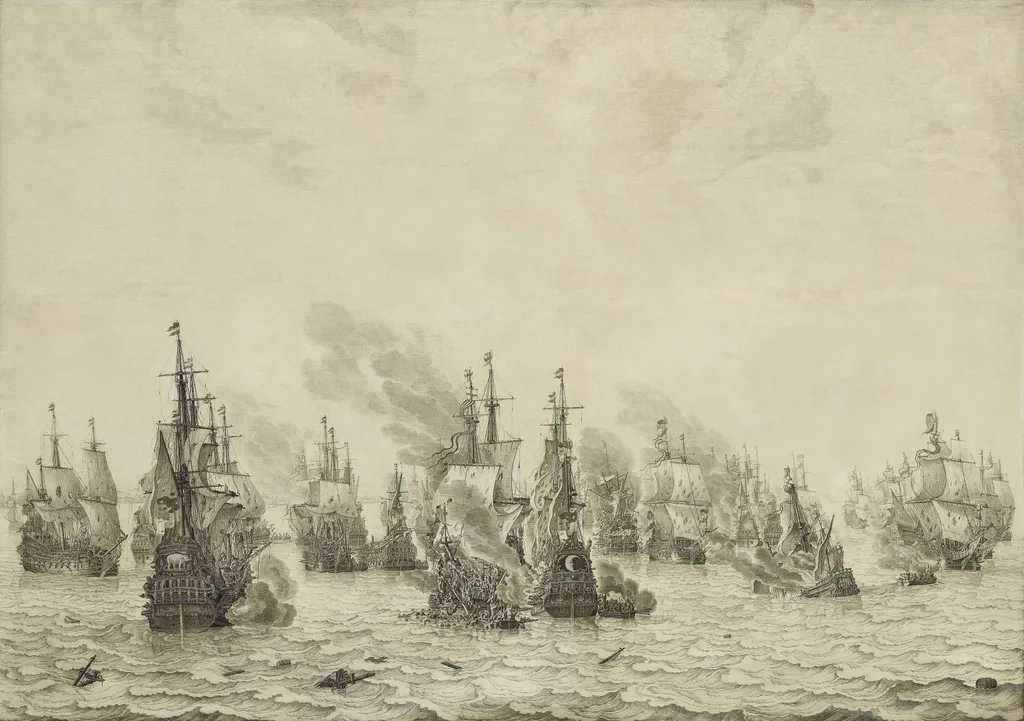
The Batlle of Livorno, 14 March 1653: episode from the First Anglo-Dutch War (1652-54) is an ink painting by the Dutch Golden Age artist Willem van de Velde the elder. It dates from 1654 and is held in the collection of the Rijksmuseum.
About this work
Subject & Meaning
The piece is associated with the broader genre of marine art and was originally owned by Cornelis Sebille Roos before entering the museum’s holdings.
The painting portrays a naval clash during the First Anglo-Dutch War, specifically the Battle of Leghorn on 14 March 1653, as recorded in the Rijksmuseum’s catalogue. Rendered in ink on panel by Willem van de Velde the Elder in 1654, the work functions as a history painting that commemorates a decisive English victory over Dutch forces. Its composition emphasizes the chaos of sea combat and the strategic dominance of the English fleet, reflecting contemporary maritime propaganda.
The artwork is housed in Rijksmuseum Amsterdam, displayed in hall 2.15, and forms part of the museum’s collection of battle and marine paintings. The piece is associated with the broader genre of marine art and was originally owned by Cornelis Sebille Roos before entering the museum’s holdings.
Technique & Style
Willem van de Velde the Elder created a battle painting using ink on wood panel to depict the naval clash of 14 March 1653 during the First Anglo-Dutch War. The work measures 160 cm in width and 114 cm in height, reflecting the marine genre and historical narrative typical of 17th-century Dutch art. It is classified as a history painting and battle scene within the marine art tradition, executed with precise ink techniques on a wooden support.
The composition emphasizes dynamic ship interactions and tactical movement, showcasing the artist's mastery of maritime subject matter through formal arrangement and stylistic clarity. Its creation in 1654 aligns with the period's developments in naval illustration, while its current display at the Rijksmuseum Amsterdam places it within the institutional context of Dutch Golden Age marine art.
History & Provenance
Created in 1654 by Willem van de Velde the Elder, this ink painting on panel depicts the Battle of Leghorn, a naval engagement from the First Anglo-Dutch War. The work measures 114 cm in height and 160 cm in width. Historical records indicate that the piece was once owned by Cornelis Sebille Roos.
Today, the painting is held in the collection of the Rijksmuseum in Amsterdam, where it is displayed in hall 2.15 as a significant example of marine art and battle painting.
The painting is part of the Rijksmuseum's collection in Amsterdam, where it is displayed in hall 2.15. It was acquired by the museum through the bequest of Cornelis Sebille Roos.
Exhibition history includes a presentation in the museum's 1995 exhibition titled 'Dutch and Flemish Masterpieces from the Rijksmuseum Collection'.
Context
Willem van de Velde the Elder specialized in marine and battle scenes, a focus reflected in his 1654 work depicting the Battle of Leghorn. His artistic lineage was rooted in a family of painters; his son, Willem van de Velde the Younger, later collaborated with him and achieved prominence for detailed ship drawings. Contemporary assessments of the painting’s reception are limited in available scholarship, but its inclusion in the Rijksmuseum collection underscores its historical significance within Dutch Golden Age art.
The work’s genre aligns with 17th-century Dutch interests in documenting naval conflicts, placing it within broader discussions of maritime art and historiography.
Scholars have examined the painting’s composition and historical context as part of the First Anglo-Dutch War narrative, though specific critical commentary from the period is sparsely documented. It remains a key example of van de Velde’s contribution to the evolution of marine painting, influencing later artists in the genre. The attribution to van de Velde the Elder is well-established in art historical literature and supported by institutional records.
The painting’s placement in the Rijksmuseum’s collection highlights its recognized value in illustrating 17th-century Dutch naval history and artistic innovation.
Overview
Willem van de Velde the Elder produced this ink drawing in 1654, depicting a naval clash that occurred on 14 March 1653 off the coast of Livorno. The work records a specific episode of the First Anglo‑Dutch War (1652–54), focusing on the violent encounter known as the Battle of Leghorn.
Own this work as a print
Artist & collection

Artist
Willem van de Velde the Elder (1610/11 – 13 December 1693) was a Dutch Golden Age seascape painter, who produced many precise drawings of ships and ink paintings of fleets, but later learned to use oil paints like his son.

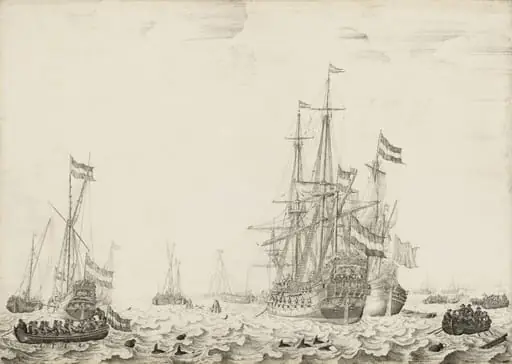 Dutch Ships near the Coast
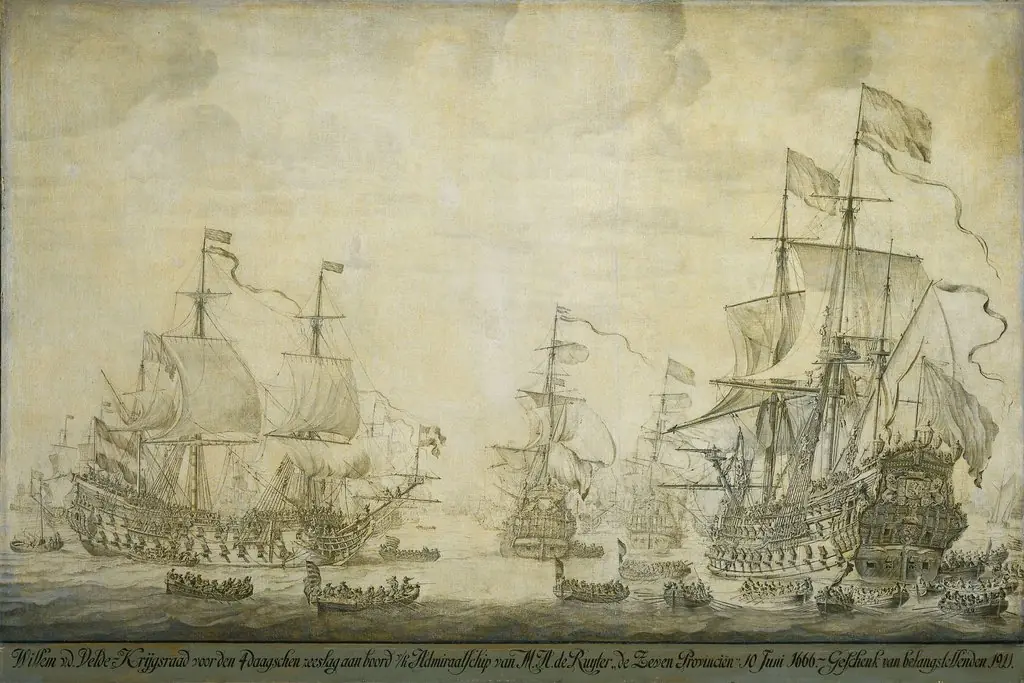 "Council of War aboard 'The Seven Provinces' the Flagship of Michiel Adriaensz de Ruyter, 10 June 1666, preceding the Four Days' Battle
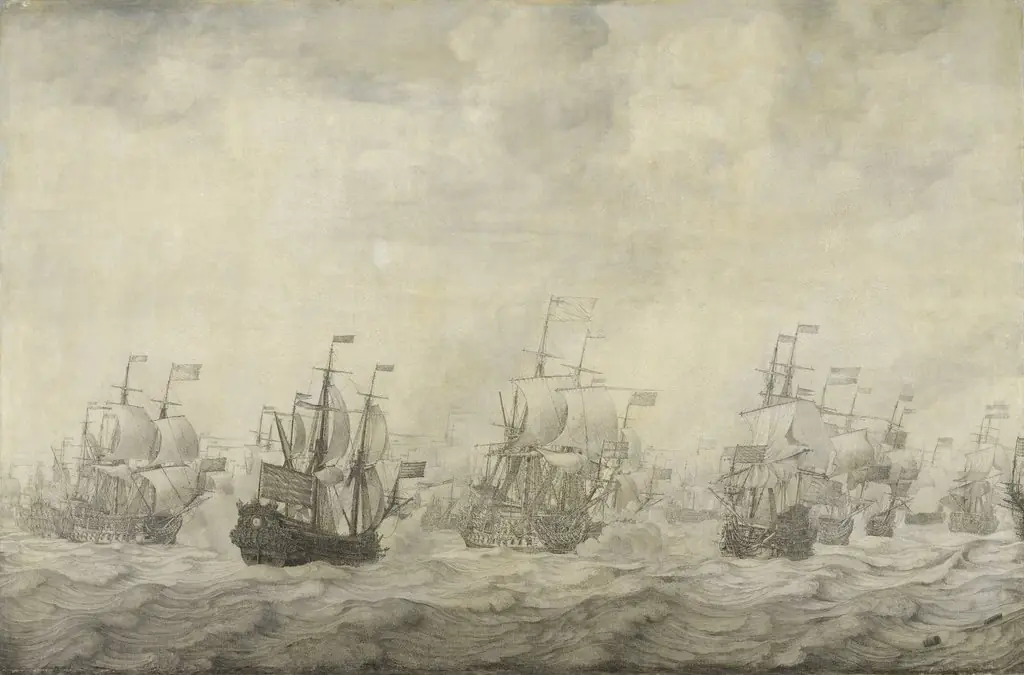
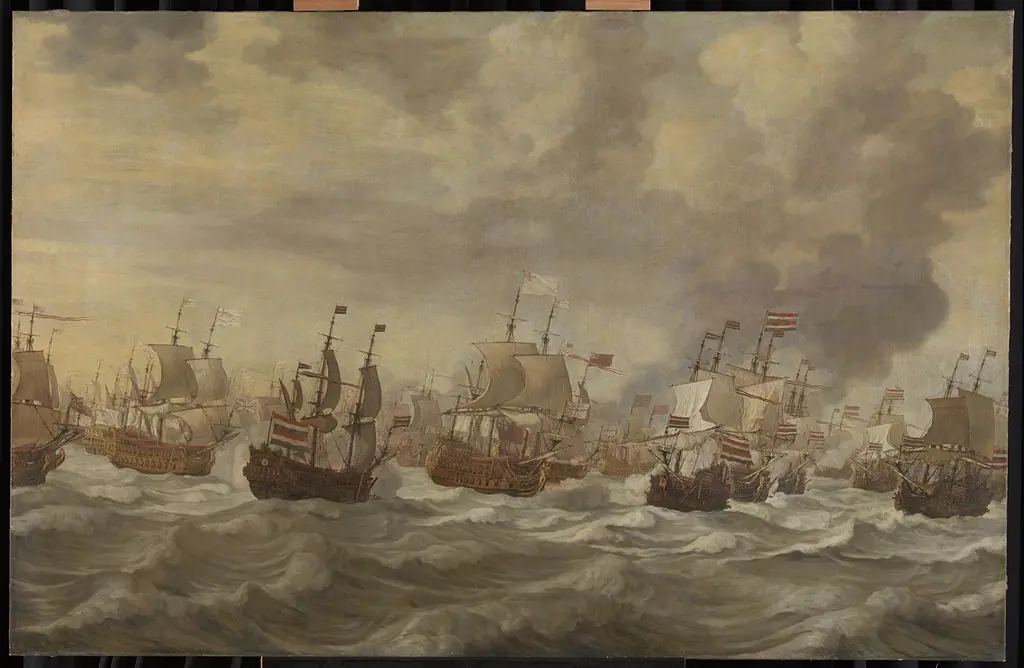 Episode from the Four Day Battle at Sea, 11-14 June 1666, in the second Anglo-Dutch War (1665-67)
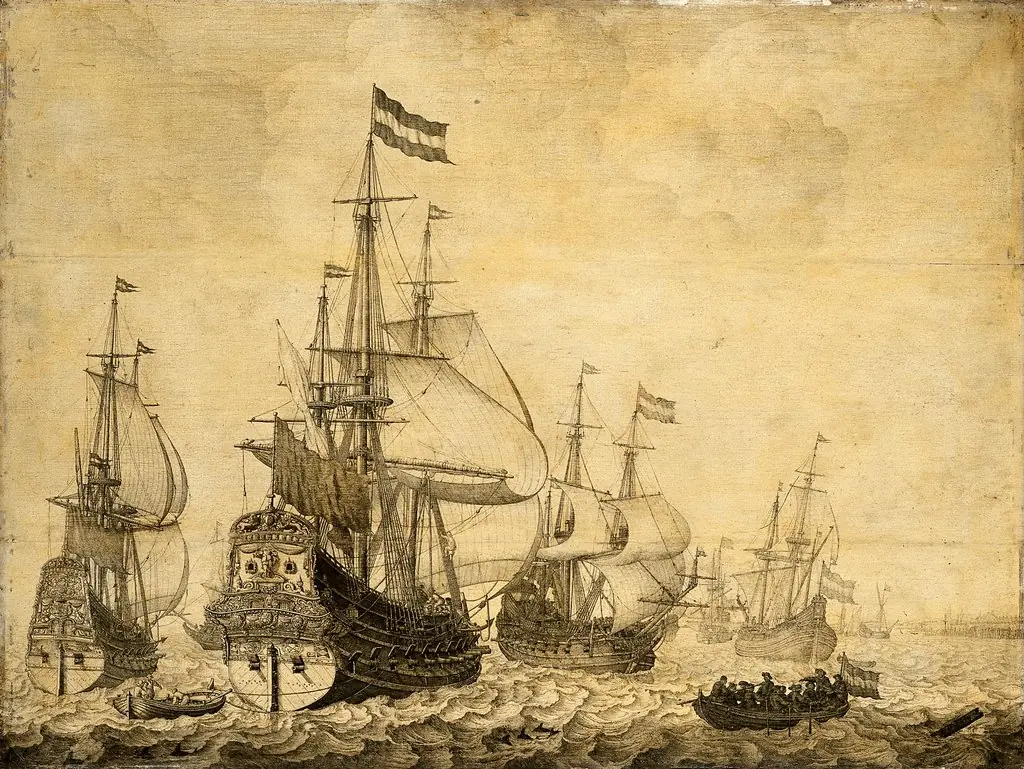 Seascape with Dutch men-of-war
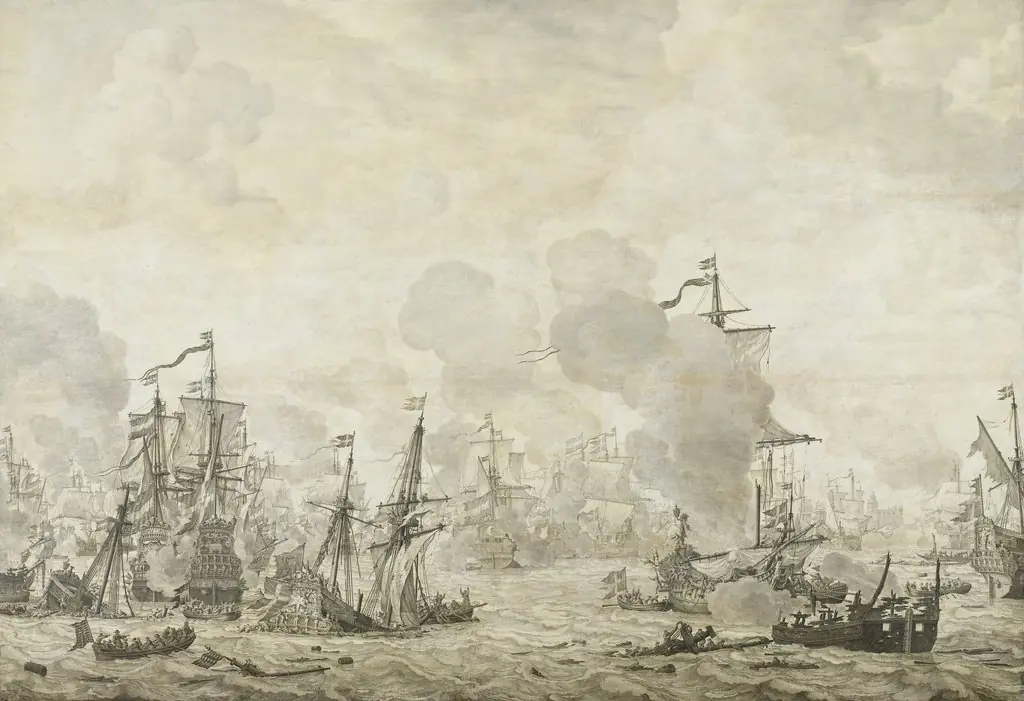 Episode from the Battle of the Sound between the Dutch and Swedish fleets, 8 November 1658
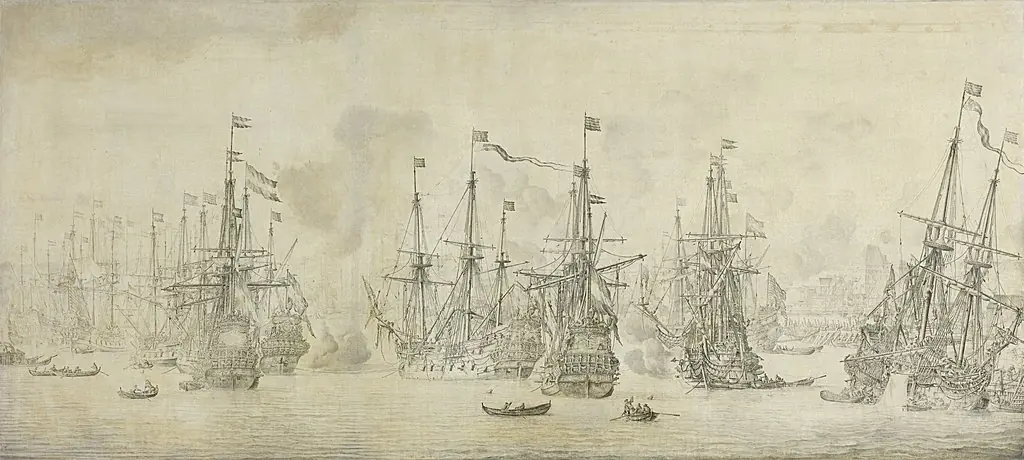 The unsuccessful English attack against the returning Dutch fleet in the harbor of Bergen, Norway, 12 August 1665: episode from the Second Anglo-Dutch War (1665-67)
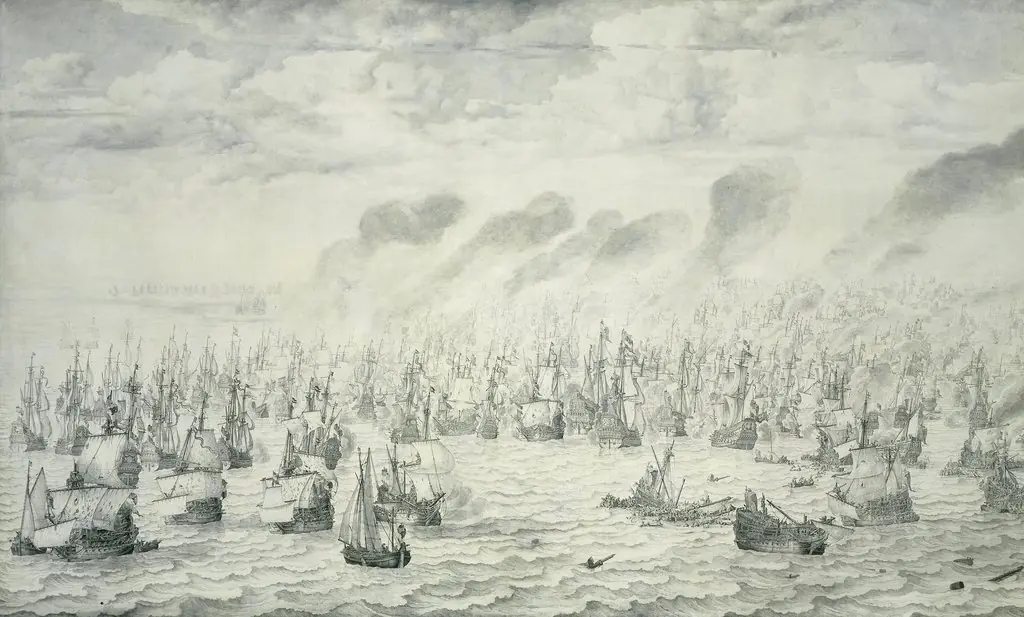 The Battle of Terheide
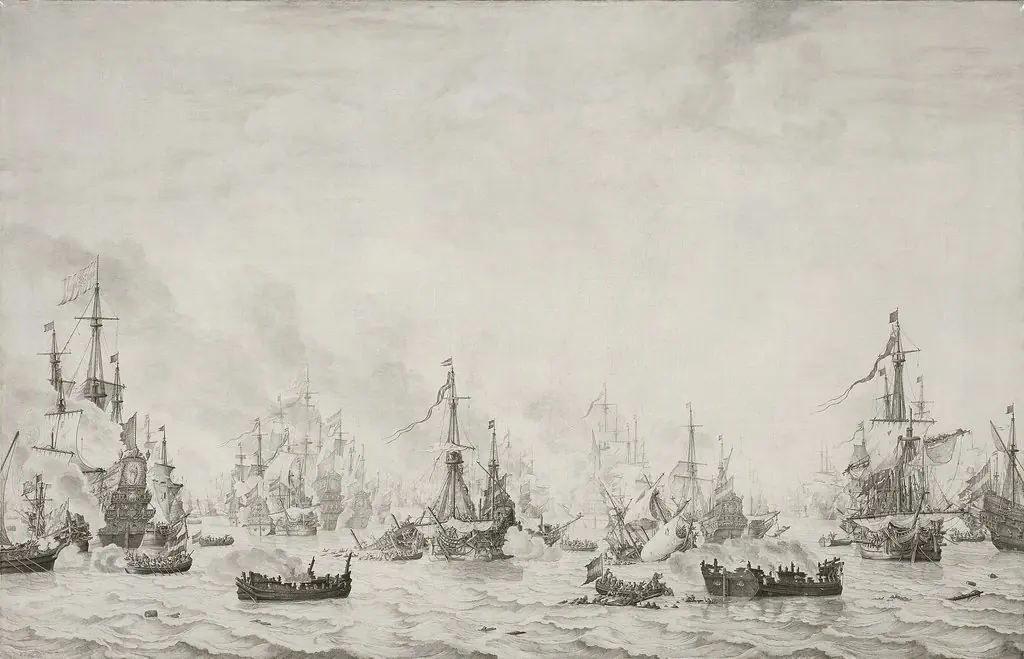 The Battle of the Downs
- Episode from the Four Days Battle at Sea, 11-14 June 1666, in the Second Anglo-Dutch War (1665-67)
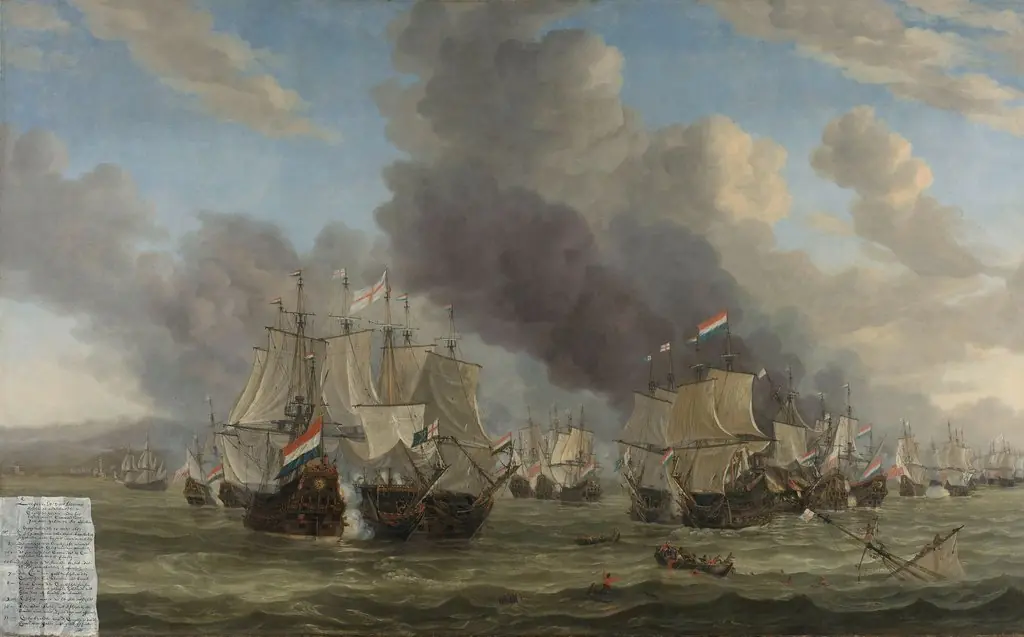 The Battle of Livorno
 Slag bij Livorno
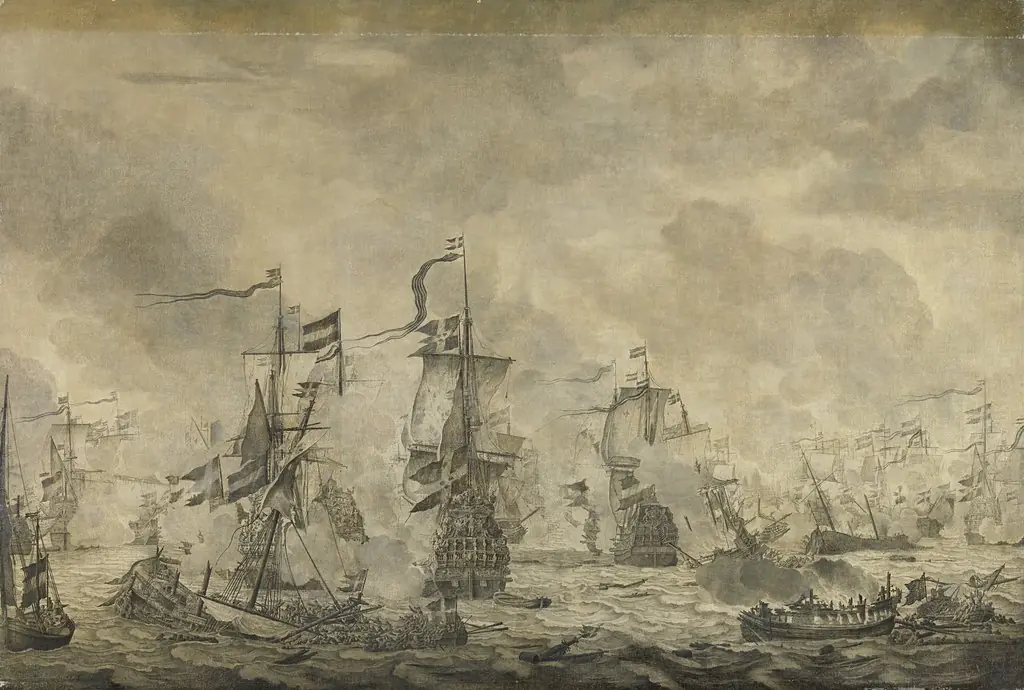 Episode from the Battle of the Sound between the Dutch and the Swedish fleets, 8 November 1658
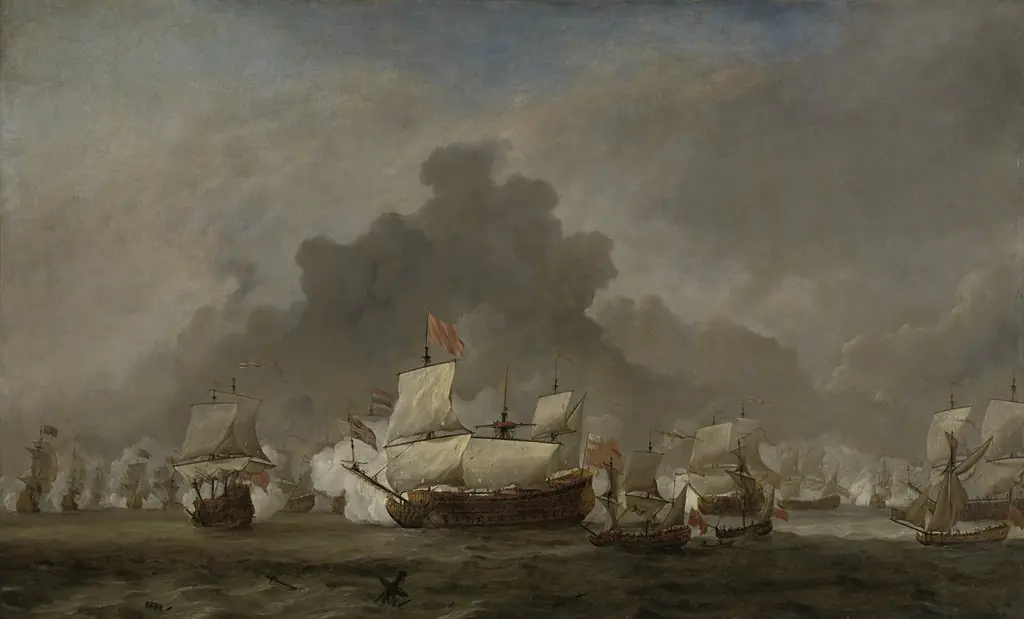 The skirmish of Michiel Adriaensz de Ruyter against the duke of York, commanding the 'Royal Prince'during the Battle of Solebay, 7 June 1672: episode from the Third Anglo-Dutch War (1672-74)
 Battle between the Dutch and Swedish Fleets, in the Sound, 8 November 1658
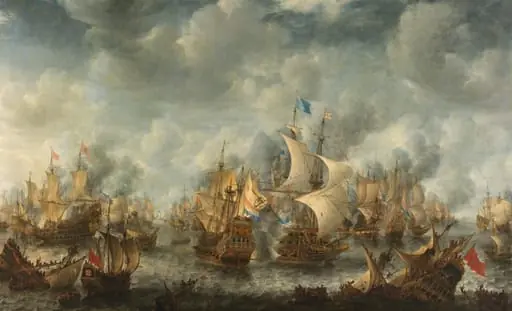 Slag bij Terheide
 Episode from the Battle of the Sound between the Dutch and Swedish fleets, 8 November 1658