Artwork
Warren Rogers
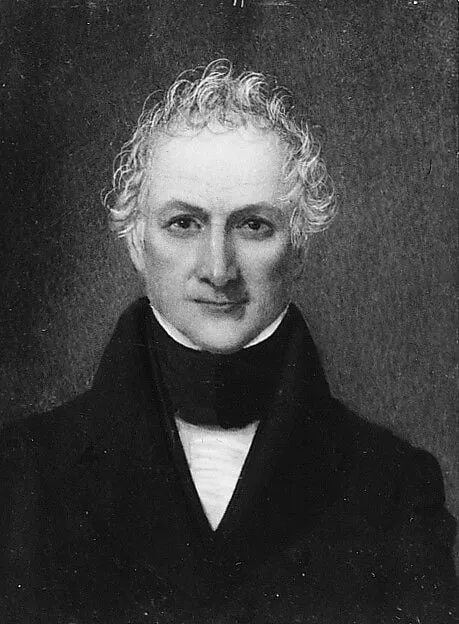
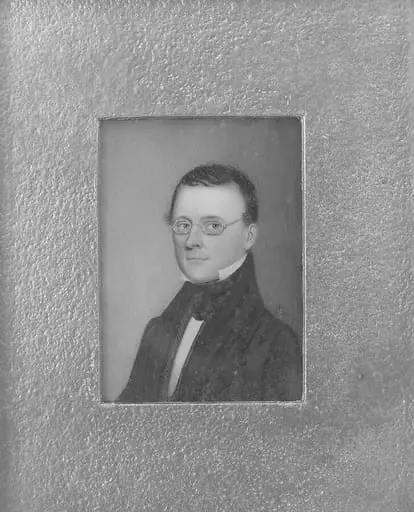
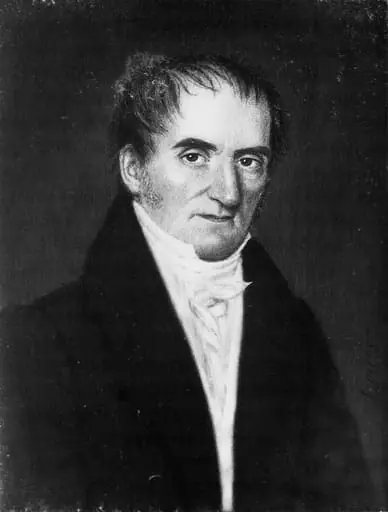
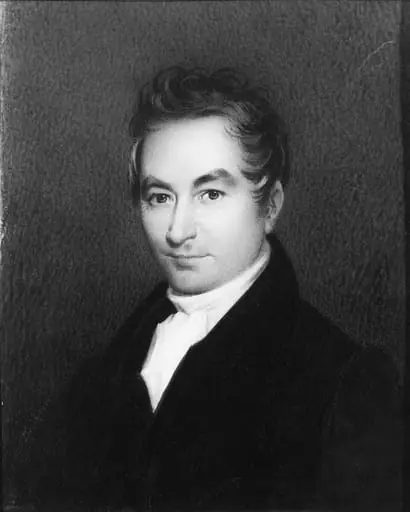
Warren Rogers is a watercolor painting by the American Folk Art artist Theodore Lund. It dates from 1839 and is held in the collection of the Metropolitan Museum of Art.
- Accession no.
- 1981.447.3
- Credit line
- Gift of Isabella Reeder Jones, in memory of her husband, Eugene Jones II, 1981
About this work
Subject & Meaning
Created by Theodore Lund in 1839, the piece falls within the genre of portraiture, focusing on the representation of a specific male individual.
The work is a portrait depicting a man, identified in the record as Warren Rogers. Created by Theodore Lund in 1839, the piece falls within the genre of portraiture, focusing on the representation of a specific male individual. As a watercolor on ivory, the medium was traditionally employed for intimate, detailed likenesses, emphasizing the sitter's personal identity rather than broader allegorical narratives.
The subject is presented without additional contextual figures or symbolic attributes in the available descriptions, suggesting the primary intent was to capture the likeness and presence of Rogers himself. The composition serves as a direct visual record of the individual, characteristic of early 19th-century American portraiture where the depiction of the sitter's features was the central meaningful element.
Technique & Style
Warren Rogers is rendered in watercolor on ivory, a common miniature portrait support of the period. Theodore Lund’s handling emphasizes fine, controlled brushwork to articulate facial features and costume details, typical of early nineteenth-century American miniature practice. The ivory support’s smooth, reflective surface enhances the luminosity of the watercolor pigments, while the intimate scale, measuring 6.8 cm in height and 5.2 cm in width, positions the work within the conventions of portrait miniatures designed for private circulation.
Stylistically, the portrait conveys restrained realism, with attention to physiognomic accuracy and subdued tonal modulation rather than dramatic chiaroscuro, reflecting the restrained aesthetic favored in American portrait miniatures of the 1830s.
History & Provenance
The artwork titled Warren Rogers was created in 1839 by the artist Theodore Lund. Executed as a watercolor on ivory, this portrait depicts a man and measures 6.8 units in height by 5.2 units in width. The work is currently held within the collection of the Metropolitan Museum of Art, where it is classified under The American Wing.
While the specific commissioning details and the full chain of ownership prior to its arrival at the museum are not detailed in the available records, the piece is definitively dated to the year 1839. The creation history centers on Lund's execution of this miniature portrait, which remains a part of the institution's permanent holdings.
Warren Rogers is held in the collection of the Metropolitan Museum of Art, where it is catalogued within The American Wing and classified as a portrait. The work is recorded as a watercolor on ivory created by Theodore Lund in 1839, with dimensions of 6.8 × 5.2 inches. Both sources identify the Metropolitan Museum of Art as the institution housing the piece, but they do not provide an explicit inventory or accession number.
No exhibition history is documented in the supplied references, indicating that the work’s public display record is not detailed in the available material.
Overview
This miniature portrait, titled Warren Rogers, was created by Theodore Lund around 1839. Executed in watercolor on ivory, it presents a direct likeness of a man, presumably Warren Rogers himself. The subject is depicted in a dark coat, his face softly illuminated as he gazes straight ahead.
Its diminutive size, small enough to be held in one's hand, is characteristic of portrait miniatures from the period, intended for intimate viewing and personal possession.
Artist & collection