Artwork
An Indian Lady, perhaps 'Jemdanee', Bibi of William Hickey
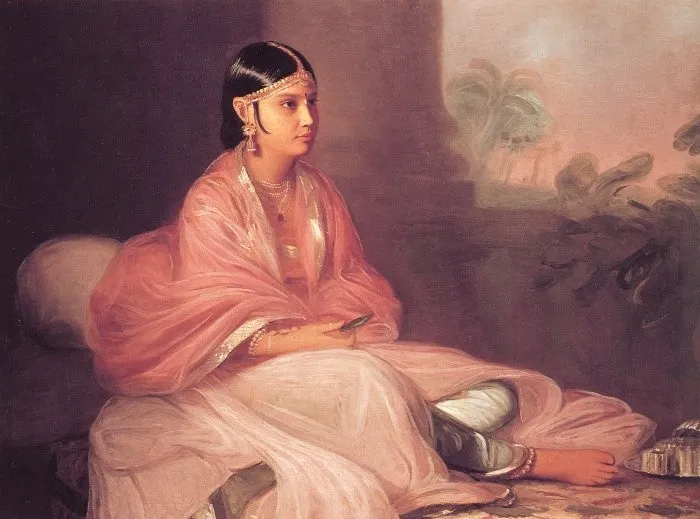
An Indian Lady, perhaps 'Jemdanee', Bibi of William Hickey is an oil painting by the Patna School of Painting artist Thomas Hickey. It dates from 1794 and is held in the collection of the National Gallery of Ireland.
About this work
Overview
Thomas Hickey’s 1794 oil on canvas portrays a seated Indian woman in a pink robe, her dark hair styled beneath a matching headpiece. She is surrounded by modest interior details, a wall and a faint window, while holding a small object in her right hand, suggesting a moment of quiet reflection.
Subject & Meaning
The sitter, identified in historical records as ‘Jemdanee’ or the Bibi of William Hickey, is presented with traditional jewelry, necklace, earrings, bracelets, highlighting her cultural identity within a European portrait framework. The composition balances personal presence with subtle indications of domestic space.
Technique & Style
Executed in the company painting tradition, Hickey employs a restrained palette and fine brushwork to render the textures of silk and metal. The soft modeling of the figure’s face and the delicate handling of light create a sense of immediacy typical of late‑18th‑century portraiture.
History & Provenance
An Irish artist trained at the Royal Dublin Society, Hickey spent several years in India, producing works for colonial patrons. After its creation, the painting entered the collection of the National Gallery of Ireland, where it remains on display.
Context
The portrait reflects the cross‑cultural encounters of the British colonial period, illustrating how European artists documented Indian subjects for both personal and official purposes. It offers insight into the visual conventions used to represent Indian women within a Western artistic idiom.
Artist & collection
Artist
Thomas Hickey (c. 13 May 1741 – May 1824) was an Irish painter. Born in Dublin, Hickey was the son of Noah, a confectioner in Capel Street, and Anne Hickey. A younger brother was John Hickey, the sculptor. He was…

 Portrait of two Children
 Thomas Leland (1722-1785)
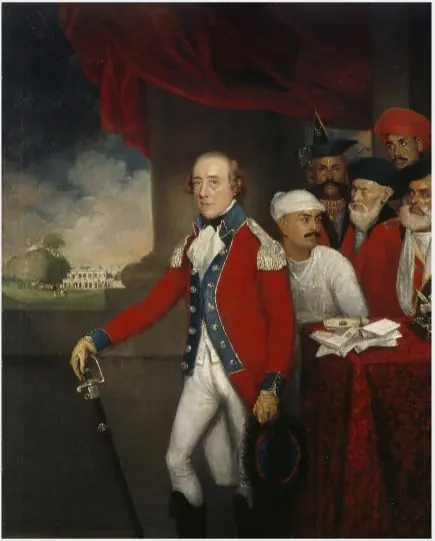 Lieutenant-Colonel William Kirkpatrick with His Assistants
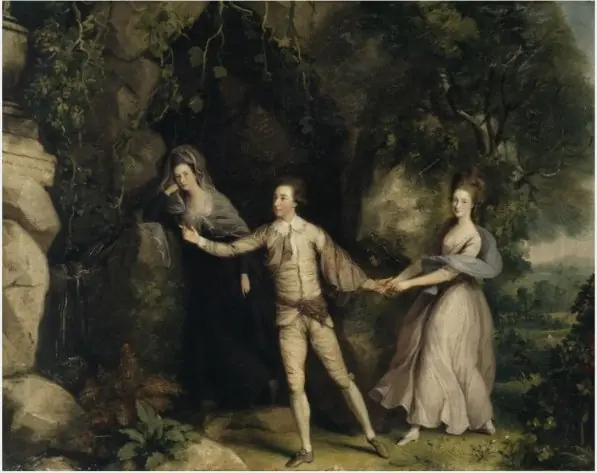 An Actor between the Muses of Tragedy and Comedy
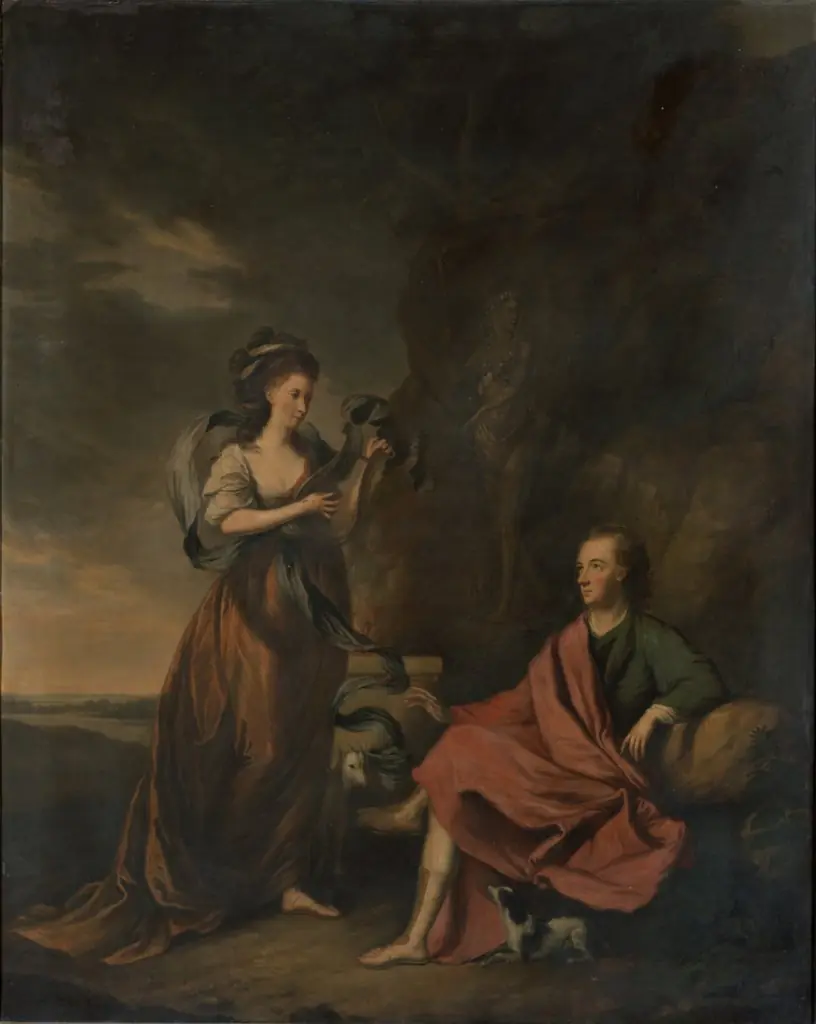 Double Portrait of Arthur Wolfe and his Wife Anne
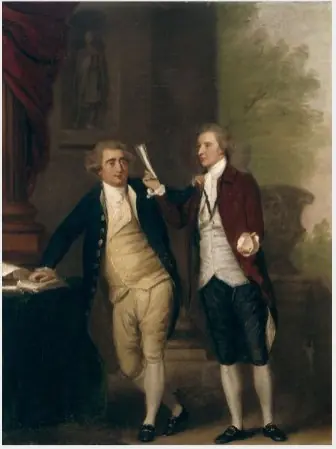 Edmund Burke (1729-1797) in Conversation with Charles James Fox (1749-1806)
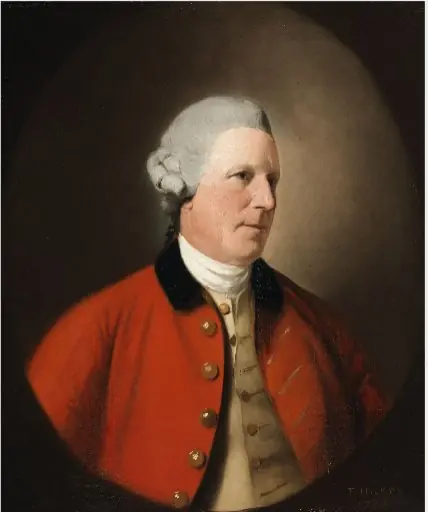 Sir Armine Wodehouse, 5th Baronet
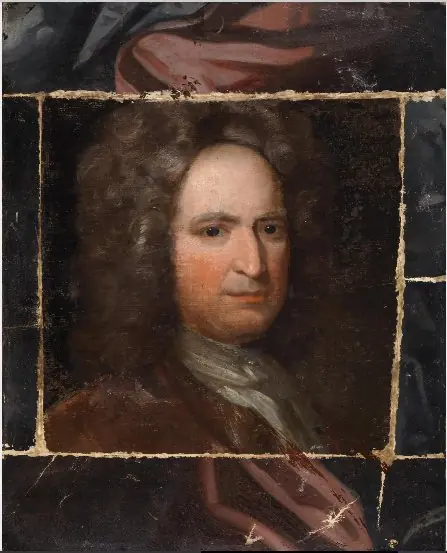 Portrait of the Reverend Samuel Madden (1686-1765), Philanthropist
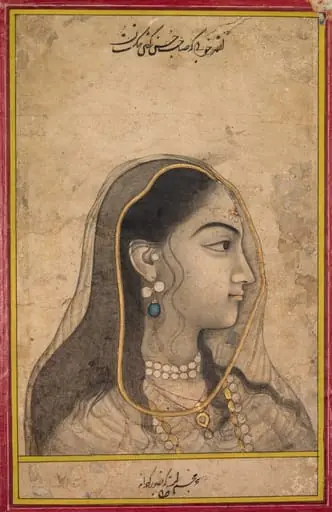 Head of a Beauty
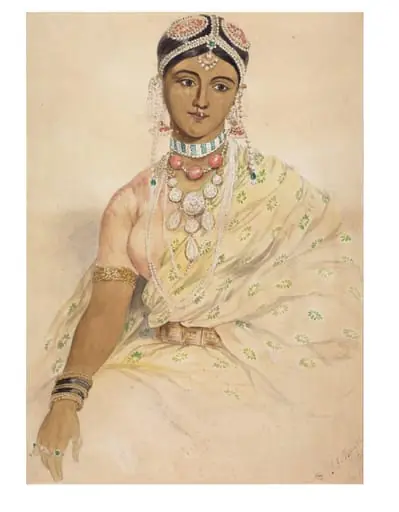 Portrait of a Hindu woman wearing jewellery
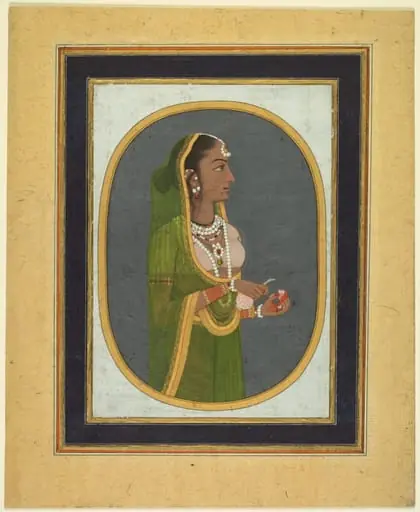 Court Lady Pouring Wine (recto)
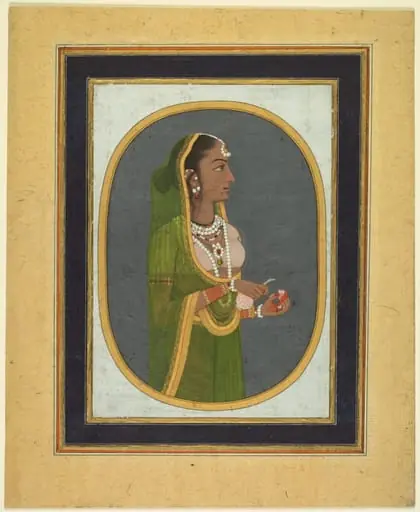 Court Lady Pouring Wine (recto); Calligraphy of Lyrical Quatrains (verso)
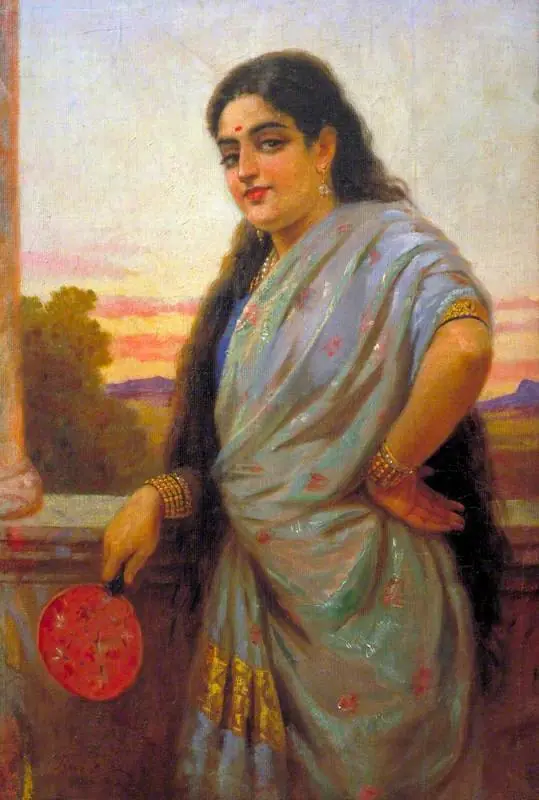 Woman Holding a Fan
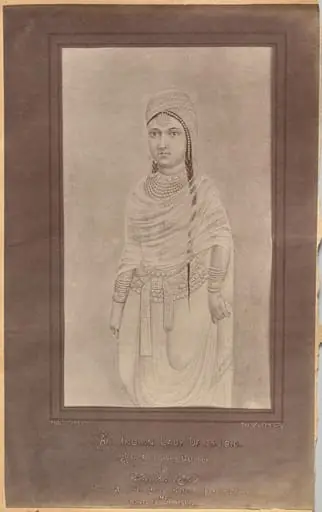 Indian Lady 250 BC (verso, right)
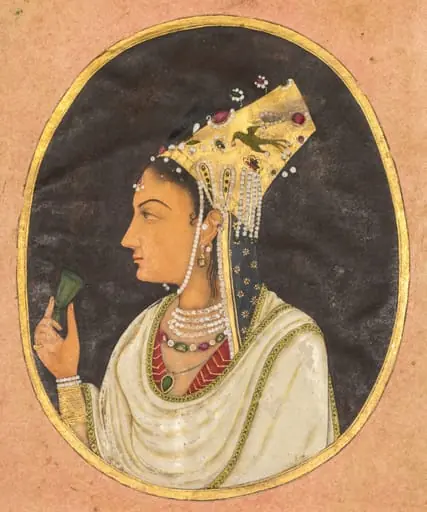 Oval portrait of a woman in a Chaghtai hat
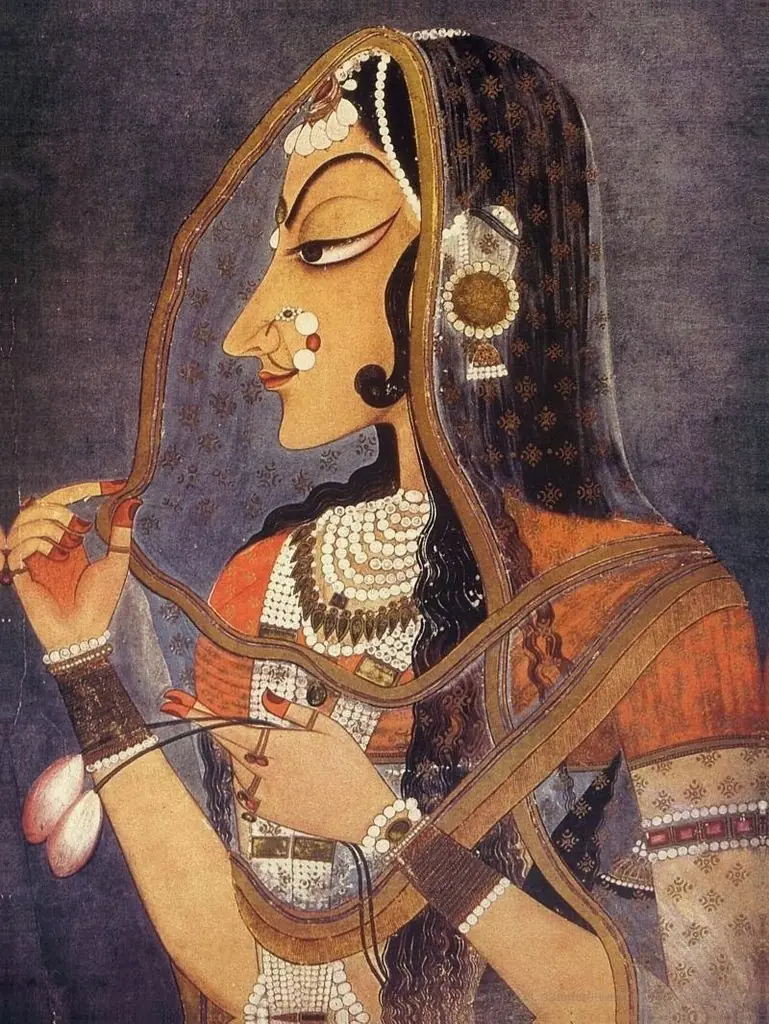 Bani Thani
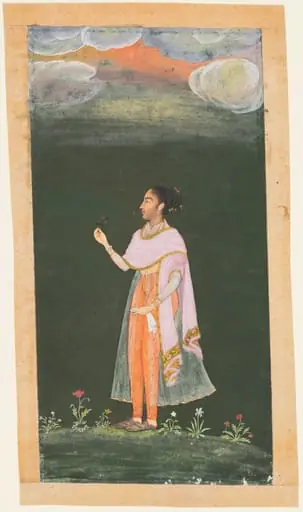 Royal Woman Holding a Flower
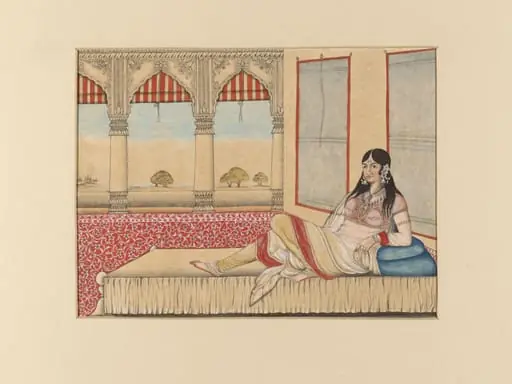 An Indian lady reclining on a couch in the open verandah of a palace.