Artwork
Bani Thani
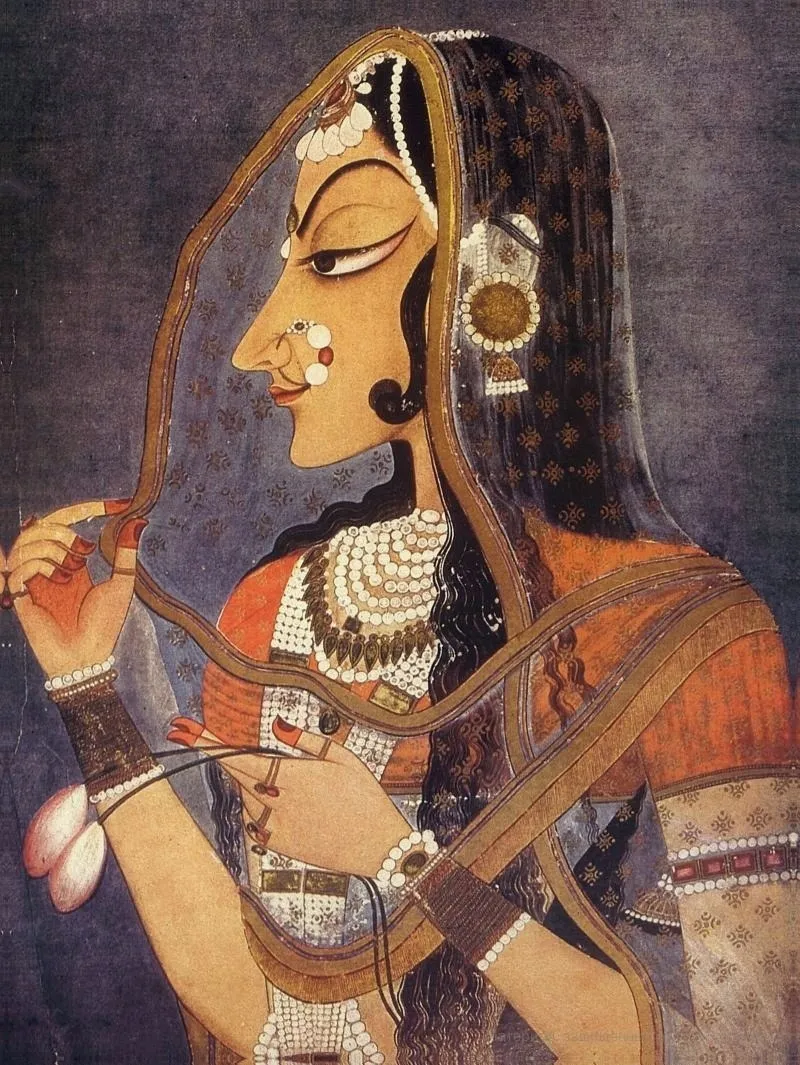
Bani Thani is an unspecified painting by the Rajput painting artist Nihâl Chand. It dates from 1750 and is held in the collection of the National Museum.
About this work
Overview
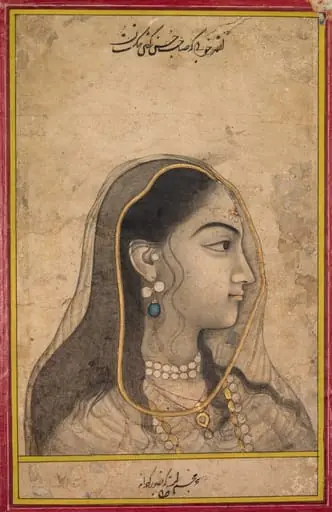
Created around 1750 by Nihâl Chand, a court artist in Kishangarh, Bani Thani is a miniature portrait from the Rajput painting tradition.
Created around 1750 by Nihâl Chand, a court artist in Kishangarh, Bani Thani is a miniature portrait from the Rajput painting tradition. It belongs to a rare series of larger-than-usual works produced under the patronage of Maharaja Savant Singh. The painting is now held in the National Museum’s collection and exemplifies the distinctive aesthetic developed in this regional court during the mid-18th century.
Subject & Meaning
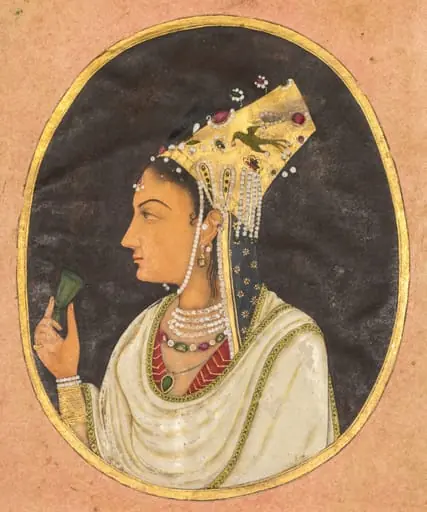
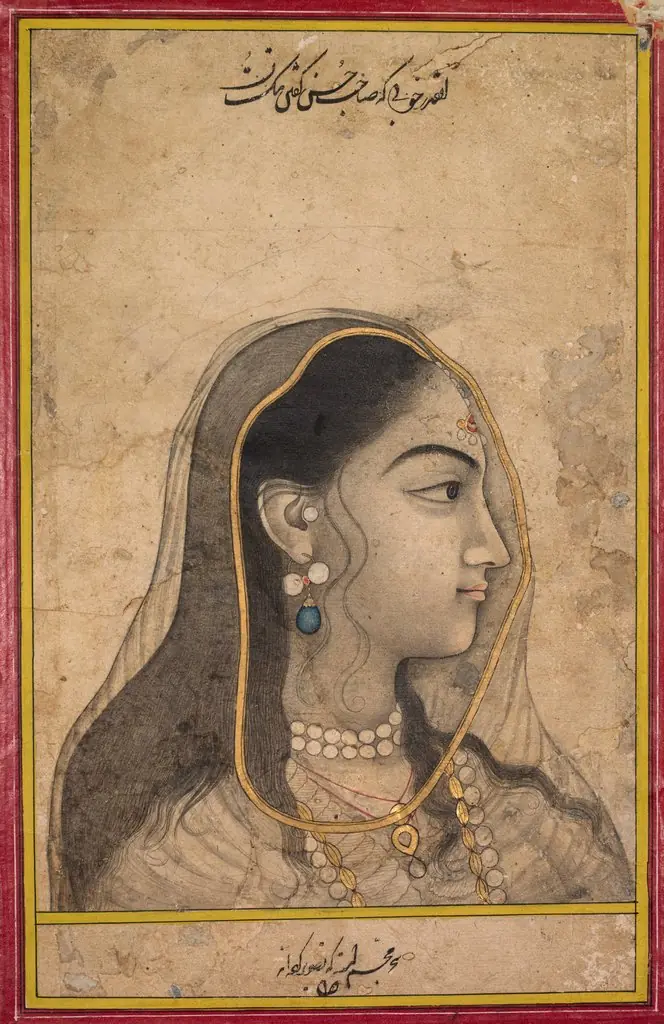
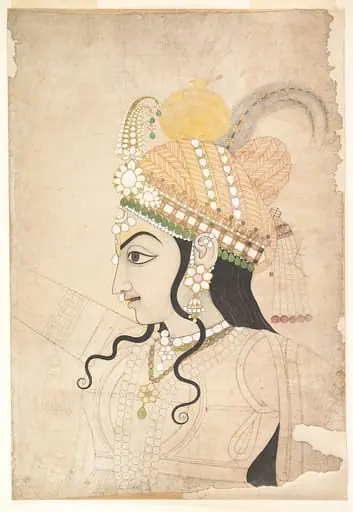
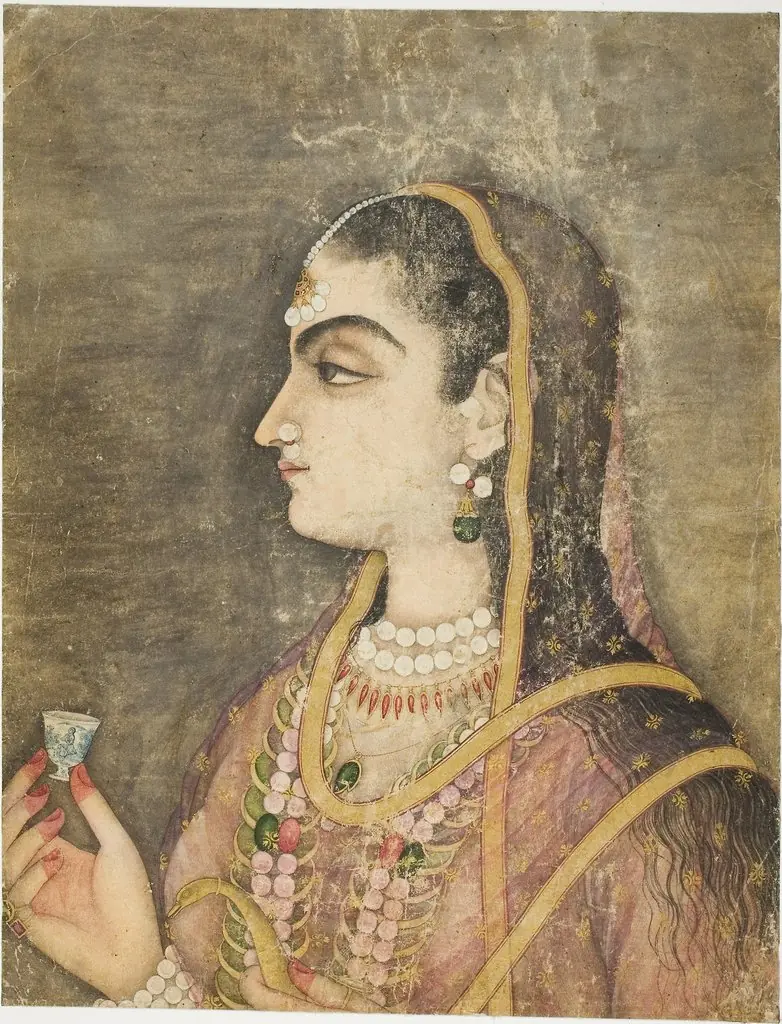
The figure is widely understood to represent Bani Thani, a singer and poet who was also the beloved of Savant Singh. In this work, she is depicted with the idealized features of Radha, the divine consort of Krishna, merging earthly love with spiritual symbolism. Her downcast gaze and delicate posture evoke devotion, while her adornments and attire reflect both royal status and mythological association.
Technique & Style
Nihâl Chand employed fine brushwork and mineral pigments to render intricate details in jewelry, fabric patterns, and facial features. The elongated eyes, arched brows, and slender form are hallmarks of the Kishangarh style. The dark, flat background isolates the figure, heightening focus on her form and ornamentation, while the luminous colors contrast subtly against the deep ground.
History & Provenance
The painting originated in the Kishangarh court, where Savant Singh encouraged artistic expressions of his spiritual and romantic ideals. Nihâl Chand, serving as chief painter, produced several portraits of Bani Thani in this manner. The work remained within royal collections before entering the National Museum’s holdings, where it has been preserved as a key example of 18th-century Rajput portraiture.
Context
Kishangarh’s artistic output in this period was shaped by the ruler’s devotion to Krishna bhakti and his personal relationship with Bani Thani. The court’s paintings fused poetic themes with visual idealism, distinguishing them from other Rajput schools. This work reflects a broader trend of blending personal emotion with religious iconography, a hallmark of Kishangarh’s unique contribution to Indian miniature painting.
Legacy
The Bani Thani portrait became a defining image of Kishangarh’s artistic identity. Its stylized beauty and emotional depth influenced later regional painters and continue to be studied for their synthesis of courtly love and devotional symbolism. While not widely reproduced in popular culture, it remains a touchstone in scholarly discussions of Indian miniature portraiture and its spiritual dimensions.
Artist & collection
Artist
Nihâl Chand (1710–1782) was an Indian painter and poet who produced some of the best known examples of Rajput painting.