Artwork
Rowlandson's Sketches from Nature: West Loo, Cornwall
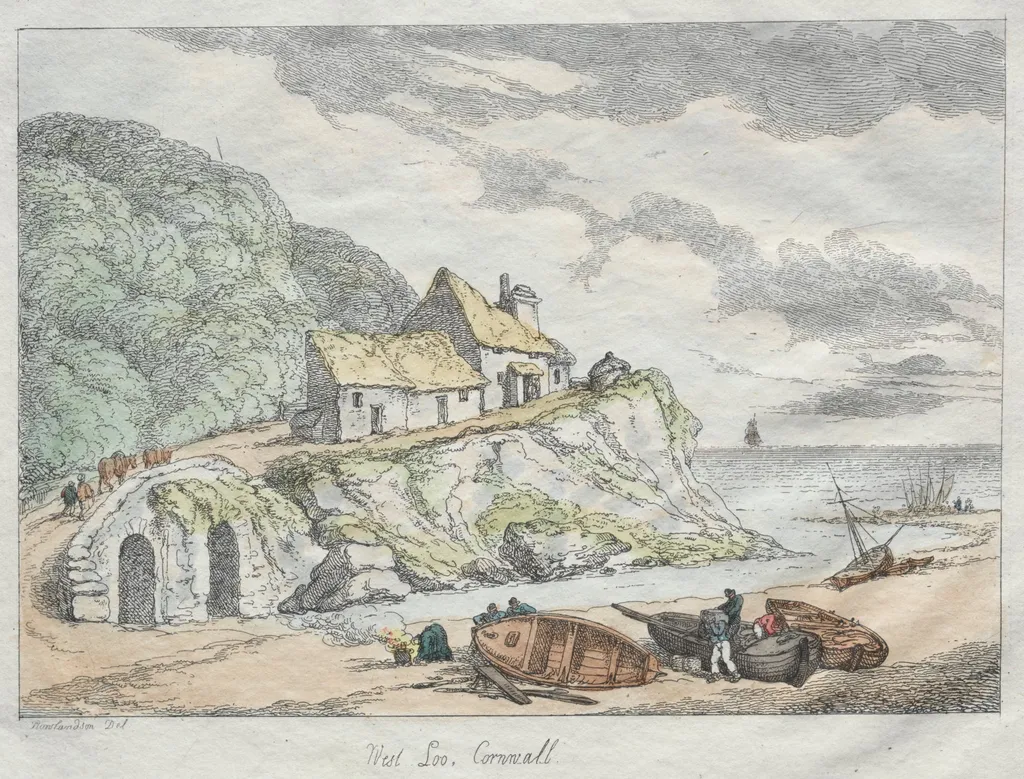
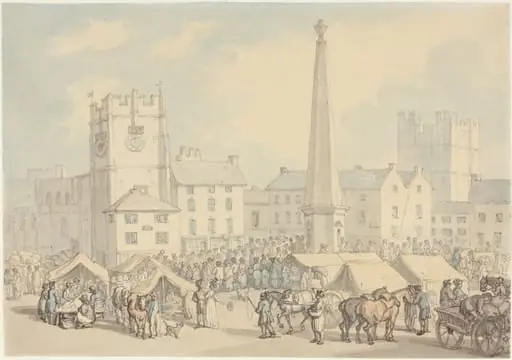
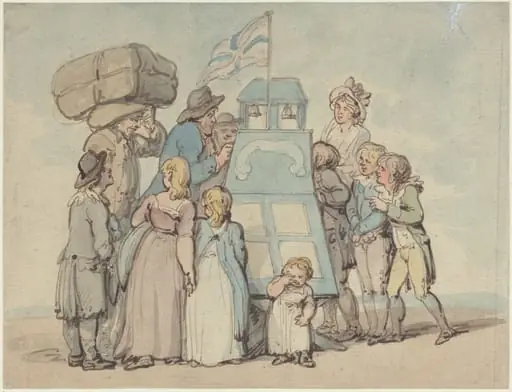
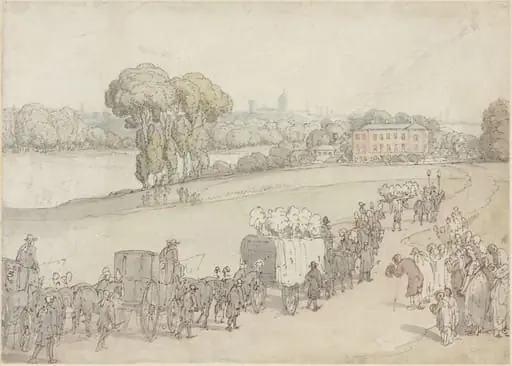
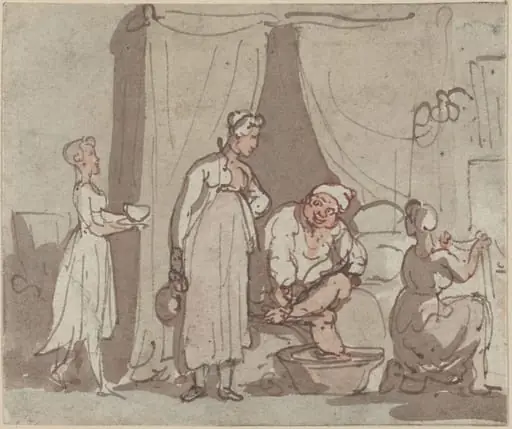
Rowlandson's Sketches from Nature: West Loo, Cornwall is a print by the Romanticist artist Thomas Rowlandson. It dates from 1822 and is held in the collection of the Cleveland Museum of Art.
- Accession no.
- 1964.18
- Credit line
- Mr. and Mrs. Charles G. Prasse Collection
About this work
Overview
This work belongs to a lesser-known but consistent strand of his output: direct responses to natural scenery, made during travels across Britain.
Created in 1822, this print is one of several topographical studies by Thomas Rowlandson depicting coastal Cornwall. Though best known for satirical illustrations, Rowlandson also produced quiet, observational drawings of rural landscapes. This work belongs to a lesser-known but consistent strand of his output: direct responses to natural scenery, made during travels across Britain. It reflects his engagement with the land beyond political commentary.
Subject & Meaning
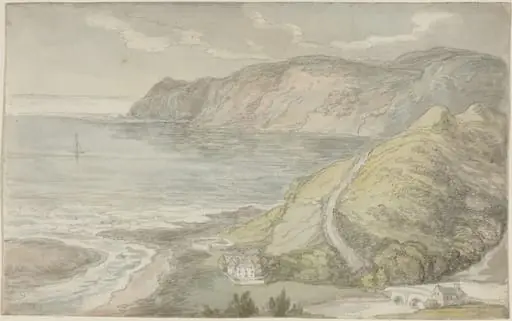
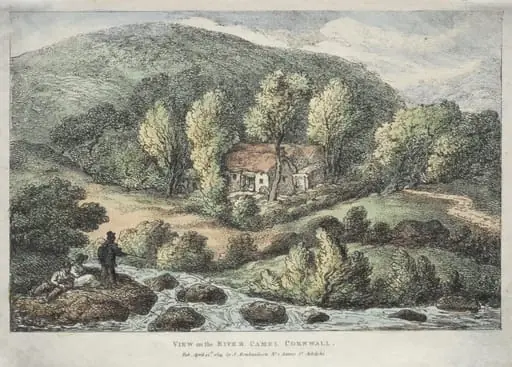
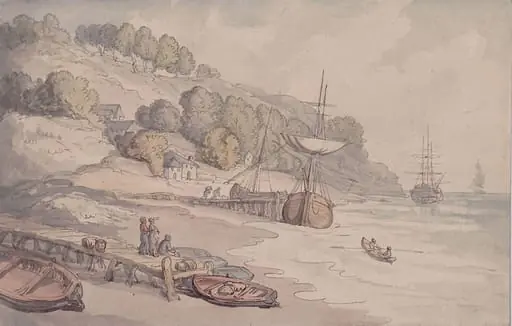
The scene captures a modest fishing hamlet at West Loo, with a stone cottage perched on a cliff, smoke rising from its chimney. Figures move along a path, while two boats rest on the shore, one being unloaded with catch. The composition avoids drama, instead emphasizing daily life and the rhythm of coastal labor.
There is no overt narrative or satire, only a calm record of place and routine, suggesting an interest in authenticity over embellishment.
Technique & Style
Rowlandson employed loose, fluid ink lines to convey immediacy, characteristic of on-site sketching. The brushwork is economical, suggesting form rather than defining it precisely, cliffs, trees, and roofs are indicated with swift strokes. The sky is lightly washed, adding atmosphere without detail.
This approach aligns with contemporary drawing practices aimed at capturing transient effects of light and movement, prioritizing observation over finish.
History & Provenance
The print was issued as part of a series titled Sketches from Nature, published in 1822. These were likely produced during Rowlandson’s travels in southwest England in the years before his death. Unlike his satirical prints, these landscapes were not widely circulated or reprinted, and few original impressions survive. Their existence reveals a private, personal dimension to his artistic practice, distinct from his public caricatures.
Context
In the early 19th century, a growing interest in the British countryside coincided with Romantic ideals of nature as a source of quiet reflection. While Rowlandson did not align formally with Romantic painters, his sketches share their emphasis on unidealized, everyday landscapes. His work in Cornwall fits within a broader trend of artists documenting regional topography, often for personal or commercial publication, rather than grand exhibition.
Legacy
Rowlandson’s Cornwall sketches remain minor in the broader canon of British art, overshadowed by his satires. Yet they offer valuable insight into his range as a draftsman and his responsiveness to place. These works contribute to the historical record of rural life in early Victorian England and demonstrate how even a caricaturist could engage with landscape as a subject of quiet observation, not just humor.
Own this work as a print
Artist & collection
Artist
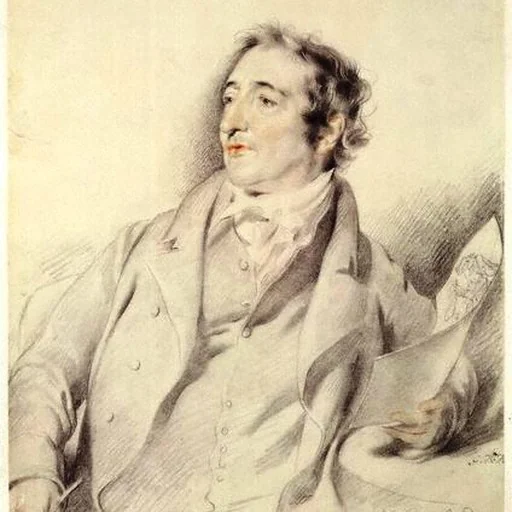
Thomas Rowlandson (; 13 July 1757 – 21 April 1827) was an English artist and caricaturist of the Georgian Era, noted for his political satire and social observation.