Artwork
Child Asleep (The Rosebud)
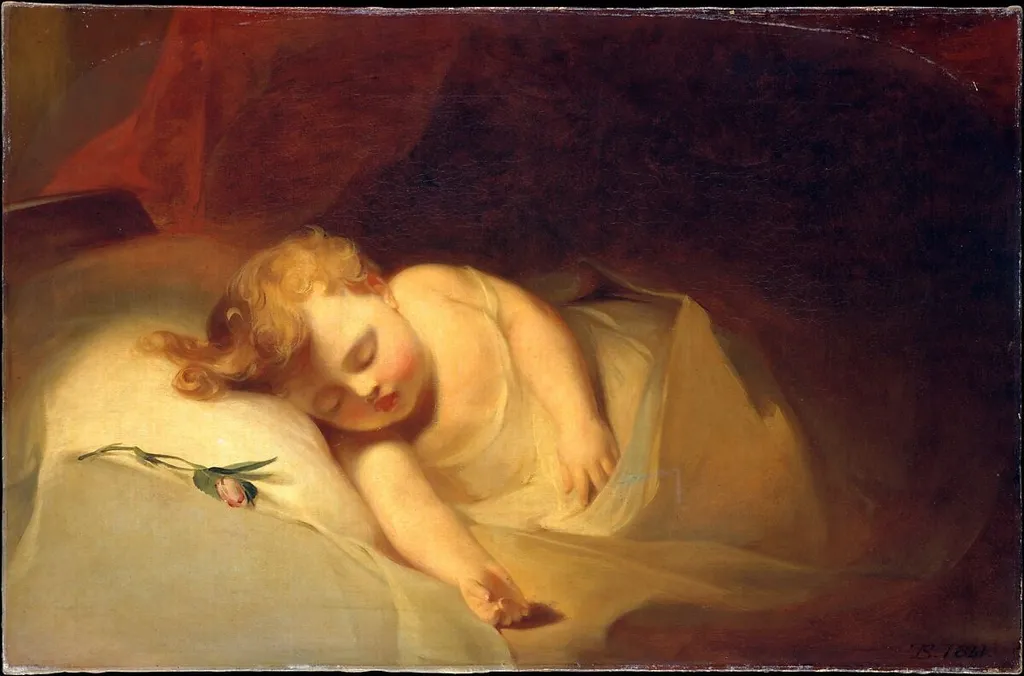
Child Asleep (The Rosebud) is an oil painting by the American Impressionist artist Thomas Sully. It dates from 1841 and is held in the collection of the Metropolitan Museum of Art.
About this work
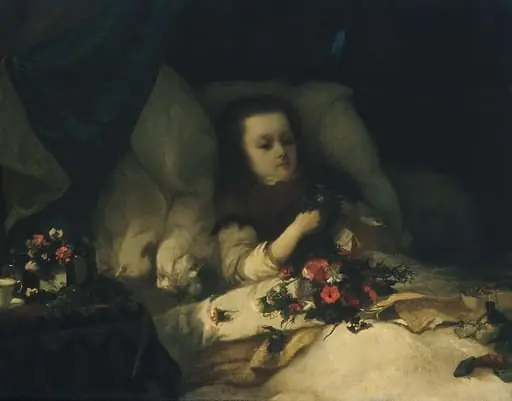
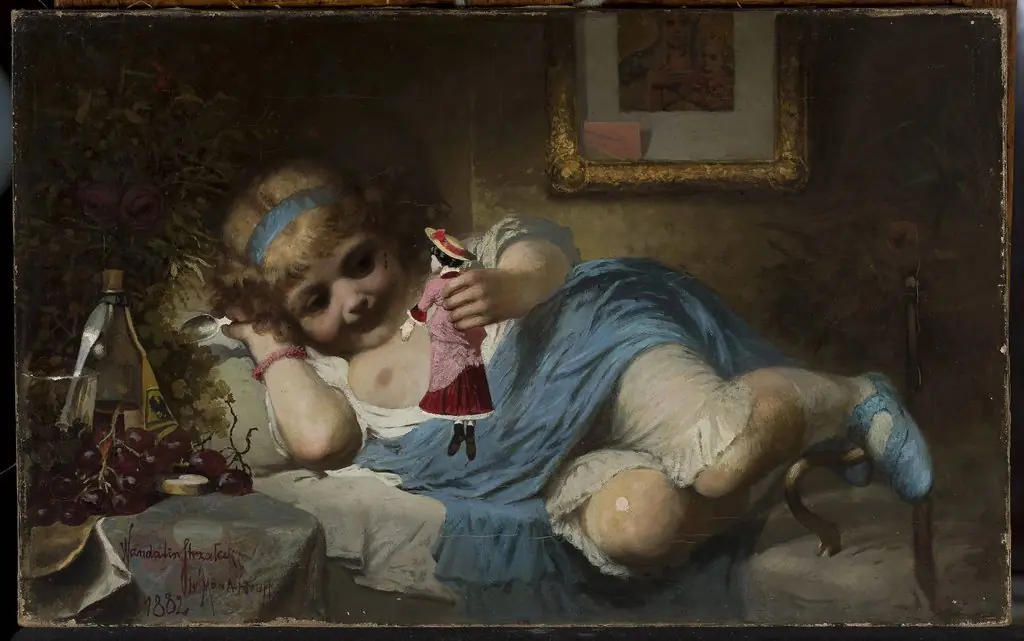
A little girl sleeps with her head on folded arms, a pink rosebud near her cheek and soft light on her dress. Thomas Sully painted her in 1841, building gentle shadows in careful layers. Her relaxed face feels real, as if she dropped off while playing.
Subject & Meaning
The sleeping infant functions as an emblem of innocence and the fleeting nature of childhood, while the rosebud conveys themes of purity and potential growth.
The painting portrays a young child in a tranquil slumber, gently clasping a single rosebud. The sleeping infant functions as an emblem of innocence and the fleeting nature of childhood, while the rosebud conveys themes of purity and potential growth. Sully's composition emphasizes stillness through the child's relaxed posture and the soft, diffused lighting, inviting viewers to contemplate the quiet transition from youth to maturity.
By situating the figure within a domestic, intimate setting, the work underscores the domestic ideal of nurturing and the protective role of caregivers. The overall meaning thus intertwines notions of vulnerability, hope, and the ephemeral beauty of early life, reflecting mid‑nineteenth‑century American values surrounding family and moral virtue.
Technique & Style
Child Asleep (The Rosebud) is executed in oil paint on canvas, a standard medium for Thomas Sully's portrait practice. The canvas measures 60.6 by 92.7 centimeters, giving the composition a horizontal orientation that accommodates the reclining child. The work is held in the collection of the Metropolitan Museum of Art's American Wing.
Its subject, a sleeping child with a flower, aligns with Sully's characteristic handling of tender, intimate portrait subjects in the Romantic idiom.
History & Provenance
Child Asleep (The Rosebud), painted by Thomas Sully in 1841, is held in the collection of the Metropolitan Museum of Art, where it is classified within The American Wing. Executed in oil on canvas, the work measures 60.6 by 92.7 centimeters. The available records document its institutional ownership and classification but do not provide a specific accession number or any exhibition history for the painting.
Overview
Thomas Sully's Child Asleep (The Rosebud), executed in 1841, is an intimate oil-on-canvas portrait depicting a young girl in a state of natural slumber. The composition centers on the child, whose head rests upon folded arms, conveying a sense of unguarded repose rather than a formal, posed stance. A single pink rosebud lies adjacent to her cheek, serving as a delicate symbolic element often associated with innocence or the fleeting nature of childhood.
Sully employs a soft, diffused light that models the folds of the girl's dress and highlights the texture of the rose petals, creating a gentle atmosphere. His technique involves careful layering of paint to achieve subtle tonal transitions and realistic shadows, a hallmark of his portraiture style during this period. This work reflects Sully's established reputation in mid-19th century American art for capturing tender, domestic moments with psychological depth and technical refinement, distinguishing his approach from the more rigid formalism common in earlier portraiture.
Artist & collection

Artist
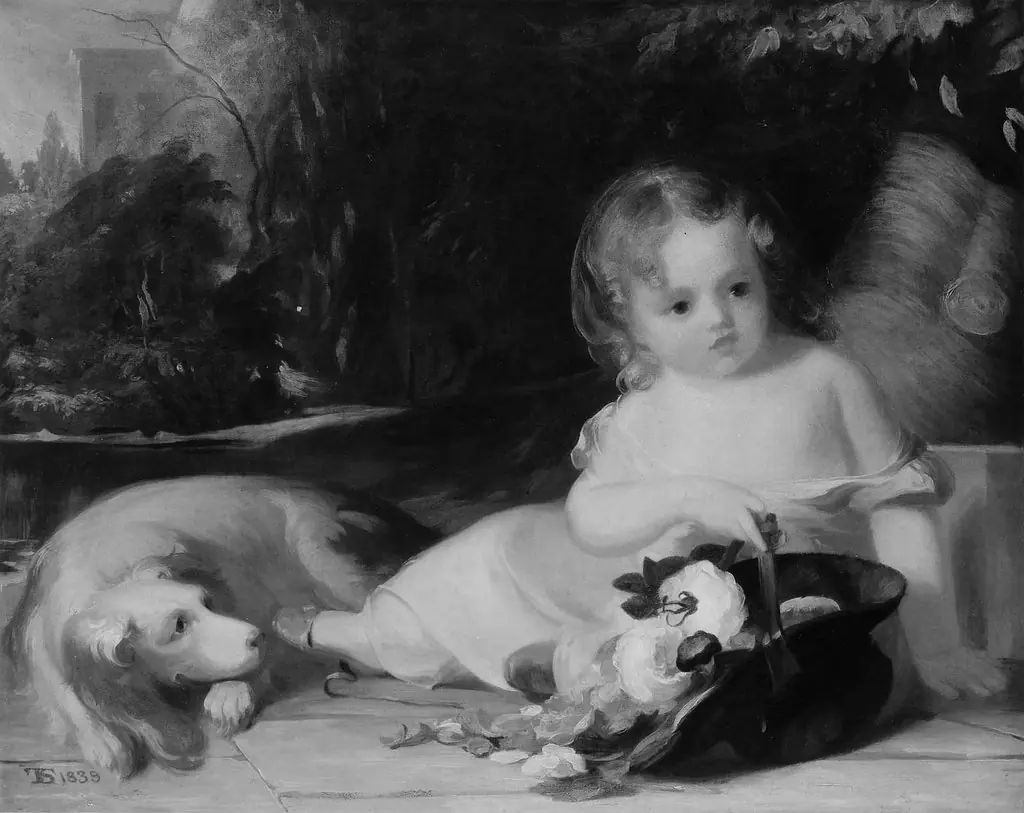
Thomas Sully was an English-American portrait painter. He was born in England, became a naturalized American citizen in 1809, and lived most of his life in Philadelphia, Pennsylvania, including in the Thomas Sully…