Artwork
A Bit of War History: The Contraband
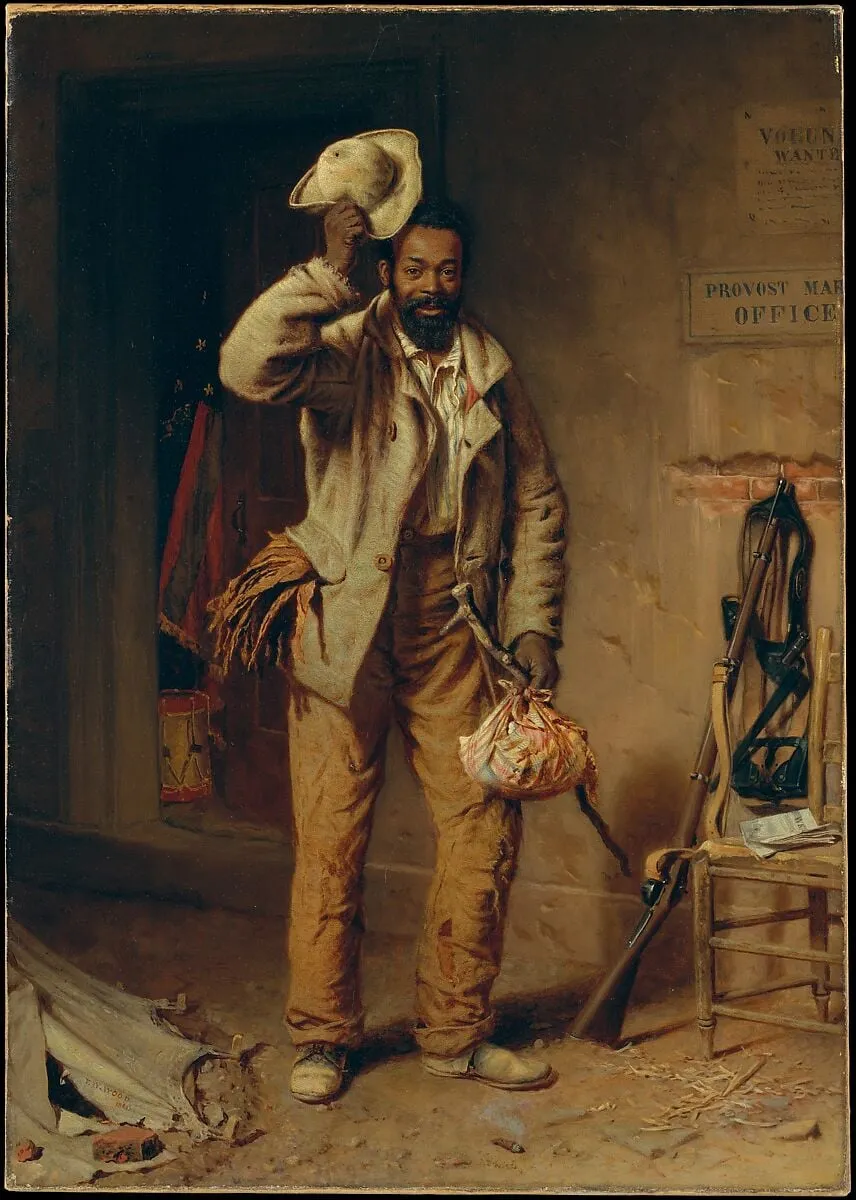
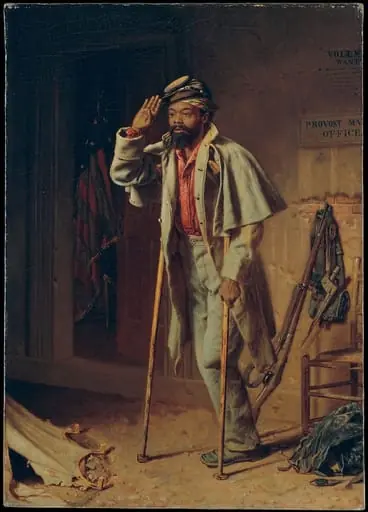
A Bit of War History: The Contraband is an oil painting by the American Folk Art artist Thomas Waterman Wood. It dates from 1865 and is held in the collection of the Metropolitan Museum of Art.
About this work
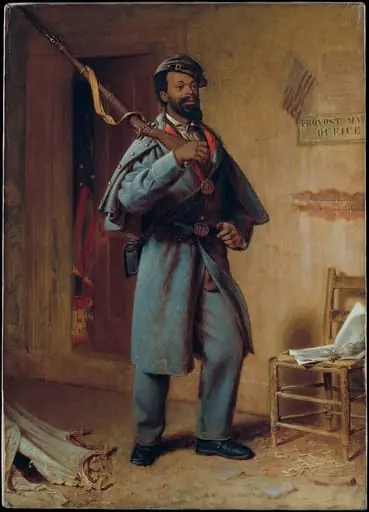
A Black man in a Union army coat holds a rifle, standing against a plain wall with one hand on his hip, the barrel pointed at the floor. Wood painted it in 1865, just after the Civil War, one of the few pictures from that time showing a formerly enslaved man choosing freedom with a weapon. The coat looks too big, as if borrowed.
Overview
Thomas Waterman Wood's 1865 oil painting, A Bit of War History: The Contraband, presents a direct portrait of a Black man.
Thomas Waterman Wood's 1865 oil painting, A Bit of War History: The Contraband, presents a direct portrait of a Black man. Executed immediately following the American Civil War, this work captures a significant moment in history, depicting an individual who has claimed his freedom and stands armed, embodying the complex realities of the war's aftermath and the changing status of formerly enslaved people.
Subject & Meaning
The painting features a Black man, identified by the title as a "contraband," a term used during the Civil War for enslaved people who escaped to Union lines. He wears a Union army coat, which appears somewhat ill-fitting, suggesting it may have been acquired or borrowed. Posed against a plain background, he holds a rifle with its barrel resting on the floor, one hand placed on his hip, conveying a sense of quiet resolve and newfound agency.
Technique & Style
Wood rendered this work in oil on canvas, employing a straightforward, almost documentary approach to portraiture. The subject is depicted frontally, with minimal background distractions, which emphasizes his presence and the symbolic weight of his attire and weapon. This directness allows the viewer to focus on the man's individual experience and the broader social implications of his representation in the immediate post-Civil War landscape.
Context
Created in 1865, as the Civil War concluded, this portrait emerged during a pivotal period of national transformation. It is notable for its portrayal of a formerly enslaved man not only asserting his freedom but also equipped with a weapon, a powerful symbol of self-determination. Such direct and armed representations of Black individuals choosing liberation were uncommon in American art of the era, making Wood's painting a distinctive historical document.
Artist & collection

Artist
Thomas Waterman Wood (1823–1903) was an American artist, born in Montpelier.