Artwork
The Wood Sawyer
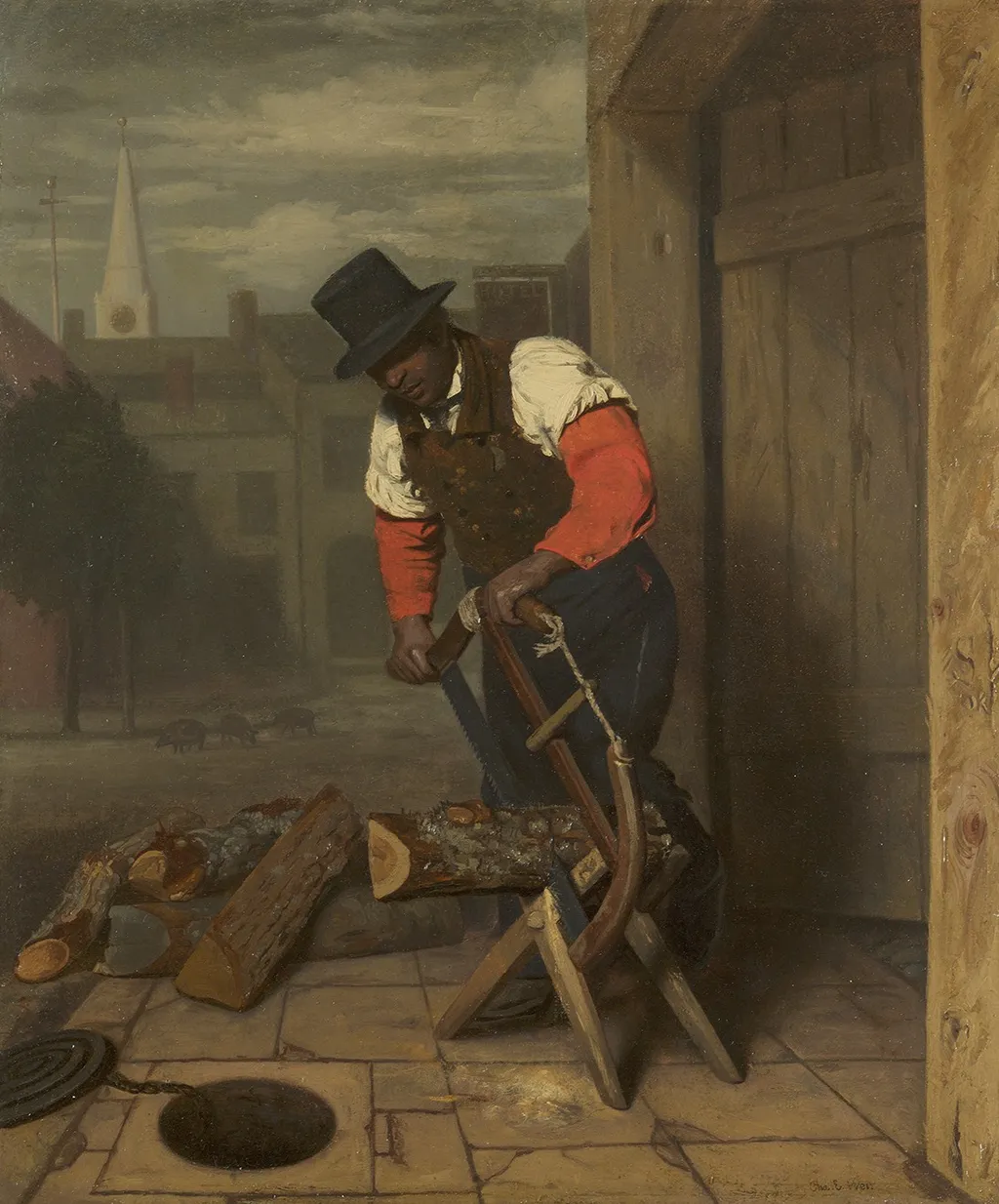
The Wood Sawyer is an unspecified painting by Charles E. Weir. It dates from 1842 and is held in the collection of the Metropolitan Museum of Art. Charles E.
About this work
Subject & Meaning
Mark’s Church in-the-Bowery, aligning the scene with a developing district of the city.
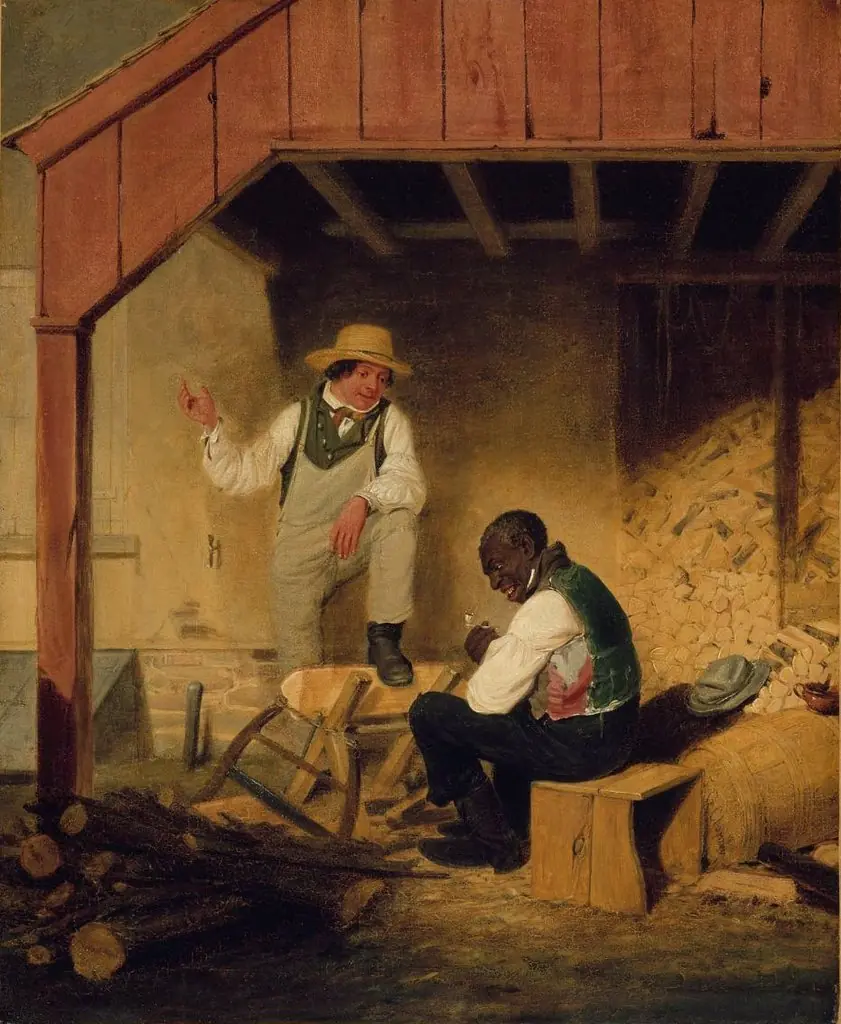
The painting depicts an African American workman chopping wood outside a hotel in Lower Manhattan, presented as a positive figure rather than a stereotype common in antebellum American genre art.
Details of the setting point to New York City in the early 1840s. The cast-iron manhole cover refers to the Croton Aqueduct, completed in 1842, the same year as the painting, while the white steeple in the background has been identified as St. Mark’s Church in-the-Bowery, aligning the scene with a developing district of the city.
Technique & Style
The Wood Sawyer is an oil paint on board work, executed by Charles E. Weir in 1842. It is classified as genre art, a style popular in mid-19th-century America, and is held in the collection of the Metropolitan Museum of Art.
The composition depicts a wood sawyer, shown as an African American workman chopping wood outside a hotel in Lower Manhattan, alongside a physical tool. Among pre-Civil War genre paintings, the work is noted by the Metropolitan Museum of Art for its unusual positive portrayal of an African American subject.
History & Provenance
Charles E. Weir created The Wood Sawyer in 1842 as an oil painting on board. This genre work depicts an African American laborer, likely a coachman or porter, sawing wood in Lower Manhattan. The setting is anchored to this specific year by visual references to the newly completed Croton Aqueduct, indicated by a manhole cover, and the steeple of St. Mark's Church in-the-Bowery visible in the background.
The piece is currently held in the collection of the Metropolitan Museum of Art. It is recognized as a unique example of pre-Civil War American genre painting for its positive portrayal of an African American subject.
Context
Created in 1842 by Charles E. Weir, The Wood Sawyer is recognized as a significant example of mid-19th-century American genre painting. Art historical analysis highlights the work's unique status among pre-Civil War depictions for its positive portrayal of an African American laborer, identified as a coachman or porter, within the urban landscape of Lower Manhattan.
Scholarship notes specific topographical details that ground the piece in its era, including a manhole cover referencing the newly completed Croton Aqueduct and a background steeple likely representing St. Mark's Church in-the-Bowery. As a trained artist and brother of Robert Weir, Charles E. Weir utilized this oil-on-board composition to document the developing city while offering a rare, dignified representation of Black workers during this period.
Overview
Charles E. Weir’s mid‑nineteenth‑century oil on board, titled The Wood Sawyer, presents a domestic workshop scene in New York City. The work belongs to the Metropolitan Museum of Art’s collection and is classified as genre painting, depicting everyday labor rather than historical or mythological subject matter.
Artist & collection