Artwork
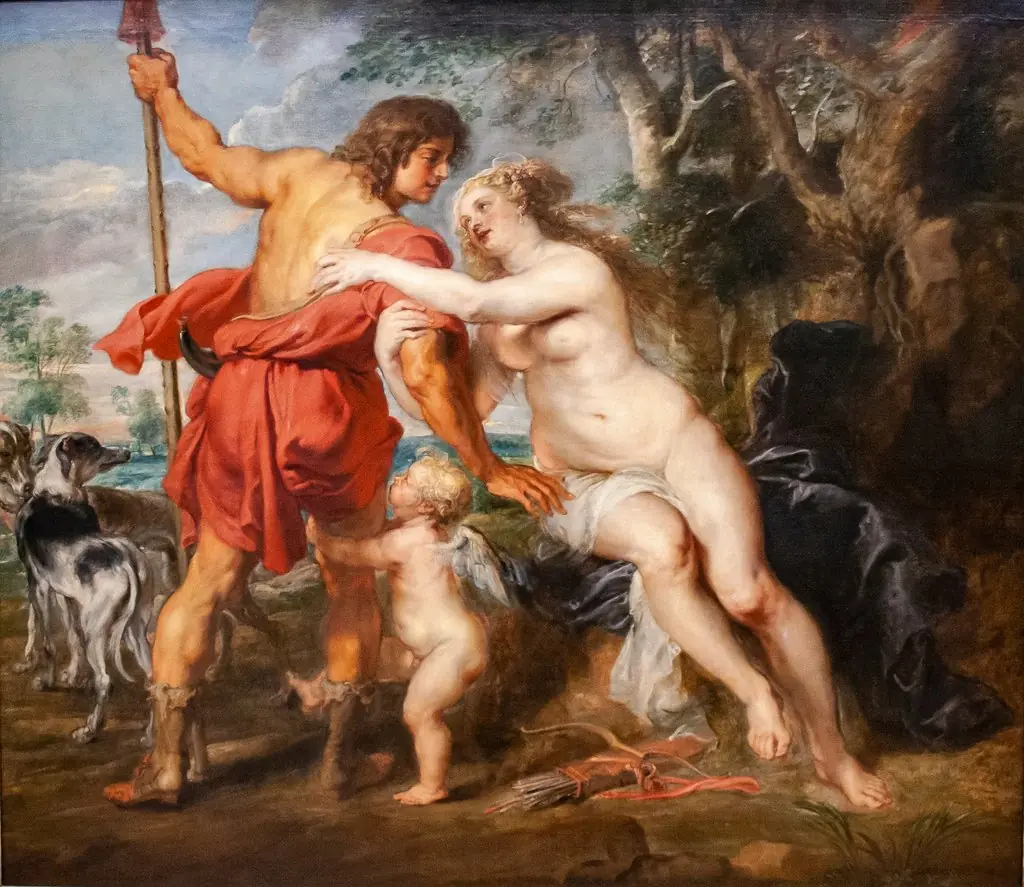
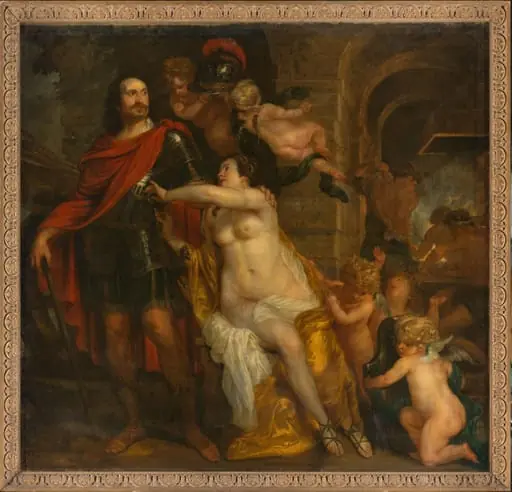
Allegorical depiction of Mars (Friedrich Wilhelm, elector of Brandenburg?) receiving the weapons of Venus (Louisa Henrietta, countess of Nassau?) and Vulcan
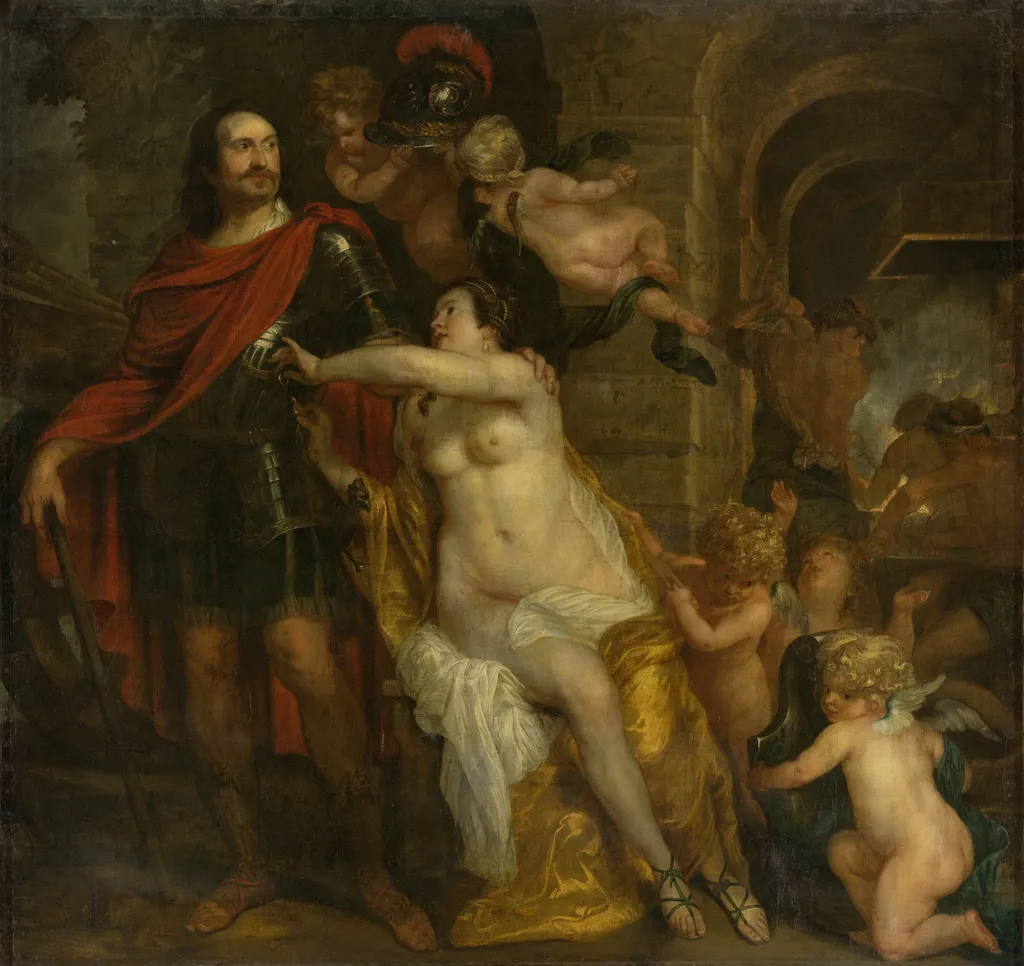
Allegorical depiction of Mars (Friedrich Wilhelm, elector of Brandenburg?) receiving the weapons of Venus (Louisa Henrietta, countess of Nassau?) and Vulcan is an oil painting by Thomas Willeboirts Bosschaert. It dates from 1640 and is held in the collection of the Rijksmuseum.
About this work
Subject & Meaning
The work functions as a complex allegory and historiated portrait, utilizing mythological figures to represent contemporary political and dynastic themes.
The work functions as a complex allegory and historiated portrait, utilizing mythological figures to represent contemporary political and dynastic themes. It depicts the god Mars, a warrior figure, receiving weapons from Venus and Vulcan, a narrative that serves as a vehicle for portraiture. The figures are widely interpreted as allegorical representations of specific historical individuals: Mars likely symbolizes Friedrich Wilhelm, Elector of Brandenburg, while Venus represents Louisa Henrietta, Countess of Nassau.
The painting also incorporates John Maurice, Prince of Nassau-Siegen, further grounding the mythological scene in the actual lineage and alliances of the House of Orange-Nassau. Commissioned by Frederick Henry of Orange-Nassau, the piece merges classical mythology with the glorification of its patrons, transforming a divine exchange into a statement of martial and noble authority.
Technique & Style
Executed in oil paint on a canvas support, the work exemplifies Bosschaert’s mid‑seventeenth‑century technique. The medium allows for smooth blending and rich coloration typical of Flemish Baroque practice. Classified as an allegorical mythological painting with historiated portrait elements, the composition blends symbolic figures, Mars, Venus, and Vulcan, with likenesses of contemporary patrons, reflecting the genre’s interest in conveying moral or political narratives through visual metaphor.
The handling of the paint is characteristic of the artist’s detailed yet fluid brushwork, though specific condition details are not recorded in the sources.
History & Provenance
The allegorical painting Mars Receiving the Weapons of Venus and Vulcan was created in 1640 by Thomas Willeboirts Bosschaert in Antwerp, as confirmed by its dating and origin [,]. Commissioned by Frederick Henry of Orange-Nassau, the work was intended as a symbolic representation of political and marital alliances [].
Initially owned by Frederick Henry, the painting later passed into the collection of John Maurice, Prince of Nassau-Siegen, a prominent military figure and patron of the arts []. Its provenance includes its eventual acquisition by the Rijksmuseum in Amsterdam, where it remains part of the permanent collection [].
Overview
Thomas Willeboirts Bosschaert's 1640 oil painting presents an elaborate allegory. Titled Allegorical depiction of Mars (Friedrich Wilhelm, elector of Brandenburg?) receiving the weapons of Venus (Louisa Henrietta, countess of Nassau?) and Vulcan, the work is a significant example of Baroque allegorical portraiture. This large-scale canvas, executed in oil paint, is currently housed in the collection of the Rijksmuseum, offering a complex narrative through mythological figures.
Context
The theme of Mars and Venus was a recurring motif in European art, often used to explore the interplay between war and peace, or love and conflict. Willeboirts Bosschaert's interpretation aligns with this tradition, employing classical mythology to convey contemporary political or personal messages. Such allegories were frequently commissioned to celebrate marriages, alliances, or the virtues of powerful individuals, providing a sophisticated visual commentary on their patrons' lives.
Own this work as a print
Artist & collection
Artist
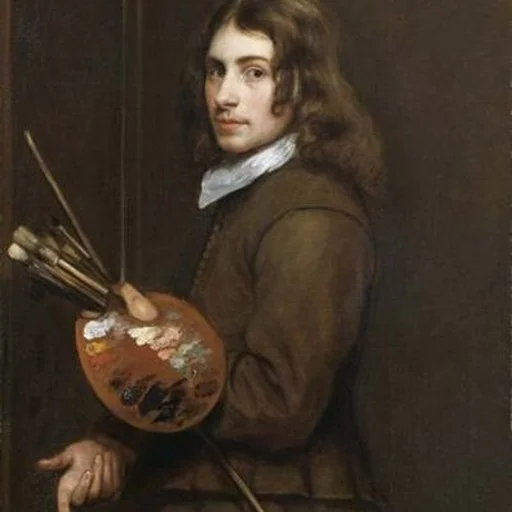
Thomas Willeboirts Bosschaert (1613–1654) was an artist, born in Bergen op Zoom.