Artwork
Venus and Adonis
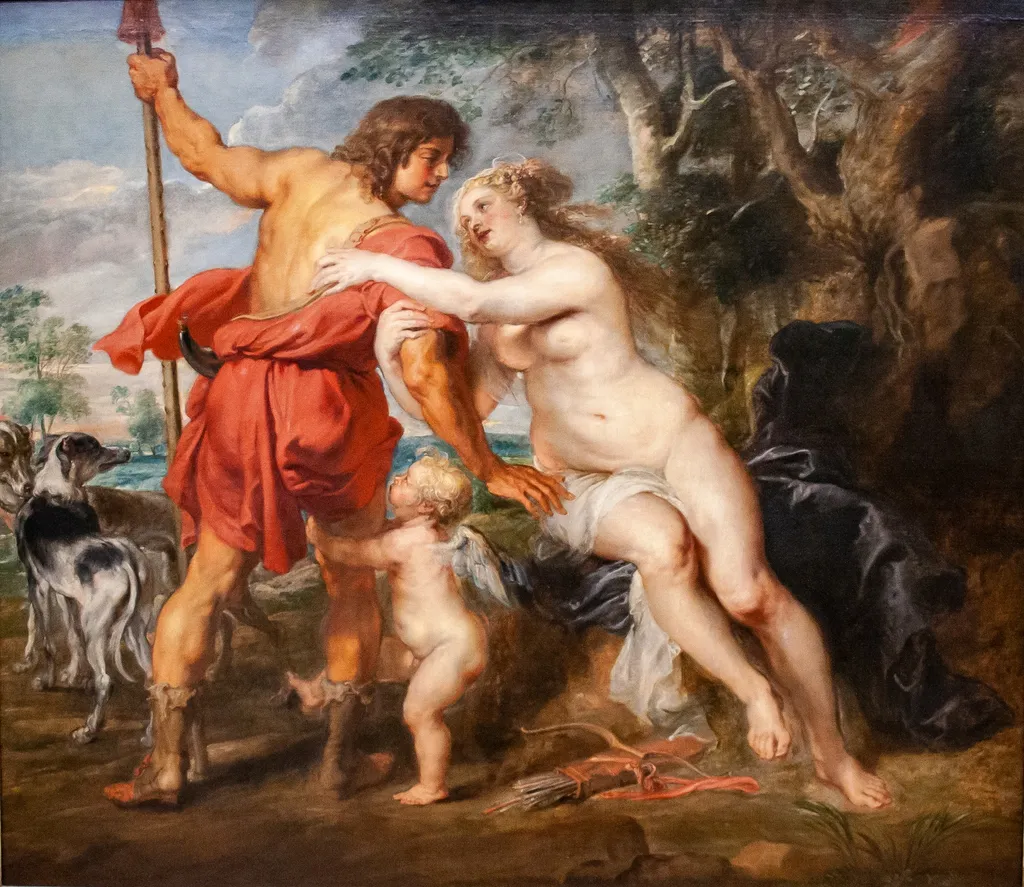
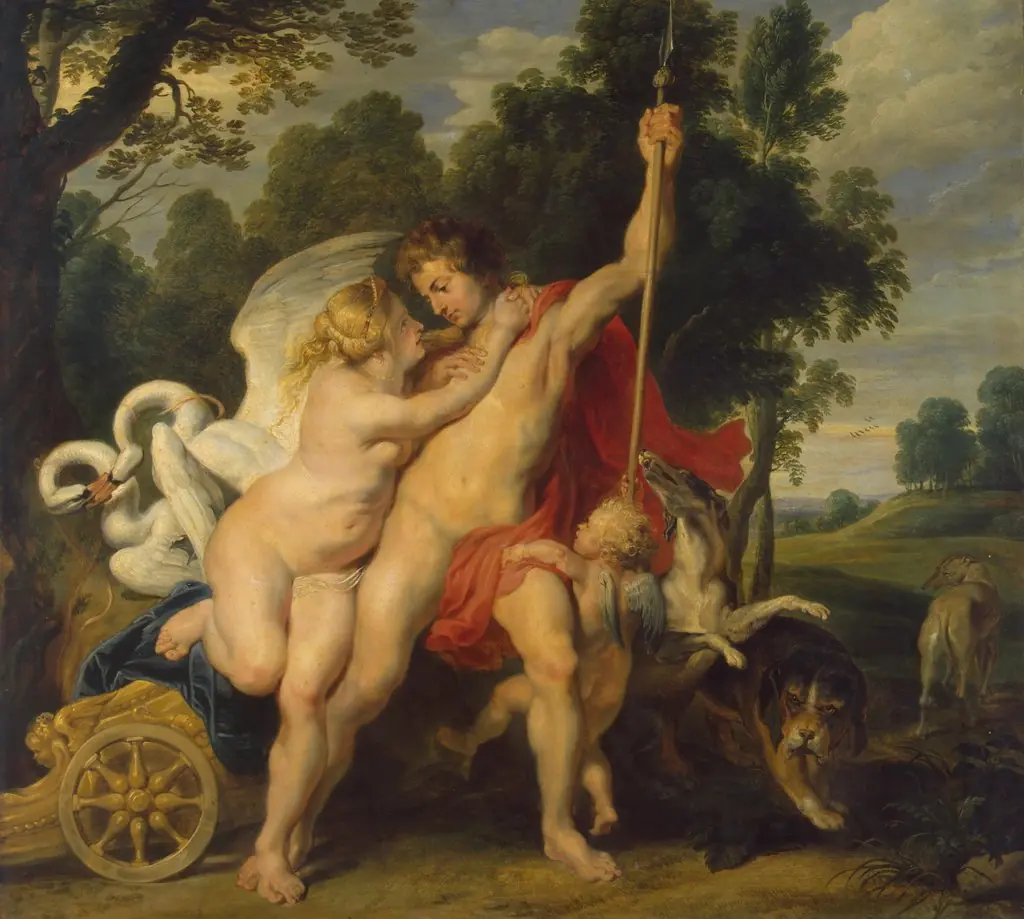
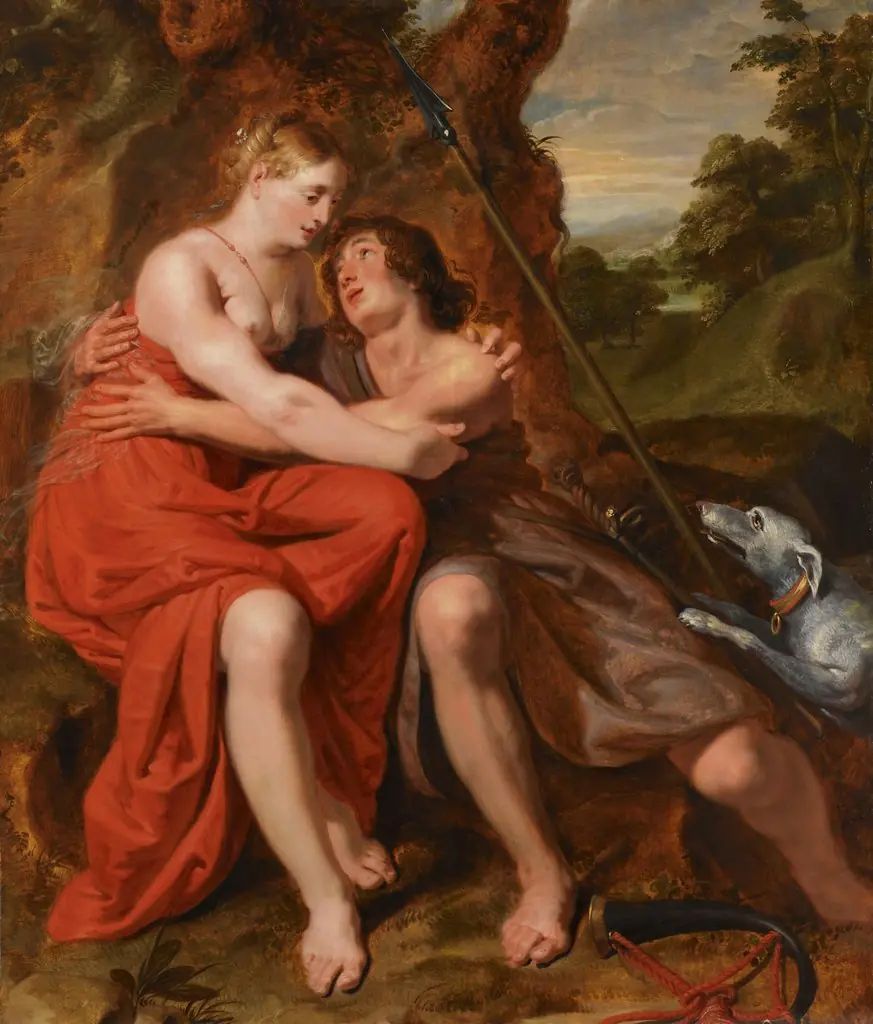
Venus and Adonis is an oil painting by the Flemish Baroque painting artist Peter Paul Rubens. It dates from 1638 and is held in the collection of the Metropolitan Museum of Art.
About this work
Subject & Meaning
Rendered in oil on canvas in 1635, the painting now resides in the Metropolitan Museum of Art.
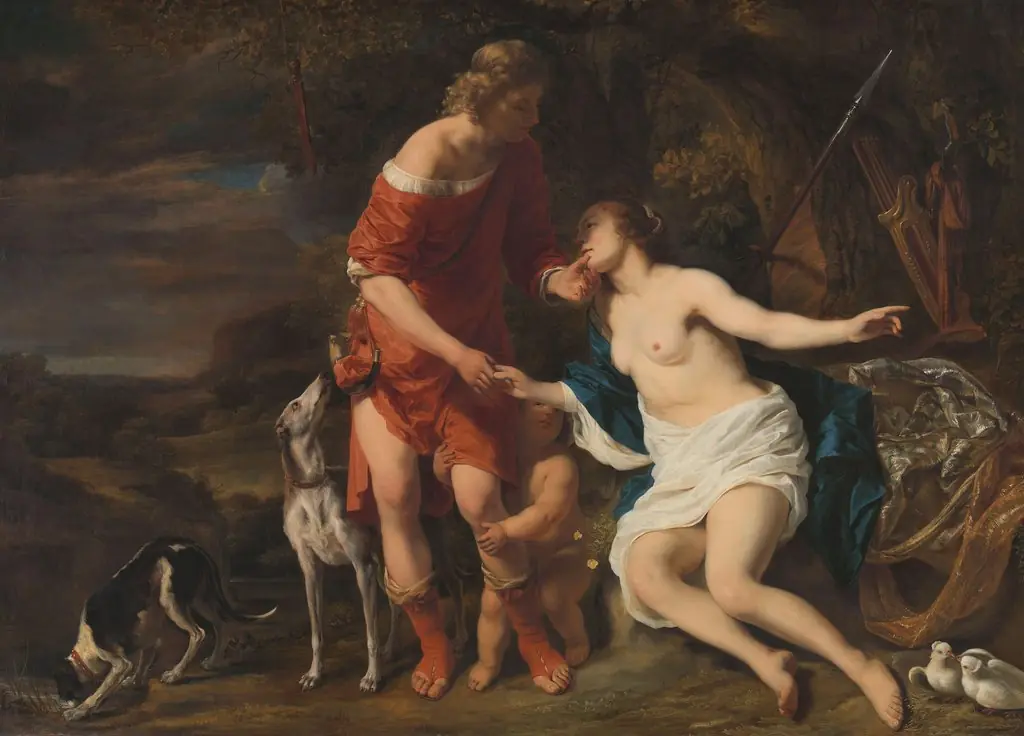
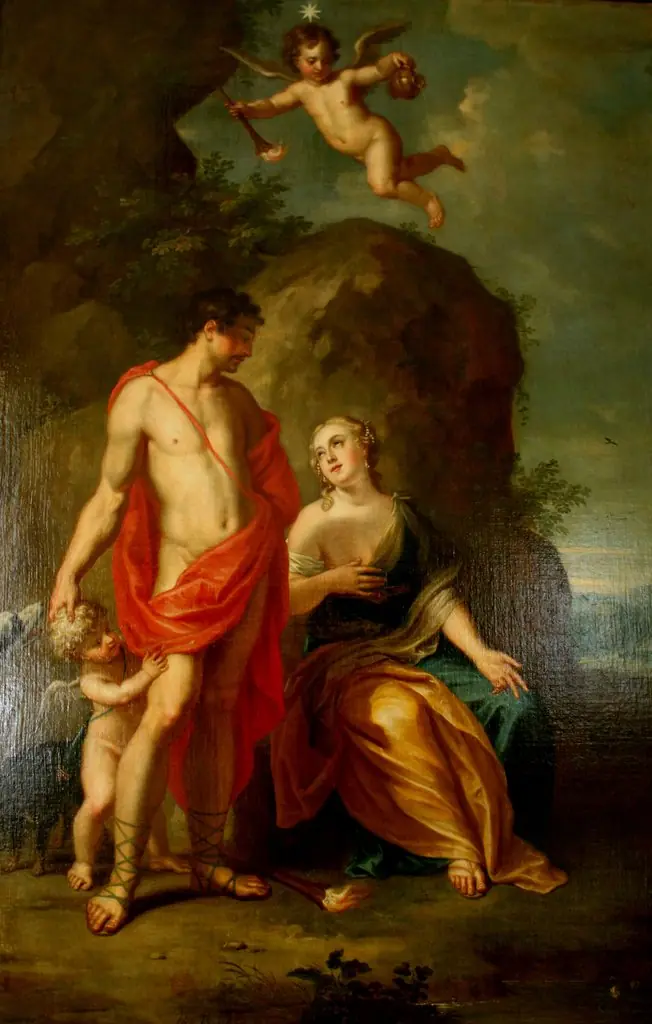
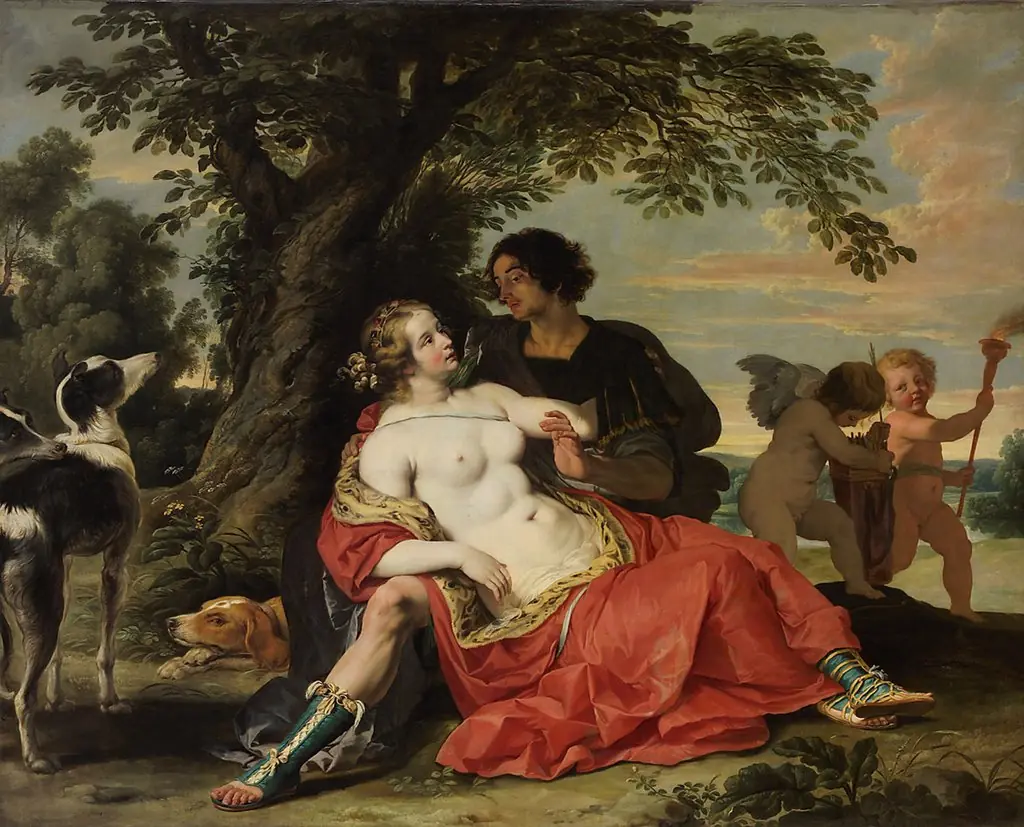
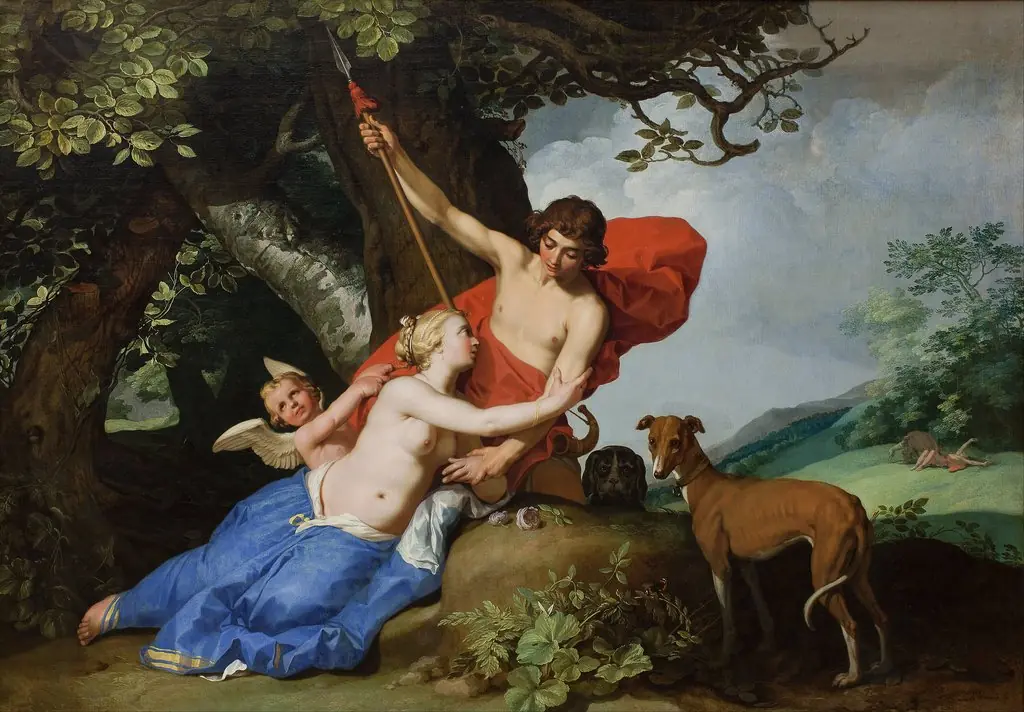
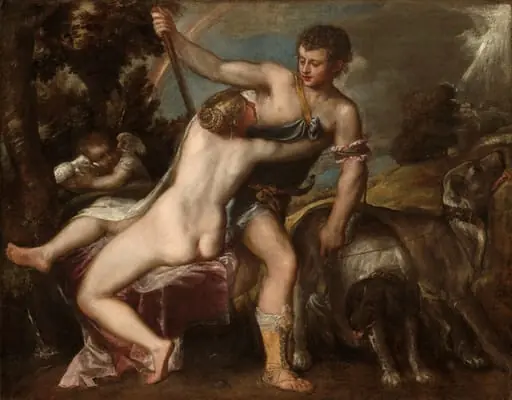
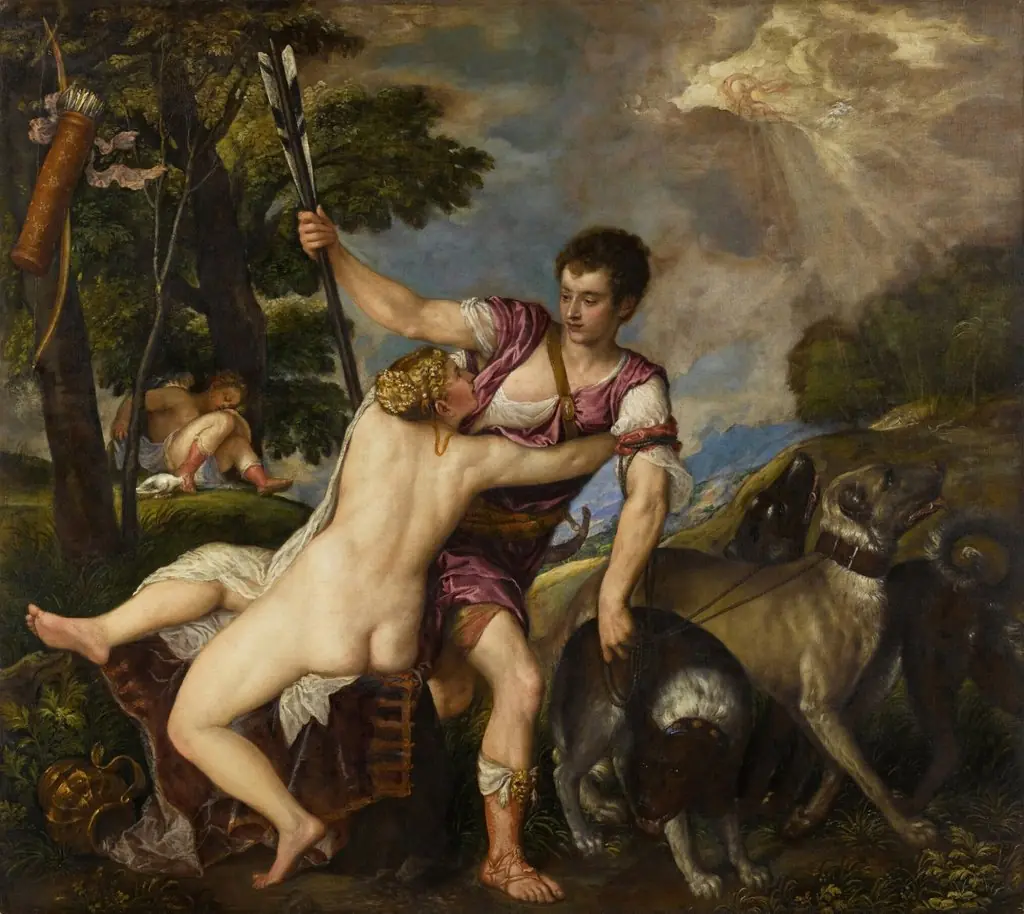
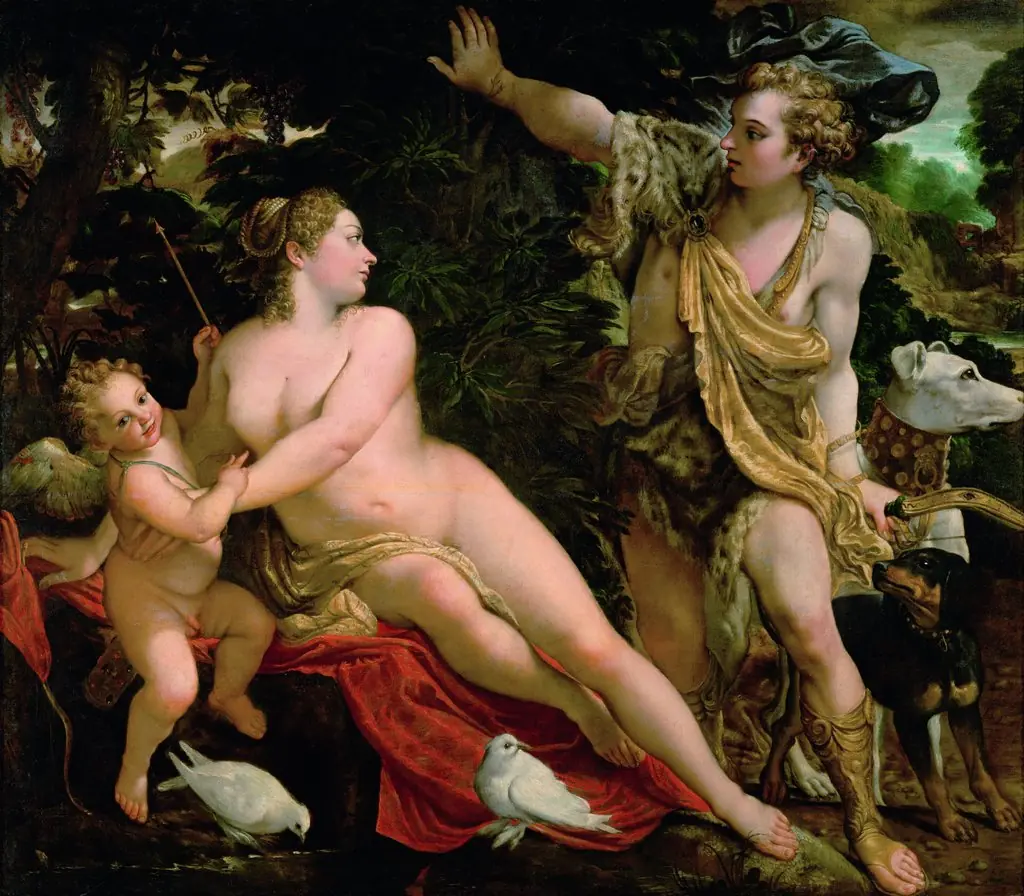
The work captures the mythic instant when Venus, the goddess of love, embraces the mortal Adonis as he prepares to hunt, while Cupid clings to his leg, symbolizing love’s futile plea to avert destiny; the nude goddess, cherubic Cupid, hunting dog, spear and red garment reference classical mythology and Baroque emphasis on sensuality and transience. The composition draws on Ovid’s Metamorphoses, as noted in contemporary accounts, and echoes earlier renditions by Titian, reinforcing the theme of tragic beauty. Rendered in oil on canvas in 1635, the painting now resides in the Metropolitan Museum of Art.
Technique & Style
Peter Paul Rubens’s Venus and Adonis (1638) is executed in oil on canvas, a medium and support consistent with his late Baroque works. The painting’s original dimensions measure approximately 197 by 243 centimeters, with added strips likely incorporated during later adjustments. Rubens’s handling demonstrates his signature dynamic brushwork, blending anatomical precision with fluid, expressive contours, evident in the lifelike musculature of Adonis and the supple folds of drapery.
The dramatic chiaroscuro, inspired by Titian and Caravaggio, heightens the emotional tension, with stark contrasts between the luminous figures and the moody, darkened background. Following a major restoration at the Metropolitan Museum of Art in the 1930s, discolored varnish and overpaint were removed, revealing Rubens’s intended tonal balance and vibrancy. Stylistically, the composition emphasizes Baroque theatricality through diagonal poses, swirling fabrics, and a palpable sense of movement, underscoring the mythological narrative’s urgency.
History & Provenance
Peter Paul Rubens executed this mythological canvas, likely intended for a large country house, with dating estimates varying between 1635 and 1638 based on stylistic analysis following major restoration. The work's documented provenance begins in the collection of the Elector of Bavaria, where it remained until 1706. It was subsequently acquired by Joseph I, Holy Roman Emperor, who gifted it to John Churchill, the 1st Duke of Marlborough, for installation at Blenheim Palace.
The painting stayed with the Marlborough family until sold by the 8th Duke. In the twentieth century, Harry Payne Bingham acquired the piece, loaning it to the Metropolitan Museum of Art starting in 1920 before formally donating it to the institution in 1937. Conservation efforts during this period removed discolored varnish and later overpainting, clarifying the artist's original technique and aiding in the refined dating of the composition.
Venus and Adonis is held by the Metropolitan Museum of Art in New York. The painting entered the museum’s collection through the 1937 donation of Harry Payne Bingham, who had loaned the work to the Met since 1920. Its earlier provenance traces back to the Elector of Bavaria, later passing to Elector Maximilian II, then to Joseph I, Holy Roman Emperor, who presented it to John Churchill, 1st Duke of Marlborough, for display at Blenheim Palace, and finally to the 8th Duke of Marlborough, who sold it before its acquisition by Bingham.
The work is catalogued in the museum’s collection as accession number 37.100.2 and has been exhibited in the Met’s European paintings galleries since its donation.
Context
Rubens’s Venus and Adonis (1635) occupies a pivotal place in the Flemish Baroque canon, where mythological subjects served as vehicles for dynamic composition and emotional intensity. The painting’s dramatic tenebrism and anatomically idealized figures reflect Rubens’s synthesis of Italian Renaissance precedent, especially Titian’s versions of the same subject, and the theatrical lighting of southern Baroque painters like Caravaggio. Art historians note that the work’s original placement in a country house conditioned its emphasis on Adonis’s virile readiness for the hunt, signaled by his hunting attire and lithe musculature, in contrast to Titian’s more tender entreaties.
After its restoration in 1937, scholars reaffirmed the 1635 dating by correlating stylistic traits with Rubens’s late oeuvre. The painting’s provenance, from the Elector of Bavaria to Blenheim Palace and finally to The Met, anchors it within aristocratic collecting practices of the seventeenth and eighteenth centuries, underscoring the enduring appeal of Ovidian narratives in courtly art.
Legacy
Rubens's 1635 depiction of Venus and Adonis solidified the artist's reputation as a master of the Flemish Baroque tradition while engaging deeply with classical literature and Renaissance precedents. The work demonstrates significant influence from Titian, whom Rubens studied during his time in Madrid, adapting the Venetian master's composition to emphasize Adonis's role as a hunter rather than a lover. Following its major restoration at the Metropolitan Museum of Art in the late 1930s, the painting's dramatic tenebrism and anatomical realism were fully appreciated, allowing historians to refine its dating based on Rubens's evolving style.
The work's legacy includes inspiring subsequent variations by the artist himself, such as a version featuring Venus's chariot and altered figure poses. Its journey from the Bavarian Elector's collection to Blenheim Palace and finally to New York underscores its enduring status as a premier example of mythological painting within the Baroque canon.
Overview
Peter Paul Rubens's 'Venus and Adonis' (1638) depicts the climactic moment from Ovid's Metamorphoses where the goddess Venus attempts to dissuade her lover, the hunter Adonis, from his fatal boar hunt. The composition centers on the dynamic struggle between the two figures: Venus, rendered with Rubens's characteristic fleshy vitality, clings to Adonis's leg, her pale skin contrasting with his muscular form draped in red cloth. Adonis, determined and turning away, grips his spear while Cupid, positioned at Venus's feet, futilely attempts to restrain the hunter.
Two hounds in the background reinforce the hunting theme, while the landscape features a rocky shore and distant trees under a soft, atmospheric sky. Painted late in Rubens's career, this work exemplifies the mature Flemish Baroque style, combining mythological narrative with intense emotional expression and masterful handling of oil paint. The artist revisited this subject multiple times throughout his life, but this 1638 version reflects a refined synthesis of classical form and dramatic movement, showcasing his enduring influence on European mythological painting.
Own this work as a print
Artist & collection
Artist
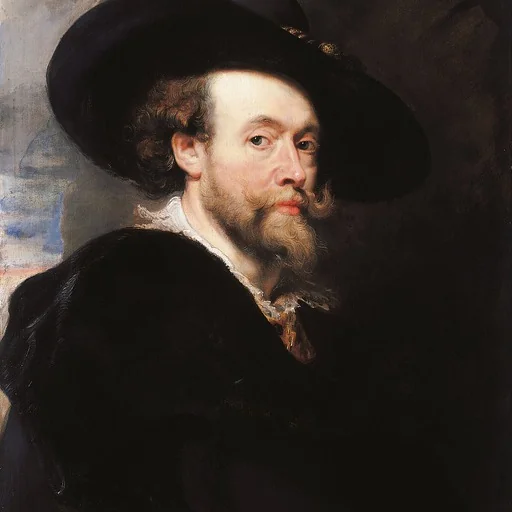
Sir Peter Paul Rubens ( ROO-bənz; Dutch:; 28 June 1577 – 30 May 1640) was a Flemish artist and diplomat.