Artwork
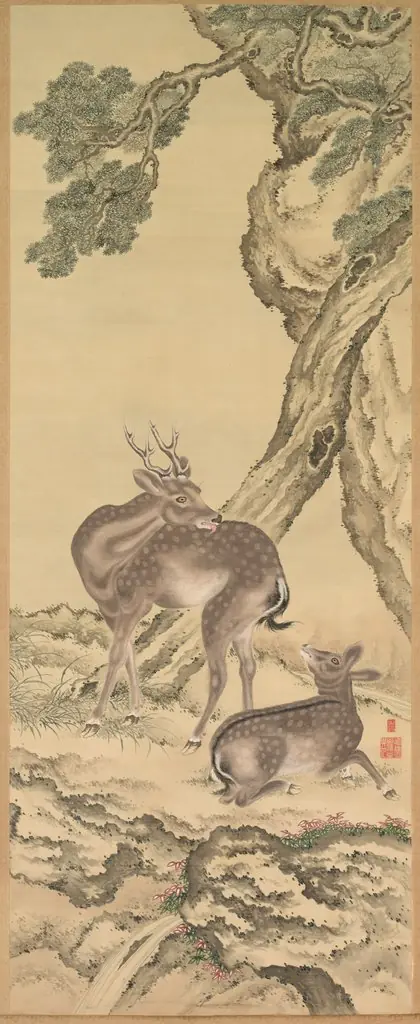
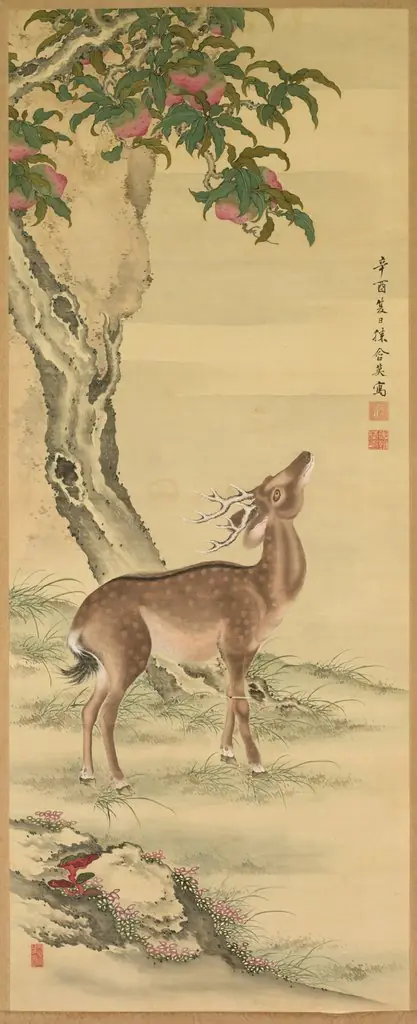
Symbols of Longevity: Deer under Peach and Pine (Pine) (right)
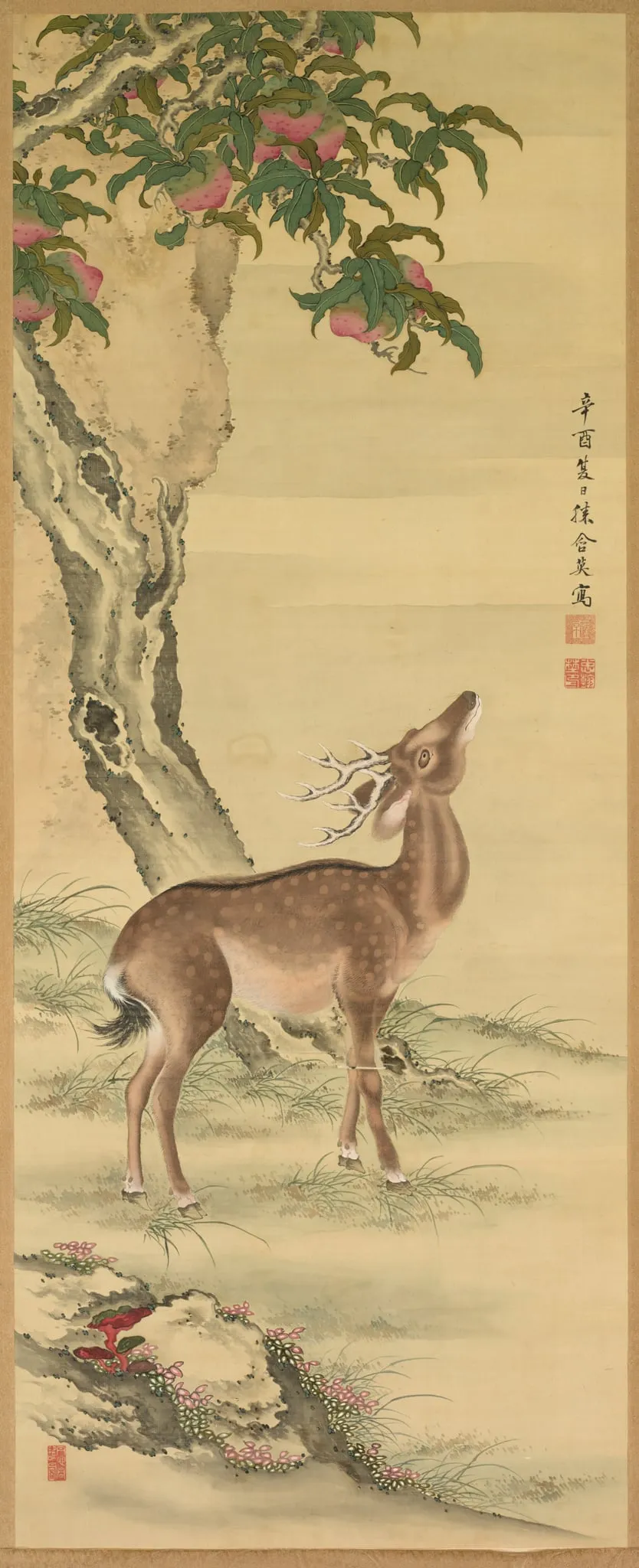
Symbols of Longevity: Deer under Peach and Pine (Pine) (right) is an unspecified painting by the Joseon dynasty painting artist Toda Tadanaka. It dates from 1801 and is held in the collection of the Cleveland Museum of Art.
- Accession no.
- 2015.86.1
- Credit line
- Gift of the Kelvin Smith Family
About this work
Overview
The work belongs to the Edo-period tradition of symbolic imagery, where natural elements convey philosophical ideals rather than literal narratives.
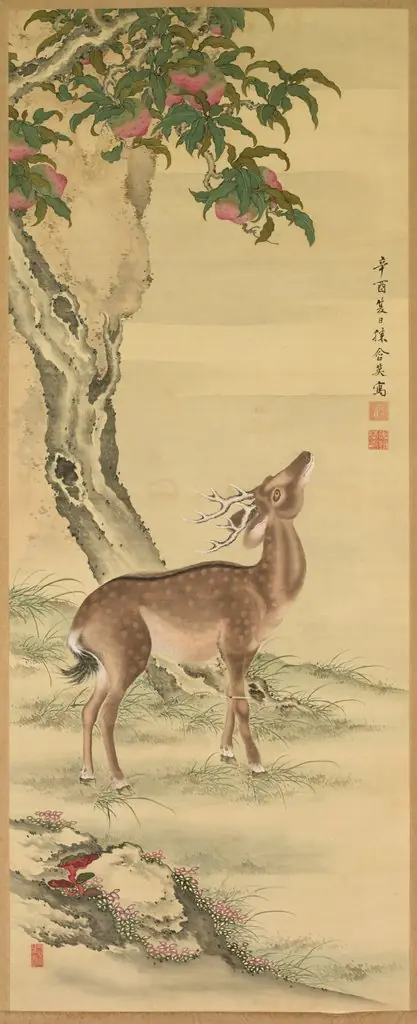
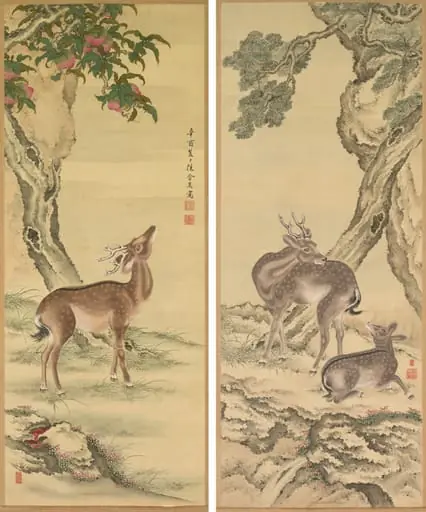
Created in 1801 by Toda Tadanaka, this painting is one panel from a pair of scrolls dedicated to themes of enduring life. Executed in ink and color on silk, it forms part of a traditional Japanese compositional format designed for contemplative viewing. The work belongs to the Edo-period tradition of symbolic imagery, where natural elements convey philosophical ideals rather than literal narratives.
Subject & Meaning
The deer, rendered in vivid red, symbolize longevity in East Asian culture, while the peach suspended above them represents immortality. The pine tree, evergreen and resilient, reinforces the theme of enduring life. Together, these elements form a visual lexicon of wishes for prolonged health and vitality, common in celebratory or ceremonial art of the period, particularly for birthdays or ancestral veneration.
Technique & Style
Tadanaka employs delicate ink washes for the sky, contrasting with sharply defined, dark pine needles and the bold red of the deer. The peach is rendered with subtle gradations, drawing attention without overt realism. The composition is sparse yet balanced, reflecting the aesthetic of restraint common in Edo-period literati painting, where suggestion outweighs detail.
History & Provenance
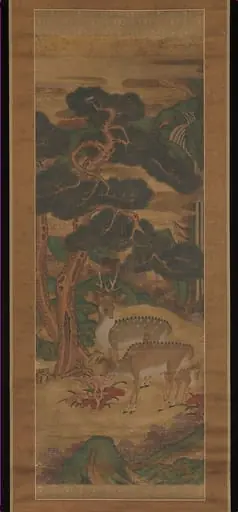
The painting entered the collection of The Cleveland Museum of Art as part of a larger group of Japanese scrolls acquired in the early 20th century. Its pairing with a complementary panel featuring the peach and deer under another pine suggests it was originally displayed as a diptych. The work has remained in consistent institutional care since its acquisition, with no known private ownership after its arrival in the West.
Context
During the Edo period, such symbolic scrolls were often commissioned for elite households or Buddhist temples to mark significant life events. Artists like Tadanaka drew from Chinese literary traditions adapted into Japanese visual culture, blending Confucian, Daoist, and Shinto beliefs. These works served both decorative and devotional purposes, reinforcing cultural values through nature-based allegory.
Legacy
This painting exemplifies the enduring influence of symbolic imagery in Japanese art, where natural forms carry layered meanings across centuries. While later generations moved toward realism or abstraction, such allegorical scrolls remain touchstones for understanding how Edo-period society encoded spiritual aspirations into everyday aesthetics. It continues to inform scholarly study of Japanese visual symbolism.
Artist & collection