Artwork
Symbols of Longevity: Deer under Peach and Pine
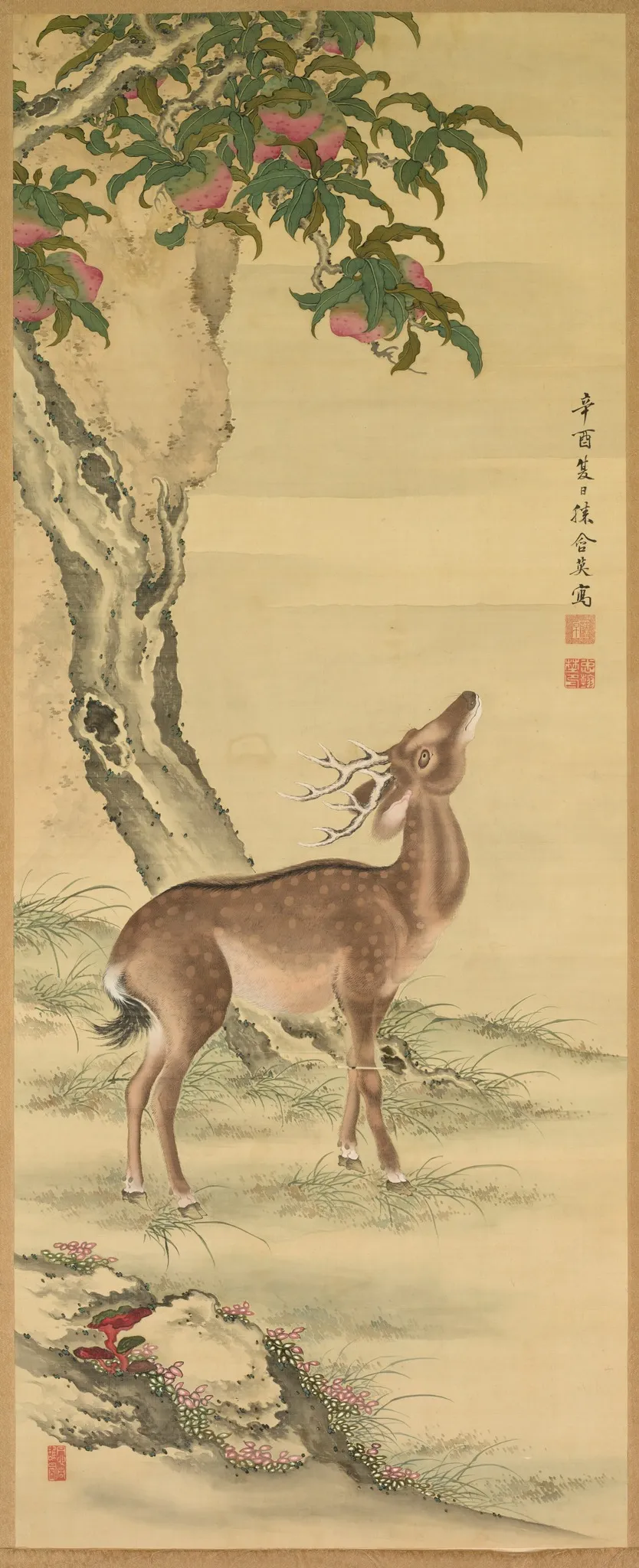
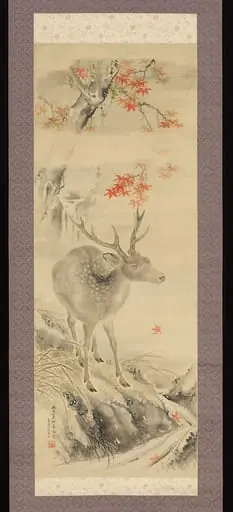
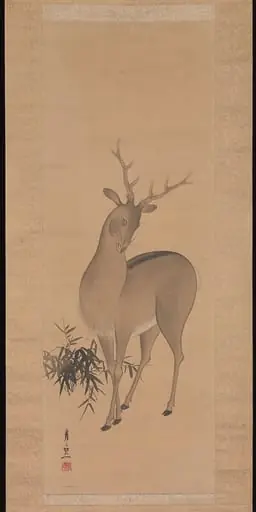
Symbols of Longevity: Deer under Peach and Pine is an unspecified painting by the Nanga artist Toda Tadanaka. It dates from 1801 and is held in the collection of the Cleveland Museum of Art.
About this work
History & Provenance
The painting Symbols of Longevity: Deer under Peach and Pine was created in 1801 by the Japanese artist Toda Tadanaka (1761–1823).
The painting Symbols of Longevity: Deer under Peach and Pine was created in 1801 by the Japanese artist Toda Tadanaka (1761–1823). The work originated in Japan and dates specifically to the year 1801. It is currently held in the collection of the Cleveland Museum of Art, where it is cataloged under the accession number 2015.86.
No further details regarding the original commission, specific patron, or the intermediate ownership chain prior to its acquisition by the museum are provided in the available records.
The painting Symbols of Longevity: Deer under Peach and Pine is held in the collection of the Cleveland Museum of Art. The work, created in 1801 by Toda Tadanaka, is cataloged within the museum's holdings under the accession number 2015.86. The institution in Cleveland, Ohio, serves as the current location for this piece of Japanese art.
Legacy
The painting's enduring presence in a major museum collection has cemented its reputation as a representative example of early 19th-century Japanese symbolic art. Its depiction of longevity motifs through deer, peach, and pine continues to inform scholarly discussions of Edo-period visual culture and remains frequently referenced in studies of Japanese painting traditions.
Overview
Created in 1801 by the Japanese painter Toda Tadanaka, Symbols of Longevity: Deer under Peach and Pine is an ink-and-colour work now in the collection of the Cleveland Museum of Art. The composition presents a solitary deer positioned before a flowering tree, set against a muted, pale yellow ground that emphasizes the quiet atmosphere of the scene.
Subject & Meaning
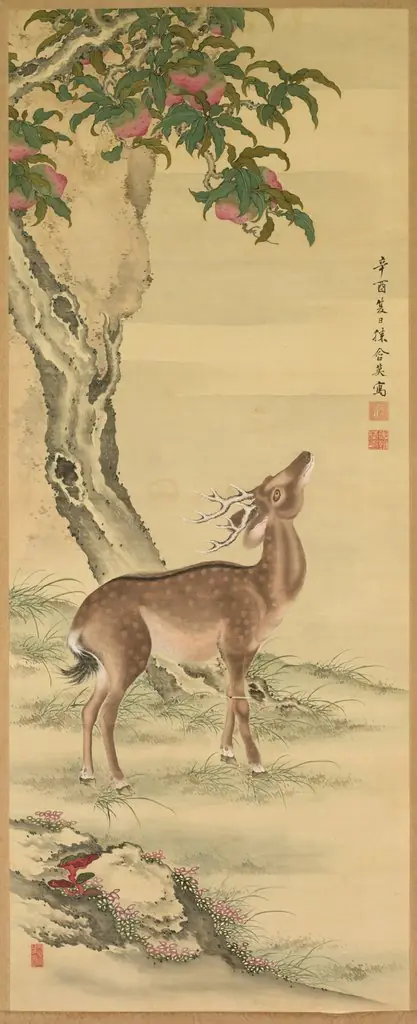
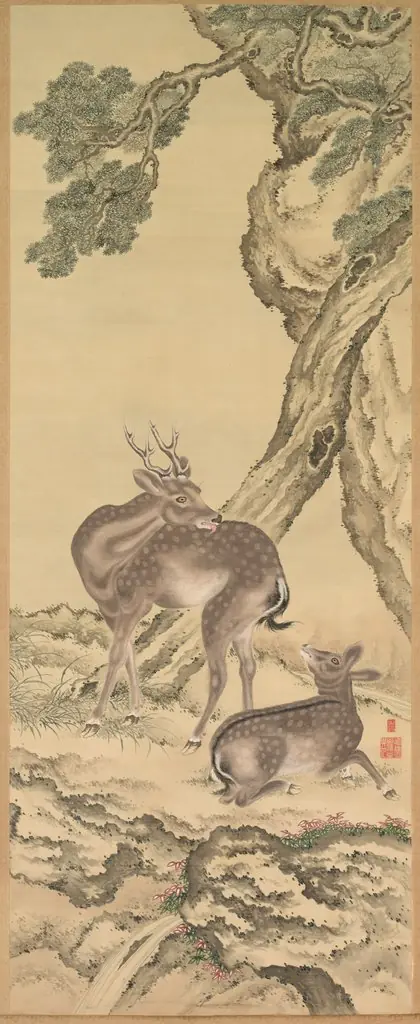
The central figure is a light‑brown deer marked with white spots and a white tail, gazing upward at a tree laden with pink fruit and surrounded by fresh green foliage. In East Asian iconography, deer often symbolize longevity and good fortune, while peach and pine are traditional emblems of long life, reinforcing the painting’s auspicious theme.
Technique & Style
Toda employs delicate brushwork and a restrained palette of soft greens, pinks, and earthy tones. Fine, controlled strokes render the animal’s fur and the tree’s blossoms, while the background’s flat, yellow wash provides a subtle contrast without detracting from the focal elements. The overall effect is one of refined elegance characteristic of early‑nineteenth‑century Japanese genre painting.
Context
In the early 1800s, Japanese painters frequently incorporated motifs of nature that conveyed moral or auspicious messages. Toda’s rendering aligns with this tradition, pairing a graceful animal with flora associated with endurance. The piece reflects the broader cultural practice of using visual symbolism to convey wishes for health and longevity.
Artist & collection

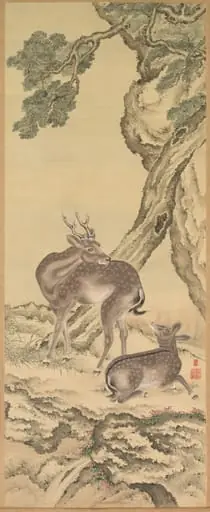
- Symbols of Longevity: Deer under Peach and Pine (Pine) (right)
 Symbols of Longevity: Deer under Peach and Pine (Pine) (right)
 Symbols of Longevity: Deer under Peach and Pine (Peach) (left)
 Symbols of Longevity: Deer under Peach and Pine (Peach) (left)
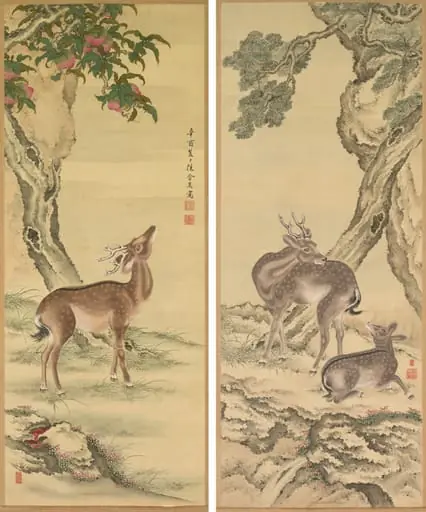 Symbols of Longevity: Deer under Peach and Pine
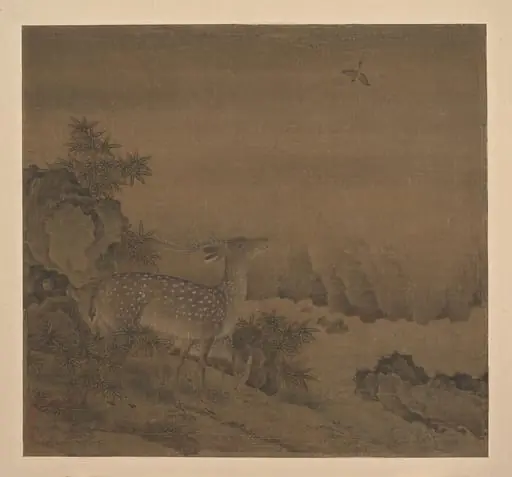 明 佚名 溪鹿圖 冊頁|Deer by a Pine Stream
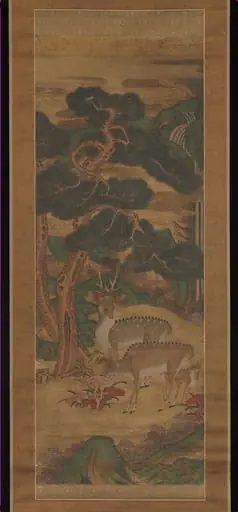 작자미상 소나무 아래 사슴 조선|作者未詳 松下雙鹿圖 朝鮮|Deer amid Pine Trees
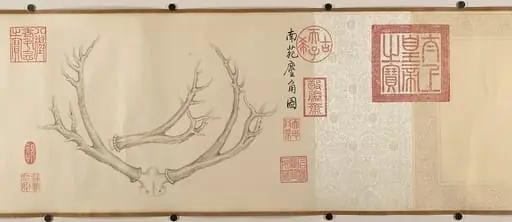 清 弘曆(乾隆皇帝) 鹿角雙幅 卷|Two Paintings of Deer Antlers