Artwork
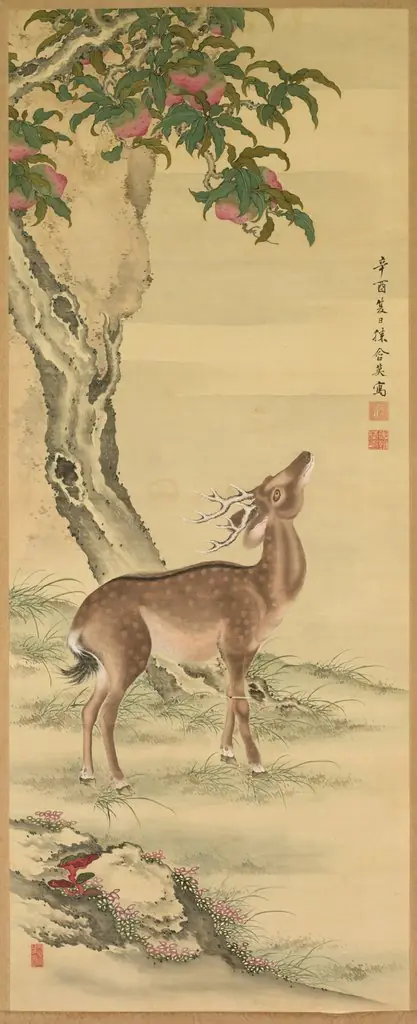
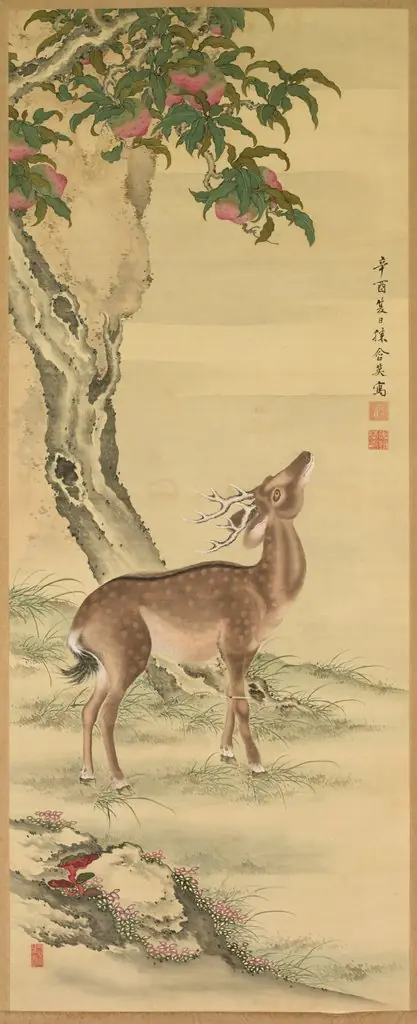
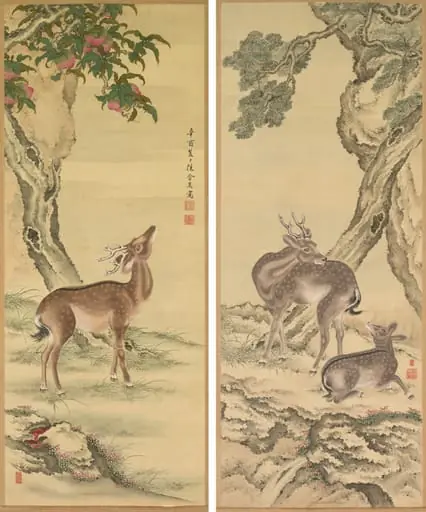
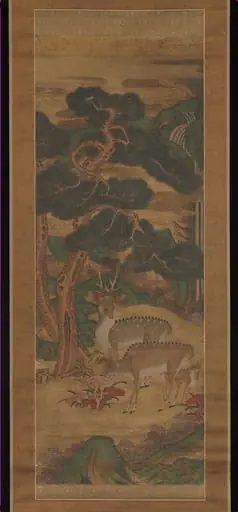
Symbols of Longevity: Deer under Peach and Pine (Peach) (left)
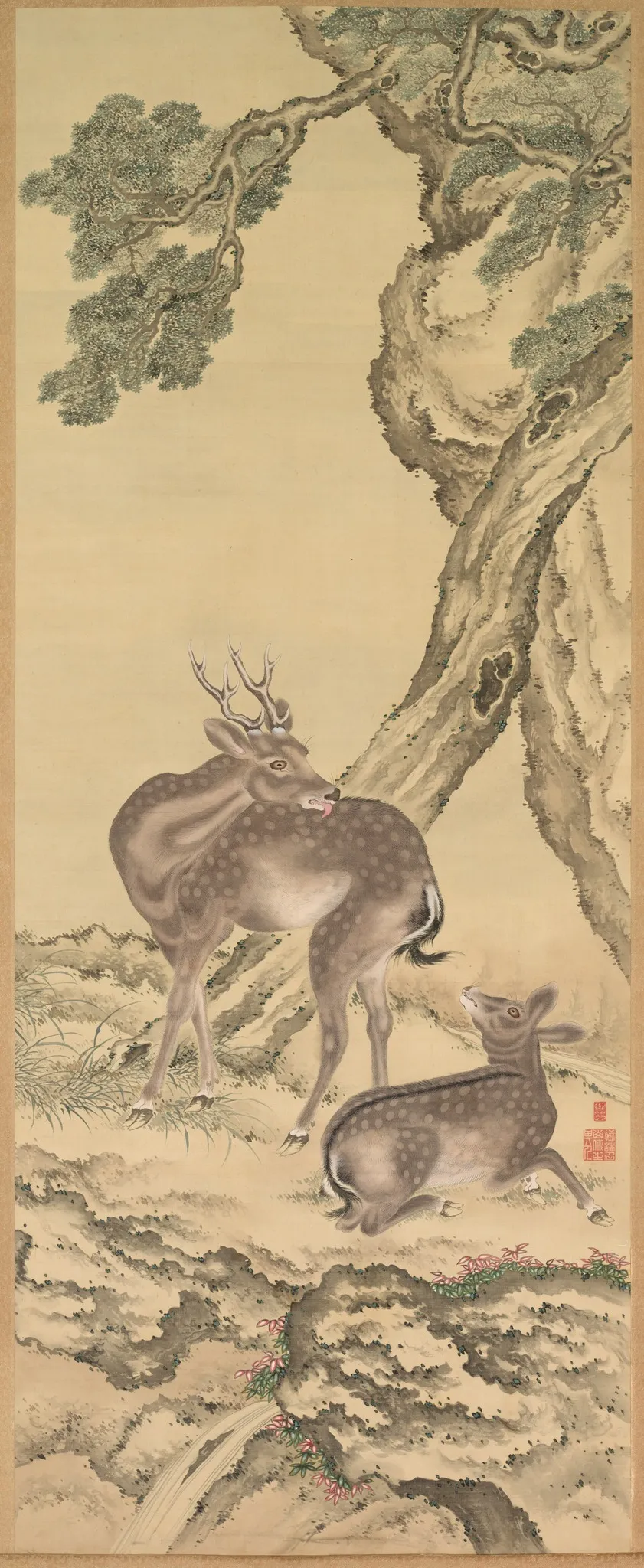
Symbols of Longevity: Deer under Peach and Pine (Peach) (left) is an unspecified painting by Toda Tadanaka. It dates from 1801 and is held in the collection of the Cleveland Museum of Art.
About this work
History & Provenance
It stands as a classified painting within the institution's holdings, representing Tadanaka's artistic output during the early 1800s.
Created in 1801 in Japan, this painting was executed by the artist Toda Tadanaka (1761–1823). The work, identified by the accession number 2015.86.2, currently resides in the collection of the Cleveland Museum of Art. While the specific circumstances regarding its original commission or the intermediate steps of its ownership chain prior to museum acquisition are not detailed in the available records, the piece is firmly dated to the turn of the nineteenth century.
It stands as a classified painting within the institution's holdings, representing Tadanaka's artistic output during the early 1800s.
Context
Toda Tadanaka (1761–1823), a Japanese painter of the late Edo period, produced Symbols of Longevity: Deer under Peach and Pine (Peach) (left) in 1801; the work is classified as a painting and is housed in the Cleveland Museum of Art (CMA). The CMA records identify the piece as part of the museum’s collection (accession 2015.86.2) and note its depiction of deer, a flower, a tree trunk, grass, and a peach motif, all traditional symbols of longevity in East Asian art. The painting’s composition reflects contemporary Japanese artistic conventions and contributes to the corpus of Edo‑era works that explore symbolic themes of nature and endurance.
Overview
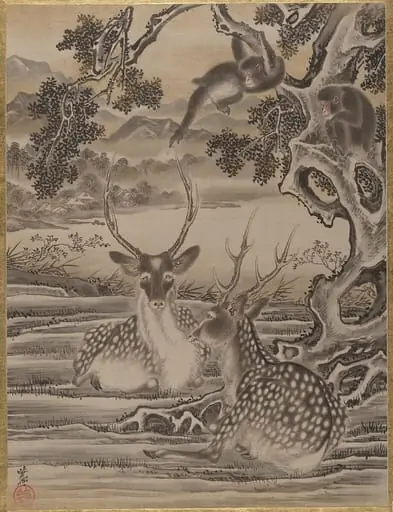
This painting, titled Symbols of Longevity: Deer under Peach and Pine (Peach) (left), presents a natural scene rich with symbolic meaning. It portrays two deer within a landscape featuring a prominent pine and a distinctive peach tree. The artwork exemplifies a recurring theme in traditional Japanese art, where specific animals and plants are selected not only for their visual appeal but also for their profound cultural associations with endurance and a long life.
Subject & Meaning
In traditional Japanese iconography, the elements depicted in this painting convey specific meanings related to longevity. Deer are esteemed for their elegance and extended lifespans, while the sturdy pine tree embodies resilience and steadfastness throughout the year. The peach tree, frequently linked with immortality, further reinforces the overarching theme of enduring vitality. Collectively, these motifs construct a visual narrative celebrating strength, endurance, and a prolonged existence.
Technique & Style
The composition features a large, antlered deer standing on a rocky slope, accompanied by a smaller deer resting nearby. A tall pine tree anchors the left side of the scene, its branches extending upwards, while the gnarled, twisting trunk of a peach tree ascends the right. The background recedes into soft, atmospheric misty hills, with delicate pink blossoms introducing subtle color to the foreground, enhancing the serene natural setting.
Artist & collection

- Symbols of Longevity: Deer under Peach and Pine (Peach) (left)
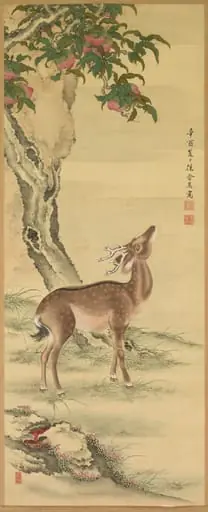 Symbols of Longevity: Deer under Peach and Pine (Pine) (right)
 Symbols of Longevity: Deer under Peach and Pine (Pine) (right)
 Symbols of Longevity: Deer under Peach and Pine
 Symbols of Longevity: Deer under Peach and Pine
 明 佚名 溪鹿圖 冊頁|Deer by a Pine Stream
 작자미상 소나무 아래 사슴 조선|作者未詳 松下雙鹿圖 朝鮮|Deer amid Pine Trees