Artwork
Croitorul - studiu
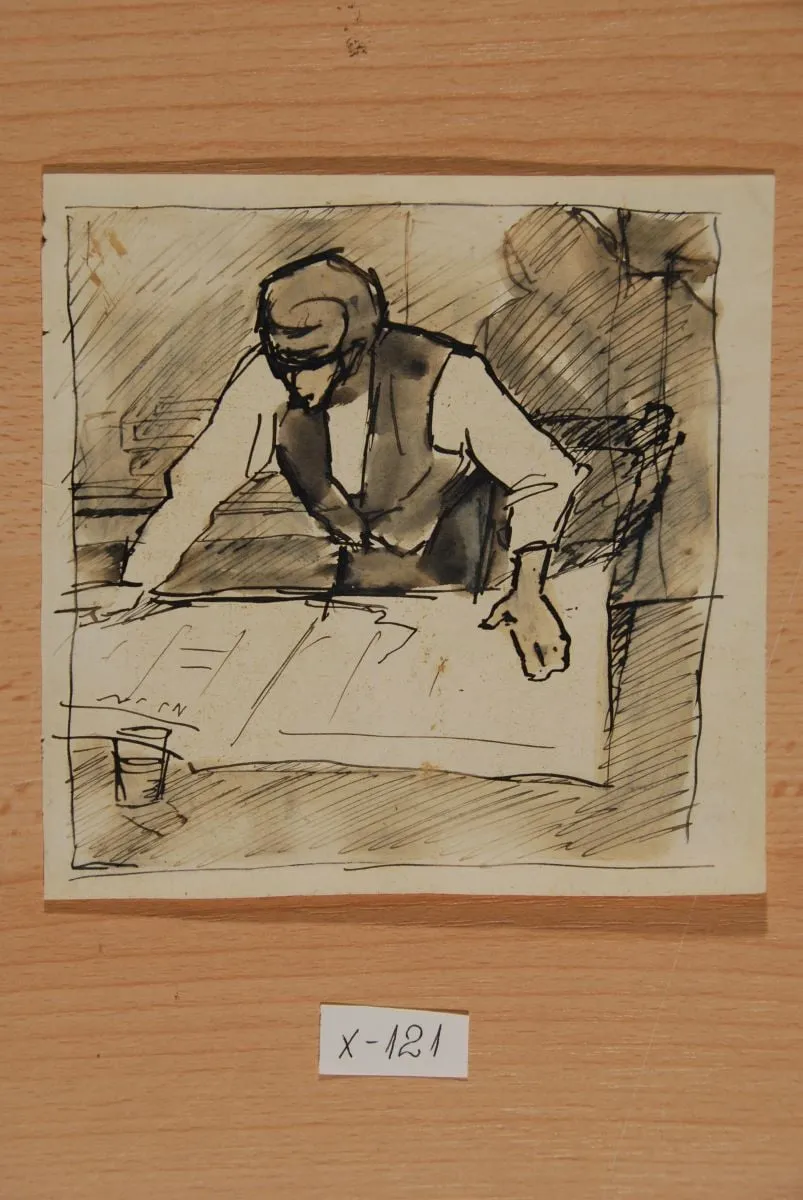
Croitorul - studiu is a drawing by Nicolae Tonitza. It dates from 1923 and is held in the collection of the Brukenthal National Museum.
About this work
Overview
The composition emphasizes gesture and posture over finish, suggesting it was made to explore form and movement rather than serve as a final piece.
Created around 1923 by Nicolae Tonitza, this ink drawing is a preparatory study titled 'Croitorul - studiu.' It captures a tailor in mid-motion, bent over his work, with minimal environmental detail. The composition emphasizes gesture and posture over finish, suggesting it was made to explore form and movement rather than serve as a final piece. The medium and spontaneity point to its function as an artist’s working sketch.
Subject & Meaning
The figure is a tailor, engaged in quiet, focused labor. His hunched posture and concentrated hands convey the physicality of craftsmanship, reflecting Tonitza’s interest in everyday Romanian workers. There is no narrative context, no tools, fabric, or setting beyond essentials, so the emphasis lies in the dignity of routine labor. The subject is rendered not as an idealized type but as a momentary, authentic presence.
Technique & Style
Tonitza employs rapid, overlapping ink lines to model form through cross-hatching, building volume without shading or tone. The strokes are loose and energetic, suggesting motion rather than stillness. Background elements, a chair, a wall, are suggested with minimal, gestural marks, leaving much to the viewer’s imagination. The technique prioritizes rhythm and structure over precision, aligning with early modernist tendencies in Romanian art.
History & Provenance
The drawing originates from Tonitza’s active period in the early 1920s, when he frequently turned to figural studies to refine his approach to portraiture and genre scenes. It likely belonged to his personal collection of sketches, later preserved in Romanian institutional holdings. No record of public exhibition at the time of creation exists, but its survival indicates its value to the artist as a working document.
Context
In interwar Romania, artists like Tonitza sought to ground their work in local life, moving away from academic traditions. This study reflects a broader trend of documenting laborers and rural artisans with empathy and formal economy. Tonitza’s sketches from this era often served as bridges between observation and larger paintings, situating him within a generation redefining national identity through intimate, unidealized imagery.
Legacy
Though not a finished painting, this study exemplifies Tonitza’s commitment to capturing human presence through direct observation. Its rawness and focus on gesture influenced later Romanian artists interested in expressive line and social realism. The work remains a key example of how preparatory drawings can carry as much artistic weight as completed pieces, revealing the process behind public works.
Artist & collection

Artist
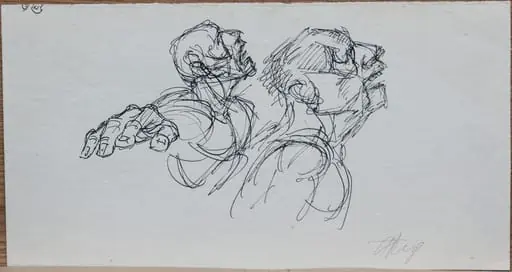
Nicolae Tonitza was a Romanian painter, engraver, lithographer, journalist and art critic. Drawing inspiration from Post-Impressionism and Expressionism, he had a major role in introducing modernist guidelines to local art.

- Studiu de personaj
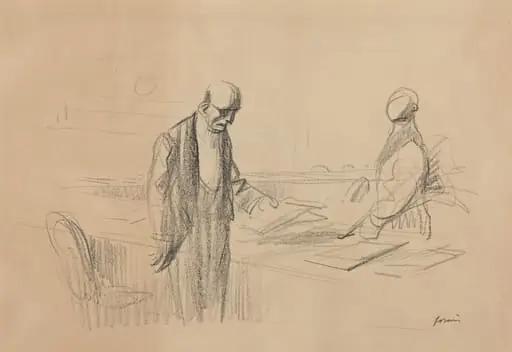 a) At the Conference (recto); b) Reclining Figure (verso)
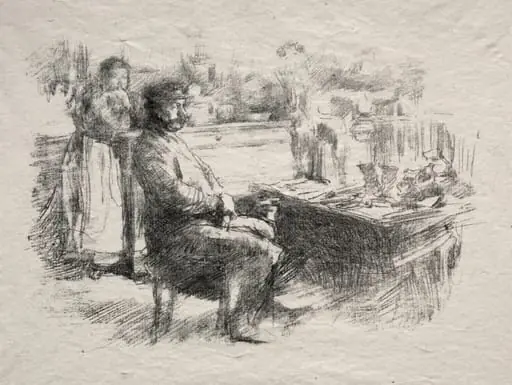 The Shoemaker
 Untitled
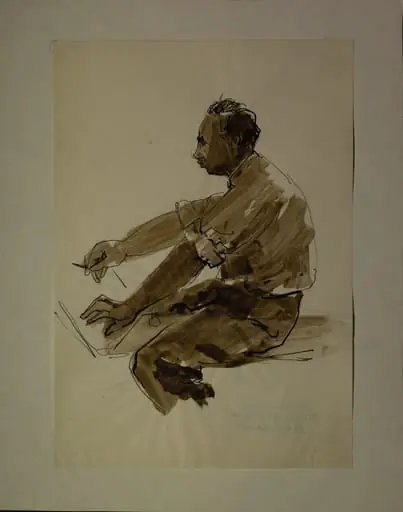 Portret al pictorului Pavel Codiță, din profil, spre stânga. Redat până la brâu, așezat, desenând. Lucia Cosmescu (1916-1969) a fost pictoriță și graficiană româncă, Născută în Galați, a făcut studii de pictură la Academia de Arte Frumoase din București.
 Untitled
 Untitled
 Internat
 Study of a Horse
 Tête-à-tête in the Garden
 Firelight - Joseph Pennell, No. 2
 Tent (recto); Two Sketches (verso)