Artwork
Nakasu no suzumi|Enjoying the Evening Cool at Nakasu
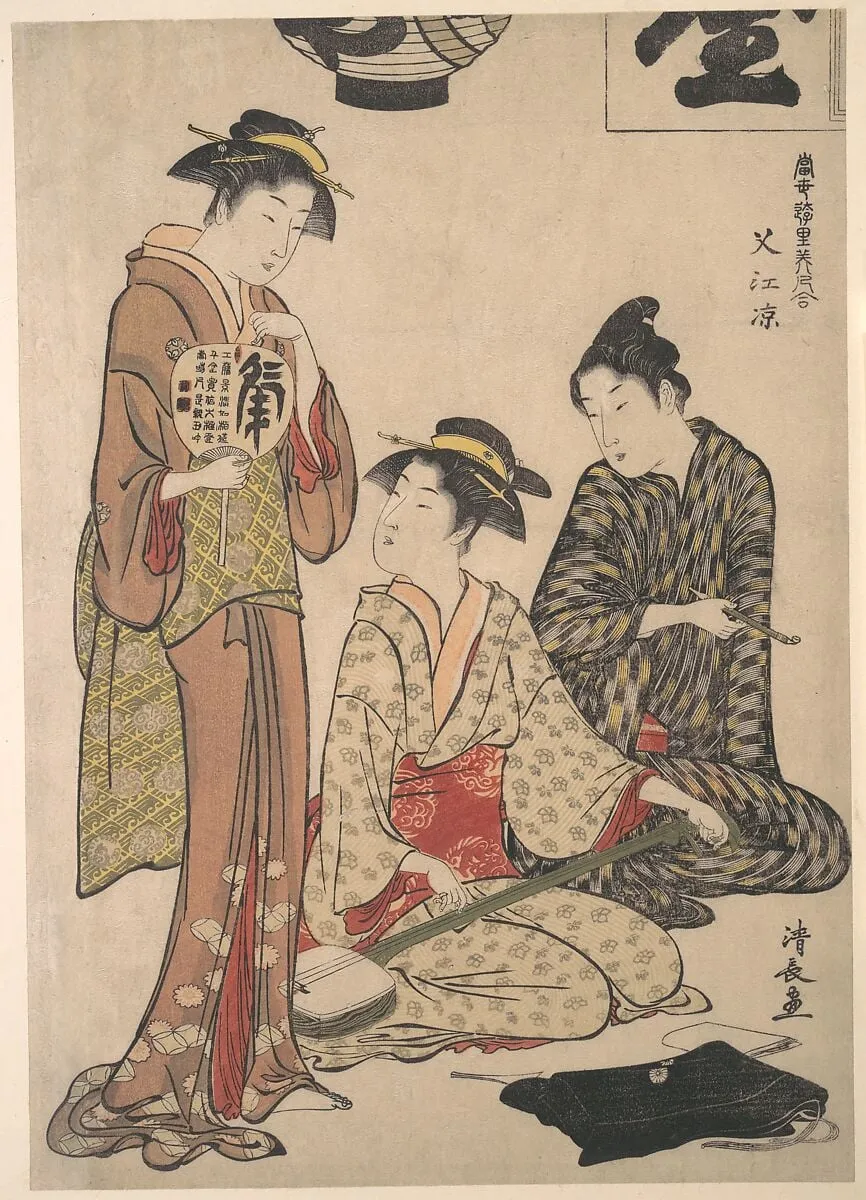
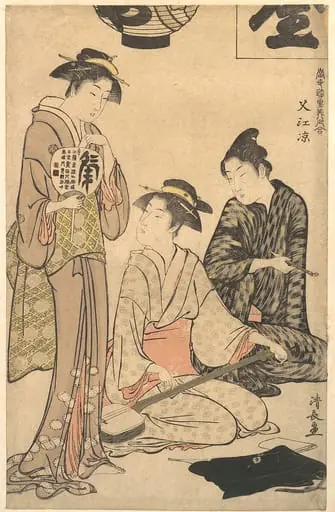
Nakasu no suzumi|Enjoying the Evening Cool at Nakasu is an ink print by the Romanticist artist Torii Kiyonaga. It dates from 1782 and is held in the collection of the Metropolitan Museum of Art.
About this work
Overview
The composition captures a moment of leisure during the summer heat, with the subjects positioned to emphasize their individual postures and interactions.
Nakasu no suzumi (Enjoying the Evening Cool at Nakasu), created in 1782 by Torii Kiyonaga, is a prominent ukiyo-e woodblock print depicting three figures in a domestic interior. The composition captures a moment of leisure during the summer heat, with the subjects positioned to emphasize their individual postures and interactions. On the left, a standing woman in a brown robe with gold patterns holds a fan inscribed with text.
Beside her, a seated woman in a red, loose-fitting kimono leans on a walking stick, her attire featuring intricate patterns. To the right, a man kneels with arms crossed, dressed in dark clothing accented by a red sash. Kiyonaga, a leading master of the Torii school, is renowned for his ability to render full-length figures with elegant proportions and sophisticated spatial arrangements.
This work exemplifies his mature style, characterized by the harmonious balance of figures within the frame and the subtle use of color to convey texture and atmosphere. Produced during the peak of the Edo period's print culture, the piece reflects the era's fascination with urban leisure and the refined aesthetics of the merchant class. The print stands as a significant example of Kiyonaga's contribution to the development of the bijin-ga (pictures of beautiful women) genre and the broader evolution of Japanese printmaking.
Subject & Meaning
The print captures a moment of relaxed evening leisure. The woman on the left holds a fan bearing calligraphic text, suggesting a cultured pastime, while the seated woman leans on a stick, her loose garment indicating informal comfort. The kneeling man, crossed‑armed and dressed in dark attire with a red sash, adds a subtle sense of contemplation, together conveying a serene domestic atmosphere.
Technique & Style
Kiyonaga employs the ukiyo‑e tradition of clean, flowing lines and flat areas of color to delineate clothing and facial features. The limited palette, browns, reds, and muted golds, enhances the calm mood, while the precise carving of the woodblocks allows for delicate patterning on the garments and the fan’s surface.
History & Provenance
The print was produced in the late eighteenth century, during the peak of Edo‑period printmaking. It entered the Metropolitan Museum of Art’s holdings through acquisition in the twentieth century, where it remains displayed as an example of Kiyonaga’s mature work and the broader cultural life of the period.
Artist & collection

 Untitled
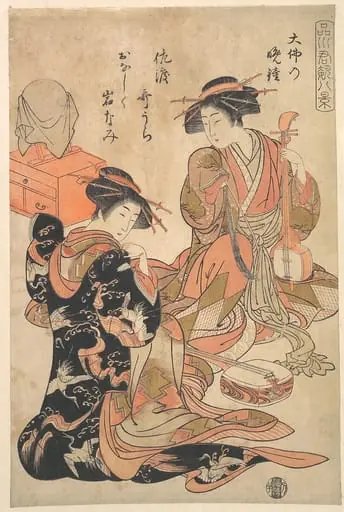 Daibutsu no bansho|Vesper Bell of the Temple of Great Buddha
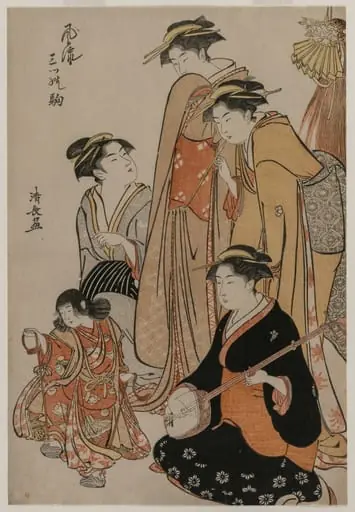 Women Watching a Girl Dance on Shells (From the series Fashionable Presentations of Three Horses)
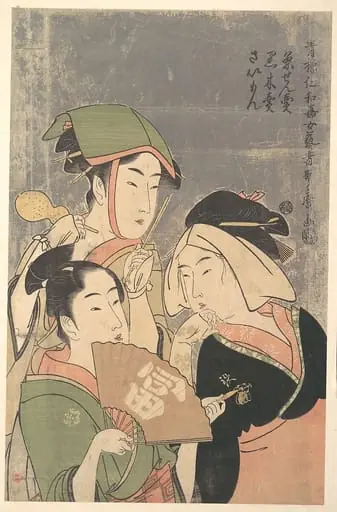 喜多川歌麿画 「青楼仁和嘉女芸者 茶せん売 黒木売 さいもん」|Three Niwaka Performers, Chasenuri, Kurokiri, and Saimon (Tea-whisk Seller, Firewood Seller, Shrine Festival Perfomer), from the “Geisha of the Yoshiwara Niwaka Festival” (Seiro Niwaka Onna Geisha)
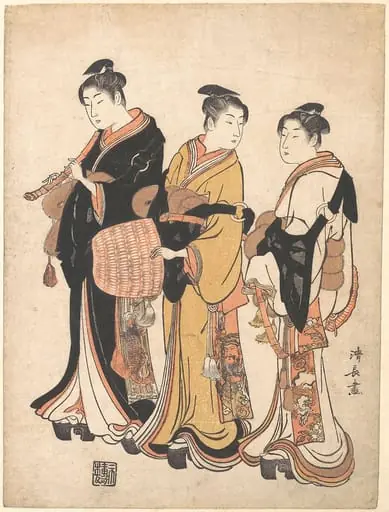 Untitled
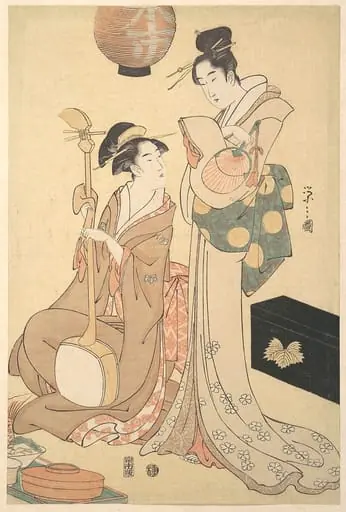 Untitled
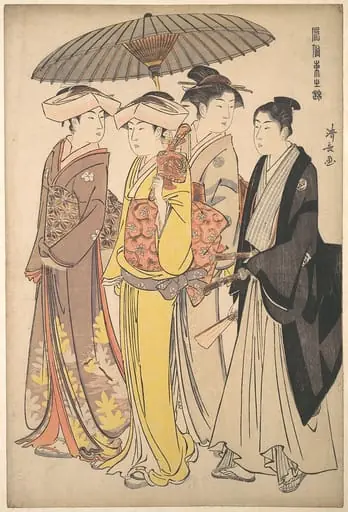 「風俗東之錦」 武家の息女と侍女と若党 |A Lady from a Samurai Household with Three Attendants, from the series A Brocade of Eastern Manners (Fūzoku Azuma no nishiki)
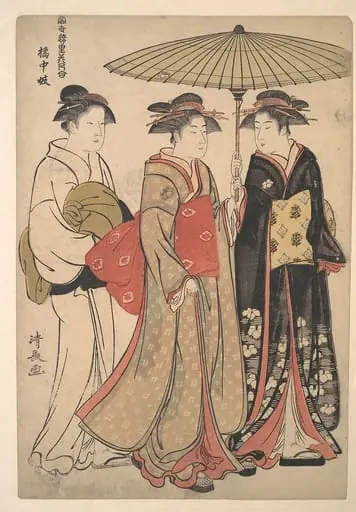 Kitchugi|Geisha of the Tachibana Street
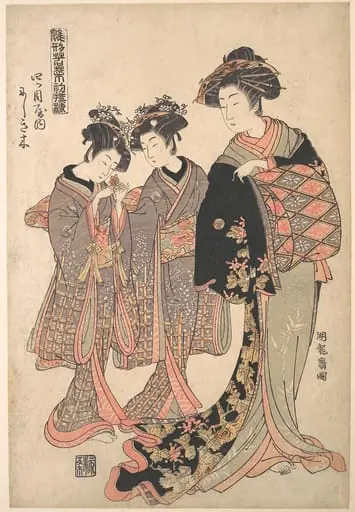 『雛形若菜初模様 四ツ目屋内 にしき木』|The Courtesan Nishikigi of the Yotsumeya Brothel, from the series “A Pattern Book of the Year’s First Designs, Fresh as Spring Herbs” (“Hinagata wakana hatsu moyō”)
- Sako no Suzumi|Cooling Off at Nakazu