Artwork
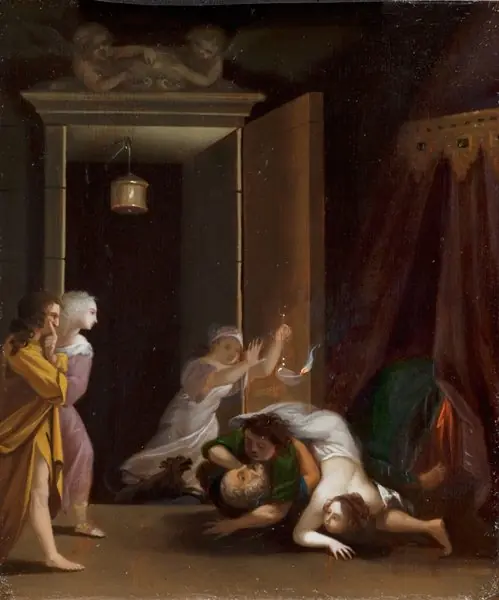
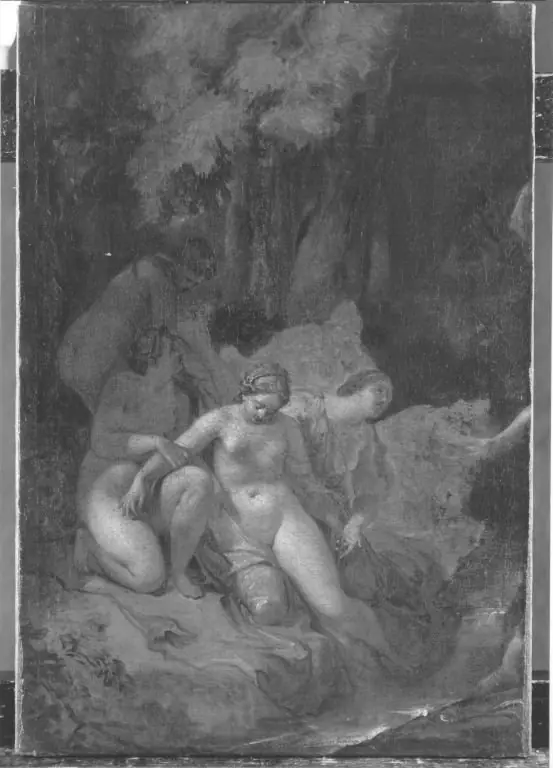
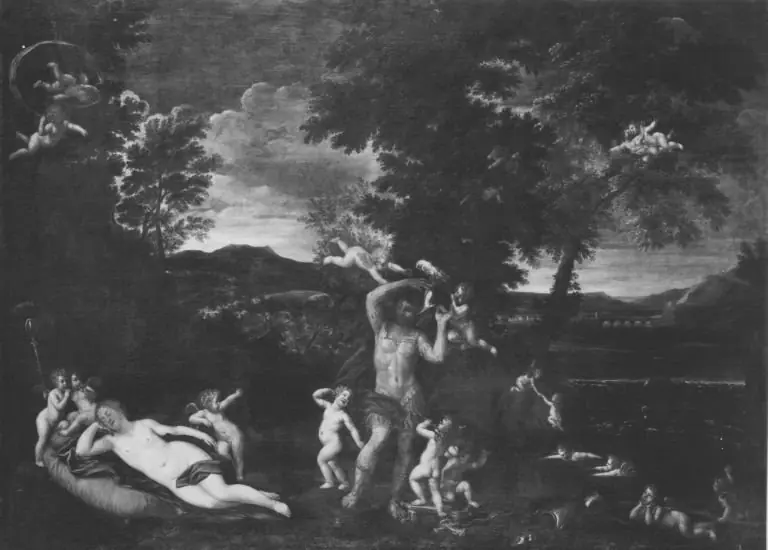
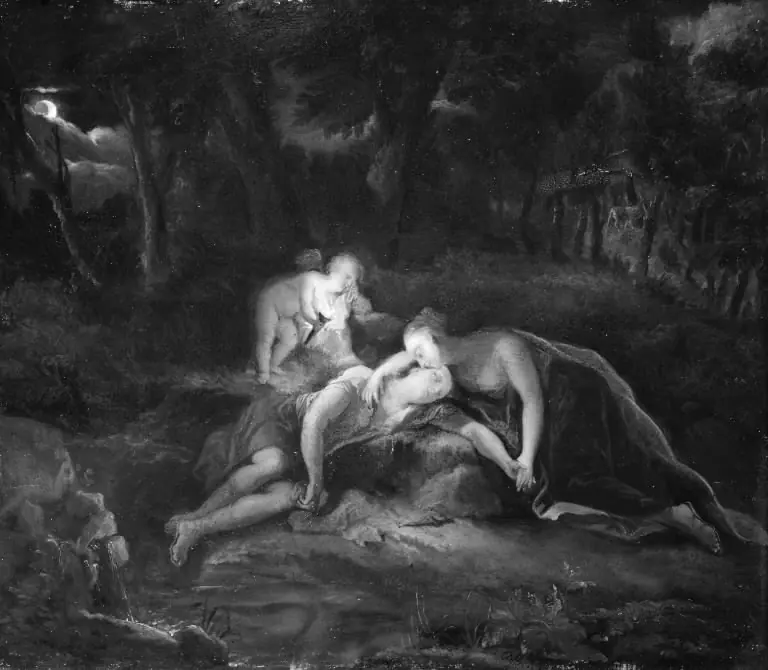
Satyr Spying on Sleeping Nymph, Antiope
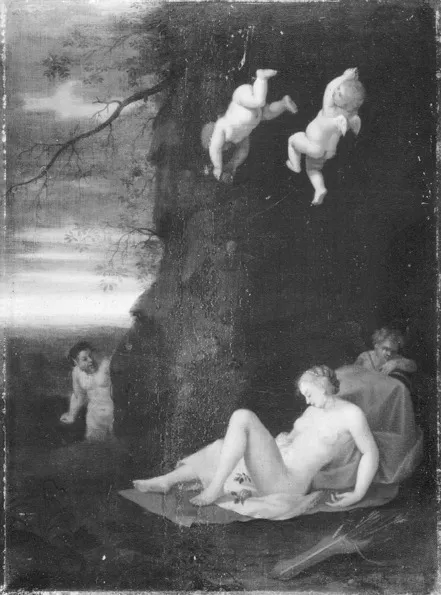
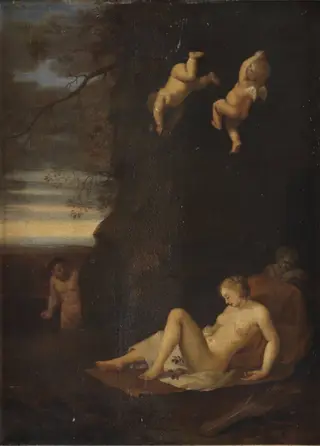
Satyr Spying on Sleeping Nymph, Antiope is an oil painting by Toussaint Gelton. It dates from 1662 and is held in the collection of the Statens Museum for Kunst.
About this work
Subject & Meaning
The arrow held by the satyr functions as an iconographic attribute of love and desire, reinforcing the theme of erotic pursuit.
The painting shows a satyr observing Antiope as she sleeps, a scene drawn from classical mythology that emphasizes the seductive and elusive nature of the nymph. The arrow held by the satyr functions as an iconographic attribute of love and desire, reinforcing the theme of erotic pursuit. Together, these elements symbolize the tension between pursuit and vulnerability, reflecting Baroque interpretations of mythological narratives as allegories of passion and transience.
Technique & Style
The work Satyr Spying on Sleeping Nymph, Antiope is an oil painting on canvas, created by Toussaint Gelton in 1662. Executed in the mythological genre, it depicts the satyr observing the sleeping nymph Antiope with an arrow, reflecting Baroque compositional drama and chiaroscuro modeling. The painting’s handling emphasizes fluid brushwork and rich color contrasts, characteristic of Dutch Golden Age techniques adapted in Northern European art.
Its current support is canvas, and it remains in the collection of the Statens Museum for Kunst, where its condition is documented as stable.
Formal qualities include a dynamic diagonal composition, nuanced chiaroscuro, and meticulous detail in the satyr’s musculature and the nymph’s drapery, underscoring Gelton’s mastery of mythological narrative through painterly precision.
History & Provenance
The painting Satyr Spying on Sleeping Nymph, Antiope was created in 1662 by the artist Toussaint Gelton. Executed in oil paint, the work depicts a mythological scene featuring Antiope, a satyr, and an arrow. The piece currently resides in the collection of the Statens Museum for Kunst, where it is held as part of their holdings.
No specific details regarding the original commission or intermediate ownership history prior to its arrival at the museum are provided in the available records.
The painting Satyr Spying on Sleeping Nymph, Antiope by Toussaint Gelton is held in the collection of the Statens Museum for Kunst. Created in 1662, the work depicts mythological figures including Antiope and a satyr. The museum houses the piece as part of its permanent holdings of mythological paintings executed in oil on canvas and panel.
Overview
Created in 1662, the oil painting Satyr Spying on Sleeping Nymph, Antiope is attributed to the Dutch artist Toussaint Gelton. The work belongs to the collection of Denmark’s Statens Museum for Kunst and exemplifies Gelton’s mid‑17th‑century output, which combined Dutch genre traditions with mythological subject matter.
Context
The painting belongs to a broader 17th‑century Dutch interest in classical mythology, often rendered with genre‑like intimacy. By integrating a mythological narrative with domestic lighting and naturalistic detail, Gelton aligns his work with contemporary tastes for learned yet accessible subjects.
Artist & collection
Artist
Toussaint Gelton (1630 – 1680) was a Dutch painter known for his work buying paintings in 1658 for the Swedish king Charles X Gustav and the family of Swedish noble Magnus Gabriel de la Gardie.