Artwork
Paris and Helena Surprised by Menelaus
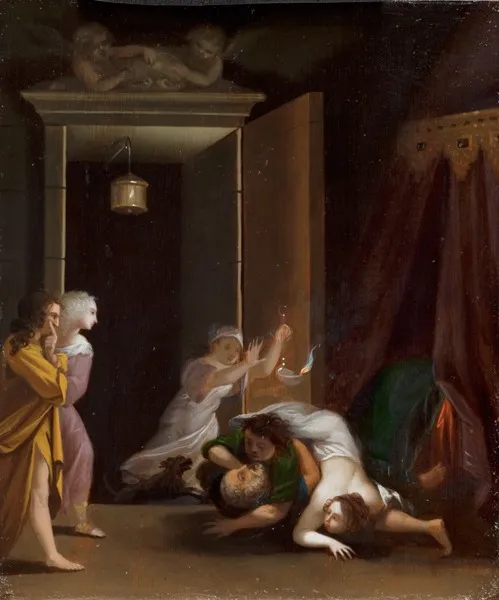
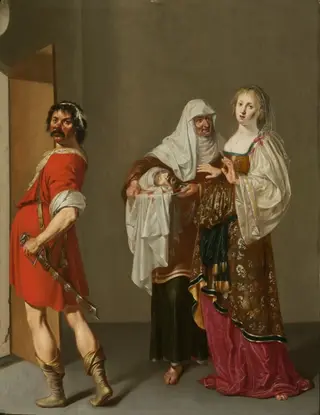
Paris and Helena Surprised by Menelaus is an oil painting by the Dutch Golden Age artist Toussaint Gelton. It dates from 1662 and is held in the collection of the Rosenborg Castle.
About this work
Subject & Meaning
The painting illustrates a scene from Greek mythology in which the Trojan prince Paris is discovered with Helen of Troy by her husband Menelaus, the Spartan king. The encounter depicts the moment that precipitates the Trojan War, as Paris's abduction of Helen, already consummated in the lovers' shared presence, provokes Menelaus's vengeful return. By naming Paris, Helen, and Menelaus as the figures depicted, the work belongs to a long tradition of mythological painting that dramatized this pivotal episode of the Iliad cycle, transforming a narrative of betrayal and retribution into a compact tableau of confrontation between the cuckolded husband and the fugitive lovers.
Technique & Style
The composition’s shallow space and careful attention to detail align with Dutch classicist tendencies of the 1660s.
The painting is executed in oil on a wooden panel measuring 21 cm in height and 17.5 cm in width.
The handling reflects a refined, miniature-like approach consistent with cabinet painting of the period. Figures are rendered with precise contours and smooth transitions, emphasizing clarity and narrative legibility. Drapery folds are softly modeled, and flesh tones are delicately blended, while the subdued palette favors muted earth tones punctuated by restrained accents of warm red and cool blue. The composition’s shallow space and careful attention to detail align with Dutch classicist tendencies of the 1660s.
History & Provenance
Paris and Helena Surprised by Menelaus is an oil-on-panel painting created by Toussaint Gelton in 1662. The work depicts the mythological figures Paris, Helen of Troy, and Menelaus. It is currently held in the collection of the Statens Museum for Kunst, located in Copenhagen, and is also associated with Rosenborg Castle. The piece measures 21 cm in height and 17.5 cm in width.
Overview
Created in 1662, Paris and Helena Surprised by Menelaus is an oil on canvas by Dutch painter Toussaint Gelton. Executed during the height of the Dutch Golden Age, the work presents a nocturnal interior in which six figures enact a moment from the Trojan myth, foregrounding the drama of Helen’s encounter with Paris and Menelaus.
Context
In the mid‑17th century, Dutch artists frequently turned to classical antiquity for subject matter, aligning with a broader European fascination with mythological themes. Gelton’s choice of a Trojan episode reflects this trend, while his Dutch training infuses the work with a meticulous attention to detail and a subdued palette characteristic of his national school.
Artist & collection
Artist
Toussaint Gelton (1630 – 1680) was a Dutch painter known for his work buying paintings in 1658 for the Swedish king Charles X Gustav and the family of Swedish noble Magnus Gabriel de la Gardie.

 Martyrium der hl. Justina
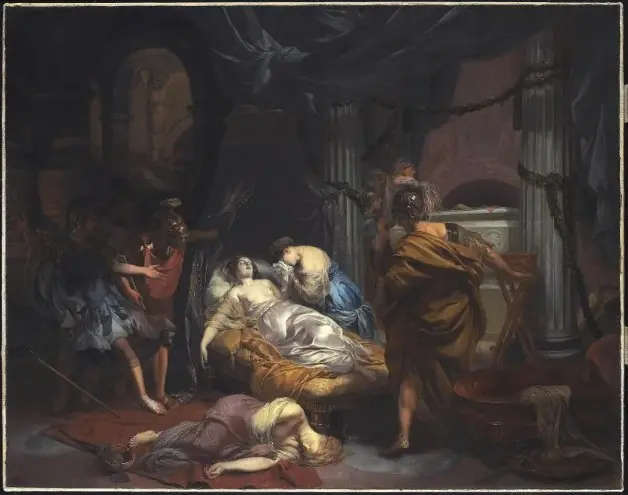 The Death of Cleopatra
 Quarrel of Gamblers
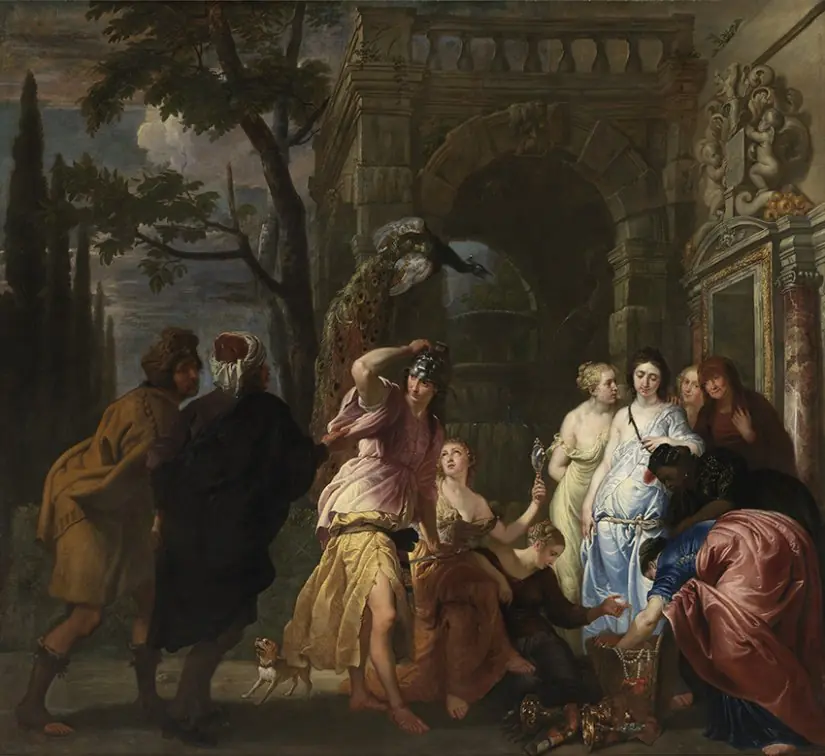 Achilles among the Daughters of Lycomedes
 Moartea Cleopatrei
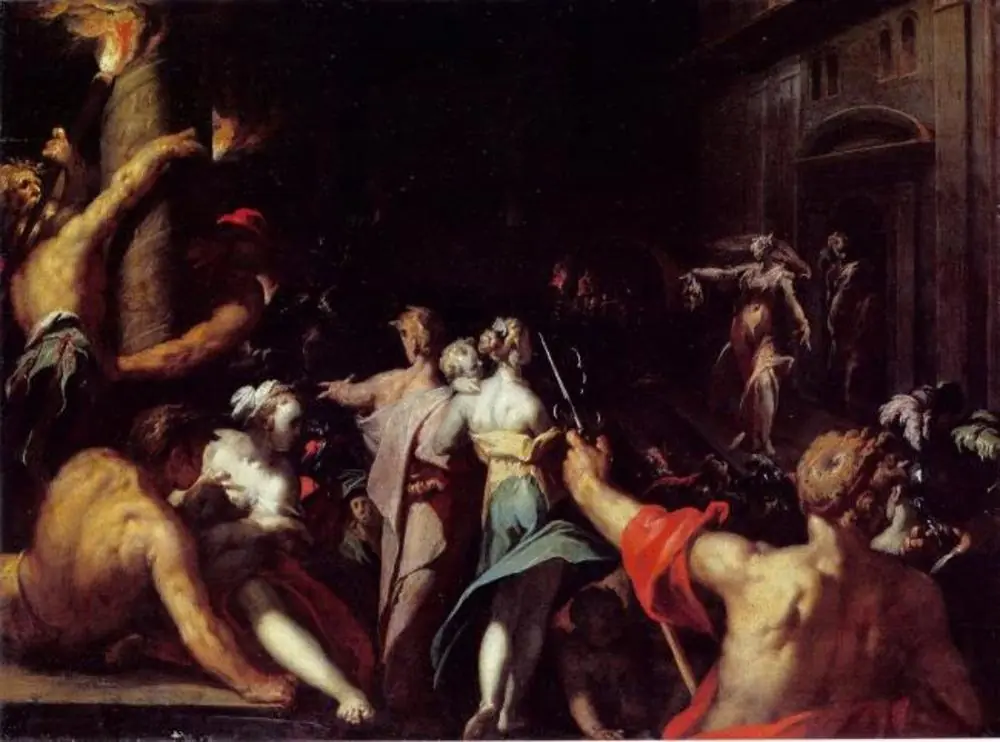 Judith Displays the Head of Holofernes
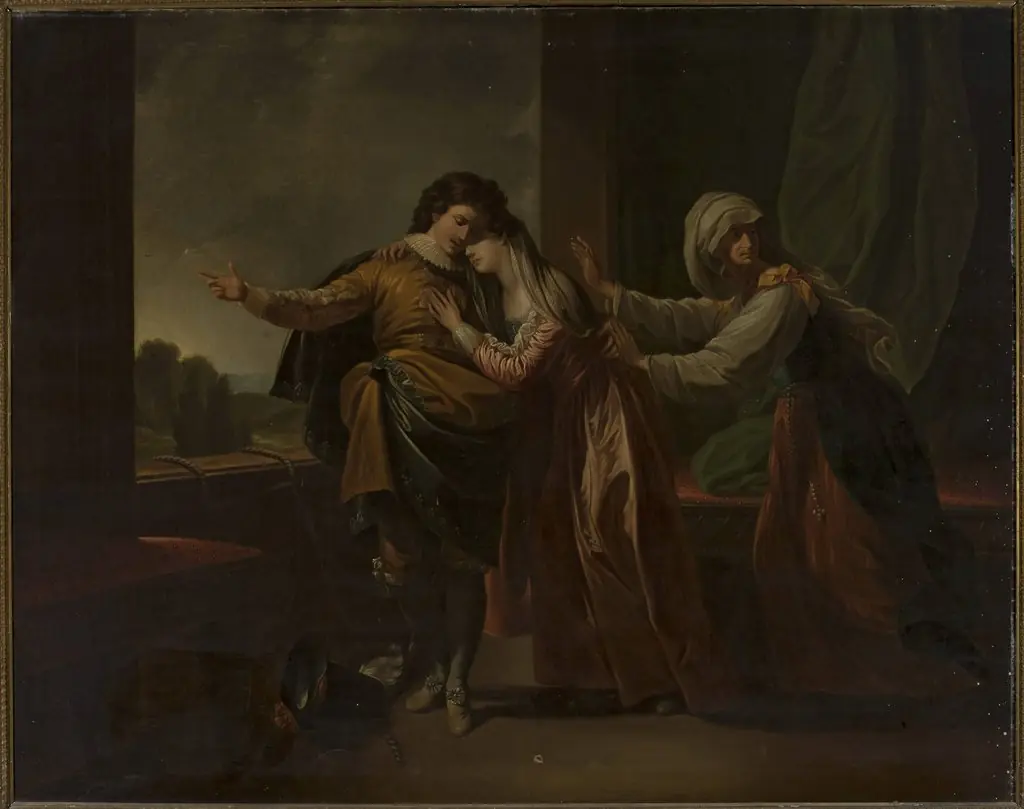 Romeo and Juliet
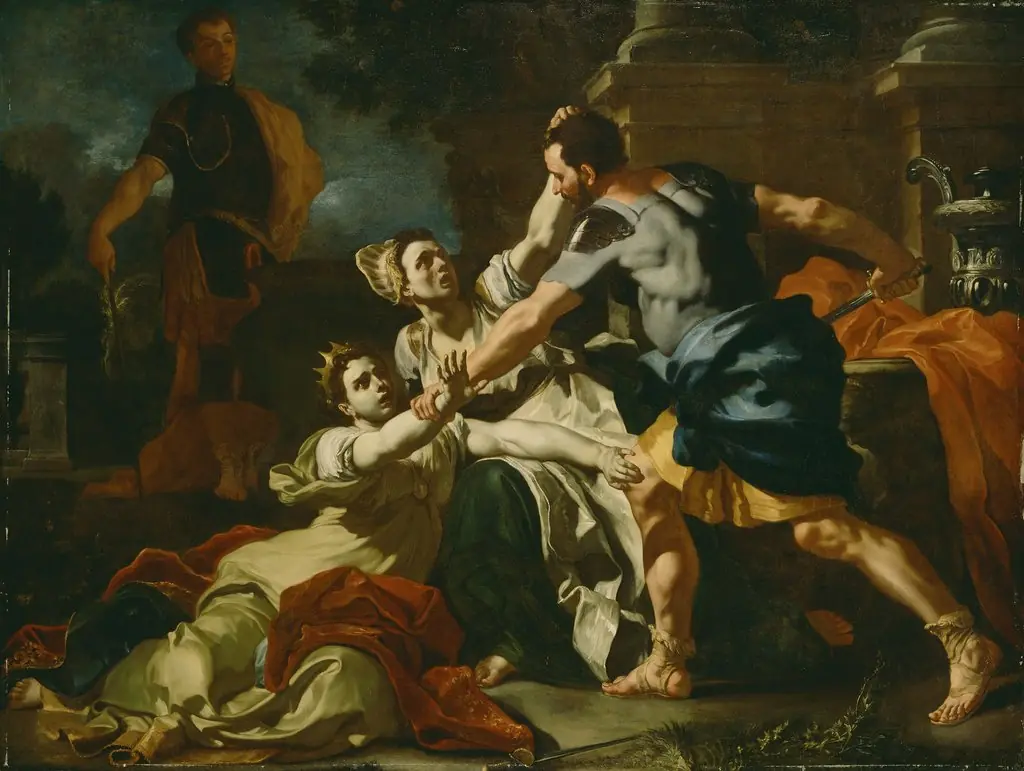 Death of Messalina
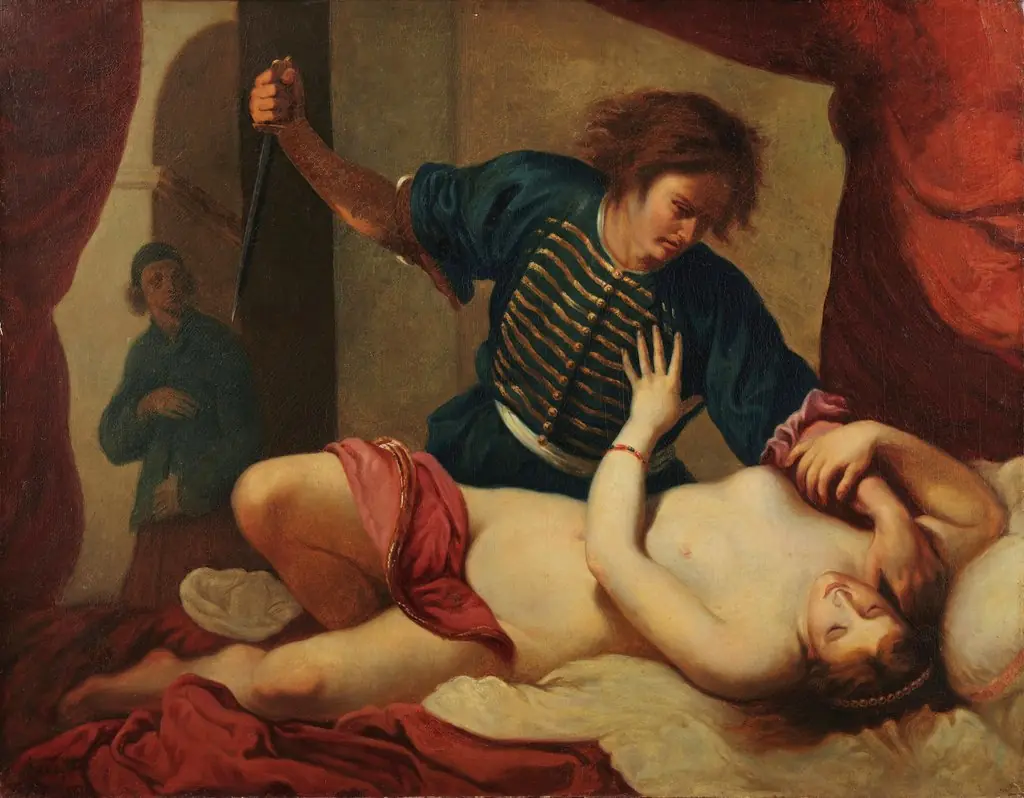 Tarquin and Lucretia
 Salome with the Head of Saint John the Baptist
 Judith and Holophernes
- Paris and Helena Surprised by Menelaus