Artwork
花舞台当寿語六|Board game of the Flower Stage (Hanabutai atari sugoroku)
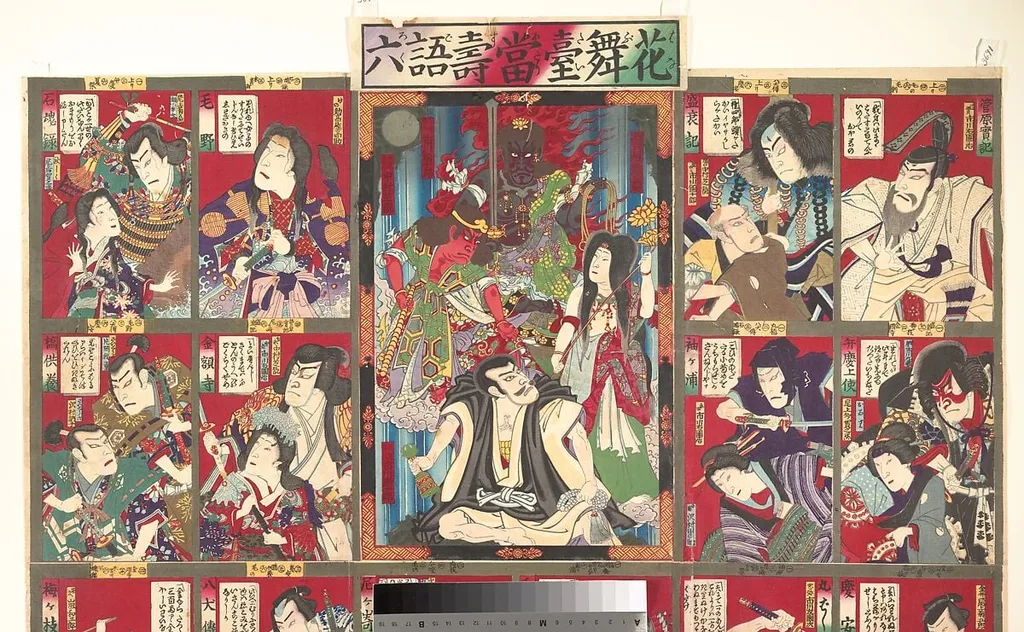
花舞台当寿語六|Board game of the Flower Stage (Hanabutai atari sugoroku) is an ink print by the Impressionist artist Toyohara Kunichika. It dates from 1883 and is held in the collection of the Metropolitan Museum of Art.
- Accession no.
- JP3691
- Credit line
- Gift of Lincoln Kirstein, 1985
About this work
Overview
The composition blends entertainment with cultural reference, turning the act of play into an engagement with popular theater.
Created in 1883 by Toyohara Kunichika, this woodblock print functions as a visual board game titled Hanabutai atari sugoroku. It presents a grid of small, vividly colored scenes depicting theatrical moments drawn from kabuki performances. Each square serves as a space on the game board, guiding players through a sequence of dramatic vignettes.
The composition blends entertainment with cultural reference, turning the act of play into an engagement with popular theater.
Subject & Meaning
The print illustrates scenes from kabuki dramas, featuring actors in signature poses and costumes associated with specific roles. Central to the composition is a supernatural episode, a pale woman, a shadowed man, and a spectral figure, suggesting a climactic ghost story common in kabuki. The inclusion of such scenes reflects the genre’s fascination with the supernatural and moral drama. The game format invites players to navigate these narratives, reinforcing theatrical storytelling as communal experience.
Technique & Style
Kunichika employed traditional ukiyo-e woodblock techniques, using bold outlines and flat areas of color to define each scene. Bright red backgrounds unify the grid while contrasting with the rich blues, greens, and blacks of the kimonos. Facial expressions are stylized, bordering on caricature, to convey emotion clearly at small scale.
The dense arrangement of figures and action within each square demonstrates a mastery of compression, turning limited space into dynamic narrative moments.
History & Provenance
The print was produced during the Meiji period, a time when woodblock prints increasingly served as mass-produced entertainment. As a sugoroku, it was likely sold as a commercial item for home use, appealing to urban audiences familiar with kabuki. It entered the collection of The Metropolitan Museum of Art in the 20th century, where it remains as one of the few surviving examples of theatrical board games from late 19th-century Japan.
Context
In Meiji-era Japan, kabuki theater remained a dominant cultural force despite modernization. Board games like this one translated live performance into portable, repeatable form, allowing patrons to relive favorite scenes. Kunichika, known for his actor portraits, leveraged his reputation to create works that bridged stage and domestic life. Such prints reflect the growing market for affordable, visually engaging art tied to popular entertainment.
Legacy
This print preserves a fleeting intersection of theater, game design, and print culture. While sugoroku games faded with the rise of new media, Kunichika’s work stands as a testament to the adaptability of ukiyo-e. It offers insight into how audiences interacted with performance beyond the theater, transforming spectacle into participatory experience. Today, it remains a rare artifact of Japan’s late Edo and Meiji visual culture.
Artist & collection


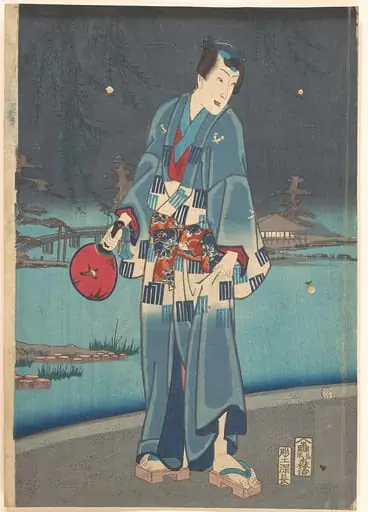 今様源氏紫絹蛍遊び|Modern Genji – Firefly Viewing (Imayō genji shiken hotaru asobi)
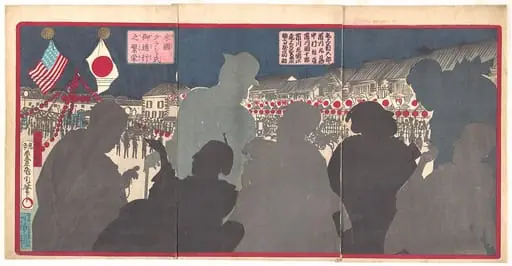 米国グラント氏御通行之繁栄|Splendor of the Procession of General Grant from America (Beikoku Guranto-shi go tsūkō no han'ei)
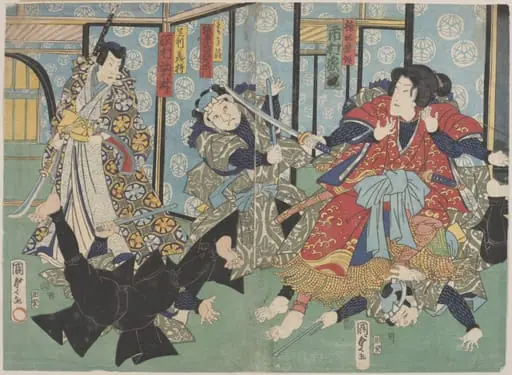
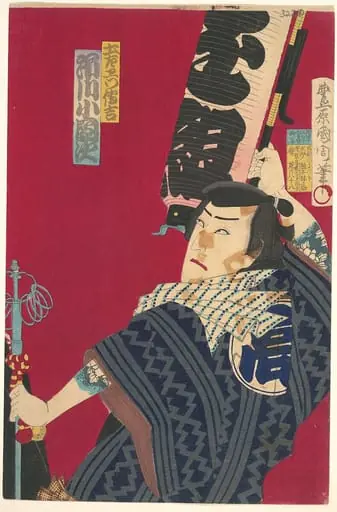 市川左小治 土左衛門伝吉|Ichikawa Sadanji as Dozaemon Denkichi in a Kabuki Play
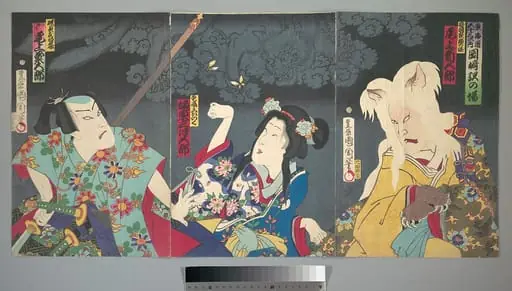 東海寄談音児館|Onoe Kikugorō V as Otowake Neko no ke (Right), Bandō Mitsugorō IV as Aishō Michinoku (Center), Onoe Kikugorō V as Isogai Mibunosuke (Left) in the Kabuki play Tōkai Kidan Nekomata Yashiki
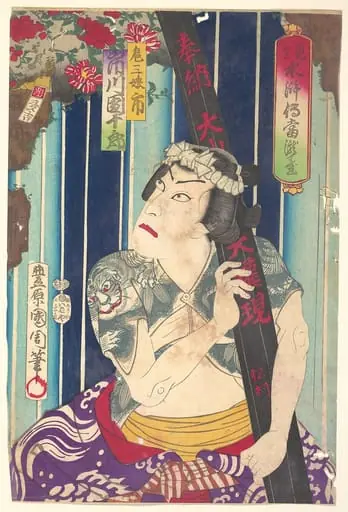 Untitled
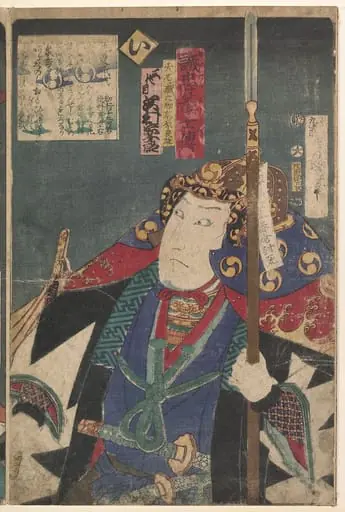 Untitled
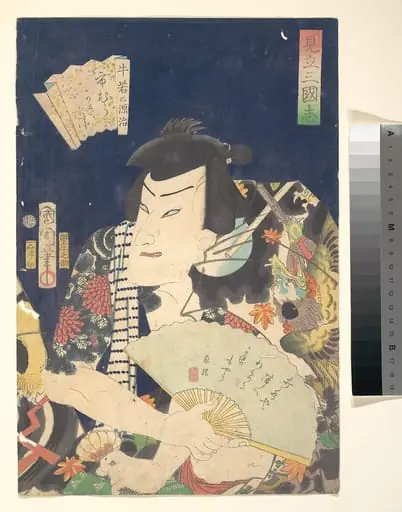 見立三国志 牛若の源治|Ichimura Kakitsu IV as Ushiwaka no Genji in the Kabuki play A Parody of the Romance of the Three Kingdoms (Mitate Sangokushi-Ushiwaka no Genji)
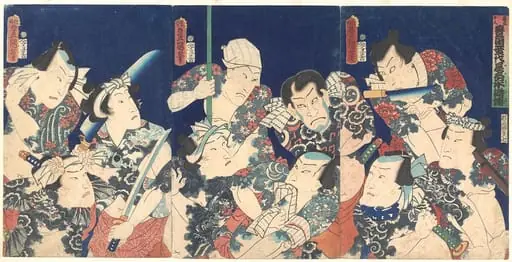
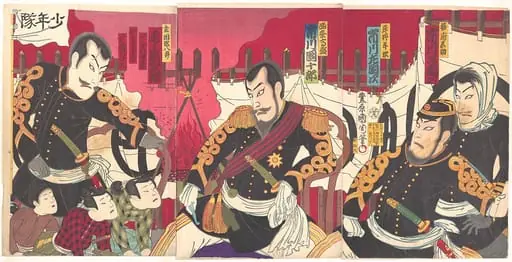 「摂府真助」「市川子團次」「岸野年秋 市川左團次」 「西条高盛 市川團十郎」 「倉田進八郎 尾上菊五郎」「正太郎 中村仲太郎」「孫市 尾上菊之介」「徳丸 市川幸作」西南雲晴朝東風|Ichikawa Kodanji as Seppu Shinsuke, Ichikawa Sadanji as Kishino Toshiaki, Ichikawa Danjūrō as Saijō Takamori, Onoe Kikugorō as Kurata Shinpachirō, Nakamura Chūtarō as Shōtarō, Onoe Kikunosuke as Magoichi, and Ichikawa Kōsaku as Tokumaru in the play Okige no kumo harau asa gochi