Artwork
Untitled
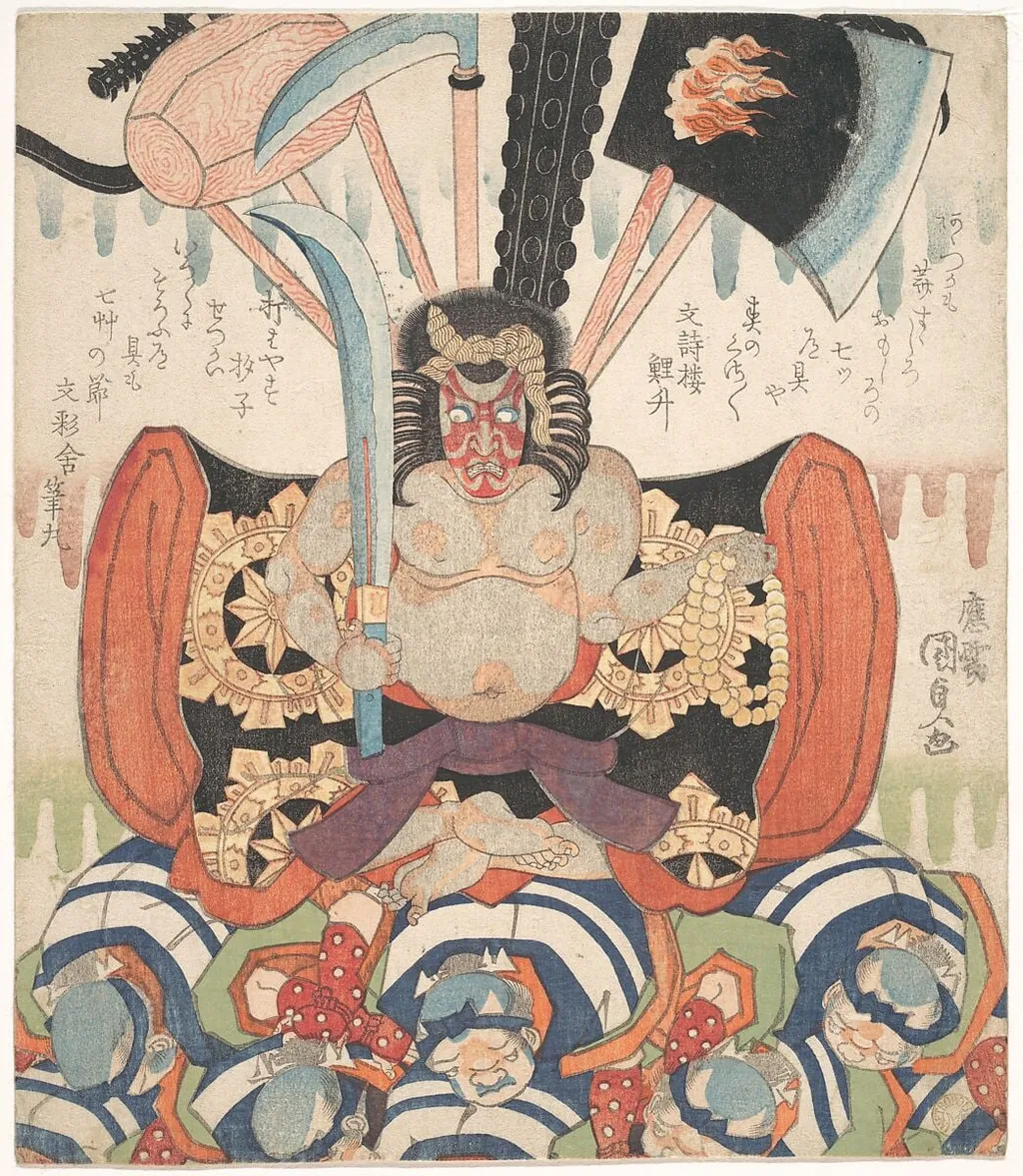
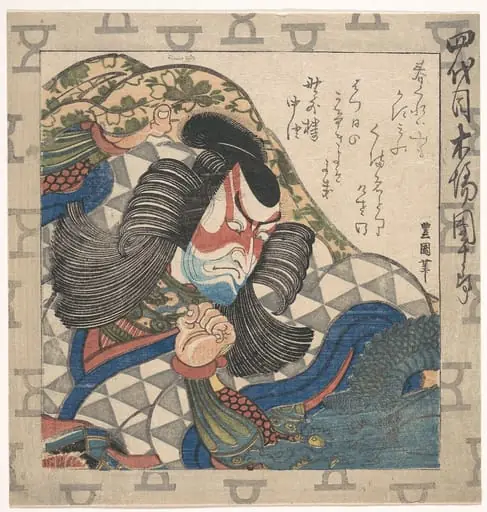
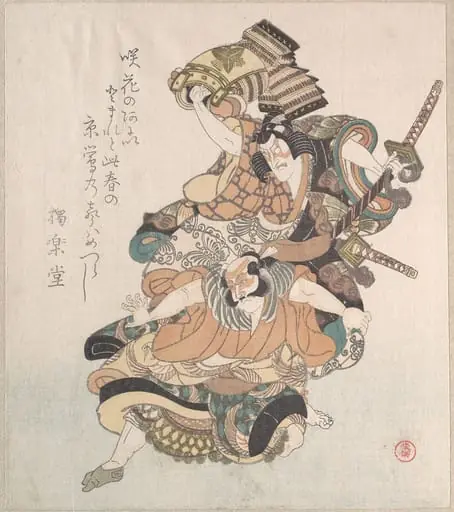
Untitled is an ink print by the Romanticist artist Utagawa Kunisada. It dates from 1824 and is held in the collection of the Metropolitan Museum of Art.
About this work
Subject & Meaning
Together, the figures convey loyalty, divine guardianship, and the celebratory connection between theater and religious symbolism.
The print shows Acala, the wrathful Buddhist deity, alongside the legendary warrior Musashibō Benkei and the kabuki actor Ichikawa Danjūrō VII, who is identified by his stage name and often portrayed Benkei on stage. A man brandishing a sword completes the group, reinforcing the martial theme. As a surimono, a privately commissioned print for special occasions, the work likely commemorates a performance in which Danjūrō VII played Benkei, linking the actor’s role to the protective power of Acala. Together, the figures convey loyalty, divine guardianship, and the celebratory connection between theater and religious symbolism.
Technique & Style
The work is a surimono woodblock print executed in ink and color on paper. As a surimono, a privately commissioned print, it employs the traditional Japanese multi-block printing technique, where each color and detail is applied using separate carved woodblocks. The medium’s precision allows for fine gradations of pigment and delicate linework, evident in the intricate patterns of garments and expressive facial features of the depicted figures.
Stylistically, the print reflects the Utagawa school’s characteristic blend of dynamic composition and rich ornamentation. Bold outlines define the figures, while delicate mica or metallic pigments, often used in surimono, may enhance select areas, adding a subtle luminosity. The handling of drapery and weaponry demonstrates a mastery of texture, contrasting smooth, flowing fabrics with the rigid, detailed surfaces of swords and armor.
The condition, as typical for works on paper from this period, depends on preservation but generally retains the vibrancy of its pigments when well-maintained.
Overview
Utagawa Kunisada produced this surimono woodblock print around 1824. Executed in ink and color on paper, the work presents a compact composition that was intended as a private gift rather than a commercial item. Its modest size and intricate detailing exemplify the specialized nature of surimono, which were often commissioned for exclusive occasions.
History & Provenance
Created for a limited audience, the print was not sold publicly but given as a personal present, reflecting the patronage practices of the period. Its survival in private collections underscores the exclusive nature of surimono, which were often exchanged among connoisseurs and collectors of Japanese art.
Context
During the Edo period, surimono served as a medium for literary and theatrical celebration, frequently depicting popular actors and heroic figures. Kunisada, a prolific ukiyo‑e artist, employed this format to honor both religious iconography and contemporary performance culture, bridging sacred and secular themes within a single composition.
Artist & collection

 二代目岩井粂三郎の肖像|Portrait of Iwai Kumesaburō II
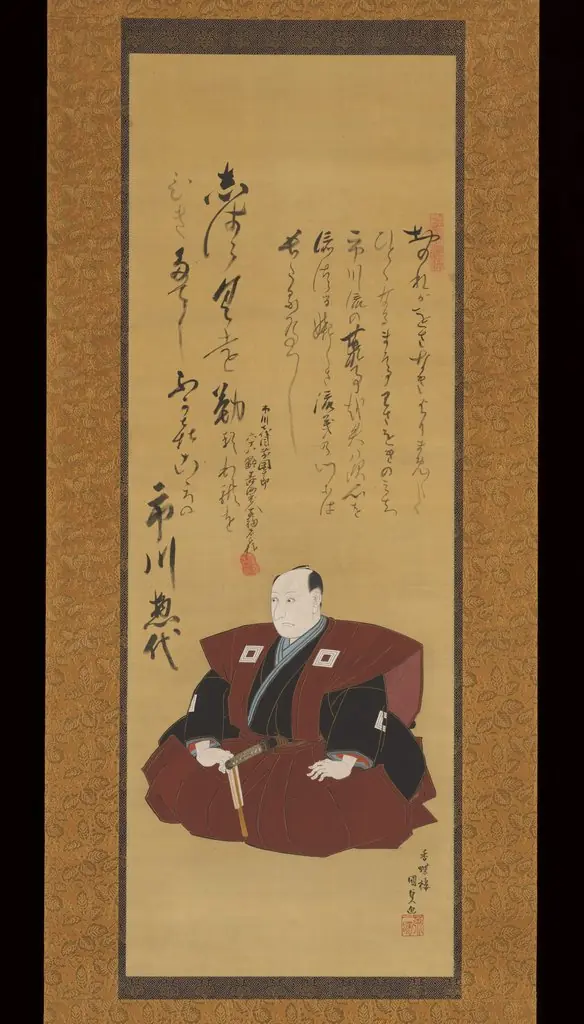 Memorial Portrait of the Actor Ichikawa Ōmezō I
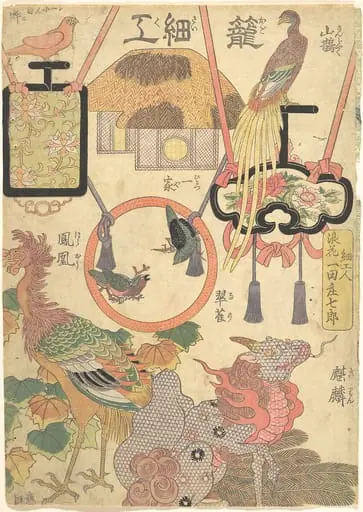 「籠細工 浪花細工人一田庄七郎」|Basketry Work: By the Craftsman Ichida Shōshichirō of Naniwa (Kagosaiku Naniwa saikujin Ichida Shōshichirō)
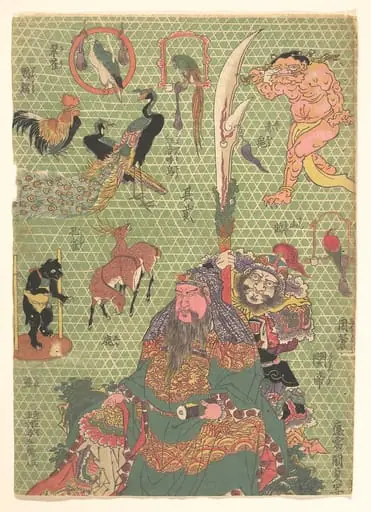 歌川国貞画 「籠細工 浪花細工人 一田庄七郎」|Basketry Work: By the Craftsman Ichida Shōshichirō of Naniwa (Kagozaiku Naniwa saikunin Ichida Shōshichirō)
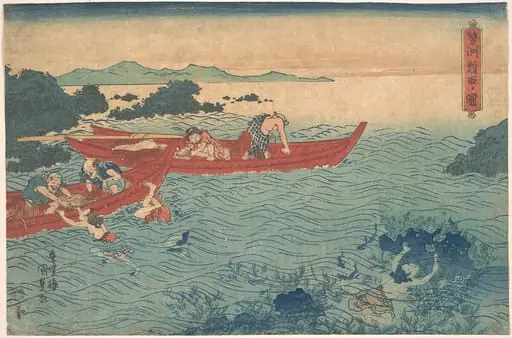 Untitled
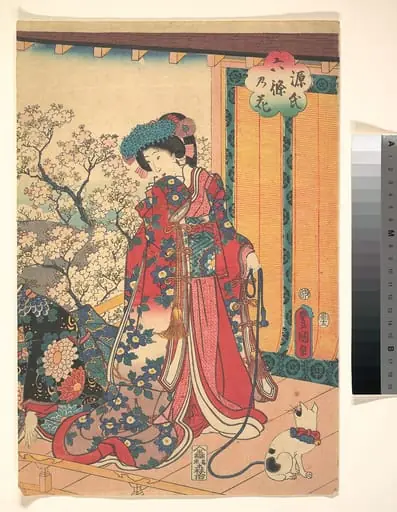 Untitled
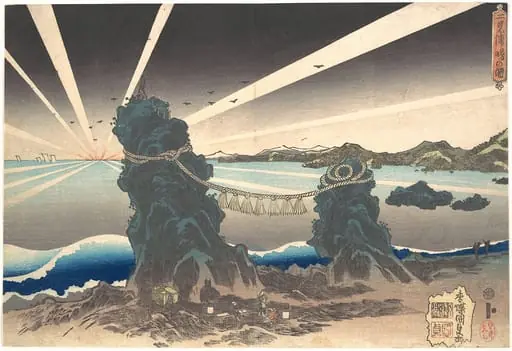 Futami-ga-ura akebono-no kuni|Futami-ga-ura Rocks at Ise, Land of Dawn
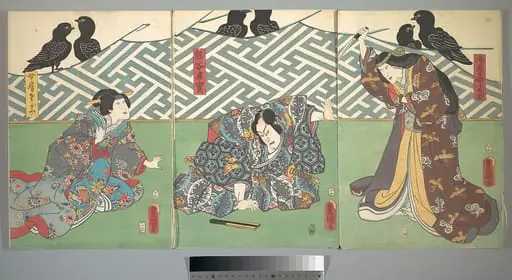 Untitled
- Mendicant Monk in Katsushika and Others
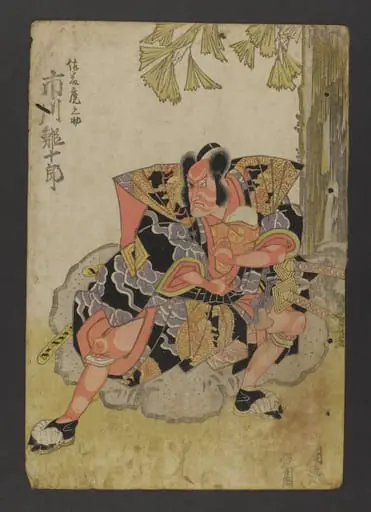 H Beard Print Collection
 Untitled
 Untitled
 The Giant Octopus and Others
 三代目市川海老蔵の篠塚伊賀守定綱|The Actor Ichikawa Ebizō III as Shinozuka Iga no kami Sadatsuna in a Shibaraku Scene
 Untitled
 Untitled
 Untitled
 Untitled
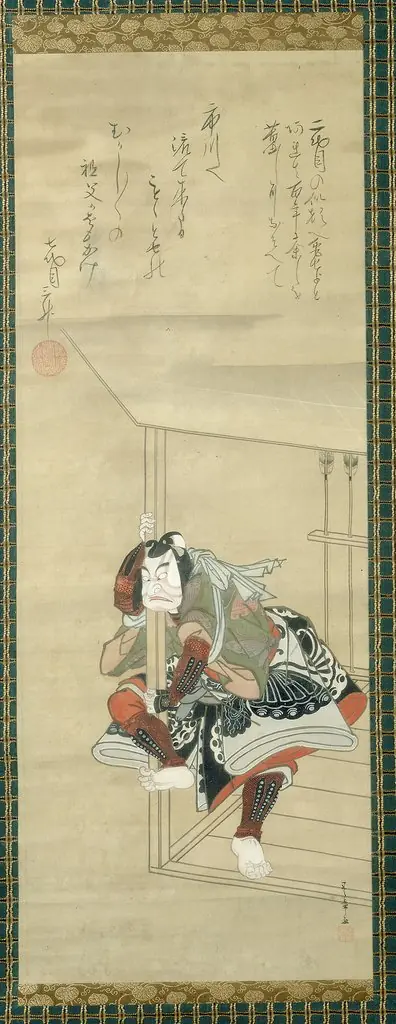 The Kabuki Actor Ichikawa Danjûrô II (1689-1758)
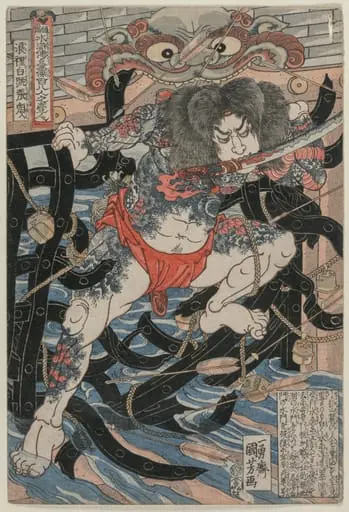 Rori Hakucho Chojun (from the series 108 Heroes of the Novel Shui Hu Chuan)