Artwork
Khan Suliman Pasha, Damascus
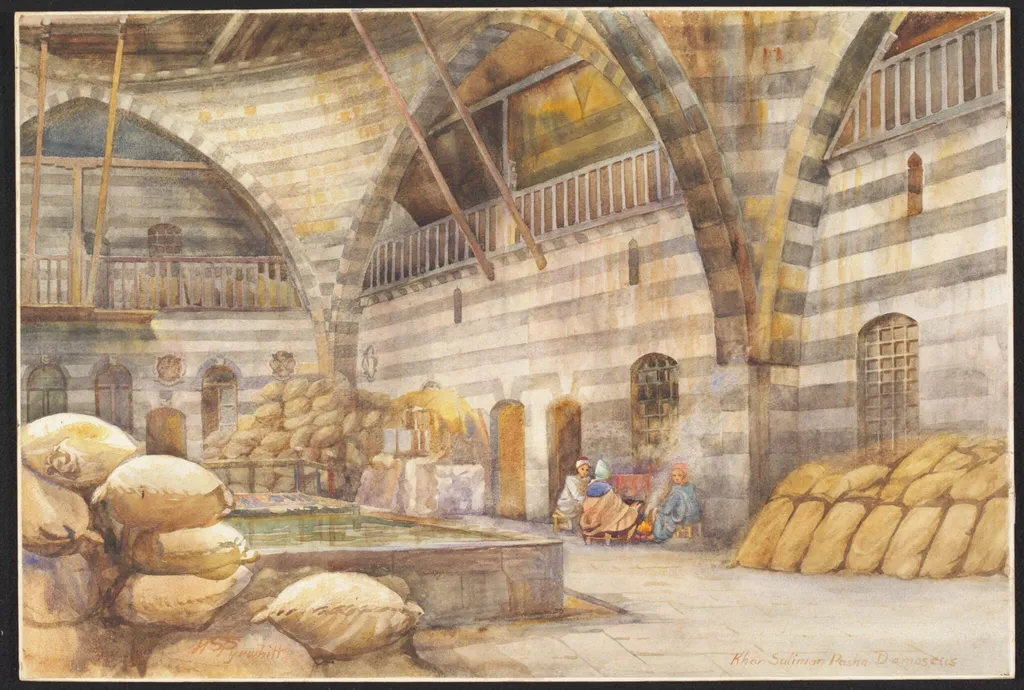
Khan Suliman Pasha, Damascus is a watercolor work on paper by the Impressionist artist Walter Spencer-Stanhope Tyrwhitt. It dates from 1905 and is held in the collection of the Victoria and Albert Museum.
About this work
Overview
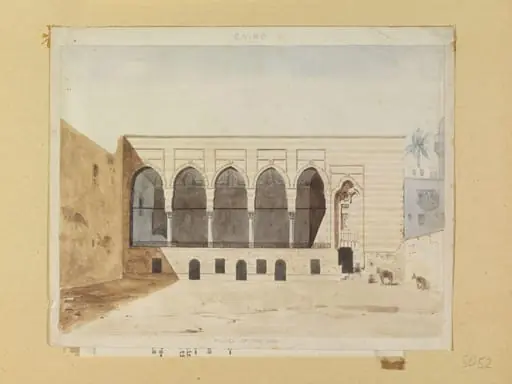
Khan Suliman Pasha, Damascus is a watercolour painting created by Walter Spencer-Stanhope Tyrwhitt in 1905. The work depicts an interior scene.
Subject & Meaning
The painting shows a large, high-ceilinged room with arched windows and stone walls, possibly a storage or marketplace. Stacked sacks and seated figures add a sense of activity to the scene.
Technique & Style
Tyrwhitt's use of light and shadow creates depth and atmosphere, drawing the viewer's eye into the room. The watercolour medium allows for a nuanced exploration of tone and texture.
History & Provenance
The painting was previously owned by a collector known as Holder before being sold at Bonhams in February 1976 for £30, alongside another work.
Artist & collection
Artist
Walter Spencer-Stanhope Tyrwhitt
Walter Spencer-Stanhope Tyrwhitt slipped off to Damascus around 1905, watercolours in hand, while most British folks that era were more likely to be found at the seaside.

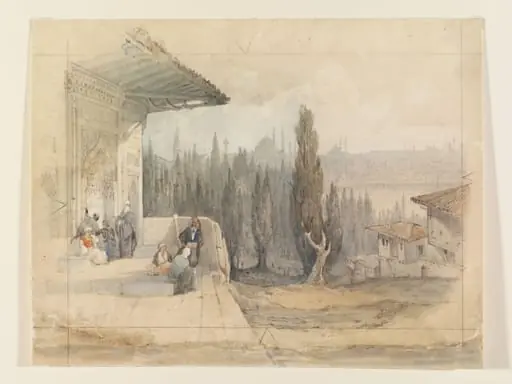 Pera
Pera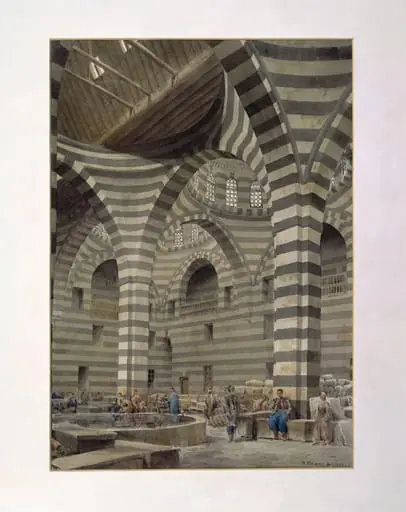 The Great Khan, Damascus
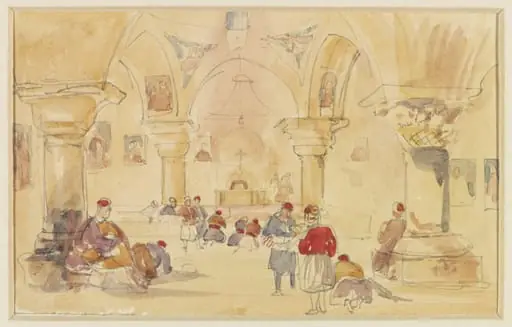 Chapel of St. Helena, Crypt of the Holy Sepulchre, Jerusalem
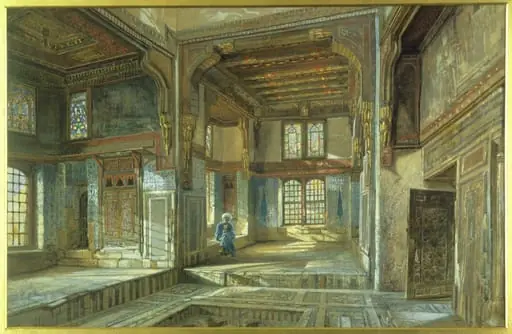 Interior of the House of the Mufti Sheikh El Mahadi, Cairo
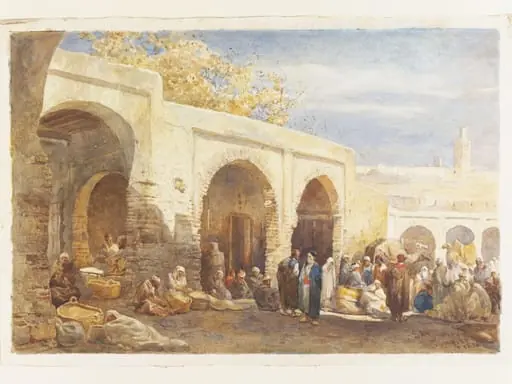 The Corn Market, Tangier
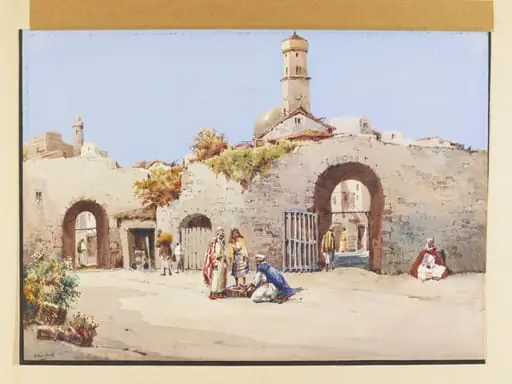 The City Walls, Jaffa, Palestine
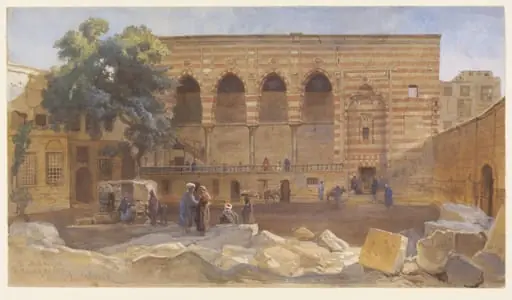 El Mahkemeh or Court of the Cadi Cairo
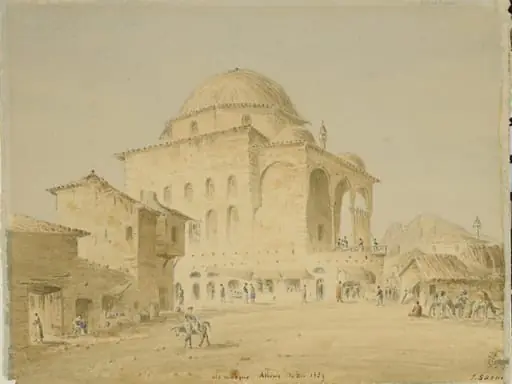 Το Τζαμί του Τζισδαράκη στο Μοναστηράκι
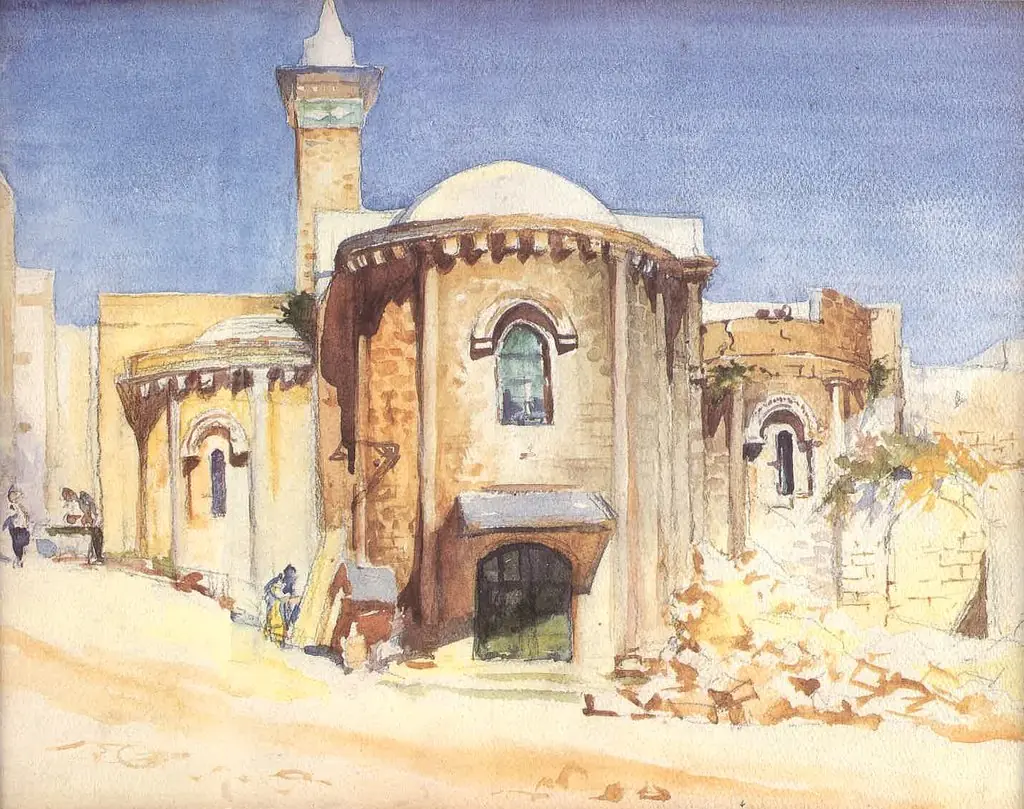 Beirut. Al-Omari Mosque
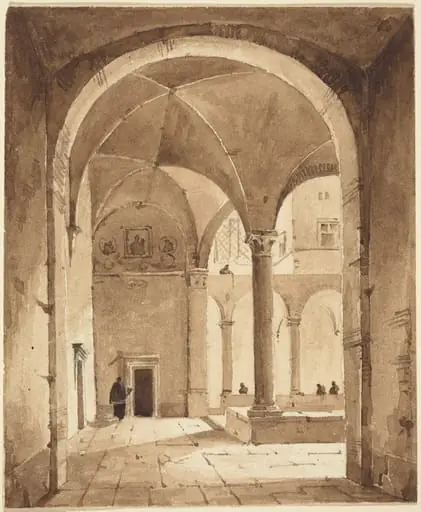 A Cloister
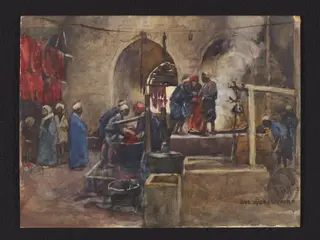 Dye works. Cairo
 Cairo: Palace of the Cadi