Artwork
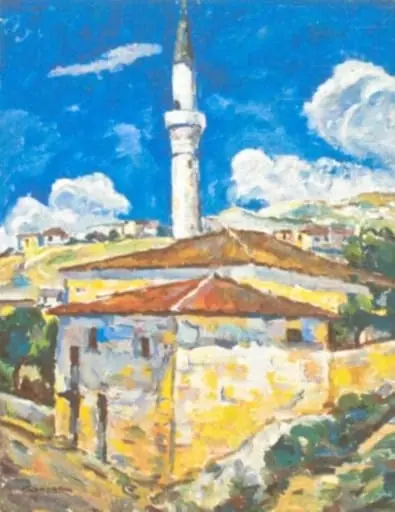
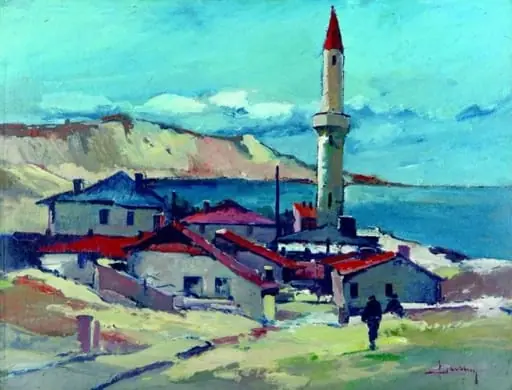
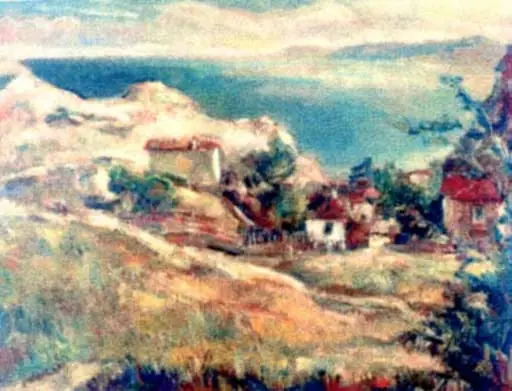
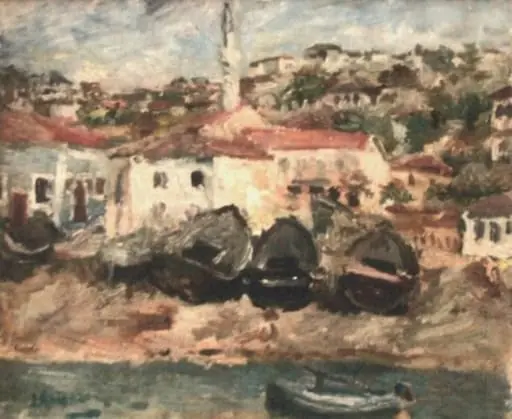
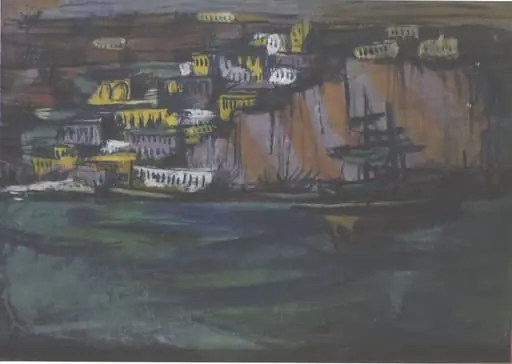
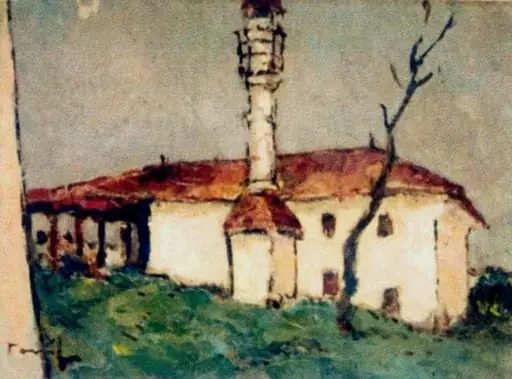
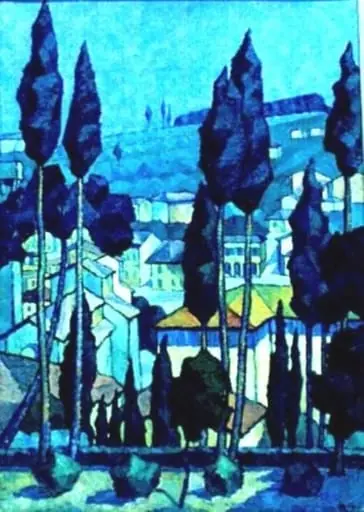
Peisaj cu geamie
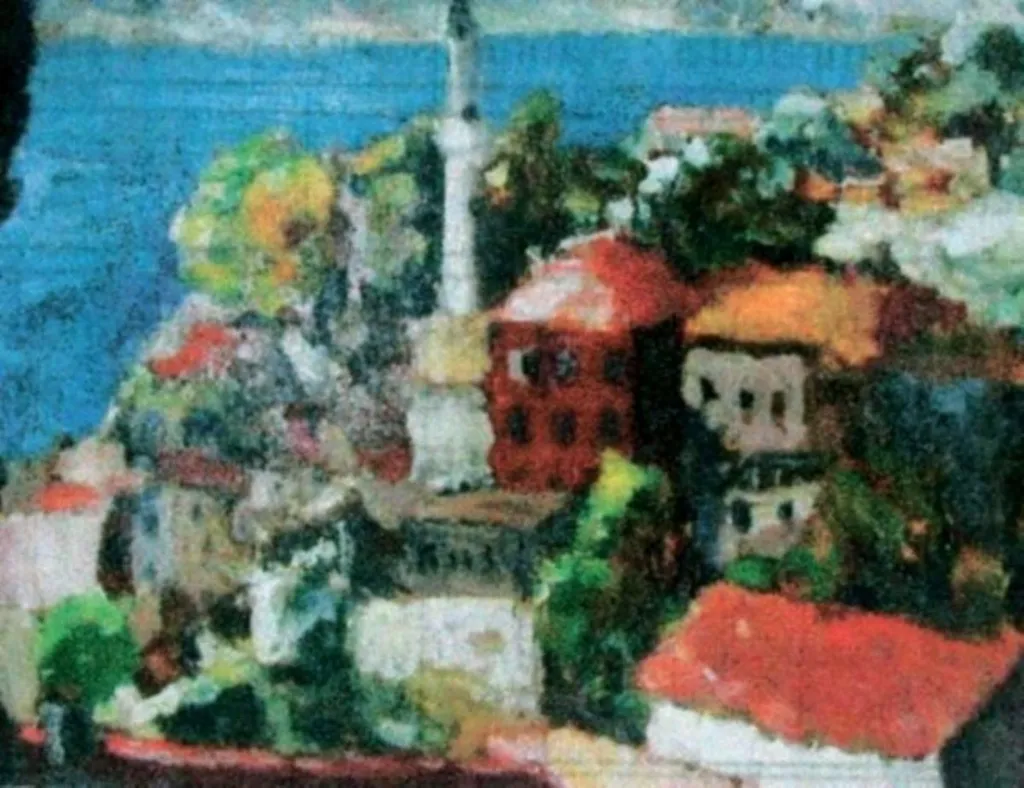
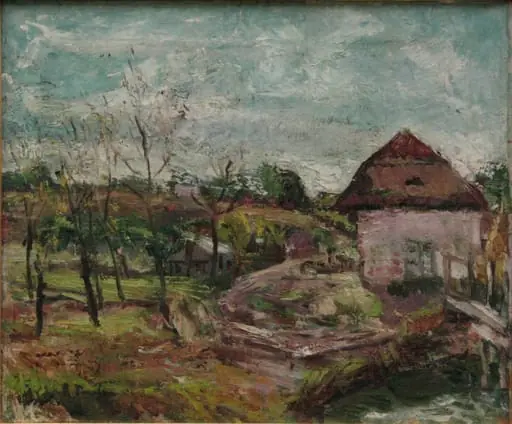
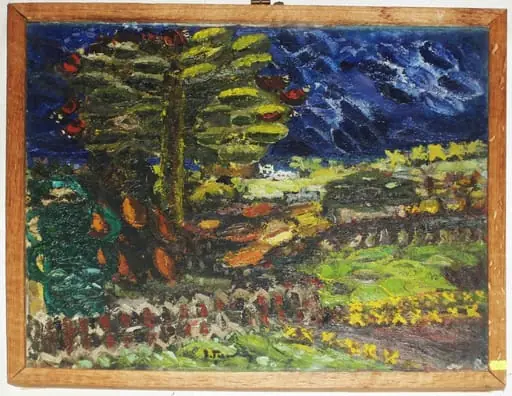
Peisaj cu geamie is an unspecified painting by the Romanesque artist Ion Țuculescu. It dates from 1932 and is held in the collection of the Gavrila Simion Eco-Museum Research Institute Tulcea.
About this work
Overview
Painted in 1932 by Romanian artist Ion Țuculescu, Peisaj cu geamie is a landscape that blends observed rural elements with imaginative distortion. Executed in thick, expressive brushwork, the scene departs from realism to evoke an inner, emotional world. The work resides in the Museum of Ethnography, where it is valued for its unique synthesis of folk sensibility and modernist experimentation.
Subject & Meaning
The scene is not a documented location but a symbolic space, possibly reflecting inner states or cultural memory through surreal domestic forms.
The painting depicts a fictional village by water, populated by two houses with vivid red roofs, one bearing a human face, the other a skull. These anthropomorphic features suggest personification of architecture, blurring boundaries between the animate and inanimate. The scene is not a documented location but a symbolic space, possibly reflecting inner states or cultural memory through surreal domestic forms.
Technique & Style
Țuculescu applied paint with a vigorous, tactile approach, using heavy impasto to build texture and movement. Colors are unmodulated and saturated, with no attempt at naturalistic blending. The brushwork appears spontaneous, capturing light and form through gesture rather than detail. This method aligns with expressive modernism, prioritizing emotional resonance over topographical accuracy.
History & Provenance
Created in 1932, the painting entered the collection of the Museum of Ethnography shortly after its completion. Its preservation there reflects early institutional interest in non-traditional Romanian art that engaged with folk motifs through avant-garde lenses. No significant changes in ownership or condition are documented, and it has remained in the museum’s care since its acquisition.
Context
In early 1930s Romania, artists were exploring ways to reconcile national identity with European modernism. Țuculescu’s work emerged amid this tension, drawing from rural imagery while rejecting academic conventions. Peisaj cu geamie reflects a broader trend of symbolic landscapes that infused everyday scenes with psychological or mystical undertones, distinct from both realism and pure abstraction.
Legacy
The painting stands as a quiet example of Romanian modernism’s idiosyncratic path. While not widely exhibited outside its home institution, it continues to influence interpretations of how folk motifs can be reimagined through personal, non-narrative forms. Its enduring presence in the Museum of Ethnography underscores its role as a bridge between tradition and experimental expression.
Artist & collection

Artist
Ion Țuculescu was a Romanian expressionist and abstract oil painter, although professionally he worked as a biologist and physician.
Museum
Gavrila Simion Eco-Museum Research Institute Tulcea
Continue through works from the same source collection.