Artwork
Title Page to Abraham Ortelius, Theatrum Orbis Tenarum
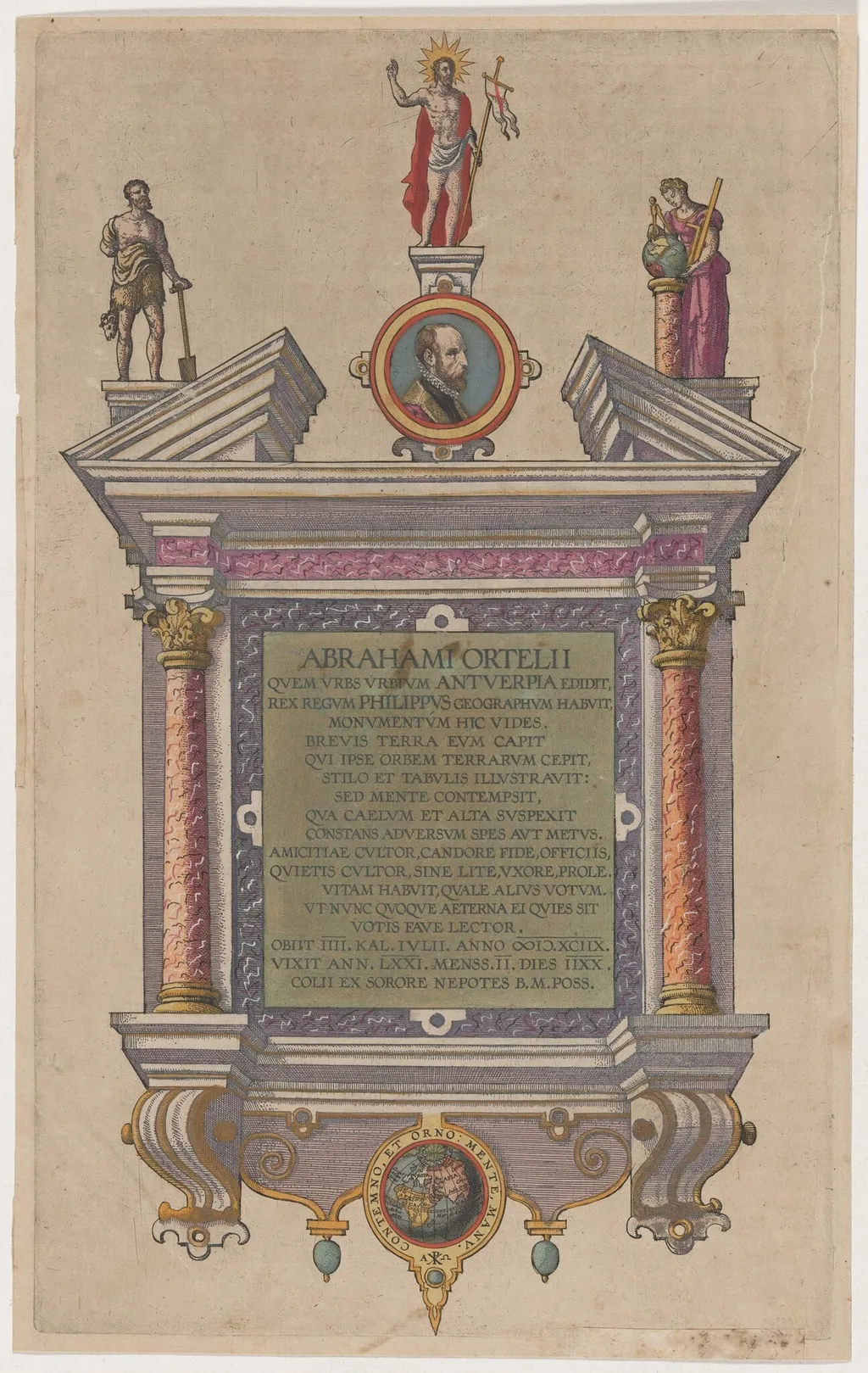
Title Page to Abraham Ortelius, Theatrum Orbis Tenarum is an ink print by the Renaissance artist Unknown 19th Century. It dates from 1598 and is held in the collection of the National Gallery of Art. The title page of Abraham Ortelius’s Theatrum Orbis Terrarum is an engraved frontispiece that introduces the first modern atlas.
About this work
Overview
The title page of Abraham Ortelius’s Theatrum Orbis Terrarum is an engraved frontispiece that introduces the first modern atlas. Executed as a print, the composition combines allegorical figures with architectural framing, establishing the work’s scholarly ambition and visual gravitas.
Subject & Meaning
Central to the design is a man in a red robe standing on a pedestal, clutching a cross and a flag, symbols of authority and exploration. Flanking him are two attendant figures on columns: one bears a shovel, evoking the act of discovery, while the other holds a globe and staff, representing the world’s geography.
Technique & Style
The engraving employs a restrained palette of red, green, and gold, achieved through careful line work and hatching to suggest color rather than pigment. Intricate ornamental motifs, columns, crests, and scrollwork, frame a central green rectangle that contains the Latin title, demonstrating the period’s taste for elaborate, bookish decoration.
History & Provenance
Printed in the late 16th century, the title page accompanied the first edition of Ortelius’s atlas, published in 1570 in Antwerp. As the opening image of a groundbreaking cartographic work, it circulated widely with the atlas copies distributed across Europe, influencing subsequent map publishing.
Context
The frontispiece reflects the Renaissance convergence of art, science, and imperial ambition. By integrating allegorical personae with architectural elements, it aligns Ortelius’s geographic compilation with the humanist tradition of presenting knowledge as a noble, almost sacred pursuit.
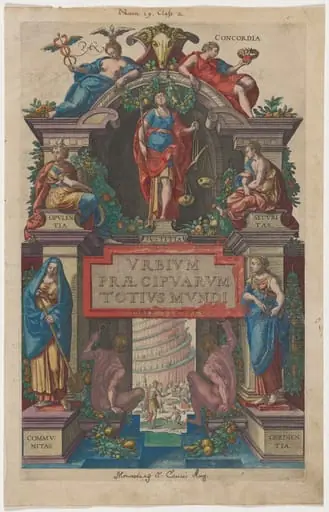
Artist & collection

Artist

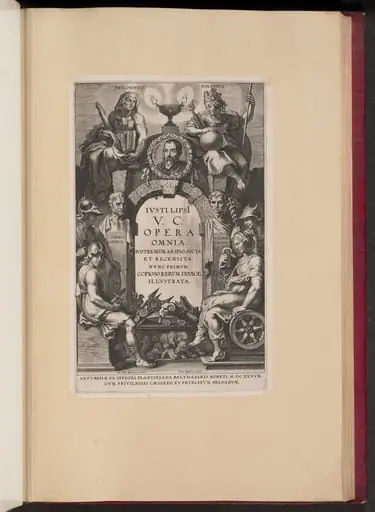 Title Page for Justus Lipsius, Opera Omnia, I
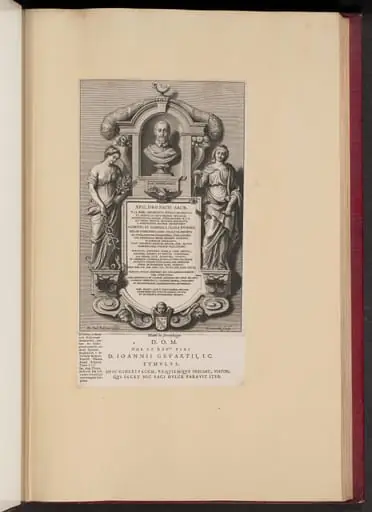 Epitaph of Claude Jean Gevaert
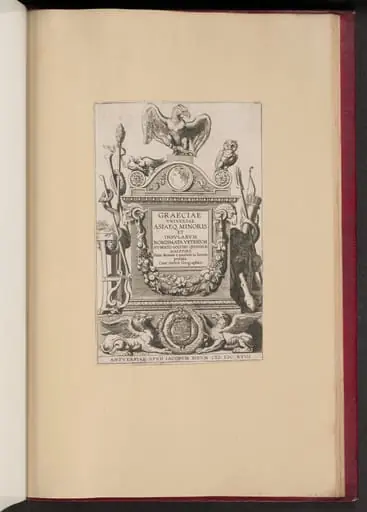 Title Page for Hubert Goltzius, Graeciae Vniversae Asiaeq. Minoris et Insularum Nomismata
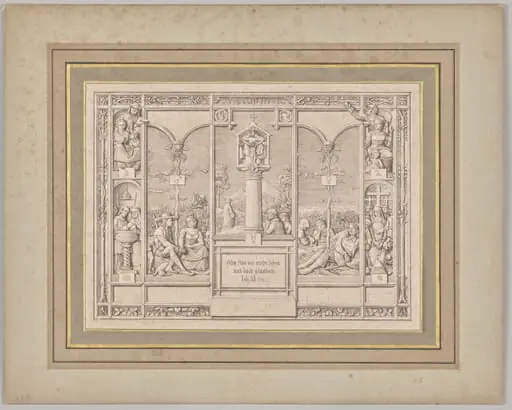 Capstone. John XX, 29
!["Always Have the Bedclothes Folded up" [fol. 41 recto], by French early 16th Century](https://artifactworldgallery.com/img/french-early-16th-century--always-have-the-bedclothes-folded-up-fol-41-recto--bad18c2c732bca78-w320.webp) "Always Have the Bedclothes Folded up" [fol. 41 recto]
"Always Have the Bedclothes Folded up" [fol. 41 recto]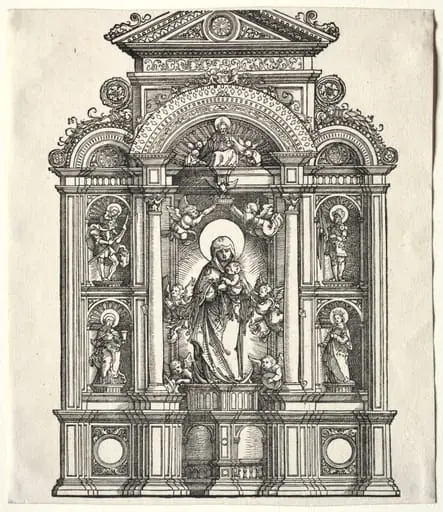 Great Altar with the Virgin, in a border with SS. Christopher, George, Barbara, Catherine
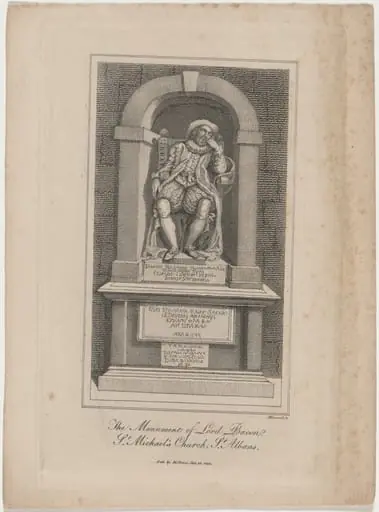 The Monument of Lord Bacon, Saint Michael's Church
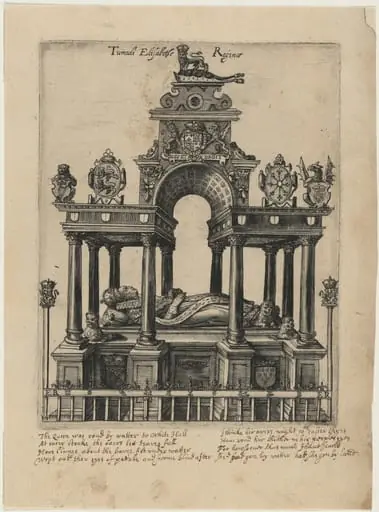 The Tomb of Elizabeth I