Artwork
Adoration of the Magi
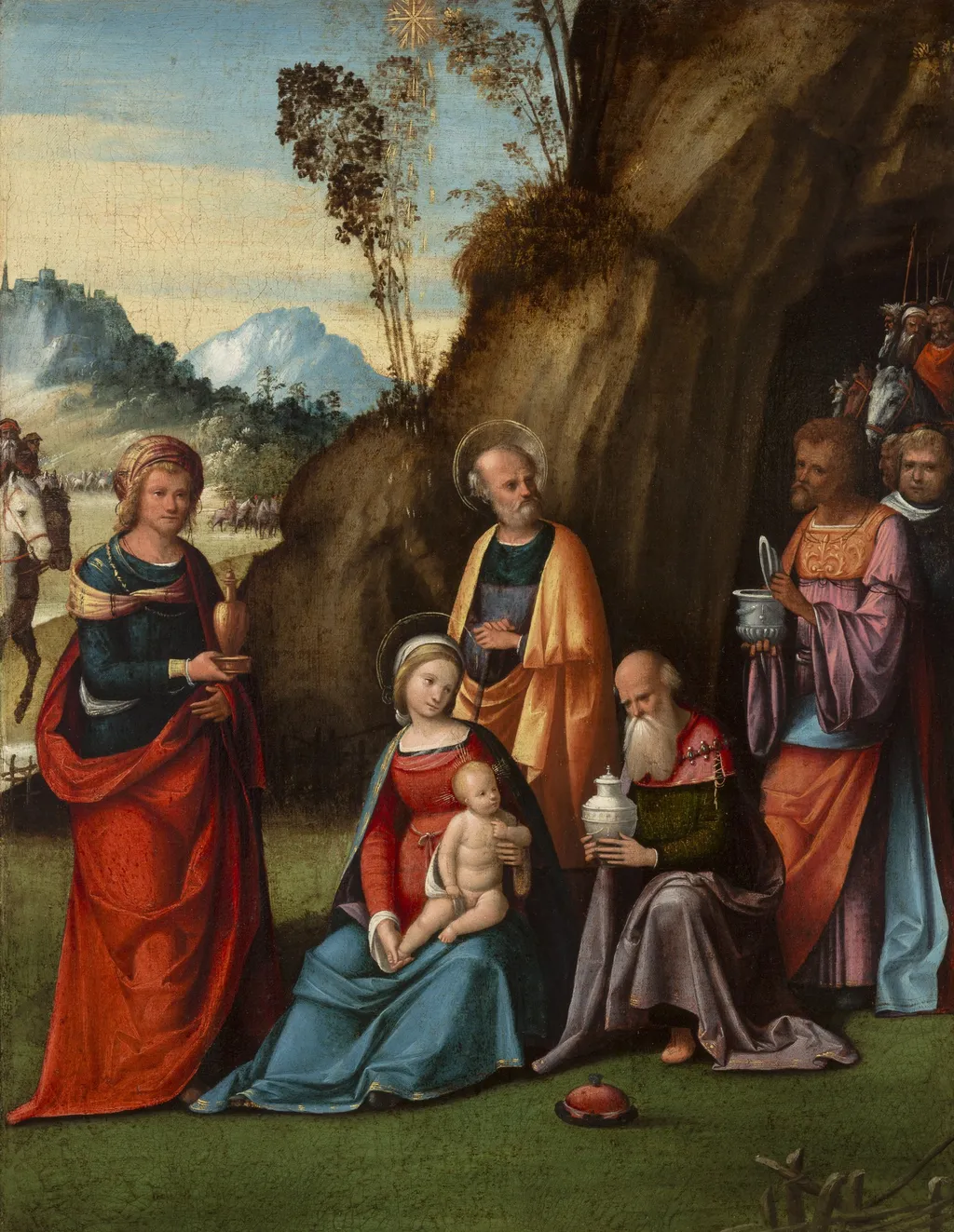
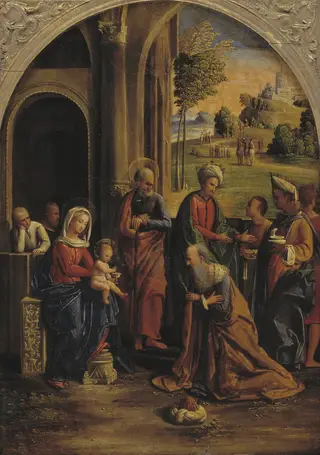
Adoration of the Magi is an oil painting. It dates from 1511 and is held in the collection of the National Museum in Kraków.
About this work
Technique & Style
The composition falls within the genre of religious art, utilizing the oil medium to render the figures and their interaction.
Created in 1511, this religious painting is executed in oil paint on a canvas support. The work measures 76 cm in height and 60 cm in width. Attributed to Bonvenuto Tisi da Garofalo, the piece depicts the biblical scene of the Adoration of the Magi, featuring the Christ Child, Mary, and the three kings Melchior, Caspar, and Balthasar presenting gifts.
The composition falls within the genre of religious art, utilizing the oil medium to render the figures and their interaction.
History & Provenance
Created in 1511, this religious painting depicts the Adoration of the Magi. The work is executed in oil paint on canvas and measures 76 by 60 cm. While the artist was historically unknown, the painting is attributed to Bonvenuto Tisi da Garofalo. The artwork is currently held in the collection of the National Museum in Kraków.
The Adoration of the Magi, dated 1511, is held in the National Museum in Kraków. Within the museum’s collection, it is classified under religious art and identified by its depiction of the Christ Child, Mary, and the Biblical Magi, Melchior, Caspar, and Balthazar, presenting gifts.
The painting has been part of the museum’s inventory without a publicly documented accession number. While its exhibition history remains largely unrecorded in available sources, its primary display location is the National Museum in Kraków.
Context
Attributed to Bonvenuto Tisi da Garofalo, this 1511 oil painting on canvas represents the artist's engagement with Renaissance religious themes. The work depicts the Adoration of the Magi, featuring the Christ Child, the Virgin Mary, and the figures of Melchior, Caspar, and Balthasar presenting gifts. Measuring 76 cm in height and 60 cm in width, the piece is currently held in the collection of the National Museum in Kraków.
As a religious genre work from the early sixteenth century, it contributes to the understanding of Garofalo's output and the broader visual culture of biblical narratives in Italian art of that period.
Legacy
The work's legacy rests on its role as a significant example of early 16th-century religious painting within the broader tradition of adoration compositions. Its composition and iconography have been studied as part of the evolution of devotional art in Italian Renaissance-influenced Central European contexts, particularly in relation to regional workshops active around 1511. The painting's inclusion in the collection of the National Museum in Kraków since its acquisition has cemented its reputation as an important piece within the museum's holdings of Central European religious art, though its attribution history reflects ongoing scholarly discussion about the work's precise authorship within the Garofalo circle.
Overview
The work is an oil painting titled Adoration of the Magi. It presents a small group of five figures gathered on a grassy plain beneath a clear sky. Central to the composition is a woman in a blue dress kneeling with a swaddled infant, while a man in a yellow robe stands behind her with clasped hands.
An elderly bearded figure kneels to the right, holding a small vessel, and a distant castle and trees frame the scene.
Subject & Meaning
The scene depicts the biblical episode of the Magi’s homage to the newborn Jesus. The infant’s red cap and the calm expression of his mother emphasize his innocence, while the older man’s container suggests the traditional gifts of gold, frankincense, or myrrh offered by the wise men. The gathering of figures conveys reverence and the acknowledgment of the child’s significance.
Artist & collection

- Adoration of the Magi
 Adoration of the Magi
 Adoration of the Magi
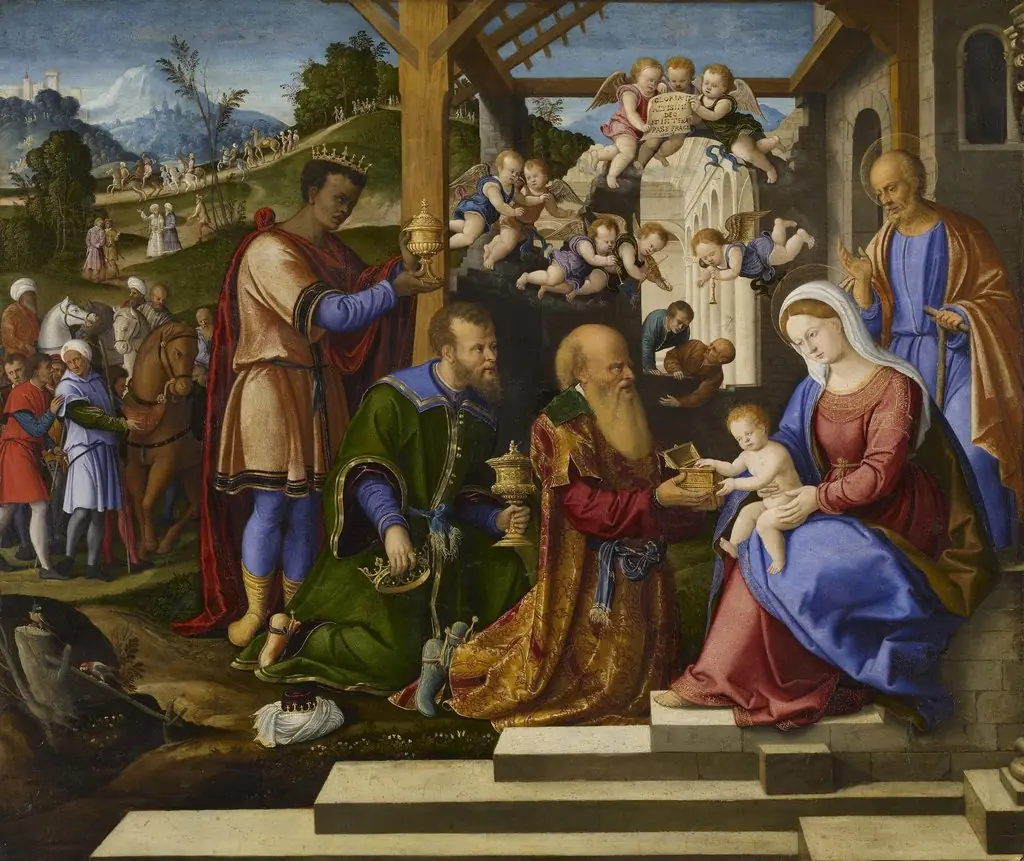 The Adoration of the Three Kings
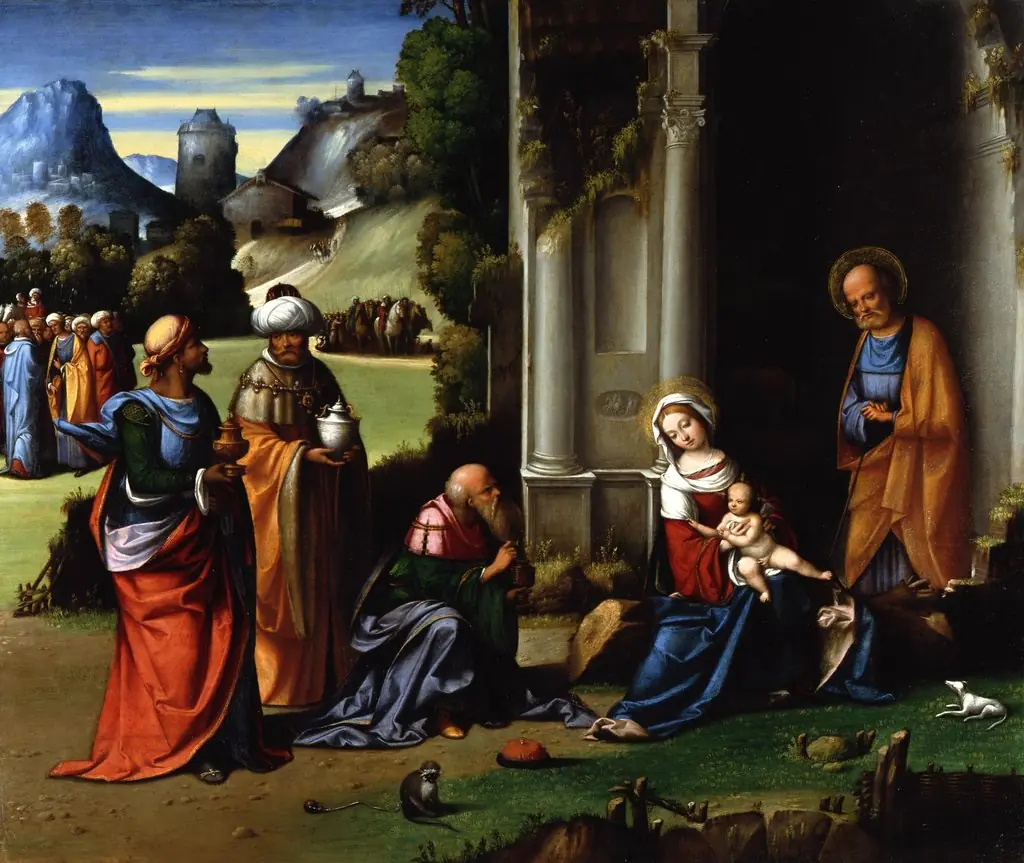 The Adoration of the Magi
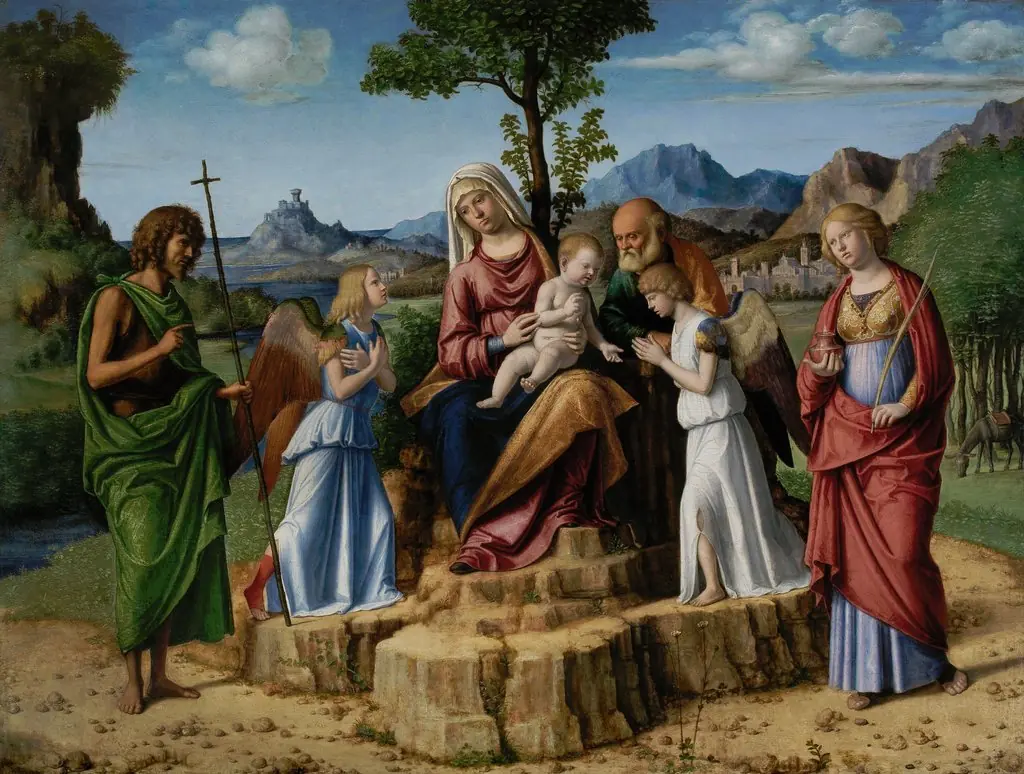 Rest on the Flight into Egypt
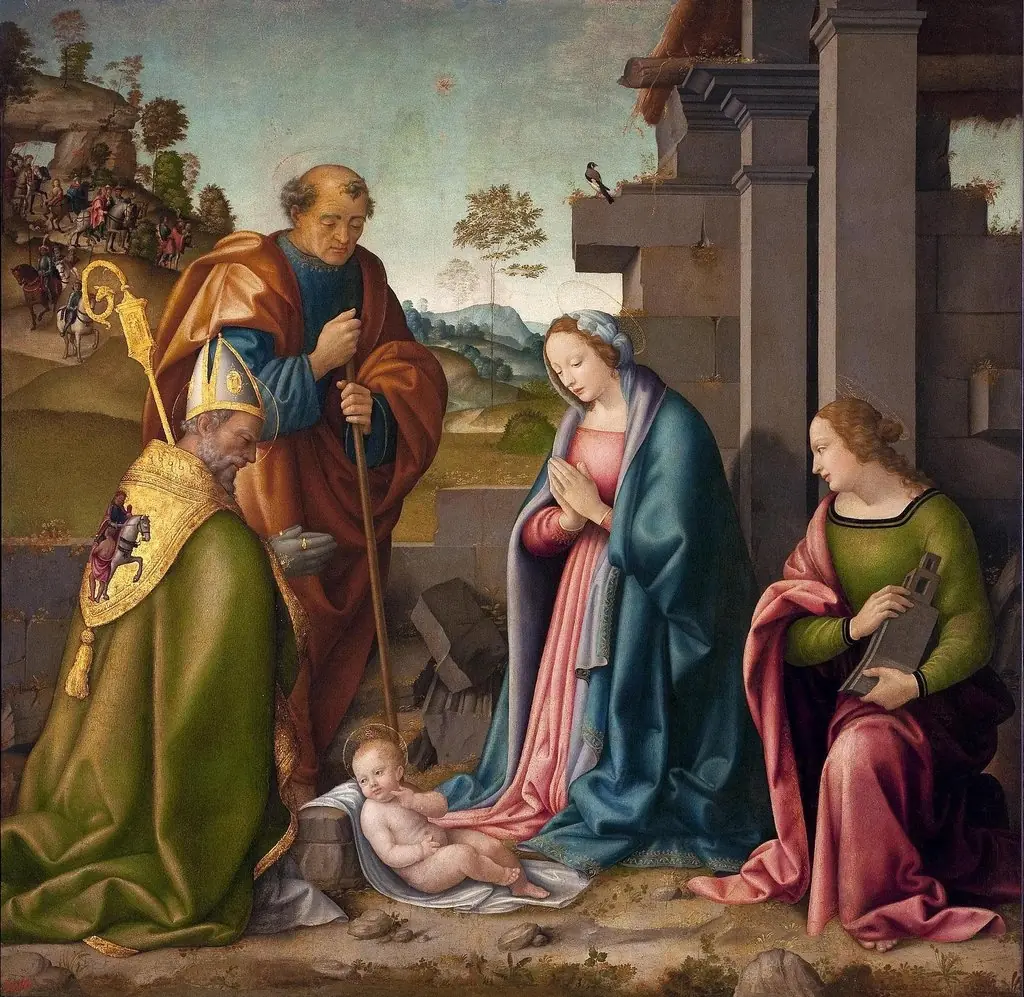 Adoration of the Christ Child, with Sts Barbara and Martin
 The Adoration of the Kings
 The Adoration of the Magi
 The Worship of the Shepherds
 The Adoration of the Magi
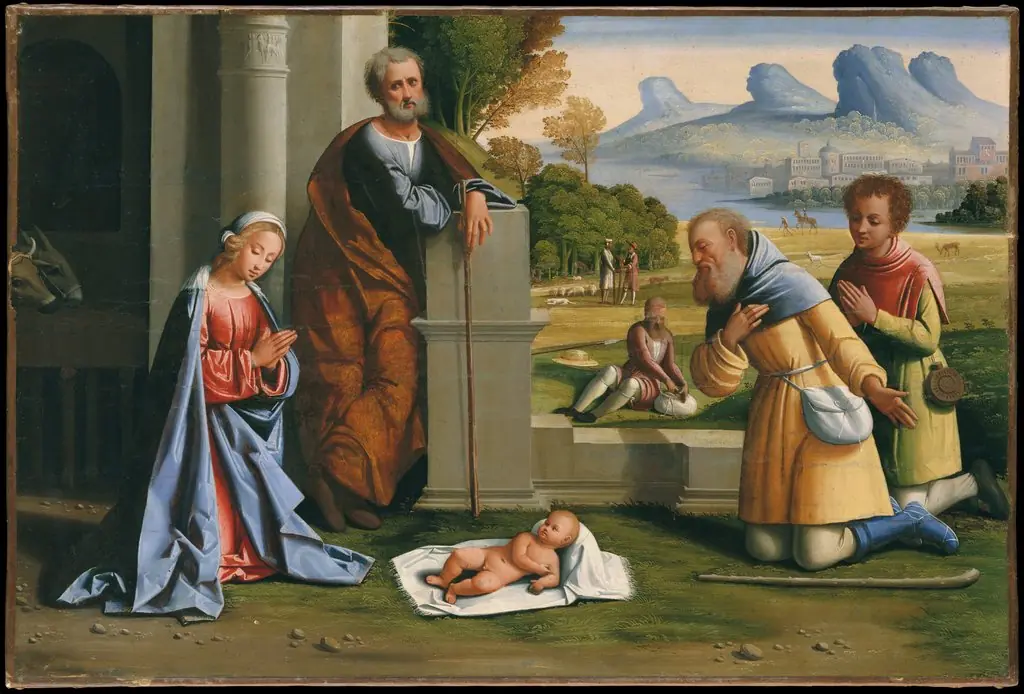 The Adoration of the Shepherds