Artwork
Adoration of the Magi
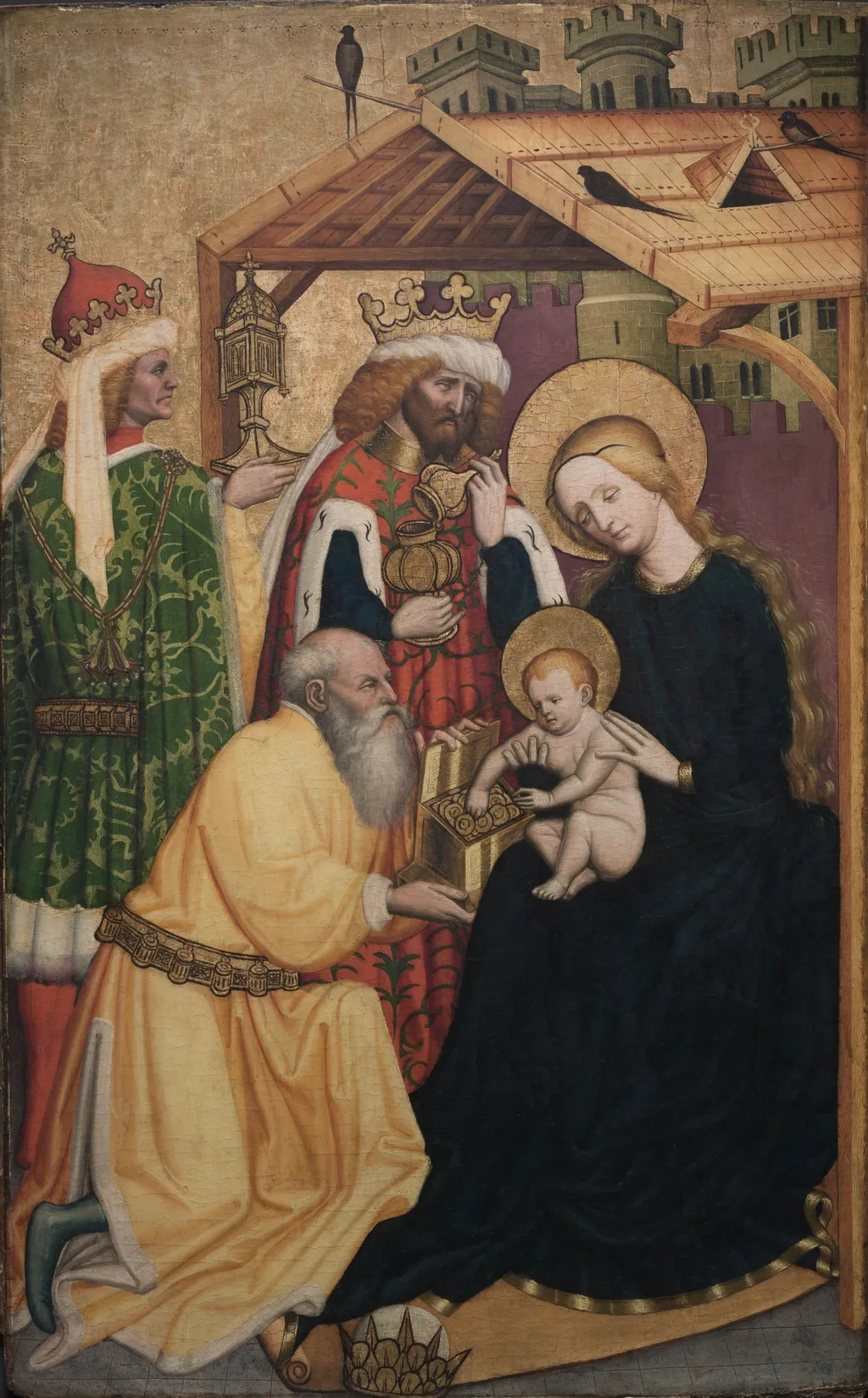
Adoration of the Magi is an oil painting by the Early Renaissance artist Conrad Laib. It dates from 1440 and is held in the collection of the Cleveland Museum of Art.
About this work
Subject & Meaning
The inclusion of rich textiles, architectural elements, and the Magi’s elaborate garments underscores the reverence and divine significance of the event.
Conrad Laib’s Adoration of the Magi depicts the biblical episode in which the three Magi present gifts to the Christ Child. The composition centers on the Virgin Mary holding the Christ Child, flanked by the kneeling Magi offering gold, frankincense, and myrrh. Joseph stands behind Mary, while an attendant holds one of the Magi’s crowns, reinforcing the scene’s narrative.
The inclusion of rich textiles, architectural elements, and the Magi’s elaborate garments underscores the reverence and divine significance of the event. The work reflects late medieval devotional traditions, emphasizing the Christ Child’s role as the incarnate Son of God and the Magi’s recognition of his kingship.
Technique & Style
The Adoration of the Magi attributed to Conrad Laib and dated to circa 1440 is executed in oil paint applied to a wooden panel support. The work is classified as a religious painting depicting the Adoration of the Magi, with dimensions of approximately 100.2 cm in height and 64.0 cm in width. No further details regarding the artist's handling, paint layering, surface condition, or stylistic qualities are provided in the available sources.
History & Provenance
Conrad Laib’s Adoration of the Magi is dated to 1440, a period consistent with the artist’s documented activity in southern Germany. The painting entered the collection of the Cleveland Museum of Art in 1936 as accession 1936.18, though its earlier provenance remains undocumented in the available sources. The work is an oil-on-panel religious painting depicting the biblical scene of the Magi presenting gifts to the Christ Child, aligning with the genre’s conventions in 15th-century Central European art.
Overview
Conrad Laib's 'Adoration of the Magi,' dated 1440, is a German panel painting executed in oil. The composition depicts the biblical scene within a confined, rustic interior characterized by a thatched roof and simple architectural elements. Four figures populate the space: on the left, a man in a green robe and red hat holds a lantern, illuminating the scene, while beside him stands an elderly figure with a long white beard, dressed in yellow and carrying a gift box.
At the center, a bearded man clad in red and gold kneels to present a golden vessel to the Christ Child. The work exemplifies the late Gothic style prevalent in southern Germany during the mid-15th century, emphasizing intimate scale and detailed observation of costume and light over monumental grandeur. As one of the few surviving works attributed to Laib, this painting provides critical insight into the artist's contribution to the Swabian school of painting during a transitional period in German art history.
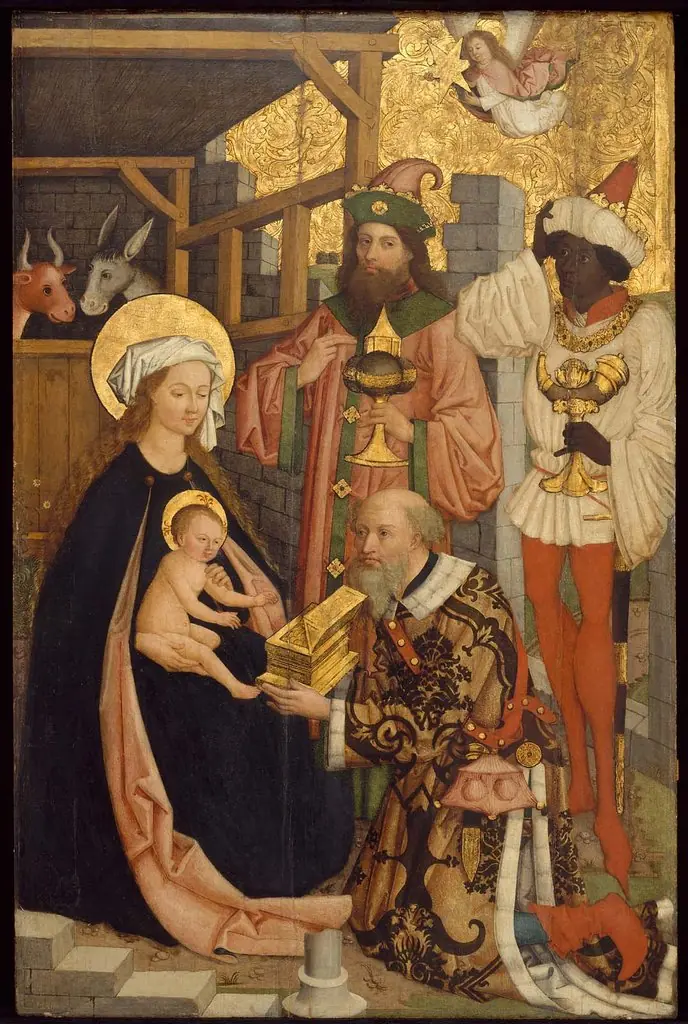
Own this work as a print
Artist & collection
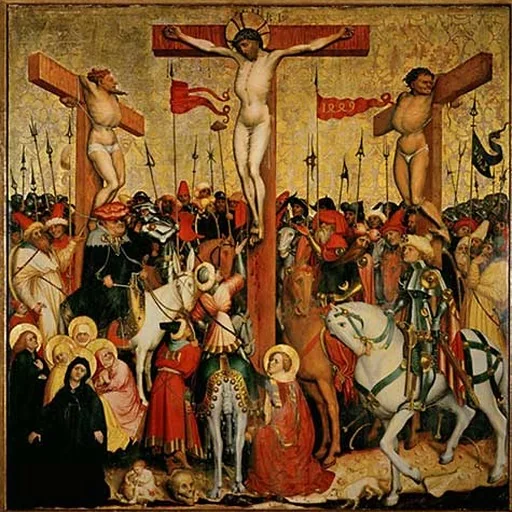

- Adoration of the Magi
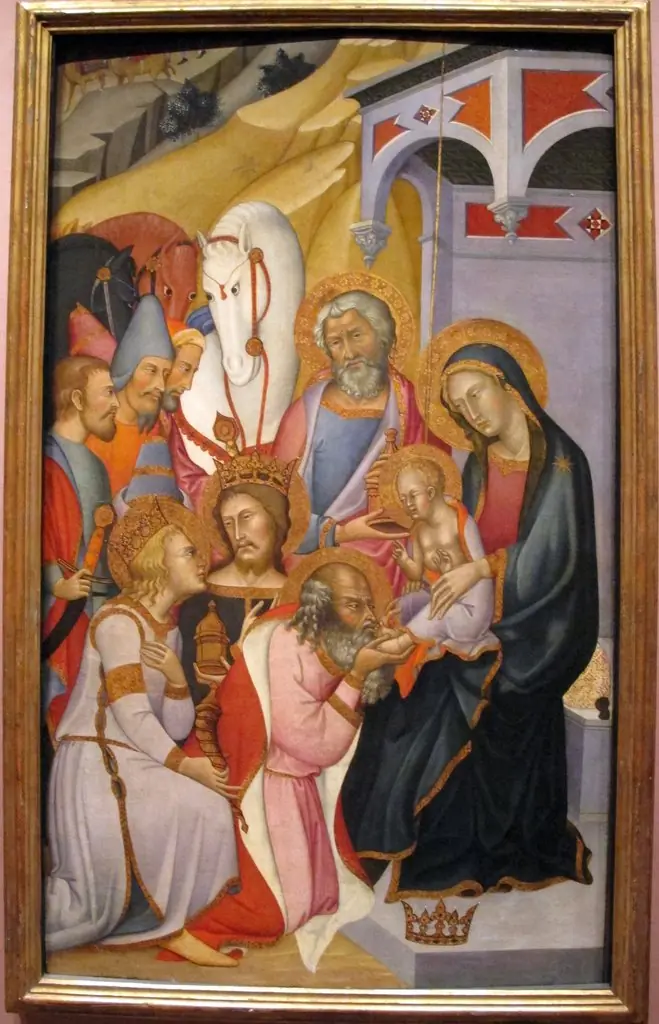 Adoration of the Magi
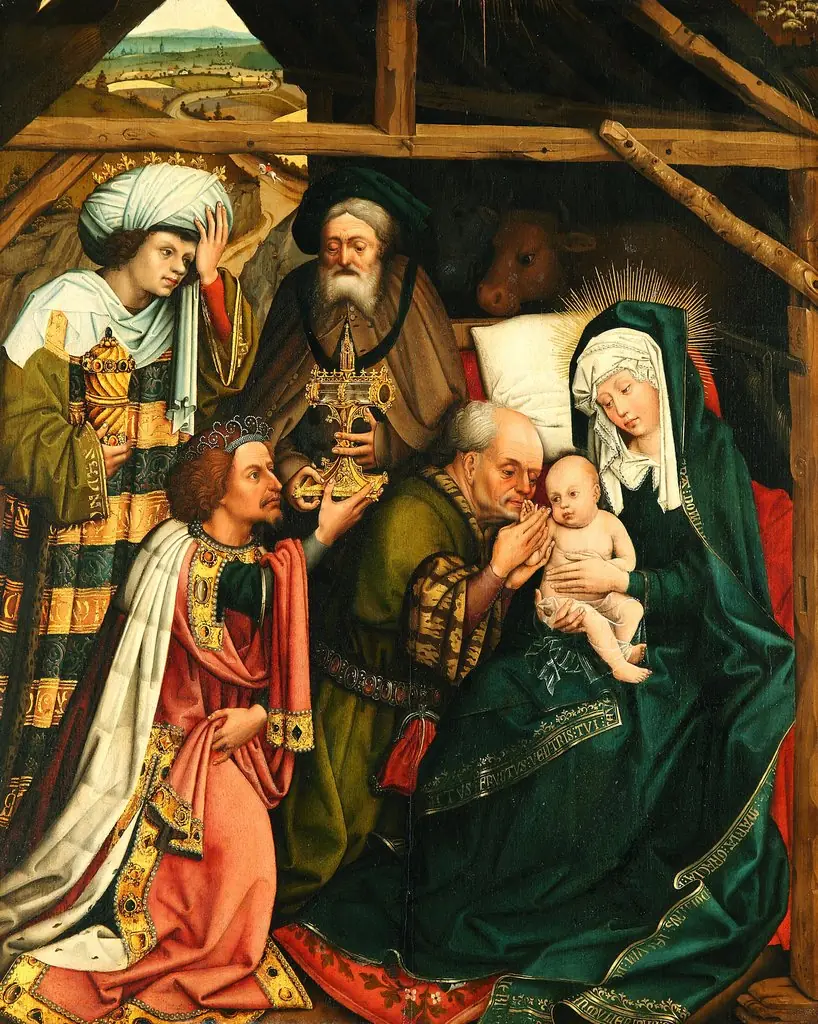 Adoration of the Magi
 Adoration of the Magi
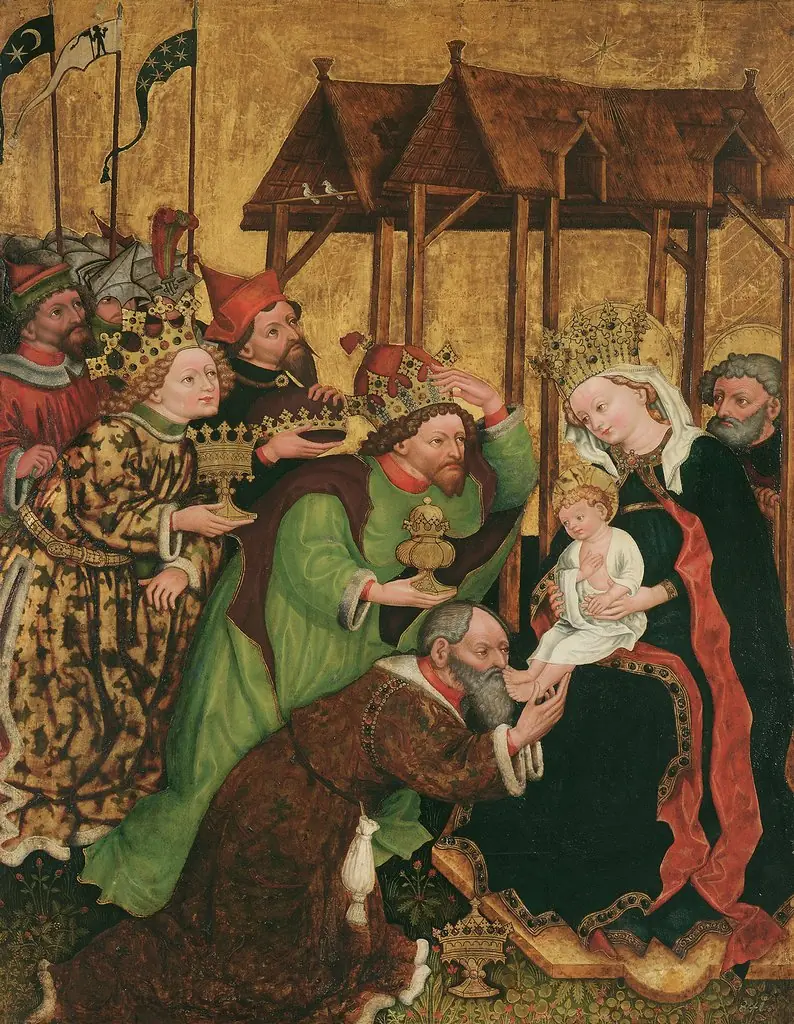 Anbetung der Heiligen Drei Könige (Innenseite); Erwählung Josephs und Vermählung Mariens (Außenseite)
 Anbetung der Hl. Drei Könige
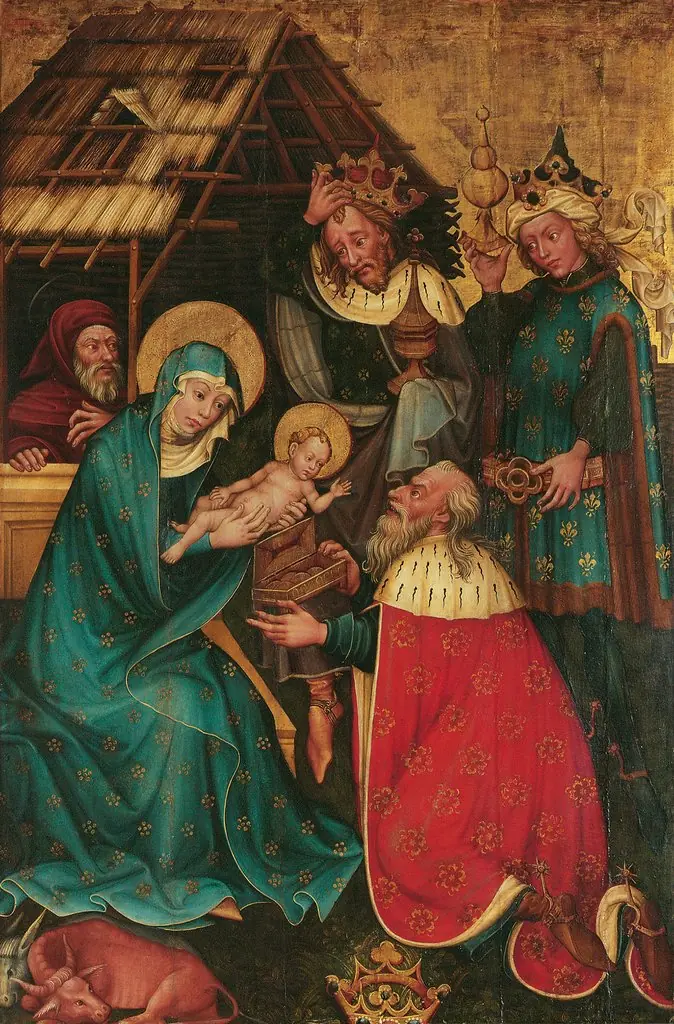 Anbetung der Hl. Drei Könige
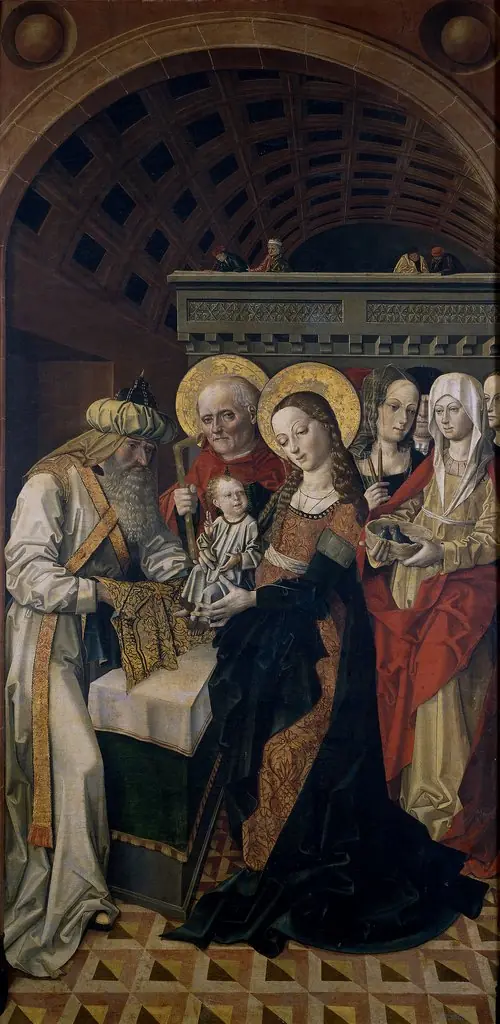 The Presentation of Jesus in the Temple
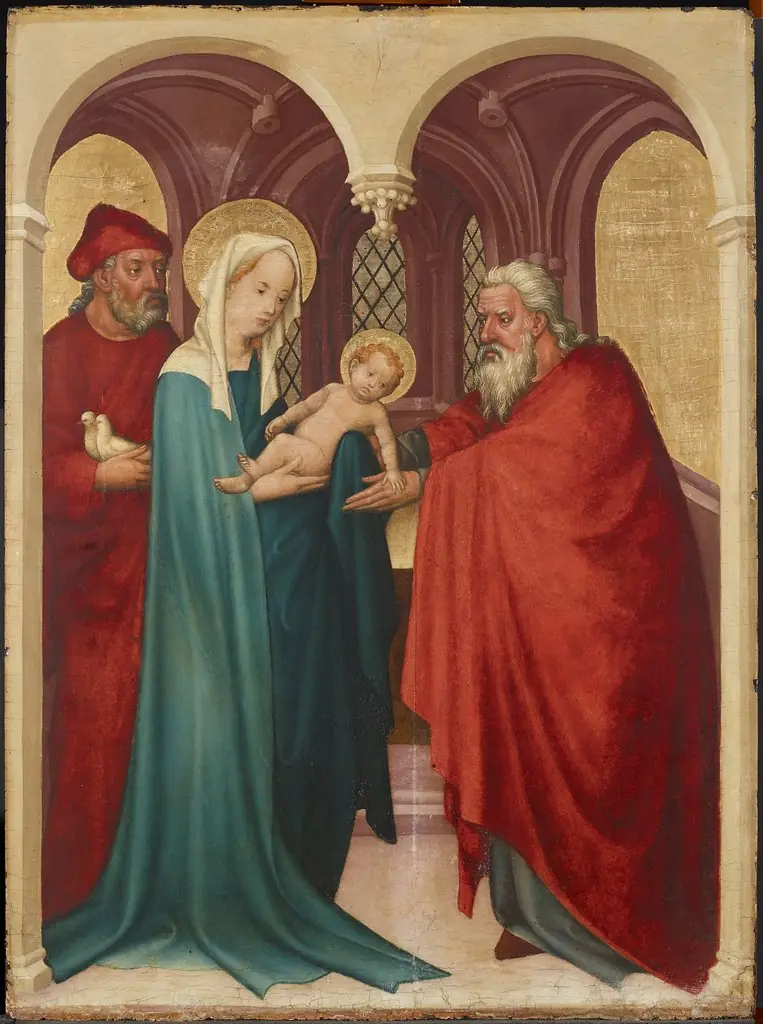 Darbringung Christi im Tempel
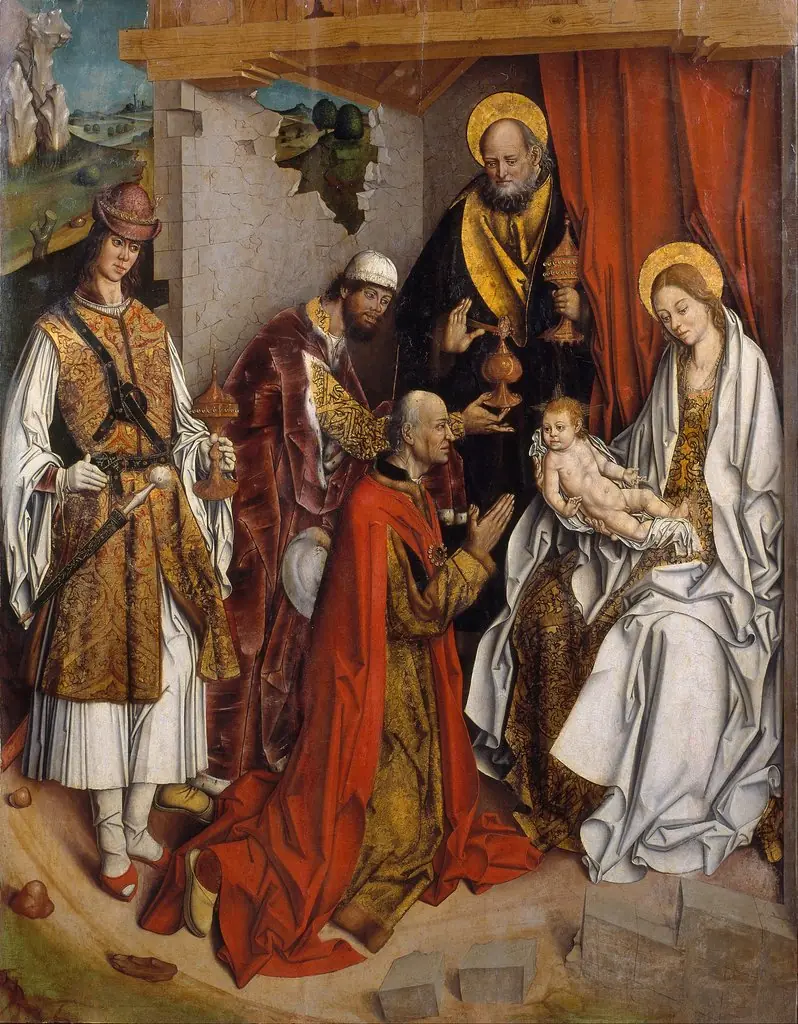 Epiphany
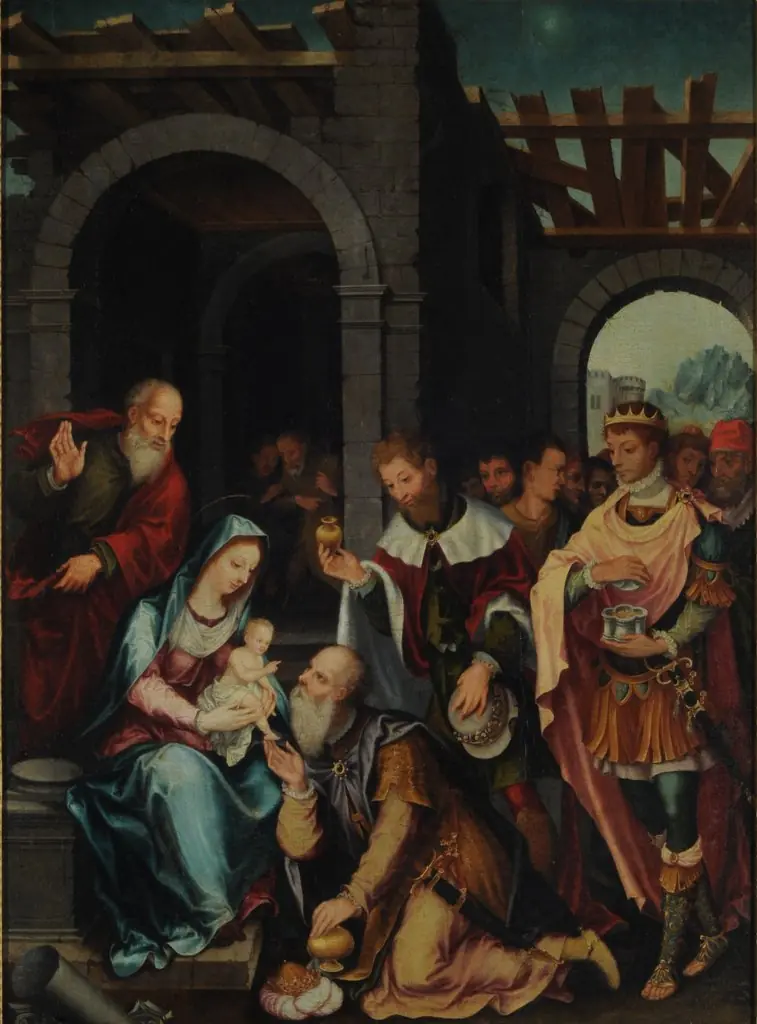 Adoration of the Magi
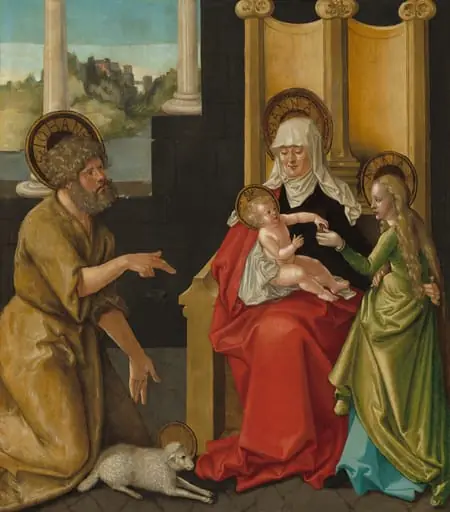 Saint Anne with the Christ Child, the Virgin, and Saint John the Baptist