Artwork
Ancestor Group Portrait
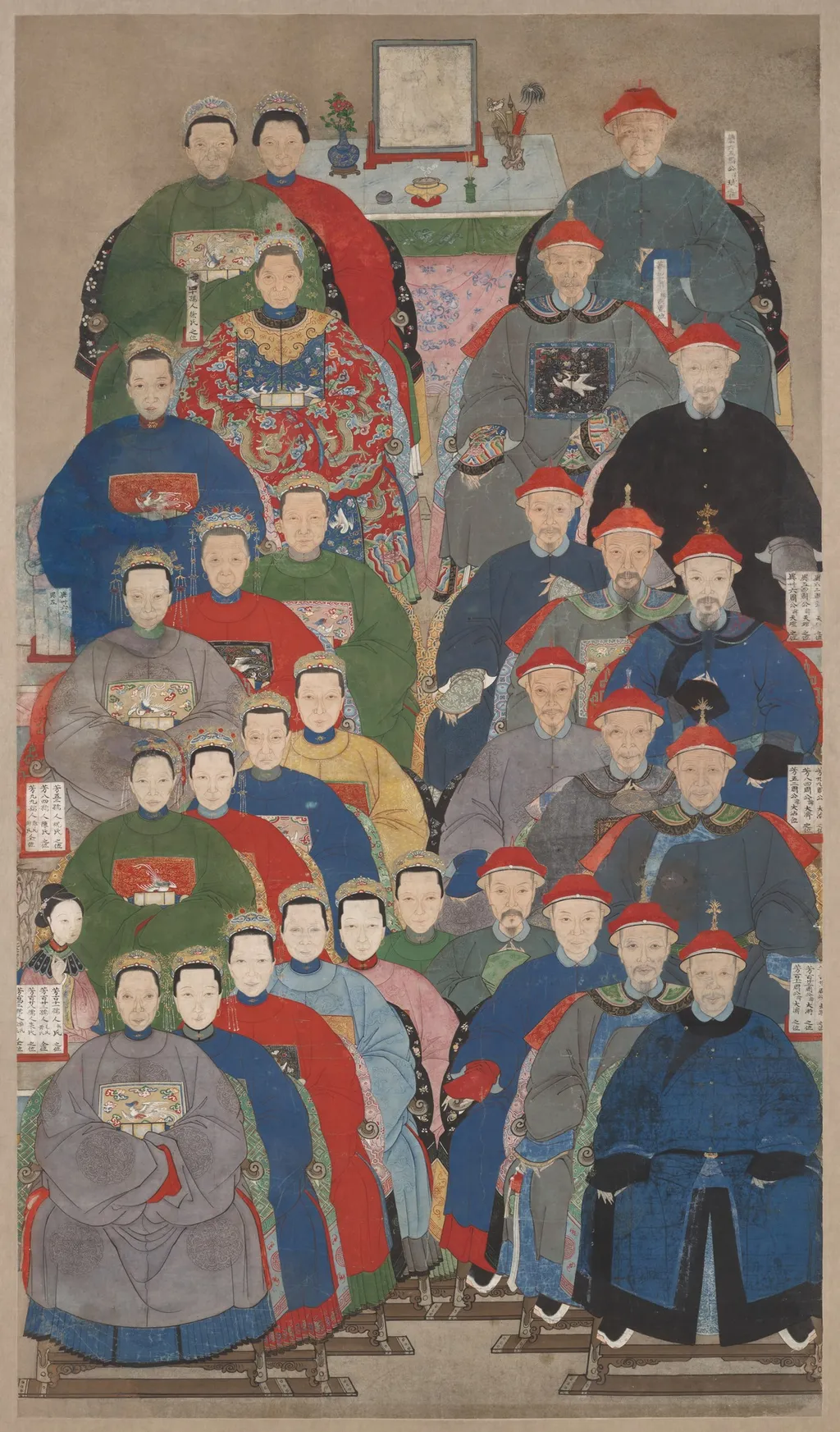
Ancestor Group Portrait is an unspecified painting. It dates from 1808 and is held in the collection of the Cleveland Museum of Art. The work is a large group portrait depicting numerous figures arranged in orderly rows within a modest interior.
About this work
Subject & Meaning
The work functions as a visual record of familial succession, reinforcing cultural values tied to ancestry and collective memory.
The painting portrays a group of ancestors gathered as a collective presence, emphasizing lineage and communal identity. Symbolic elements include traditional dress and posture that signal respect for heritage, while the compositional balance suggests continuity across generations. The work functions as a visual record of familial succession, reinforcing cultural values tied to ancestry and collective memory.
History & Provenance
The Ancestor Group Portrait is a painting dated to 1808, created by an artist who remains unidentified. The work was produced in the early nineteenth century and is currently held within the collection of the Cleveland Museum of Art. While the specific commission details and the full chain of ownership prior to the museum's acquisition are not detailed in the available records, the piece has been cataloged under the accession number 2019.82. Its creation is firmly established within the year 1808.
The painting Ancestor Group Portrait is held in the collection of the Cleveland Museum of Art. The work, created in 1808 by an unknown artist, is identified within the museum's records by the accession number 2019.82. While the piece has been part of the institution's holdings since at least 2019, the available records do not list specific past exhibitions or loan history for this object.
Overview
The work is a large group portrait depicting numerous figures arranged in orderly rows within a modest interior. The participants are dressed in vivid, traditional robes of red, blue, green and other hues, some topped with hats trimmed in red. A few individuals hold small objects such as scrolls or boxes, and a framed picture hangs on the wall behind them.
Technique & Style
Figures are rendered with a flat, stylized approach rather than naturalistic modeling, emphasizing decorative patterning over three‑dimensional illusion. The bright palette and precise brushwork reflect a courtly aesthetic that values clarity of costume and emblematic detail.
Context
During the Qianlong era, group portraits served to reinforce hierarchical order and ancestral reverence within the imperial bureaucracy. The work’s formal arrangement, vivid attire, and symbolic objects align with the emperor’s interest in preserving ritual propriety and visualizing the continuity of his administration.
Artist & collection

- Ancestor Group Portrait
 Untitled
 Celestial Buddhas and Deities of the Eastern and Southern Dipper Constellations
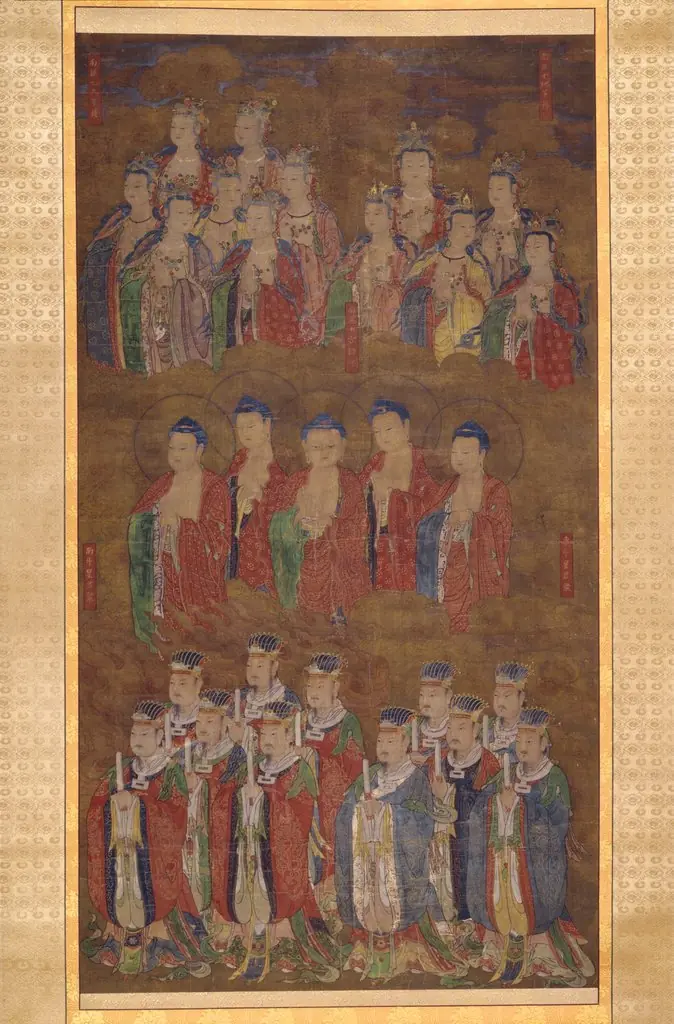 Celestial Buddhas and Deities of the Northern, Western, and Central Dipper Constellations
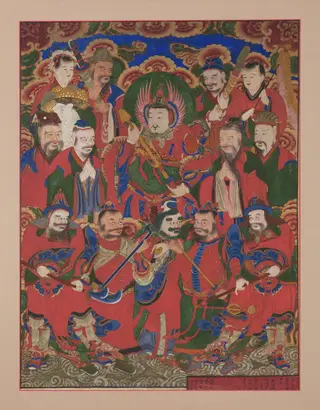 The Heavenly Dragon General with Attendants
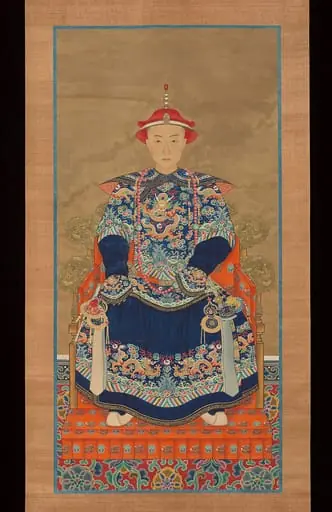 Untitled
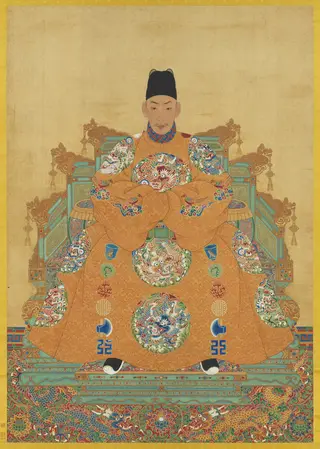 Emperor Wu-tsung of the Ming Dynasty
 Untitled
 Untitled
 Lineage Portrait of Buddhist Monks
 Portrait of Madame Wei Yixie
 Untitled