Artwork
Lineage Portrait of Buddhist Monks
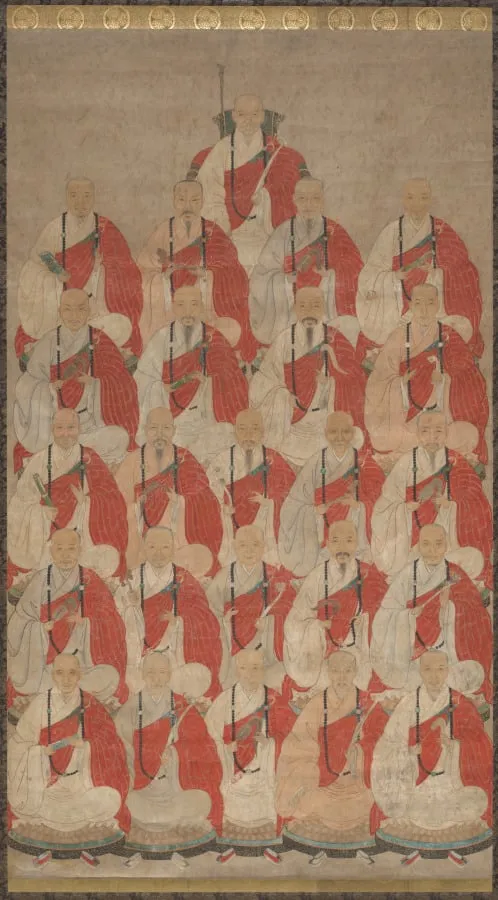
Lineage Portrait of Buddhist Monks is an unspecified painting by the Baroque artist Unknown. It dates from 1604 and is held in the collection of the Cleveland Museum of Art.
- Accession no.
- 2003.352
- Credit line
- Gift of Mr. and Mrs. Robert T. Gow
About this work
You see a long scroll of 24 Buddhist monks lined up in rows, each face different, wrinkles, beards, bald heads, all painted carefully.
You see a long scroll of 24 Buddhist monks lined up in rows, each face different, wrinkles, beards, bald heads, all painted carefully.
This isn’t just a group shot. The monks likely belonged to the Ōbaku school, a branch of Zen Buddhism that moved from China to Japan. The painting shows them in formal robes, almost like a family tree of teachers and students. No one knows who painted it, but the detail suggests someone who knew these men well.
To see more works like this, look up china, qing dynasty (1644–1911).
Overview
This painting depicts 24 Buddhist monks, possibly spanning multiple generations of a single temple or school, distinguished by their unique individual features and formal attire.
Subject & Meaning
The monks likely represent the Ōbaku school of Zen Buddhism, a tradition founded in Japan by Chinese émigré monks. The arrangement may symbolize a lineage or familial succession of teachers and students.
Technique & Style
Executed with meticulous attention to detail, the work showcases the artist's familiarity with the subjects, as evidenced by the nuanced portrayal of each monk's appearance.
History & Provenance
The artist remains unknown. Stylistic and historical context suggest connections to the Qing Dynasty (1644–1911), potentially indicating Chinese influences on Japanese Buddhist art.
Context
The Ōbaku school's blend of Chinese and Japanese Zen practices provides the cultural backdrop for this piece, reflecting the exchange of religious and artistic traditions between the two countries.
Artist & collection









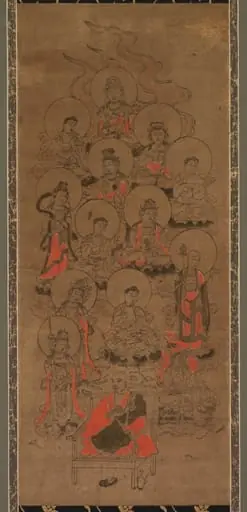 Twelve Buddhas and Kobo Daishi (Jusanbutsu)
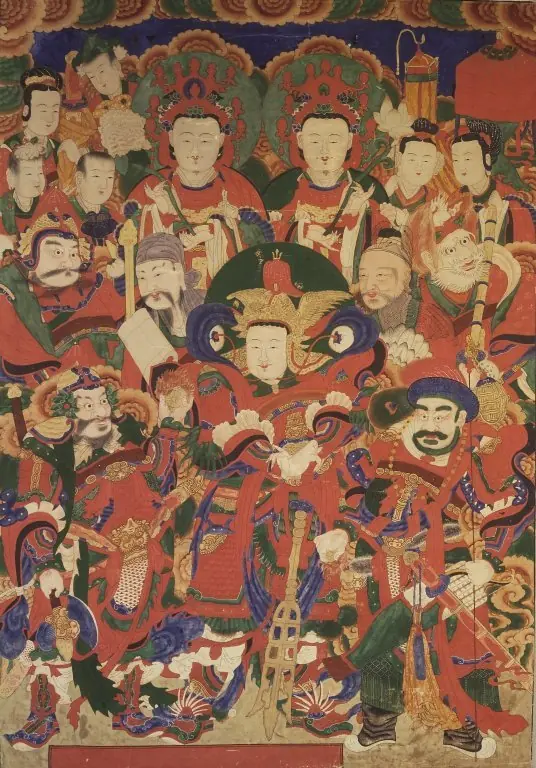 The Five Guardian Generals (O Bang Jang Kun)
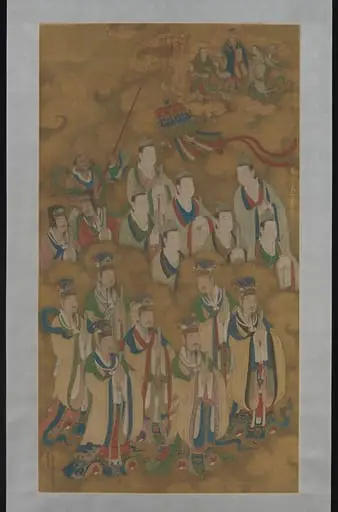 明景泰 佚名 北斗中斗本命星君圖 軸|Star deities of the northern and central dippers
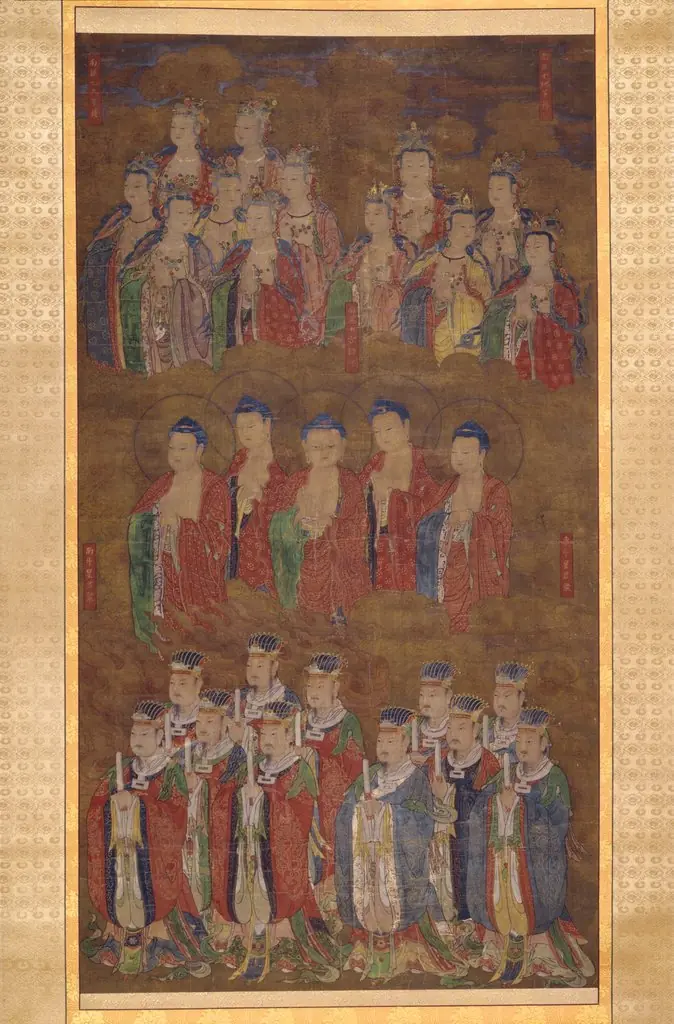 Celestial Buddhas and Deities of the Northern, Western, and Central Dipper Constellations
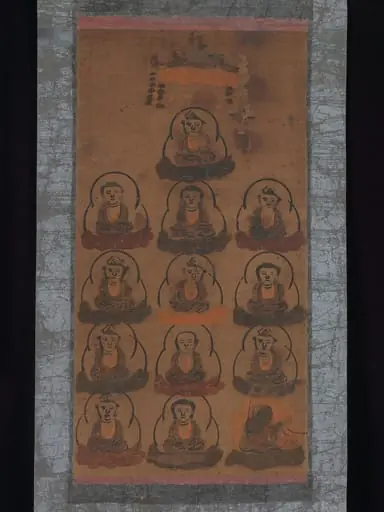 十三仏図大津絵|Ōtsu-e of Thirteen Buddhist Deities
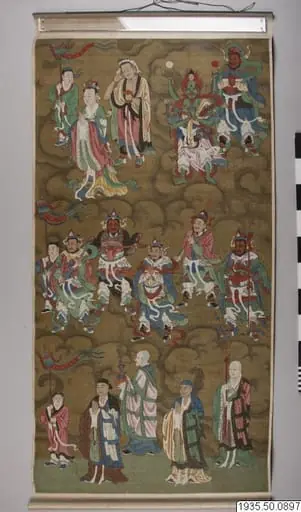 picture roller, duck, painting, painting,
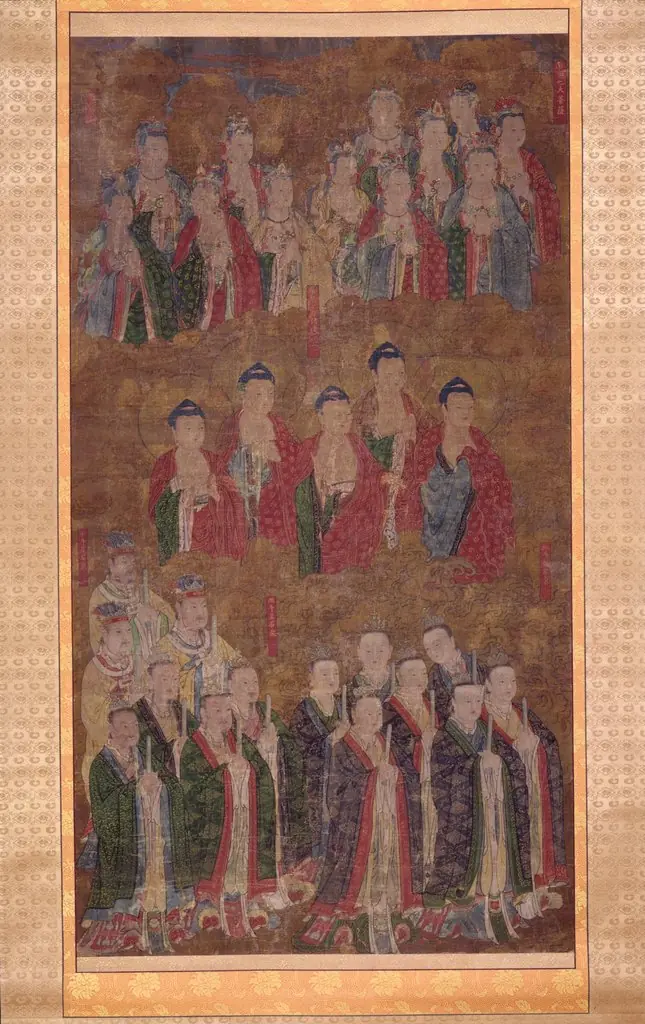 Celestial Buddhas and Deities of the Eastern and Southern Dipper Constellations