Artwork
Ancestor Group Portrait
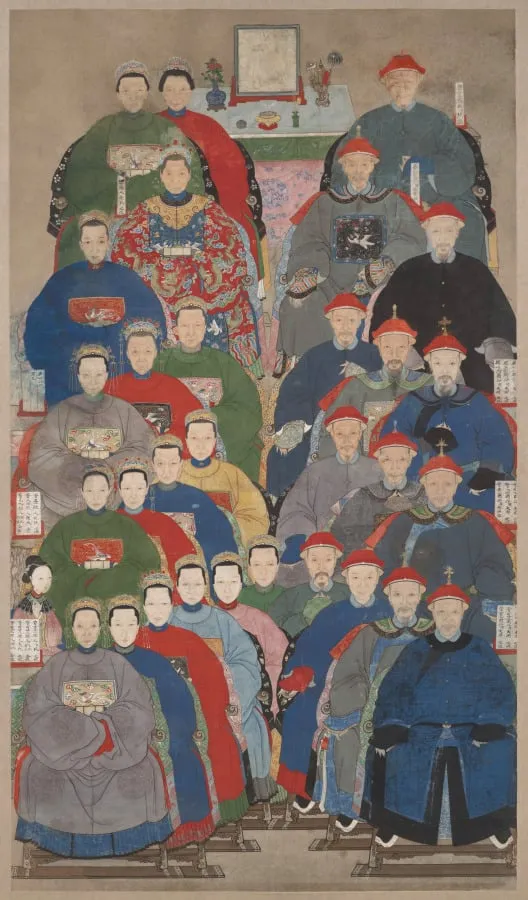
Ancestor Group Portrait is an unspecified painting by the Korean Minhwa artist Unknown. It dates from 1808 and is held in the collection of the Cleveland Museum of Art. The work is a horizontal hand‑scroll depicting thirty ancestors arranged in two vertical columns.
- Accession no.
- 2019.82
- Credit line
- Gift of Joyce G. Ames in honor of her husband B. Charles Ames
About this work
It’s rare to see so many generations in one picture, especially with their exact ranks written out.
You see a long scroll with thirty people lined up in rows, men on the right, women on the left. Each figure wears a robe with a square badge showing their rank. Small tablets above their heads list their names and titles.
This scroll was made to honor ancestors during New Year celebrations. It’s rare to see so many generations in one picture, especially with their exact ranks written out. The artist didn’t sign it, so we don’t know who made it.
To see more works like this, look up Qing dynasty (1644-1911).
Overview
The work is a horizontal hand‑scroll depicting thirty ancestors arranged in two vertical columns. Male figures occupy the right side, female figures the left, each rendered in court robes marked with a square insignia denoting official rank. Above each figure a small tablet records the individual’s name and hierarchical relationship within the lineage.
Subject & Meaning
The scroll functions as a genealogical record, presenting successive generations of a family and emphasizing their official status. By pairing gendered columns and annotating each person’s rank, the composition reinforces the Confucian ideals of filial piety and hierarchical order that were central to ritual ancestor worship.
Technique & Style
Executed in ink and color on silk, the figures are rendered with precise linear brushwork characteristic of Qing court portraiture. The square badges are painted in contrasting hues to highlight rank, while the tablets are inscribed in a formal script that mirrors official documents of the period.
History & Provenance
The scroll was created for use in domestic New Year rites, where it would be displayed as part of ancestral veneration. Its anonymous authorship is typical of utilitarian ritual objects; no signature or artist’s seal is present. The piece has survived in a private collection and is now referenced as a rare example of multi‑generational portraiture from the Qing dynasty.
Context
During the Qing era (1644‑1911) it was common for elite families to commission visual genealogies for seasonal festivals. This scroll stands out for the number of generations shown and the explicit labeling of official titles, offering insight into how status and lineage were visually codified in elite household rituals.
Artist & collection









 Untitled
 Celestial Buddhas and Deities of the Eastern and Southern Dipper Constellations
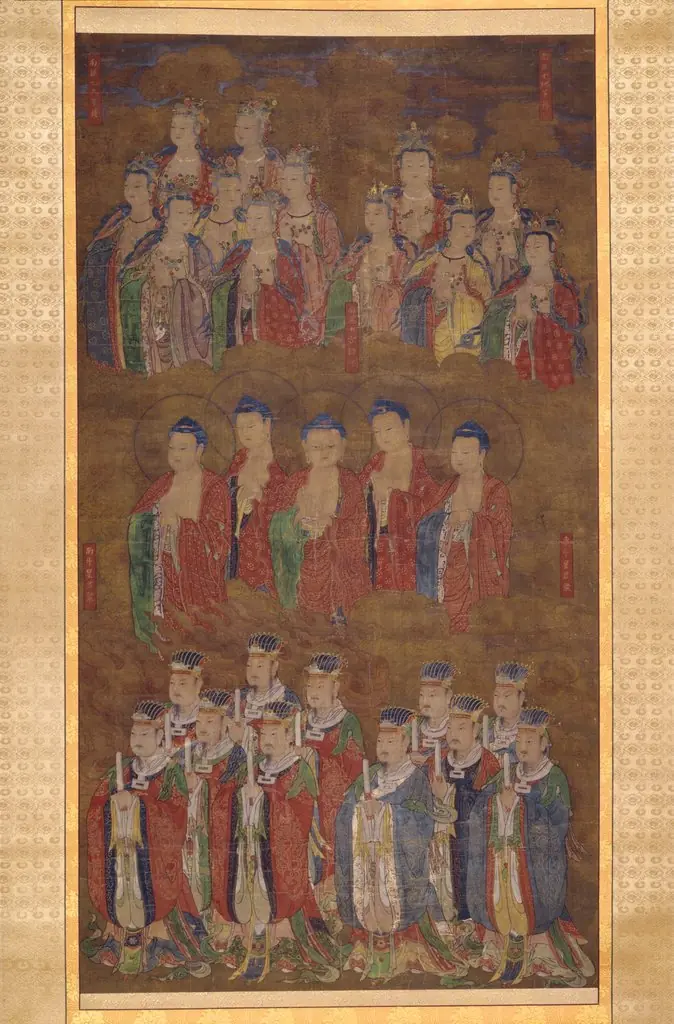 Celestial Buddhas and Deities of the Northern, Western, and Central Dipper Constellations
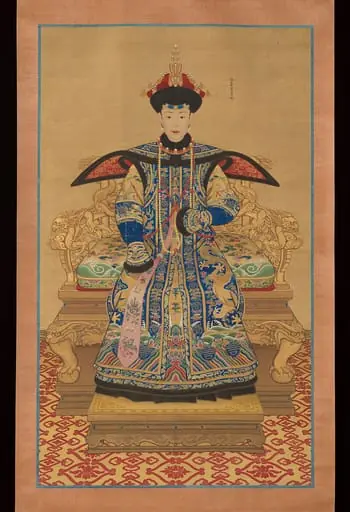 Untitled
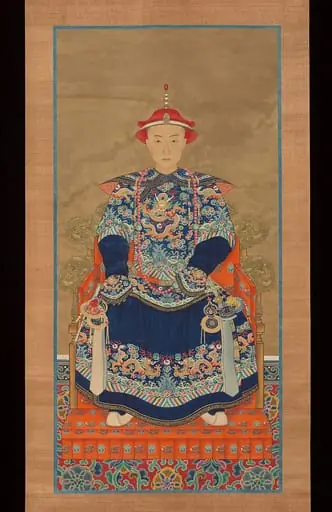 Untitled
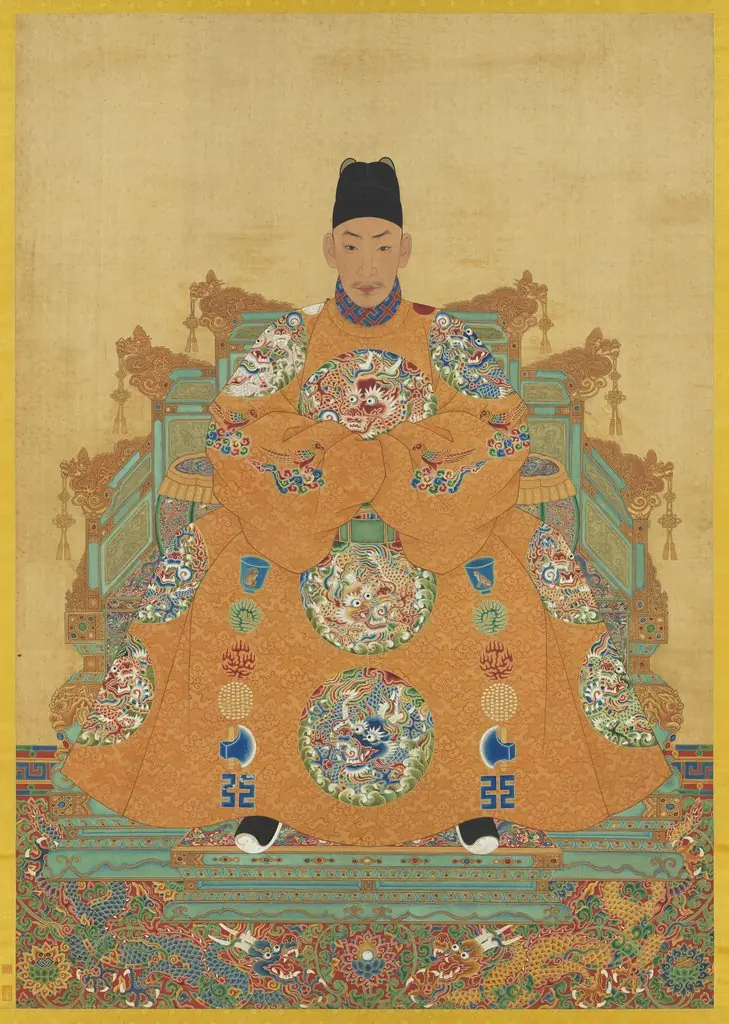 Emperor Wu-tsung of the Ming Dynasty
 Untitled
 Untitled
 Lineage Portrait of Buddhist Monks
 明景泰 佚名 北斗中斗本命星君圖 軸|Star deities of the northern and central dippers