Artwork
Arrival of the "Southern Barbarians"
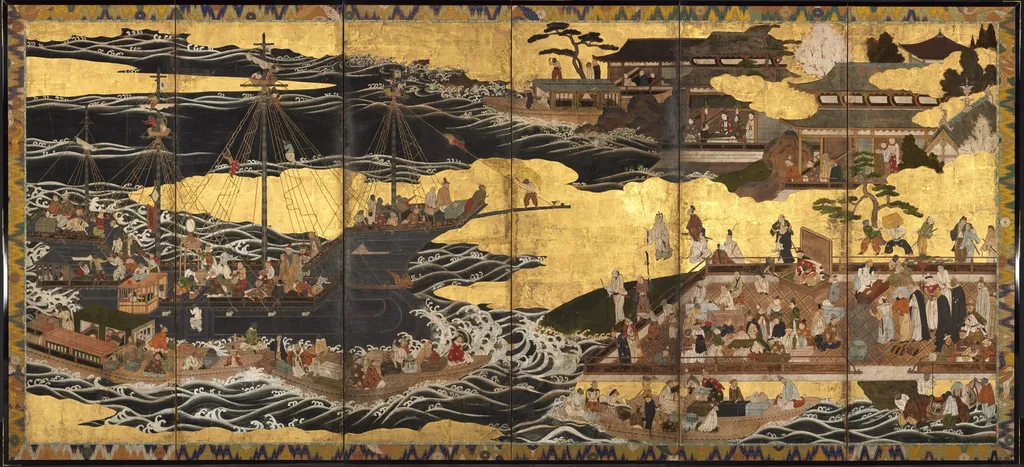
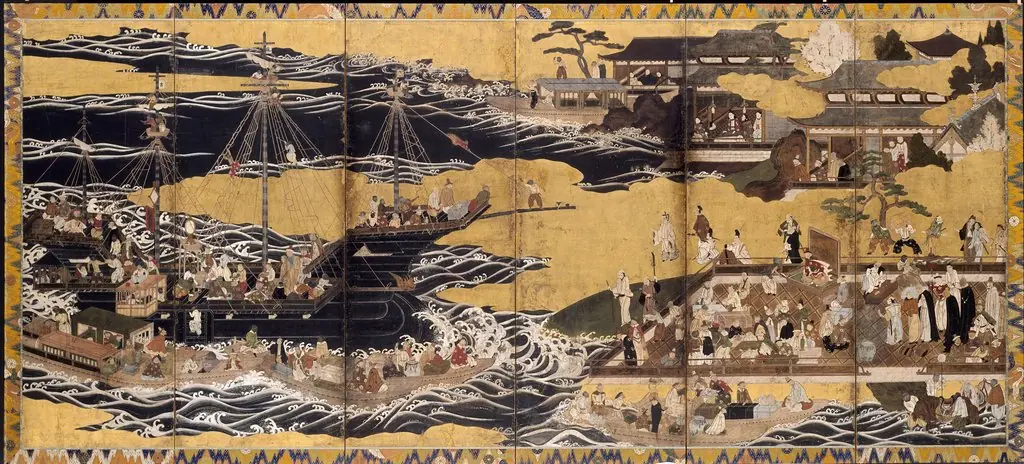
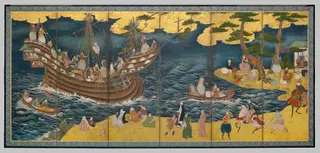
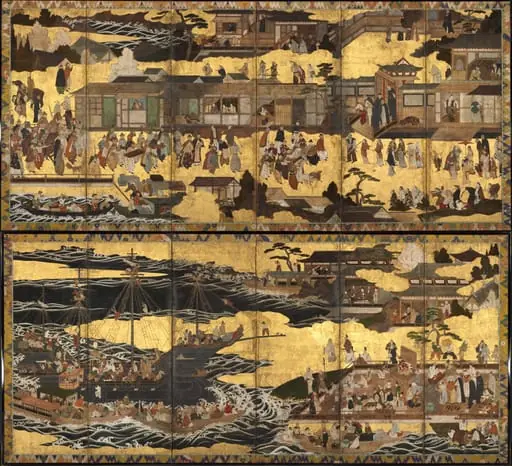
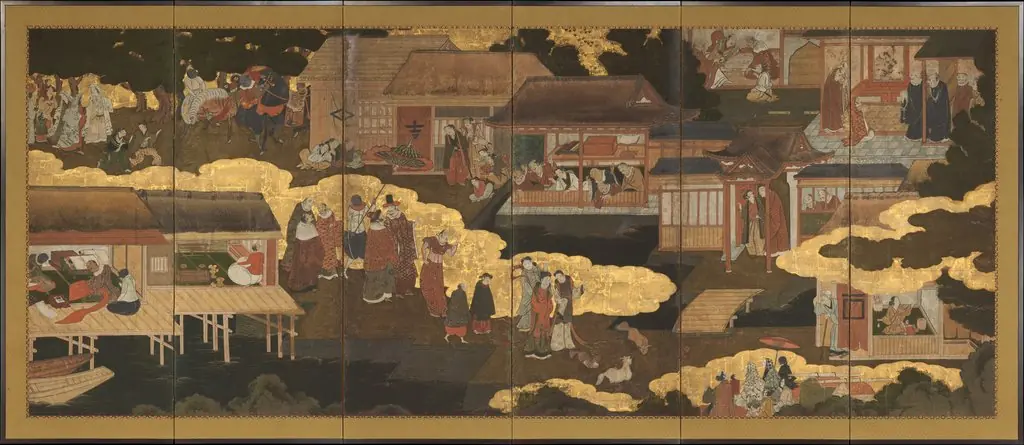
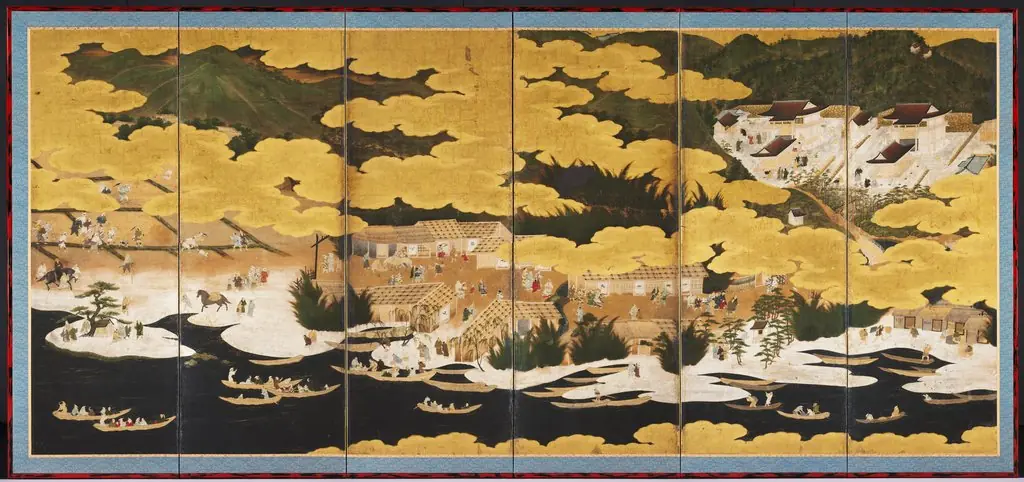
Arrival of the "Southern Barbarians" is an unspecified painting. It dates from 1600 and is held in the collection of the Cleveland Museum of Art. ‘Arrival of the Southern Barbarians’ is a multi‑panel composition that presents a bustling riverside scene across six consecutive frames.
About this work
History & Provenance
The painting Arrival of the "Southern Barbarians" is held in the collection of the Cleveland Museum of Art in Cleveland.
The painting Arrival of the "Southern Barbarians", dated to 1600, is attributed to an unknown Japanese artist and is held in the collection of the Cleveland Museum of Art (accession no. 1960.193.2).
Its creation coincides with the early Edo period, a time marked by heightened European contact with Japan. The work likely emerged from a commission or broader cultural response to the arrival of Portuguese traders, known as "Southern Barbarians" by the Japanese, whose ships first reached Japanese shores in the mid-16th century. The painting’s depiction of European figures and their ships reflects this historical context, situating its production within a period of intense cross-cultural exchange.
The painting Arrival of the "Southern Barbarians" is held in the collection of the Cleveland Museum of Art in Cleveland. The work is cataloged under the accession number 1960.193.2. Created in Japan around 1600, the piece remains part of the museum's permanent holdings.
Overview
‘Arrival of the Southern Barbarians’ is a multi‑panel composition that presents a bustling riverside scene across six consecutive frames. Each segment depicts a distinct episode populated by figures in boats, on foot, and engaged in various activities, set against a backdrop of mountains, trees and a cloud‑dotted sky. The overall effect is that of a visual narrative unfolding in sequence.
Subject & Meaning
The work illustrates the encounter of foreign visitors, referred to historically as “Southern Barbarians”, with a coastal settlement. The procession of ships and the crowd’s preparations suggest a ceremonial reception or trade exchange, while the small, seemingly weightless figures in the upper right panel may symbolize spiritual or mythic elements associated with the arrival.
Technique & Style
Executed in a bright yet slightly muted palette of blues, greens and golds, the painting employs flat areas of colour and decorative patterning typical of East Asian narrative scrolls. The division into six panels creates a rhythmic visual flow, and the detailed rendering of boats, architecture and clothing reflects a careful observational approach.
Context
During the period when the term “Southern Barbarians” was used, maritime contact between East Asian polities and distant lands intensified, prompting artistic depictions of these interactions. The painting thus serves both as a record of a specific event and as a visual expression of contemporary attitudes toward foreign peoples.
Artist & collection