Artwork
Famous Views of Ōmi
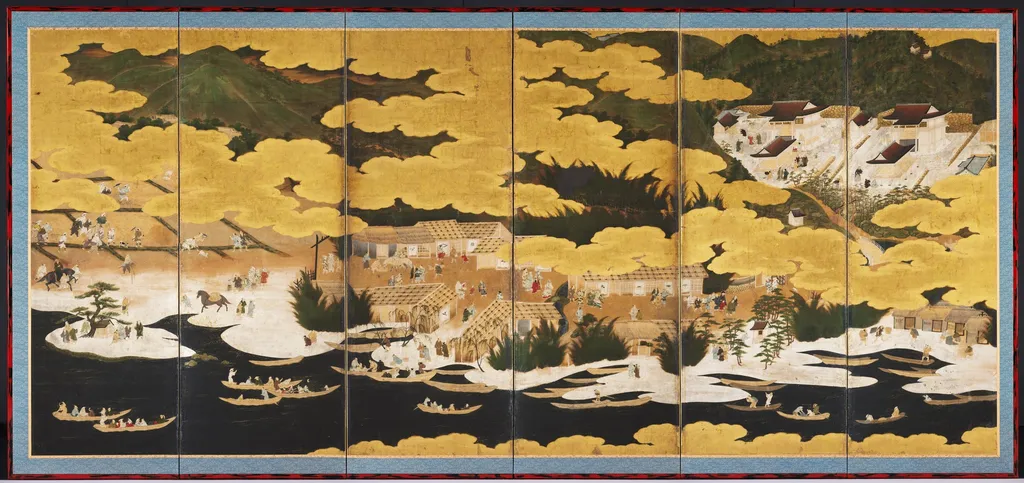
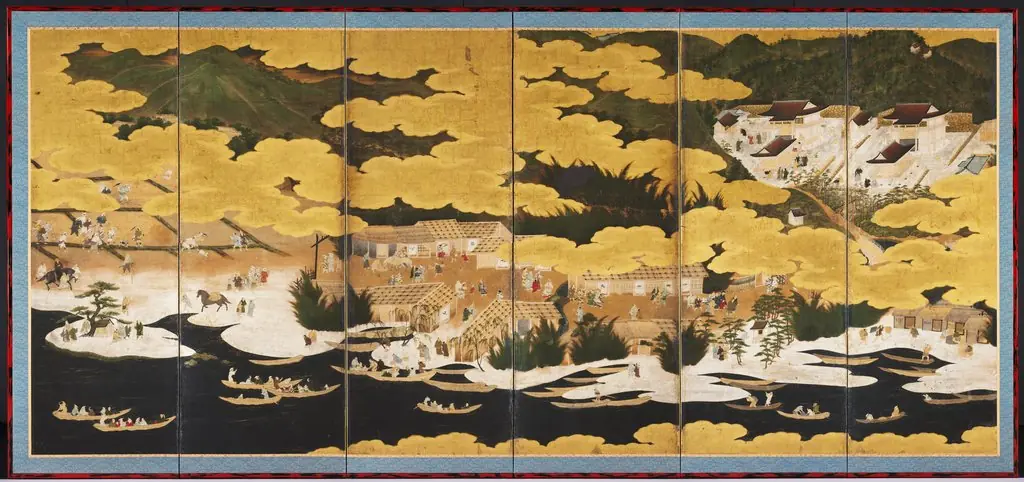
Famous Views of Ōmi is an unspecified painting. It dates from 1690 and is held in the collection of the Cleveland Museum of Art.
About this work
History & Provenance
While the specific exhibition history is not detailed in the provided records, the artwork remains part of the museum's permanent holdings.
Famous Views of Ōmi is a painting dated to 1679, created by an unknown artist in Japan. The work entered the Cleveland Museum of Art in 1983, where it is recorded under accession number 1983.19. No further details about earlier ownership, commission, or subsequent transfers are available in the provided sources.
The painting Famous Views of Ōmi, created in 1679, is held in the collection of the Cleveland Museum of Art in Cleveland, United States. The work is cataloged under the accession number 1983.19. While the specific exhibition history is not detailed in the provided records, the artwork remains part of the museum's permanent holdings.
Overview
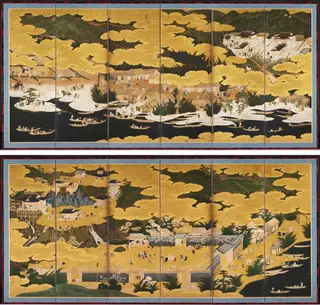
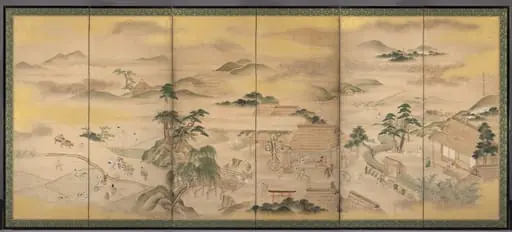
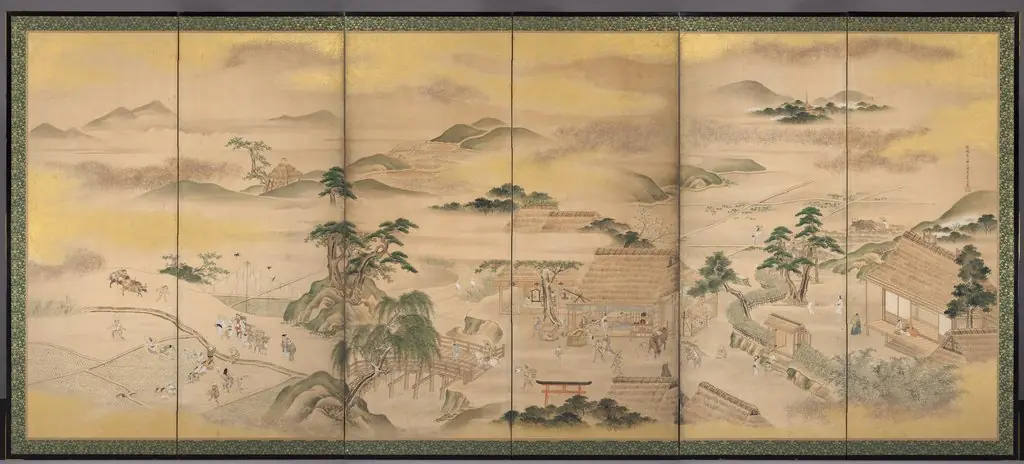
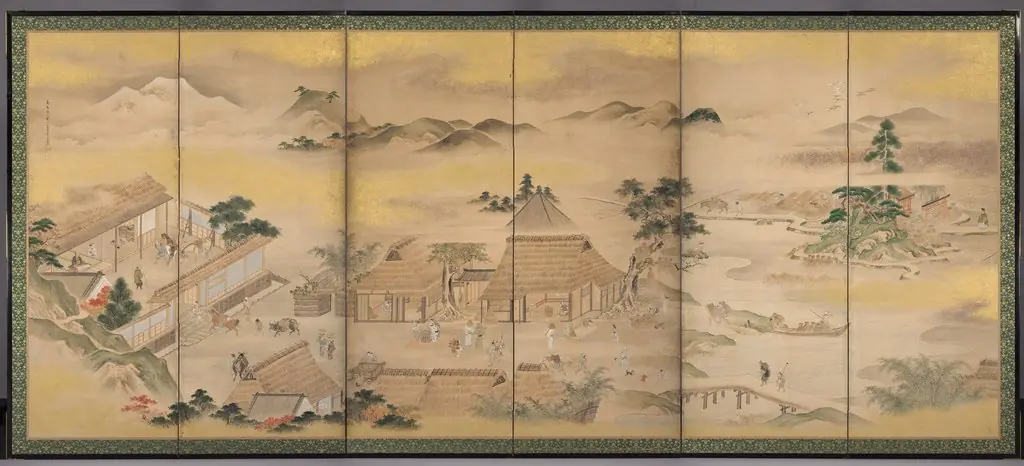
Famous Views of Ōmi is a panoramic painting composed of six contiguous panels that present a continuous landscape. The composition stretches horizontally, depicting a riverine environment framed by fields, modest structures, and a sky rendered in a light yellow hue punctuated by soft clouds.
Subject & Meaning
The work portrays everyday activity along the Ōmi region’s waterways: figures on horseback, small boats navigating the river, and pedestrians strolling the banks. Scenes of fishing and river travel suggest a bustling yet tranquil community, emphasizing the harmony between human labor and the natural setting.
Technique & Style
Executed with a restrained palette of blues, greens, and earth tones, the painting employs delicate brushwork to render atmospheric perspective and fine details. The miniature figures and simplified architecture convey depth across the six panels, while the uniform sky unifies the composition.
Context
Famous Views of Ōmi reflects the Edo‑period interest in travel literature and scenic guides, where artists produced visual records of notable locales. Such works served both as decorative objects and as informative surveys for viewers unfamiliar with the region.
Artist & collection

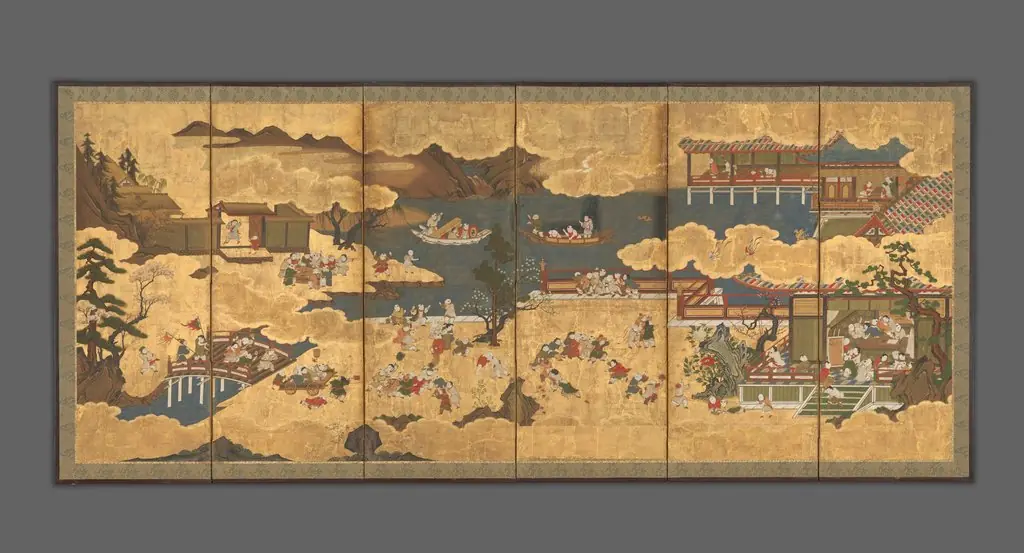 One Hundred Chinese Boys
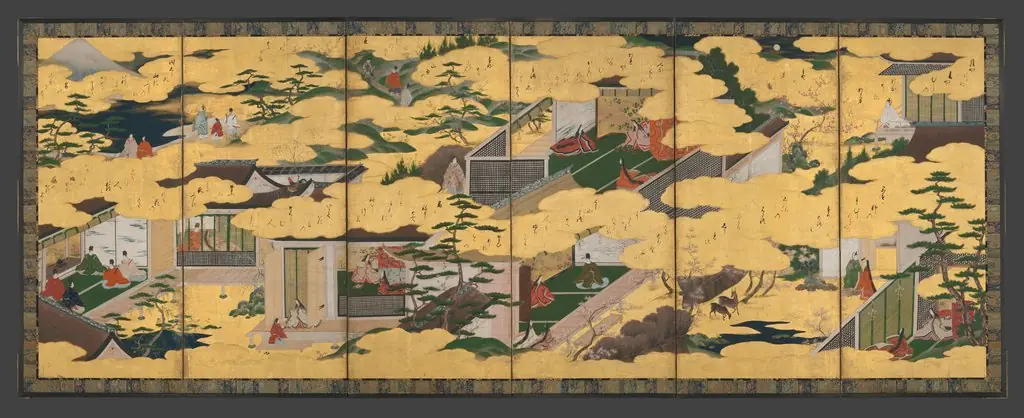 Scenes from the Tales of Ise
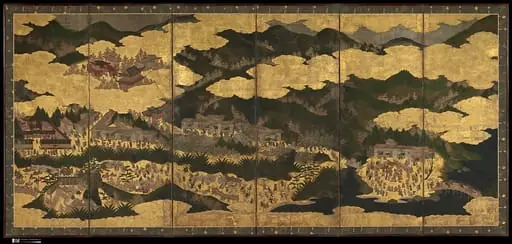 厳島吉野花見図屏風|Cherry Blossom Viewing at Itsukushima and Yoshino
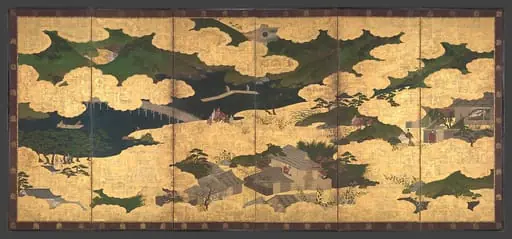 平家物語図屏風 「小督」 「大原御幸」|"Kogō" and "The Imperial Procession to Ōhara", from The Tale of the Heike (Heike monogatari)
 Spring and Autumn Farming (Spring)
 Spring and Autumn Farming (Spring)
 Spring and Autumn Farming (Autumn)