Artwork
Canton Waterfront (The Hongs at Canton)
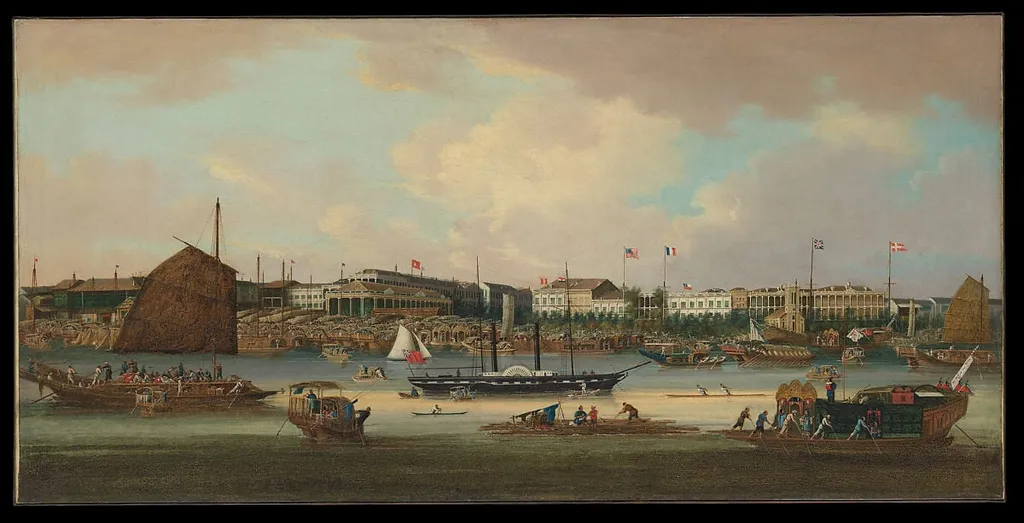
Canton Waterfront (The Hongs at Canton) is an oil painting. It dates from 1852 and is held in the collection of the Metropolitan Museum of Art.
- Accession no.
- 56.212
- Credit line
- Rogers Fund, 1957
About this work
Subject & Meaning
Canton Waterfront (The Hongs at Canton) depicts a bustling harbor scene at Canton (modern-day Guangzhou), a major trading port on the Pearl River.
Canton Waterfront (The Hongs at Canton) depicts a bustling harbor scene at Canton (modern-day Guangzhou), a major trading port on the Pearl River. The painting shows the waterfront hongs, warehouses and mercantile buildings that served as headquarters for foreign traders during the Canton trade era, alongside boats and maritime activity. The composition captures the commercial infrastructure that facilitated exchange between Chinese merchants and Western trading houses, particularly the British and American firms that dominated this trade.
The inclusion of boats and buildings underscores the painting's focus on the nexus of maritime commerce and urban architecture, reflecting the global economic networks of the early nineteenth century. As a landscape genre work, it documents a specific historical moment of cross-cultural encounter and international trade.
Technique & Style
Canton Waterfront (The Hongs at Canton) is executed in oil paint on canvas, a standard support for mid-19th-century Western landscape painting. The work is classified as a landscape genre piece and is held in the collection of the Metropolitan Museum of Art's American Wing. Its subject matter, depicting boats and buildings along the Canton waterfront, is rendered through this oil-on-canvas medium, which allowed for the layered handling typical of the period's marine and harbor views.
Overview
This oil on canvas, titled Canton Waterfront (The Hongs at Canton), depicts a bustling port scene. The painting captures the vibrant activity of a major trading hub, characterized by numerous vessels and figures engaged in commerce. A hazy sky hangs over low-lying warehouses, while tall ships dominate the harbor, reflecting the extensive maritime trade of the era.
History & Provenance
This painting is attributed to an anonymous American sailor or trader who visited China around the 1840s. Unlike works by established artists, it lacks a prominent signature, suggesting it was created by an individual with direct experience of the scene rather than a professional painter. Its inclusion in the American Wing highlights its connection to American maritime and commercial history in Asia.
Artist & collection

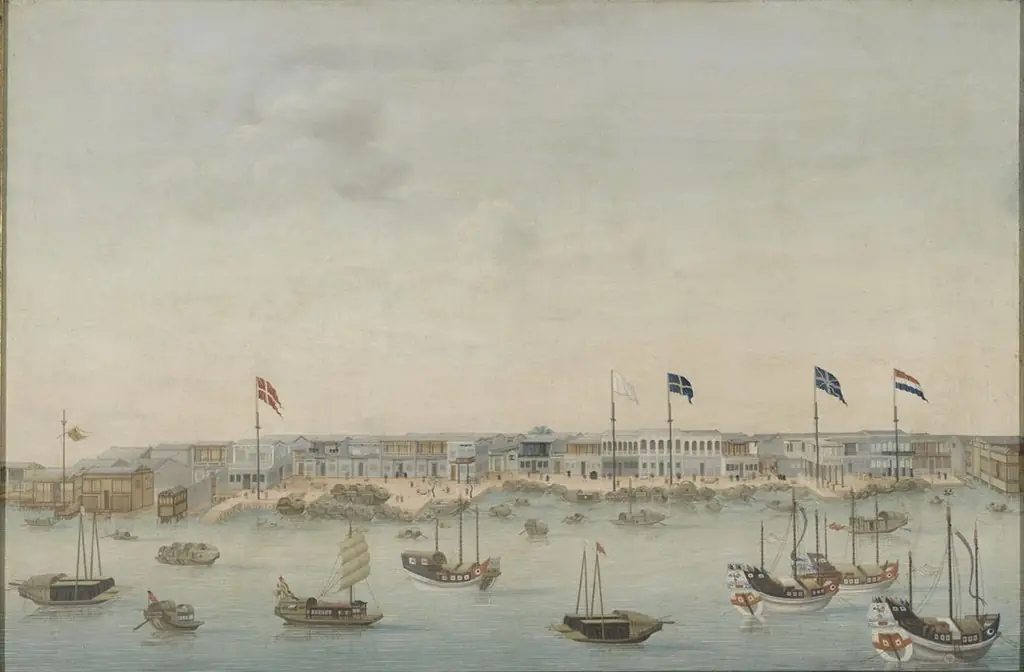 Drie gezichten op de Parelrivier: Kanton, Macao, Whampoa
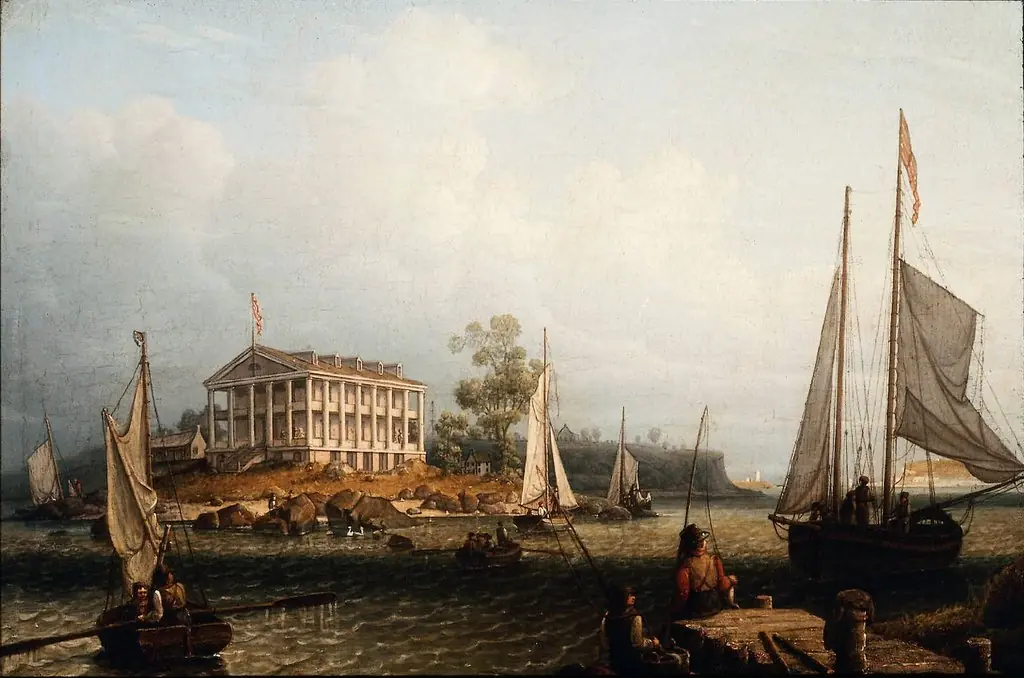 Rainsford's Island, Boston Harbor
 Untitled
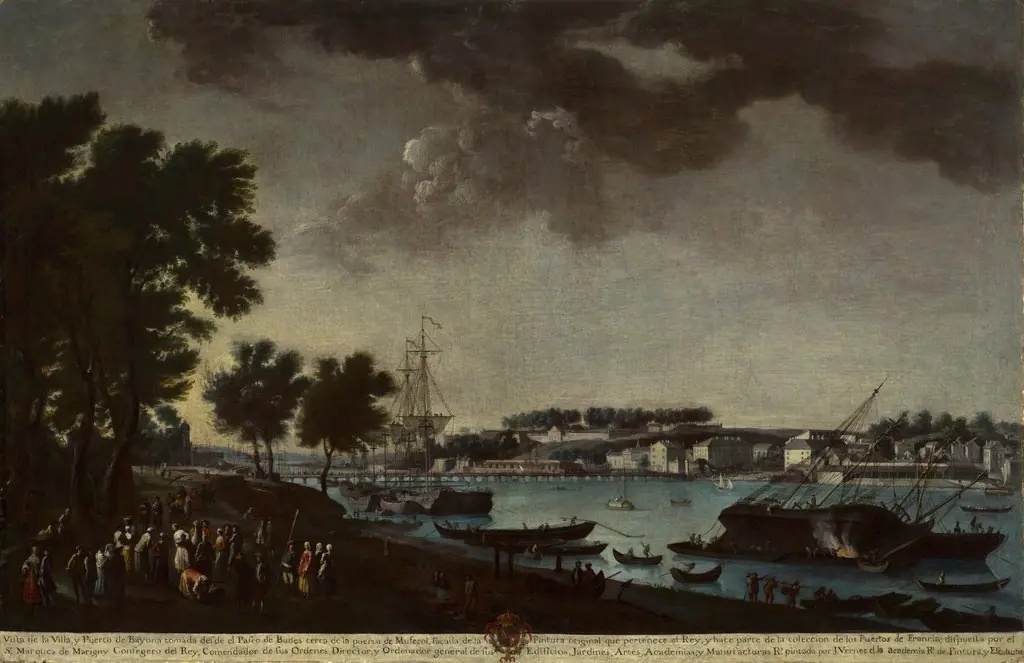 View of the Town and Port of Bayonne from the Pathways of Boufflers (La villa y puerto de Bayona tomada desde el paseo de Boufflers)
 Et prospekt af de europæiske factorier i Canton
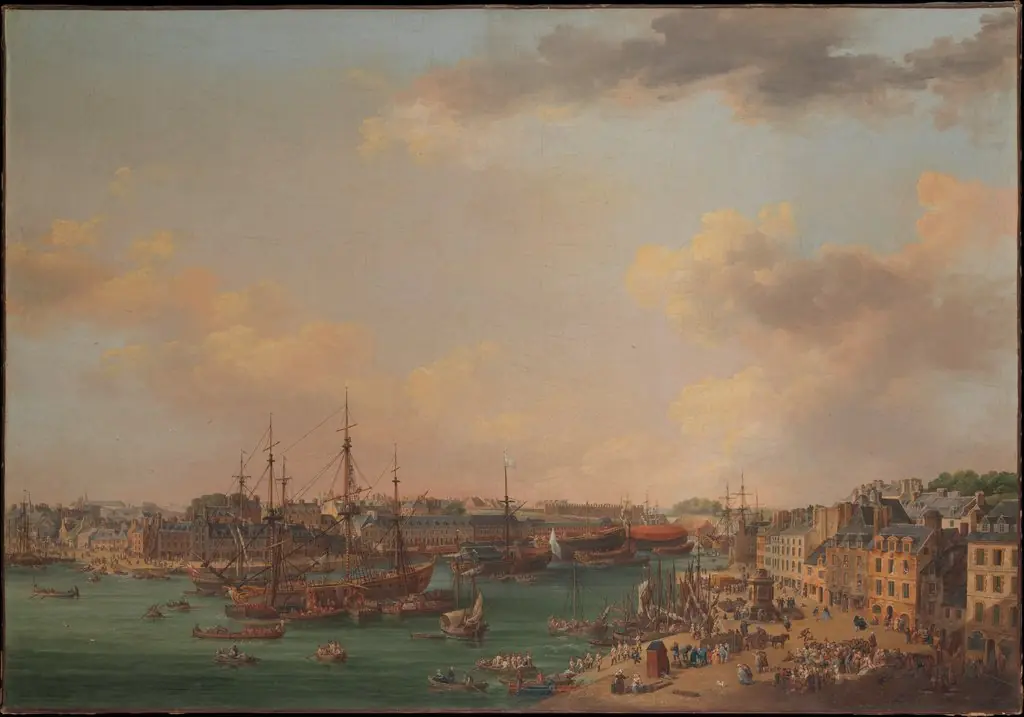 The Outer Harbor of Brest
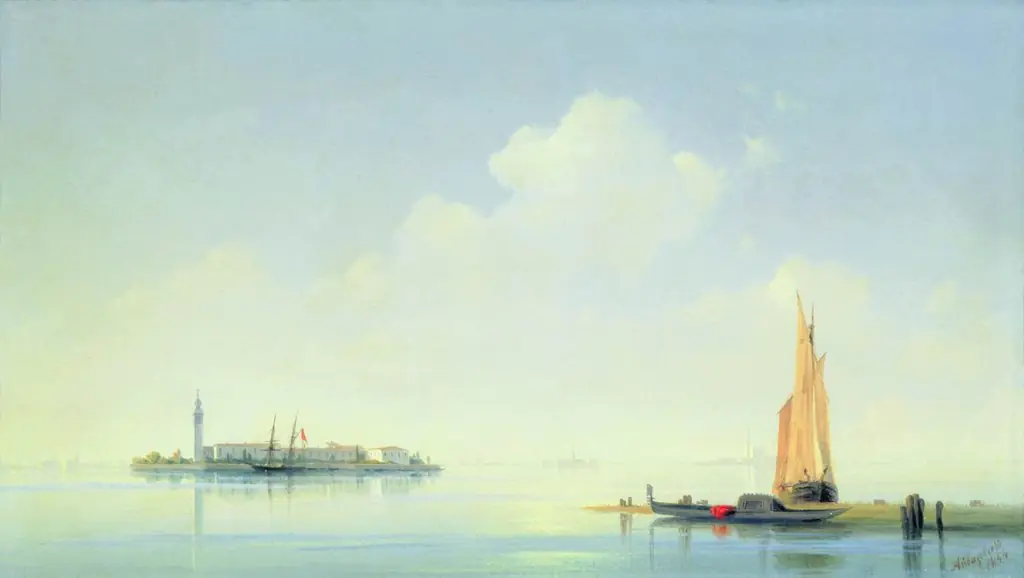 Venetian lagoon. View of the island of San Giorgio.
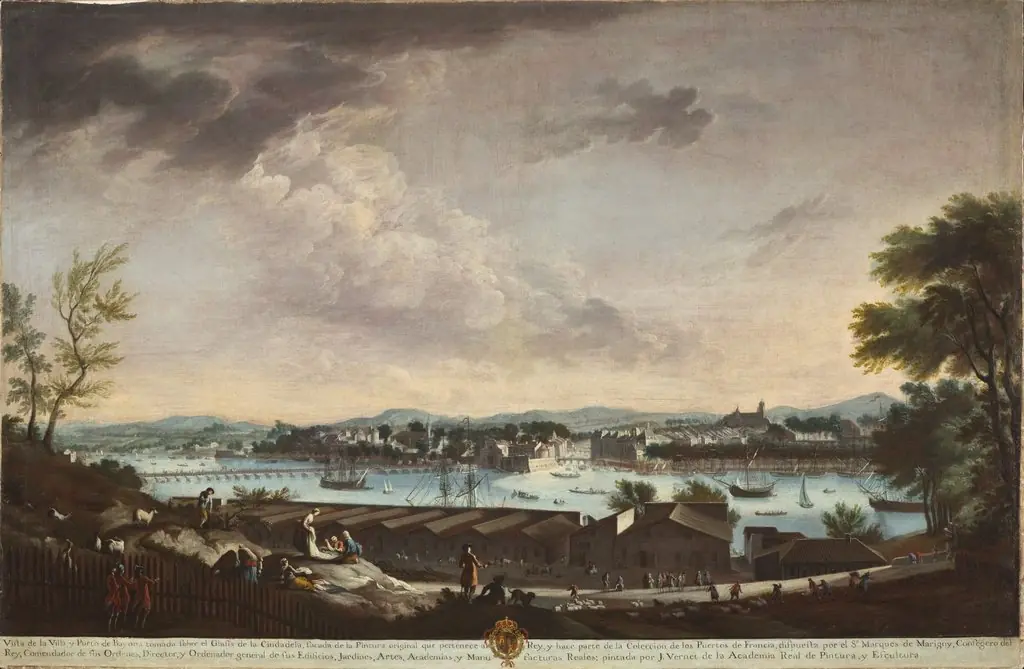 View of the Town and Port of Bayonne (La villa y puerto de Bayona)