Artwork
Charles-Claude Flahaut de la Billaderie
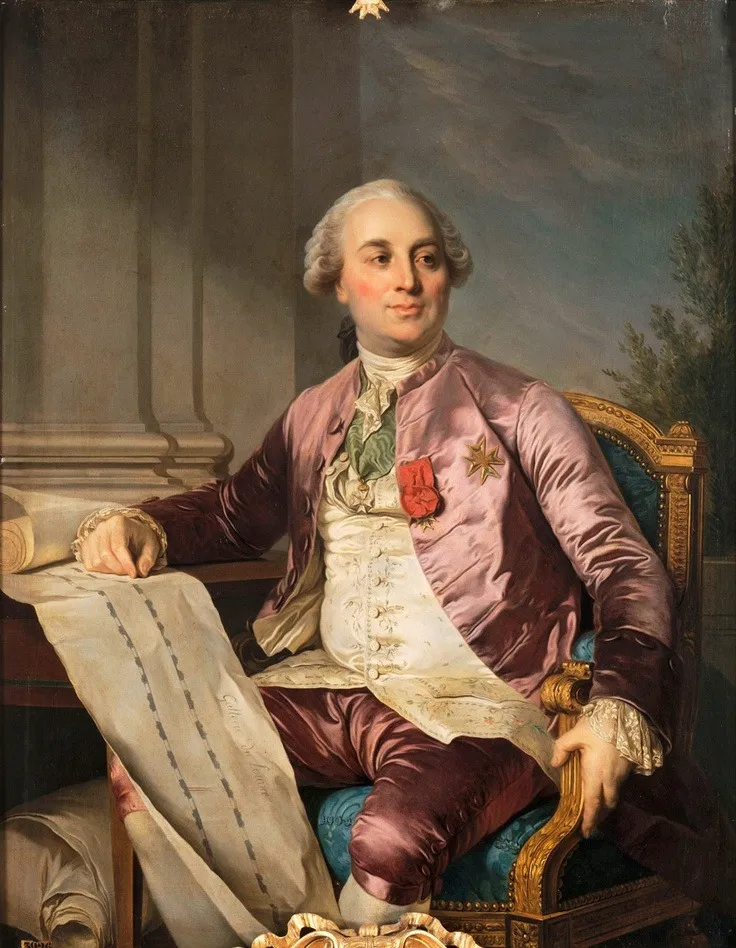
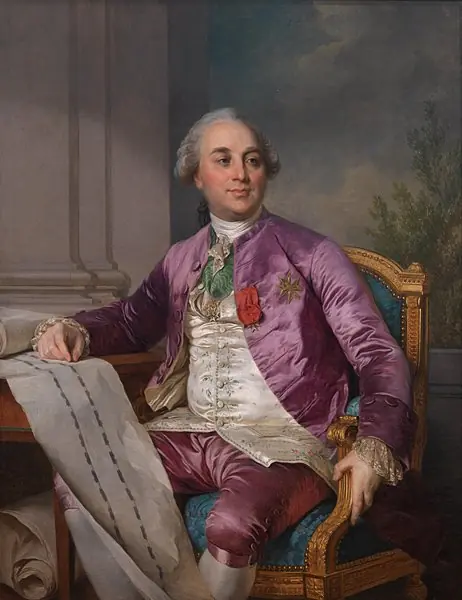
Charles-Claude Flahaut de la Billaderie is an oil painting. It dates from 1790 and is held in the collection of the Palace of Versailles. The oil painting portrays a seated figure in an interior setting.
About this work
Subject & Meaning
The composition was created in 1779 and is housed in the Museum of the History of France at the Palace of Versailles.
The portrait shows Charles-Claude Flahaut de la Billaderie seated and associated with the Order of Saint Lazarus, reflecting his status and professional role as an architect. He holds an architectural plan, underscoring his contributions to design. The composition was created in 1779 and is housed in the Museum of the History of France at the Palace of Versailles.
Symbolically, the work links the sitter to Enlightenment-era intellectual and artistic patronage, representing both his institutional affiliations and architectural expertise through visual cues such as the order insignia and drafting materials.
Technique & Style
The portrait is painted in oil on canvas, measuring 144 cm in height and 106 cm in width.
The composition presents the sitter seated, wearing the insignia of the Order of Saint Lazarus, holding architectural plans. The handling reflects the conventions of French portraiture of the late 18th century, with careful attention to costume and emblematic objects to convey status and profession. The rendering emphasizes clarity and linear precision, consistent with academic practice of the period.
History & Provenance
The portrait of Charles‑Claude Flahaut de La Billarderie was painted in 1779, as indicated by its inception date and the sitter’s age at the time.
It was created in France during the late eighteenth century and is today held by the Museum of the History of France at the Palace of Versailles, where it is catalogued as MV 3926 (also INV 4304 and AC 1563).
The portrait of Charles-Claude Flahaut de la Billaderie, dated 1779, is held by the National Museum of the Palace of Versailles and Trianon. It resides specifically within the Museum of the History of France collection. The work carries multiple inventory references, including MV 3926, INV 4304, and AC 1563, as recorded in the French national museum database.
The painting is an oil on canvas work attributed to the school of France, created after a piece by Joseph Siffred Duplessis.
Context
Charles-Claude Flahaut de la Billaderie (1730–1810) was a French architect and nobleman whose portrait was painted in 1779, reflecting his prominence in Enlightenment-era intellectual and architectural circles. The work, attributed to Joseph Siffred Duplessis, is housed in the Museum of the History of France at the Palace of Versailles and is documented in both the Joconde database and the Palace of Versailles collection. Its depiction of the sitter holding architectural plans underscores his role in neoclassical design and institutional reform, situating the portrait within broader discussions of French artistic patronage and Enlightenment-era professional identity.
Scholarly attention has focused on the painting’s stylistic precision and its representation of architectural authority in pre-Revolutionary France, with recent studies emphasizing its contribution to understanding the intersection of art, science, and statecraft in 18th-century France.
Overview
The oil painting portrays a seated figure in an interior setting. He occupies a blue chair with gilded detailing, while a column and a wall form the backdrop. The composition centers on the man holding a lengthy sheet of paper that appears to contain architectural drawings.
Artist & collection

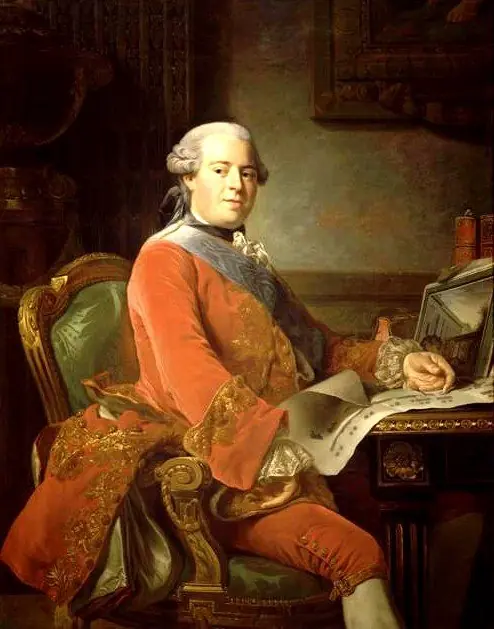 Portrait of Abel-François Poisson, marquis de Marigny
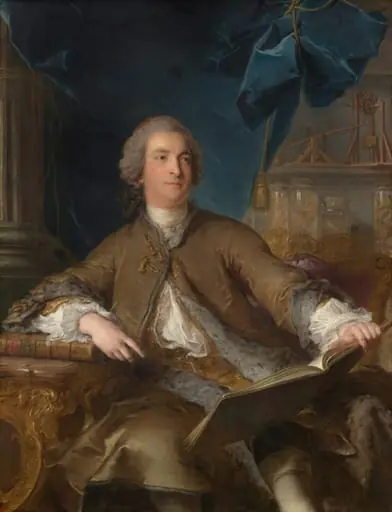 Joseph Bonnier de la Mosson
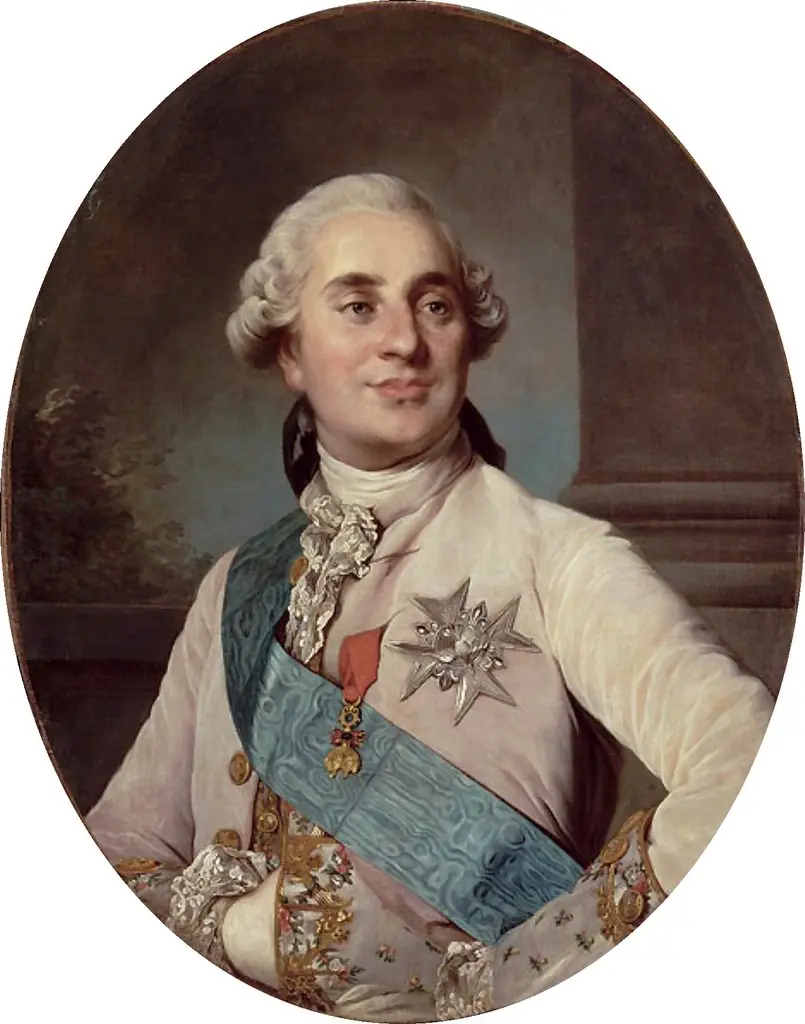 Portrait of Louis XVI, King of France and Navarre (1754-1793)
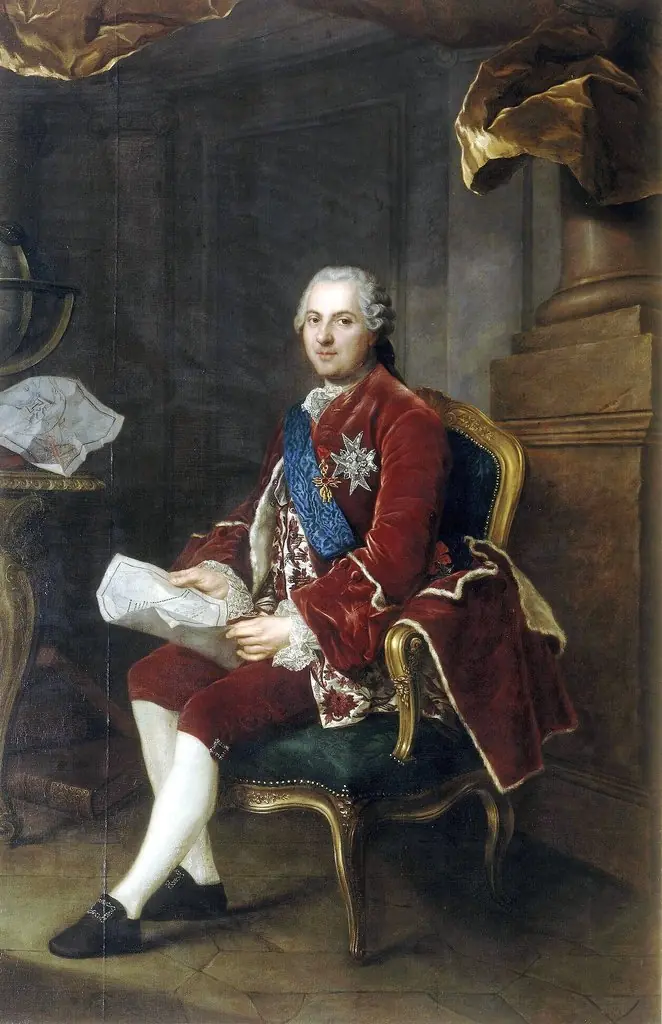 Louis, Dauphin of France
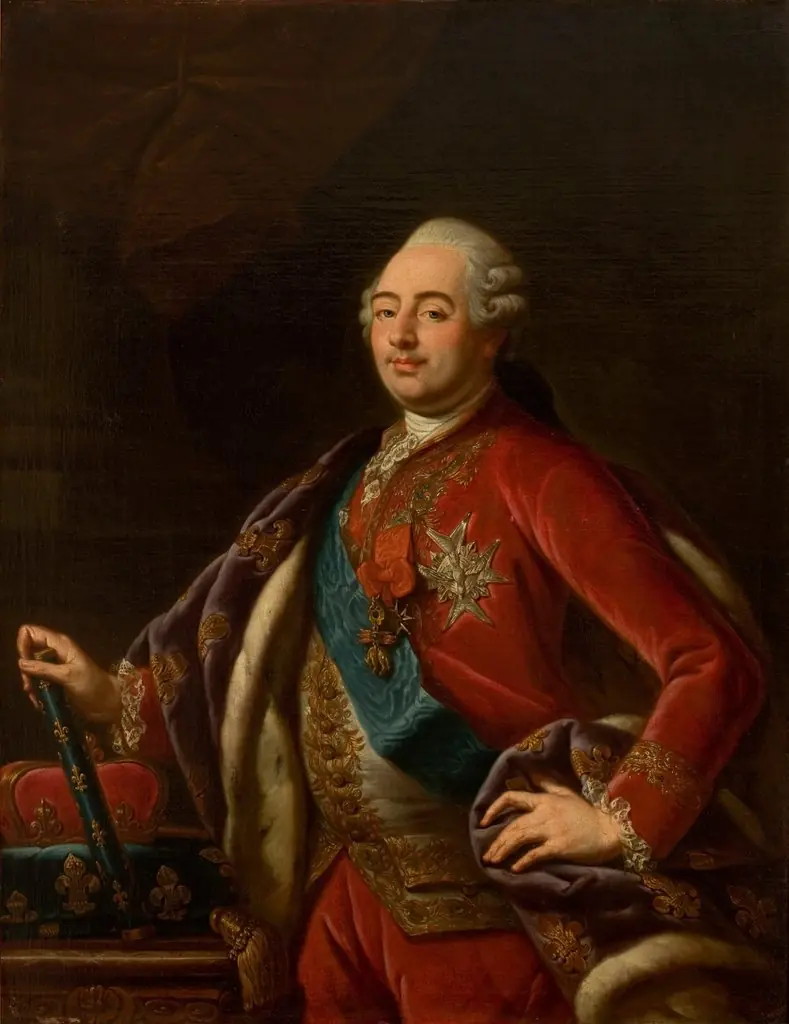 Retrato de Luís XVI
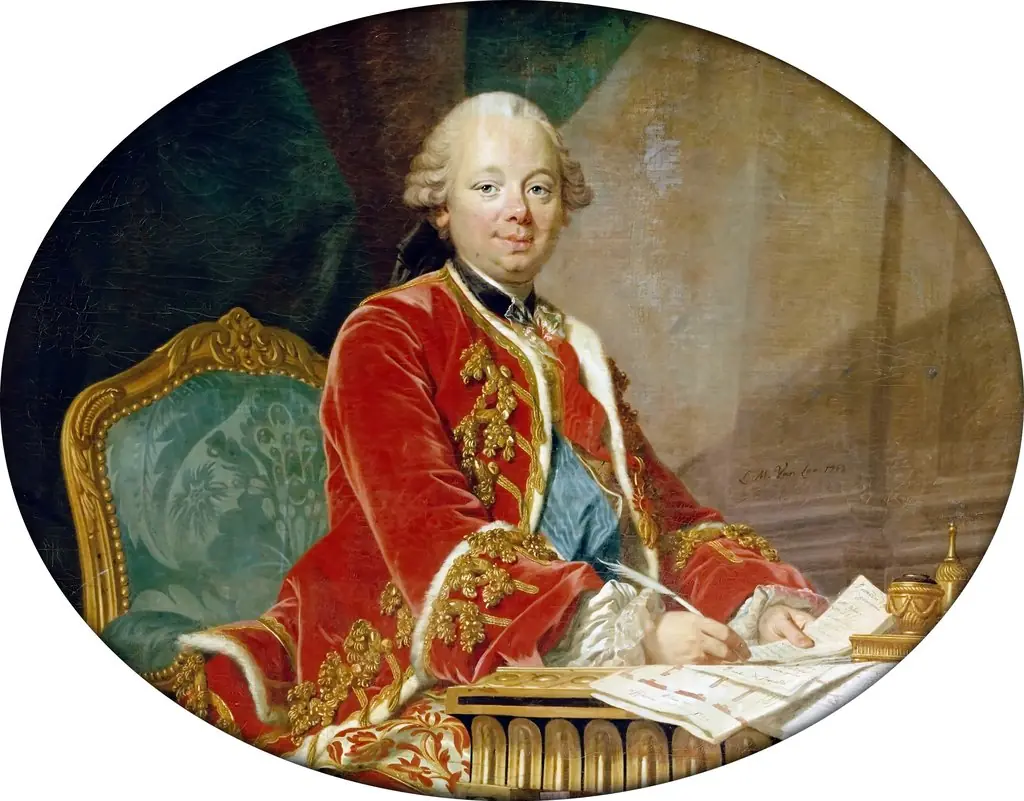 Étienne-François, Duke of Choiseul-Stainville (1719-1785)
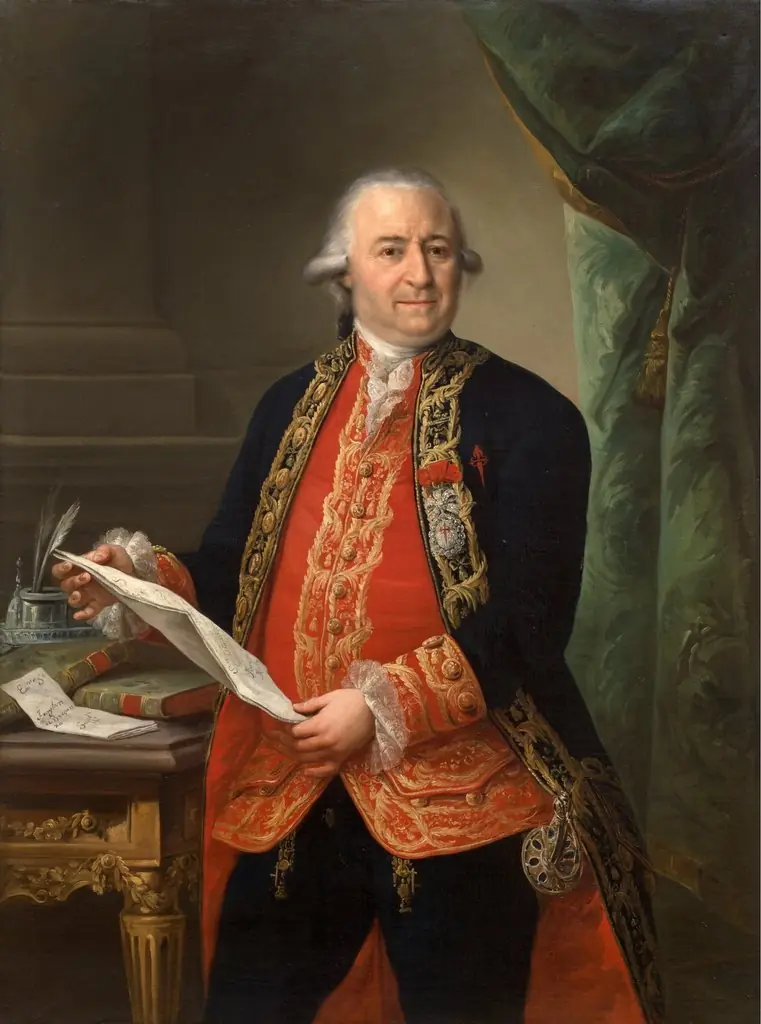 D Pedro López de Lerena, I Count of Lerena
 Antoine-René de Voyer, marquis de Paulmy d'Argenson (1722-1787), diplomate français.
 Portrait of Count Ivan Ivanovich Shuvalov