Artwork
Joseph Bonnier de la Mosson
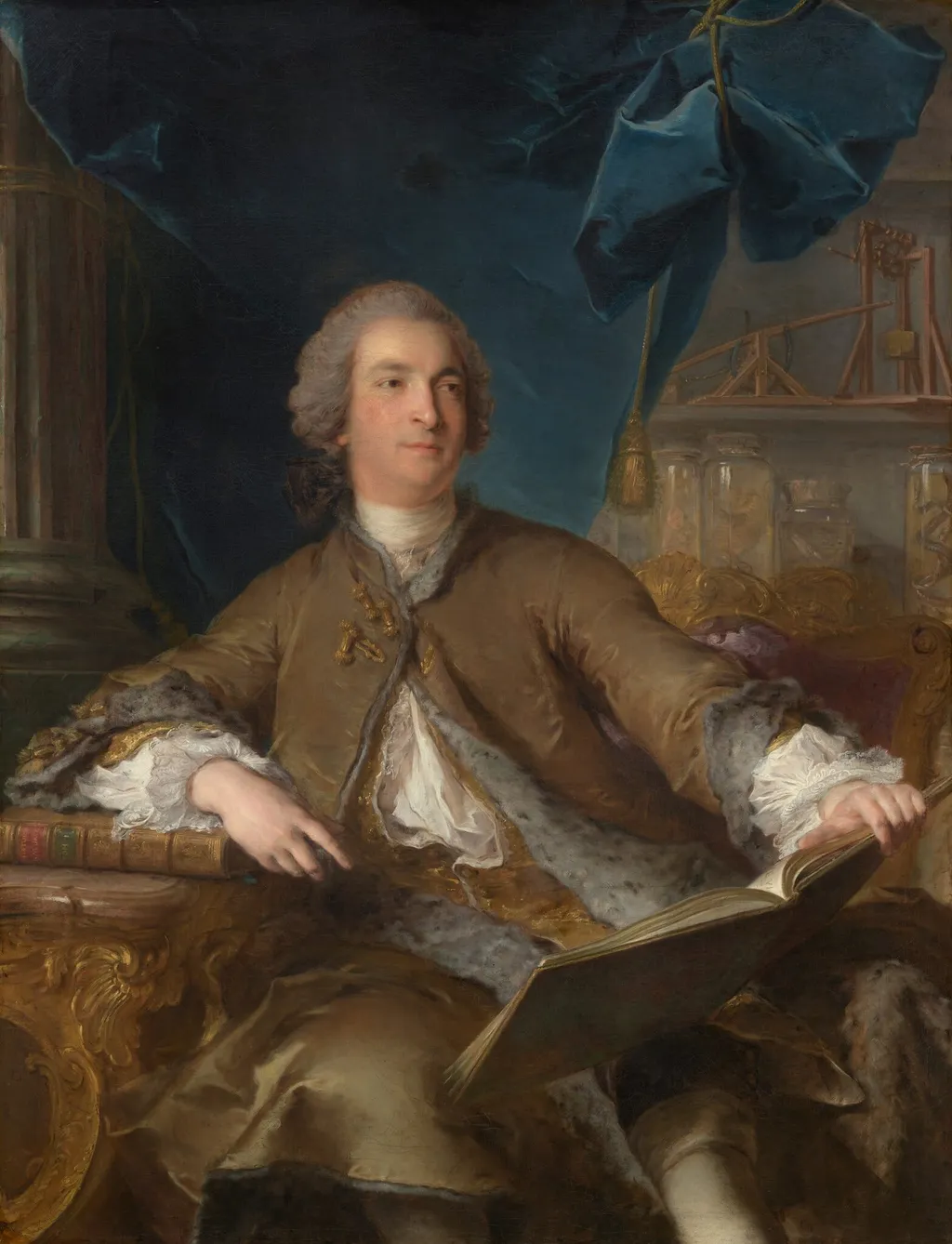
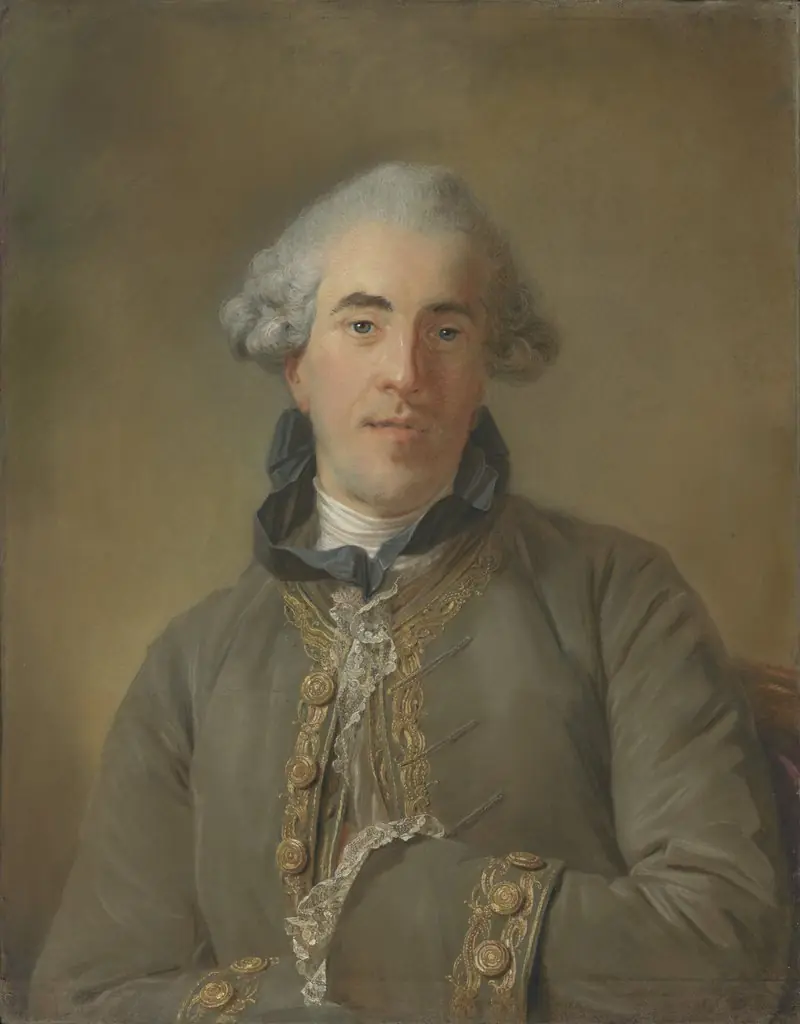
Joseph Bonnier de la Mosson is an oil painting by the Baroque artist Jean-Marc Nattier. It dates from 1745 and is held in the collection of the National Gallery of Art.
- Inscription
- Inscribed:center left at base of column: Nattier / 1745
About this work
Jean-Marc Nattier painted Joseph Bonnier de la Mosson in 1745, seated and finely dressed in an opulent room, his expression serious. Careful detail in the clothing and setting marks him as a man of standing and shows off the painter's gift for convincing realism.
Technique & Style
The composition's formal balance and restrained elegance align with Rococo portrait conventions, prioritizing aristocratic grace over overt psychological depth.
The portrait of Joseph Bonnier de la Mosson by Jean-Marc Nattier is executed in oil on canvas, a conventional medium for mid-eighteenth-century French portraiture. The work measures 137.9 cm in height by 105.4 cm in width, presenting the figure against a neutral background that directs attention to the sitter's refined attire and poised demeanor. Nattier's handling emphasizes smooth, blended brushwork and subtle chiaroscuro to model the face and drapery.
The composition's formal balance and restrained elegance align with Rococo portrait conventions, prioritizing aristocratic grace over overt psychological depth.
History & Provenance
Jean-Marc Nattier executed this oil-on-canvas portrait of Joseph Bonnier de la Mosson in 1745. The work's documented ownership begins with the Duc de Mailly, followed by Théodore Richard in Paris. It appeared at Hôtel Drouot sales in 1858 and 1877, where the sitter was erroneously identified as a buffoon.
Subsequent owners included Gustave Rothan, whose collection was sold at Galerie Georges Petit in 1890, and likely Comte Louis-Raphaël Cahen d'Anvers by 1900. By 1906, A. de Rothschild held the painting. It passed through Thos.
Agnew and Sons in London by 1936 before being sold at Galerie Jean Charpentier in Paris in March 1937 to Damidot. Galerie Cailleux possessed the work by 1952. The Samuel H. Kress Foundation acquired it in February 1954 and donated it to the National Gallery of Art in 1961.
The painting has been part of the Samuel H. Kress Collection at the National Gallery of Art in Washington, D.C., since 1961, when the Kress Foundation gifted it to the NGA following its purchase on 9 February 1954. Prior to that acquisition, the work was handled by Galerie Cailleux in Paris by 1952, and Cailleux lent it to a 1952 exhibition at the Galerie Charpentier in Paris. Earlier sale appearances include the Hôtel Drouot sales of March 1858 and 27 March 1877, the Gustave Rothan sale at the Galerie Georges Petit (29–31 May 1890, no. 176, as Portrait of a Man), and the 18 March 1937 sale at the Galerie Jean Charpentier in Paris (lot A).
Context
Jean-Marc Nattier created the portrait of Joseph Bonnier de la Mosson in 1745; the painting later entered the National Gallery of Art via the Samuel H. Kress Foundation in 1961 after passing through the Duc de Mailly, Théodore Richard, Gustave Rothan, the Rothschilds and several Parisian dealers. Its identity has been troubled by repeated misidentifications as a "Portrait of Bouffon" or a generic "Portrait of a Man," a confusion noted in nineteenth-century sale catalogues and reiterated in a 1952 exhibition at Galerie Charpentier. Contemporary scholarship, combining provenance documentation with the Kress Collection archive, places the work within Nattier's portrait practice and underscores its significance for understanding the transnational flow of French aristocratic imagery in the nineteenth-century market.
Legacy
The painting entered the Samuel H. Kress Collection in 1954 and was later gifted to the National Gallery of Art, Washington, D.C., where it is displayed as part of the permanent collection; its inclusion in the Kress archive underscores its recognized significance. Prior to this, the canvas had been exhibited in the 1952 Paris show at the Galerie Charpentier and had passed through several nineteenth-century dealers, reflecting a documented provenance that includes misidentifications later corrected. Scholarly attention to its authorship and date has contributed to the broader appreciation of Nattier's portraiture and of eighteenth-century French portrait conventions.
Overview
This oil on canvas painting, titled Joseph Bonnier de la Mosson, was completed in 1745 by the French artist Jean-Marc Nattier. It presents a formal portrait of its namesake, capturing a prominent figure of the mid-18th century. The work exemplifies the Rococo aesthetic prevalent in France during this period, showcasing the artist's characteristic attention to detail and refined execution within the genre of portraiture.
Subject & Meaning
The painting depicts Joseph Bonnier de la Mosson, a significant individual of his era, seated within an opulent interior. His attire, meticulously rendered, reflects the luxurious fashion of the French aristocracy. The subject's serious demeanor, combined with the elaborate setting, communicates a sense of status and formality, offering insight into the self-presentation expected of distinguished figures in mid-18th-century French society.
Own this work as a print
Artist & collection
Artist
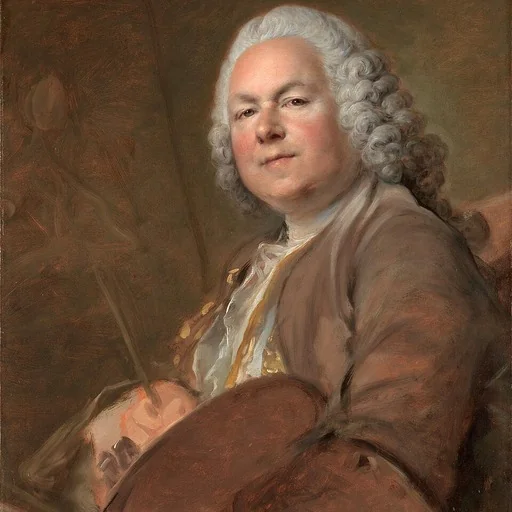
Jean-Marc Nattier (French pronunciation:; 17 March 1685 – 7 November 1766) was a French painter.

- Charles-Claude Flahaut de la Billaderie
 Portrait of Arnoldus van Rijneveld
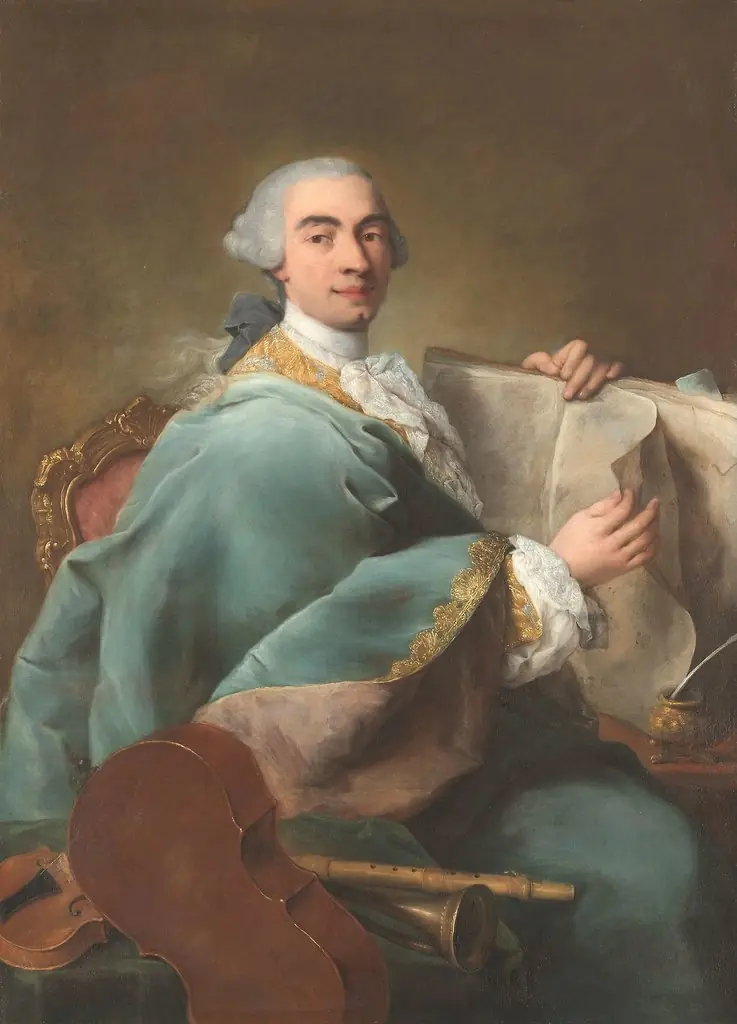 Portrait of a Musician
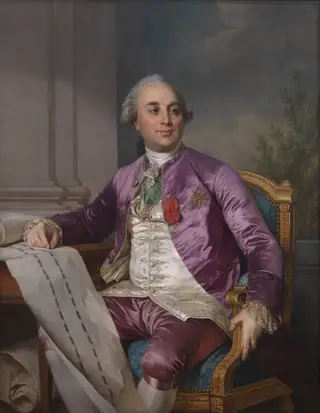 Portrait of Charles-Claude Flahaut de la Billarderie comte d'Angiviller (1730-1809)
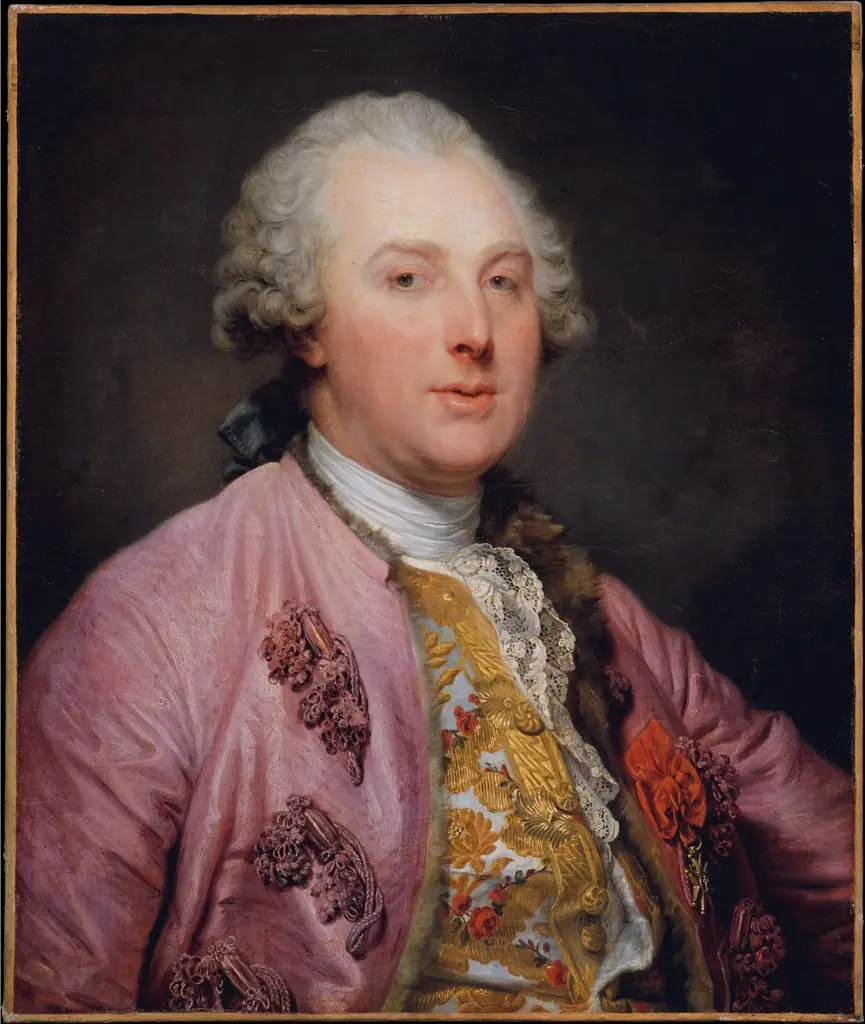 Portrait of Charles Claude de Flahaut de La Billarderie (Comte d'Angiviller)
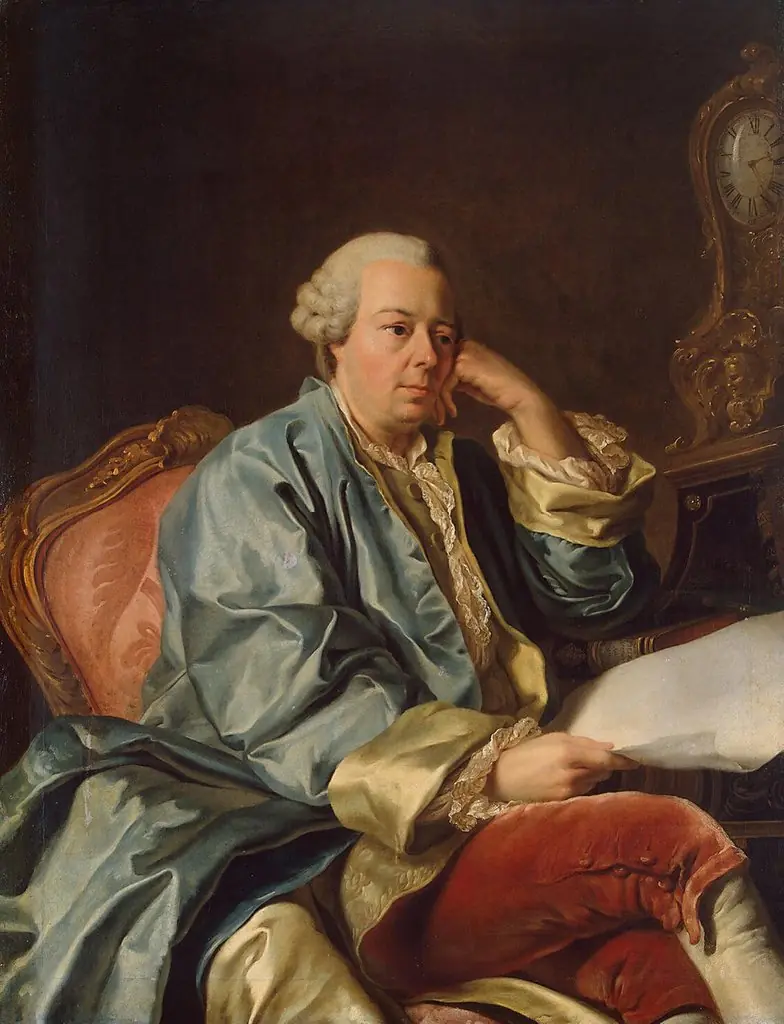 Portrait of Ivan Ivanovich Betskoi Wearing a Dressing Gown (copy)
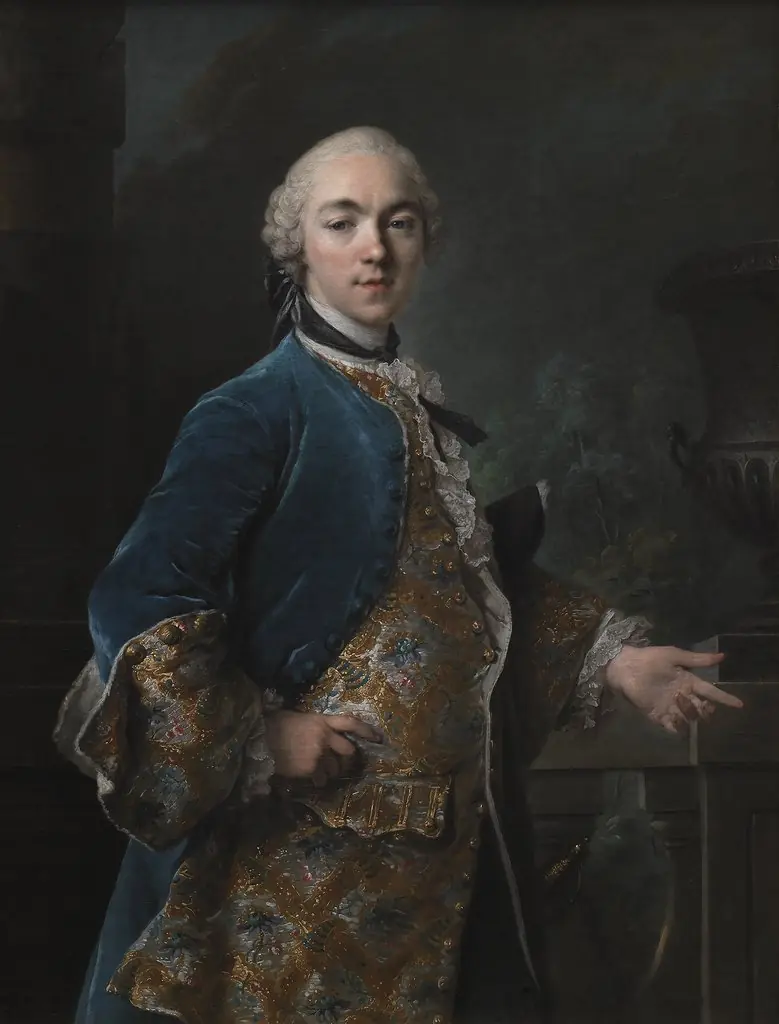 Portrait of Frederik Christian Krag (1726-1763)
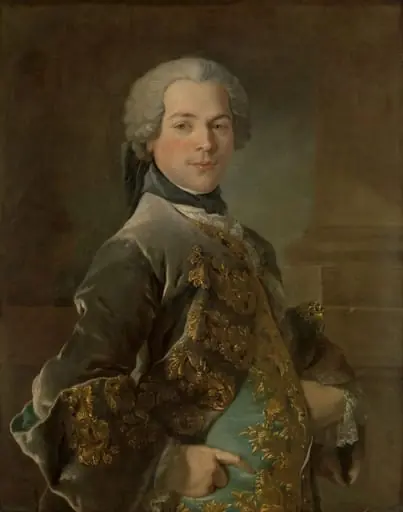 Portrait of Isaac van Rijneveld
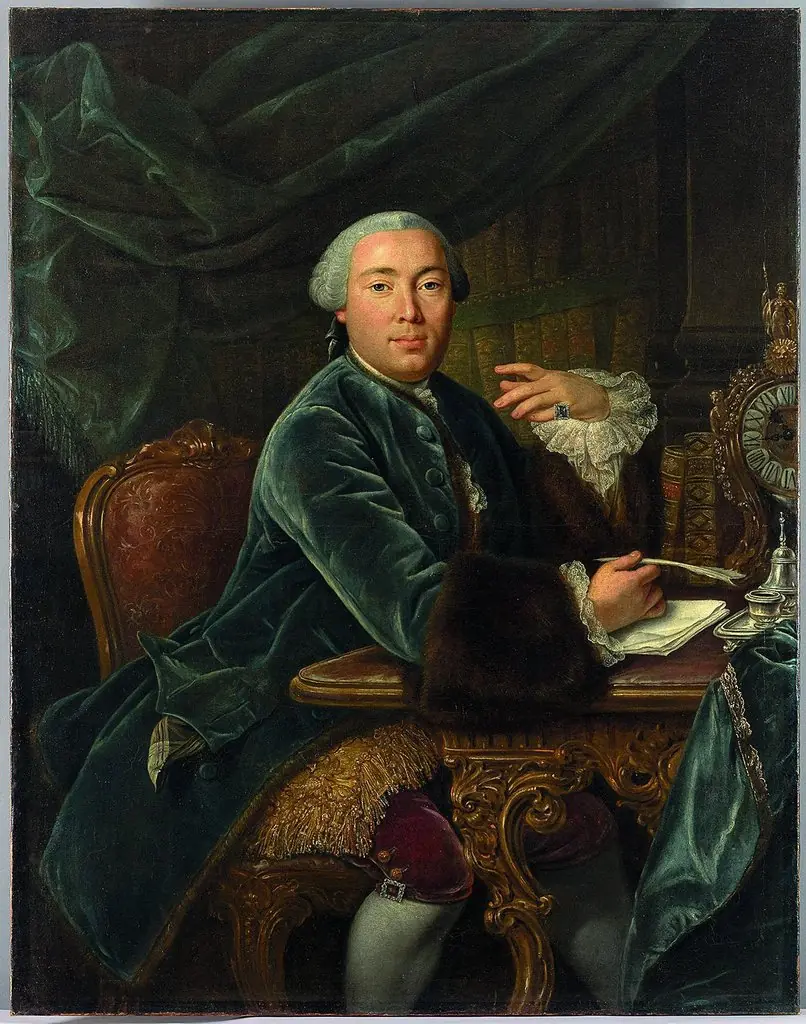 Portrait of Grigory Teplov
 Portrait of Frederik Christian Krag (1726-1763)
 Portrait of a Knight of the Order of Santiago
 Portrait of Théophile Van Robais