Artwork
Chinese Bird on Snow-Laden Branch
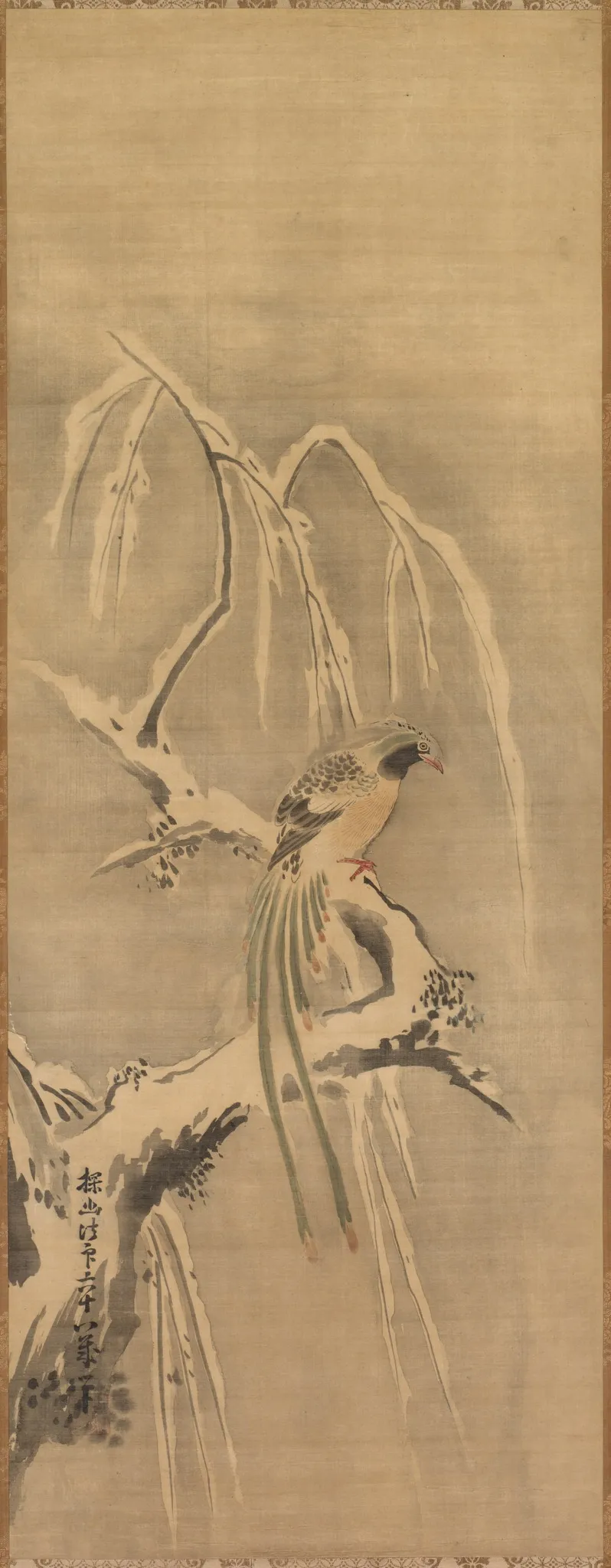
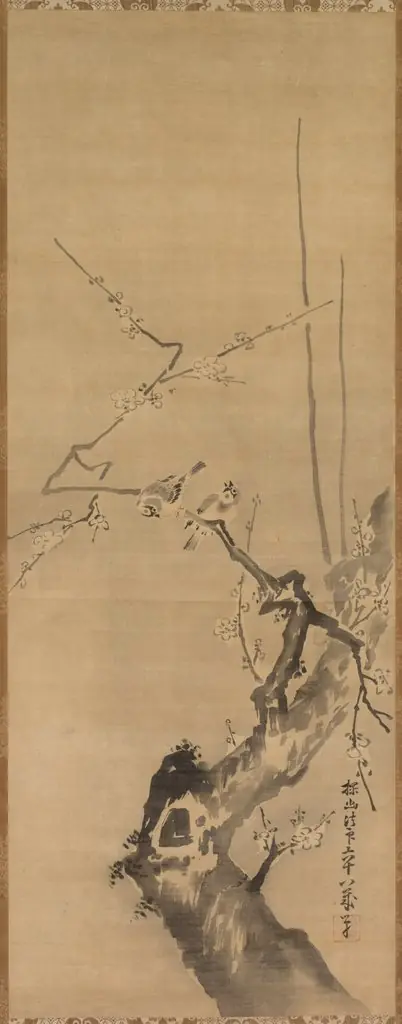
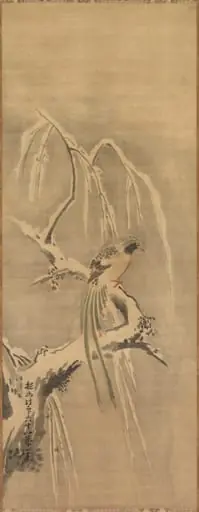
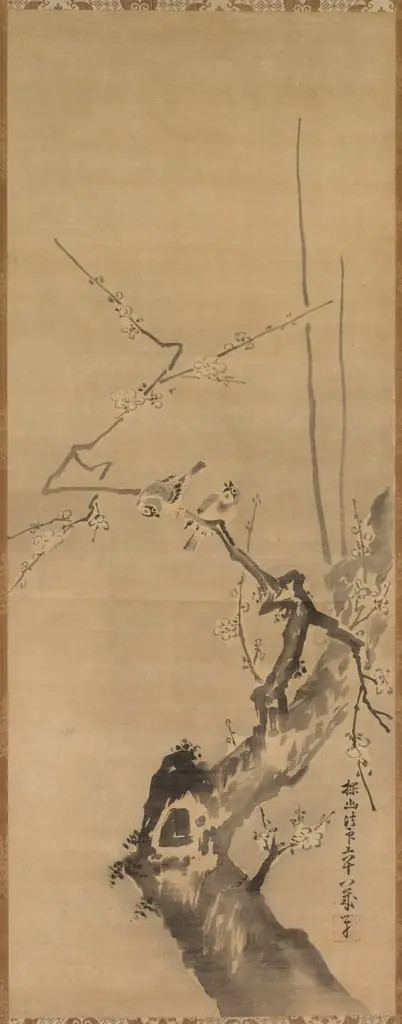
Chinese Bird on Snow-Laden Branch is an unspecified painting. It dates from 1649 and is held in the collection of the Cleveland Museum of Art. The work depicts a solitary bird perched upon a stark branch dusted with snow.
About this work
Technique & Style
The silk support contributes to the work's flexibility and subtle translucency, influencing both its handling and long-term preservation needs.
The work depicts a bird perched on a snow-covered branch rendered in ink and mineral pigments on silk. The composition emphasizes delicate line work and subtle gradations of wash to suggest atmosphere and texture. The painting's surface exhibits controlled brush handling, with fine contours defining the bird's form against a minimalist background.
Stylistically, it reflects a synthesis of Chinese literati sensibility and Japanese decorative precision, characteristic of mid-17th century East Asian visual culture. The silk support contributes to the work's flexibility and subtle translucency, influencing both its handling and long-term preservation needs.
History & Provenance
Chinese Bird on Snow-Laden Branch is dated to 1649, with a secondary inception date of 1661 also recorded for the work. It was produced in Japan and is attributed to Kano Tan'yū, the Japanese painter active in the seventeenth century. The painting entered the collection of the Cleveland Museum of Art, where it is held under the accession number 1992.80.3.
Beyond its Japanese origin and its eventual acquisition by the Cleveland Museum of Art, the documented record does not detail earlier ownership, commission history, or chain of custody prior to the museum's holdings.
The painting is housed in the Cleveland Museum of Art, where it is recorded under the accession number 1992.80.3. Its exhibition history includes display in the museum’s 1992 exhibition of Chinese paintings and a subsequent showing in the 2005 reinstallation of the Asian art galleries.
Overview
The work depicts a solitary bird perched upon a stark branch dusted with snow. The bird’s plumage is rendered with speckled tones, its beak a vivid red, and its tail feathers spread in a subtle fan. The composition is set against an almost empty backdrop, punctuated only by faint suggestions of pine needles and a muted sky, creating a quiet, wintry atmosphere.
Subject & Meaning
The central figure, a lone bird, conveys a sense of stillness and resilience amid a cold landscape. The contrast between the bright beak and the subdued surroundings may allude to vitality persisting in harsh conditions, while the sparse environment emphasizes the bird’s isolation and the fleeting beauty of winter.
Context
Works that isolate a single subject against a minimal background are characteristic of certain East Asian ink and brush traditions, where simplicity and negative space convey mood. The depiction of a bird on a snow‑laden branch aligns with longstanding motifs that celebrate nature’s seasonal cycles and the endurance of life during winter.
Artist & collection