Artwork
Commodore Hopkins
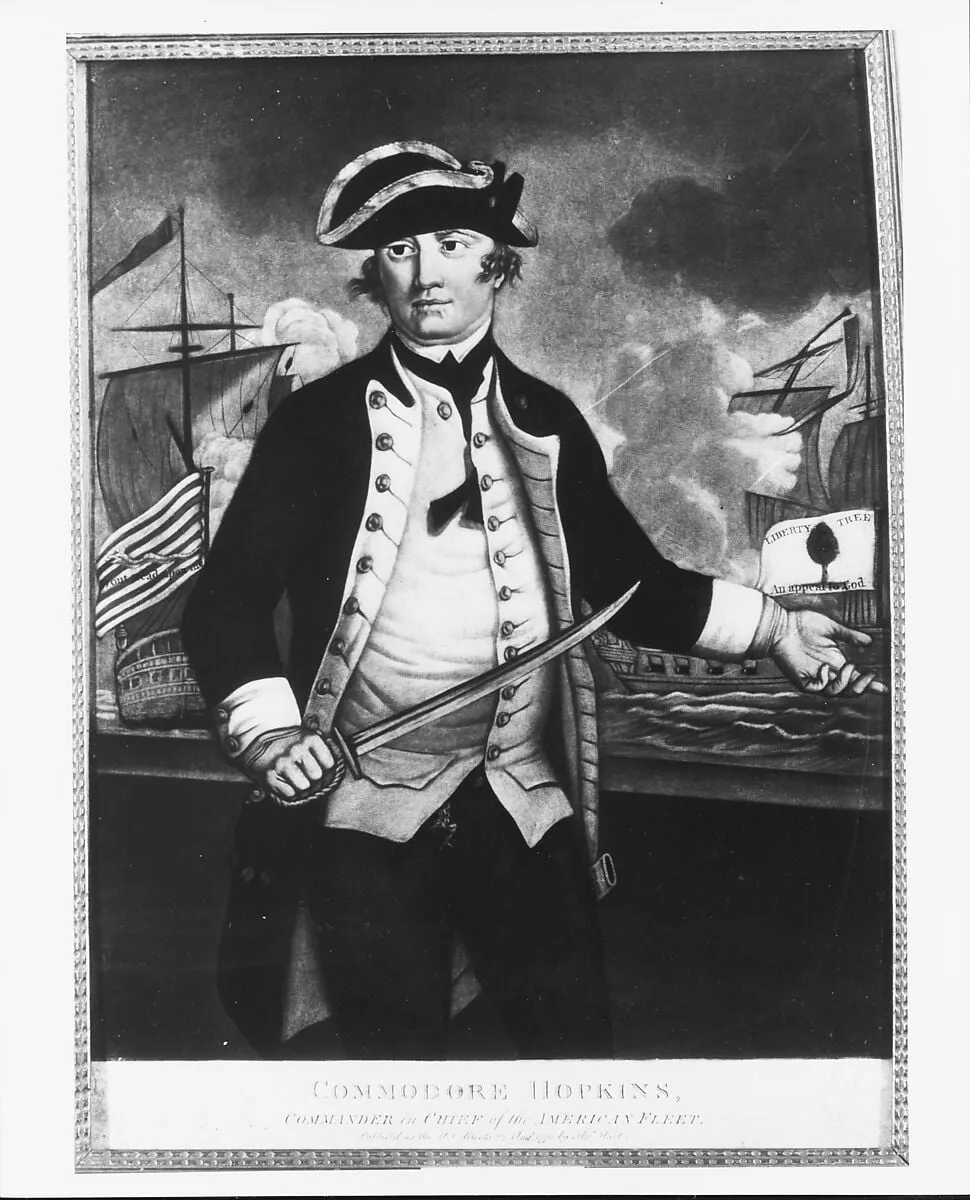
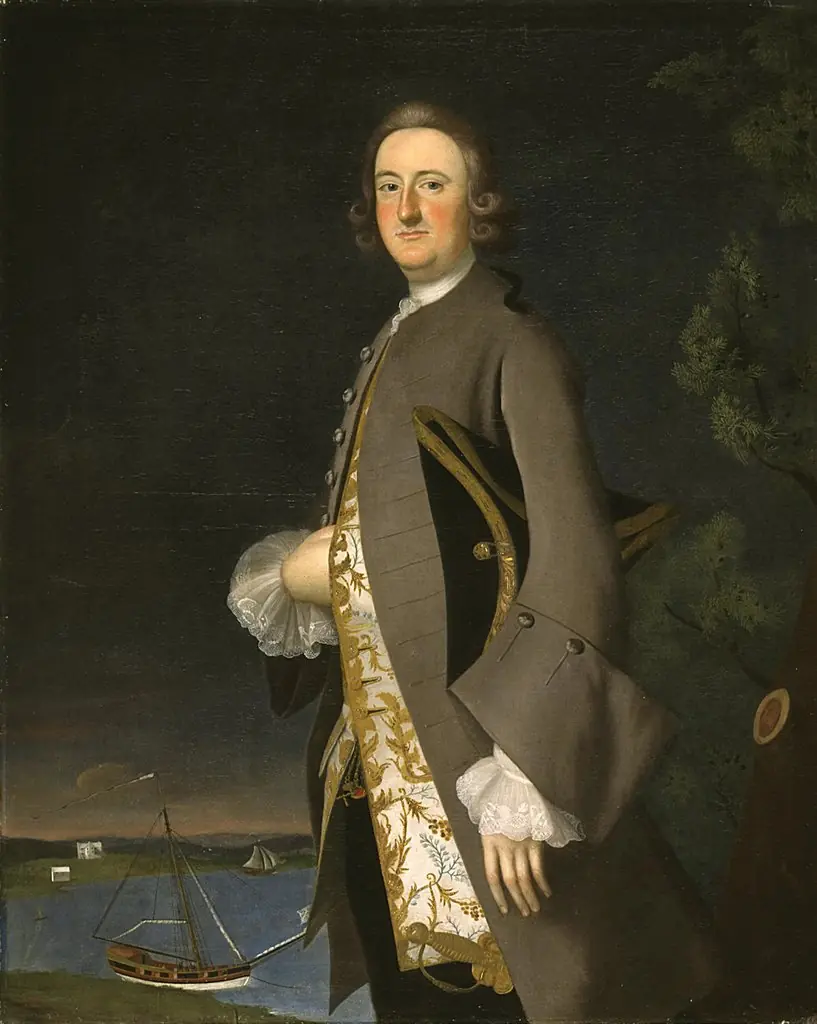
Commodore Hopkins is an oil painting. It dates from 1776 and is held in the collection of the Metropolitan Museum of Art.
About this work
Technique & Style
Commodore Hopkins is executed in oil on glass, an unconventional support that distinguishes the work from typical panel or canvas portraits of its era.
Commodore Hopkins is executed in oil on glass, an unconventional support that distinguishes the work from typical panel or canvas portraits of its era. The piece is classified as a portrait within the holdings of the Metropolitan Museum of Art's American Wing. Its subject matter combines a human likeness with a ship, and the work is attributed to an anonymous painter working in 1776.
Beyond these cataloged attributes, no further details regarding handling, condition, stylistic characterization, or specific pigment and glass-preparation techniques are documented in the available sources.
History & Provenance
The work titled Commodore Hopkins is an oil-on-glass portrait created in 1776. The identity of the artist remains unknown, with the piece attributed to an anonymous painter. The painting depicts a man alongside a ship, fitting within the genre of portraiture.
Regarding its ownership history, the artwork is held in the collection of the Metropolitan Museum of Art, where it is located within the institution's American Wing. No specific details regarding the original commission or intermediate owners prior to its museum acquisition are provided in the available records.
The portrait titled Commodore Hopkins, dated 1776, is held in the collection of the Metropolitan Museum of Art. Classified within The American Wing, the work is an oil-on-glass painting attributed to an anonymous artist. While the source data confirms the museum's custody and the 1776 inception date, no specific inventory or accession numbers are provided in the available records.
Furthermore, the provided documentation does not list any exhibition history for this piece, limiting the historical record to its current institutional location and classification details.
Overview
This portrait depicts Commodore Hopkins, a naval officer, rendered in the distinctive medium of oil paint applied directly to glass. The artwork stands out due to its unusual technique, which imparts a unique luminosity to the colors. It offers a glimpse into the appearance and professional identity of an American naval figure from its era.
Subject & Meaning
The painting portrays a man in a blue naval uniform, identified as Commodore Hopkins, positioned on the deck of a ship. His hand rests upon a cannon, a clear symbol of military power and his role within the navy. This formal pose and setting underscore his authority and professional standing, characteristic of commissioned portraits designed to convey status.
Context
The application of oil paint on glass for portraiture was an uncommon practice during this historical period, particularly for depictions of American naval officers. This rarity makes the artwork a notable example within the broader context of 18th or early 19th-century American art. Its inclusion in the American Wing highlights its significance to the nation's artistic and historical record.
Artist & collection

 Lake Lucerne
 View from Mount Holyoke, Northampton, Massachusetts, after a Thunderstorm—The Oxbow
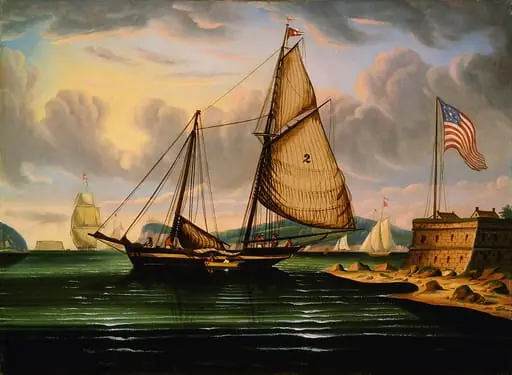 New York Harbor with Pilot Boat "George Washington"
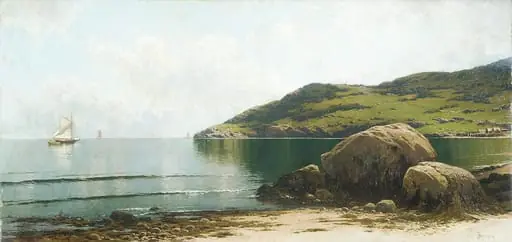 Marine Landscape
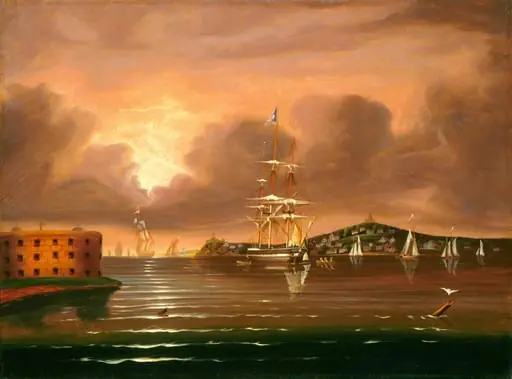 Threatening Sky, Bay of New York
 Lake George and the Village of Caldwell
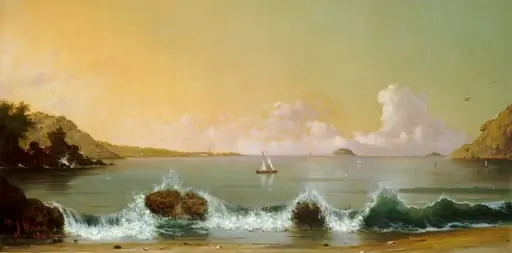 Rio de Janeiro Bay
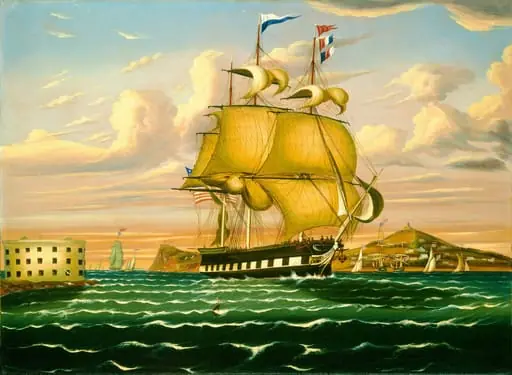 Packet Ship Passing Castle Williams, New York Harbor