Artwork
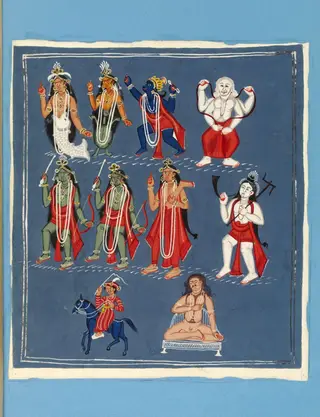
Das Avataras, Ten Incarnations of Vishnu (verso), from a Kalighat album
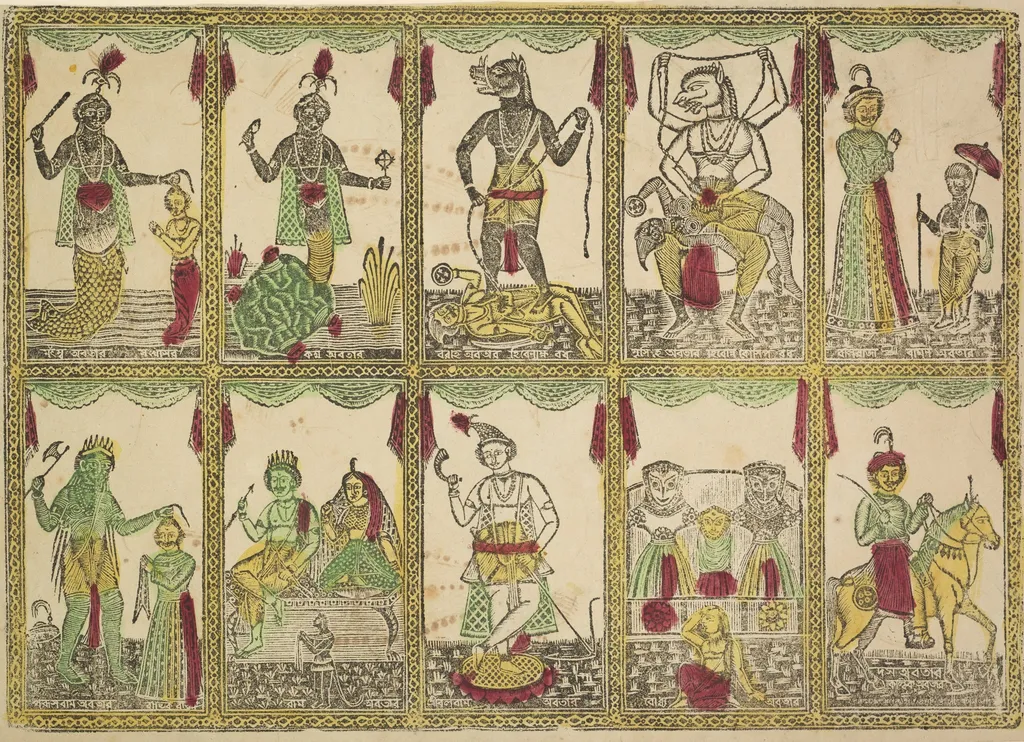
Das Avataras, Ten Incarnations of Vishnu (verso), from a Kalighat album is an unspecified painting. It dates from 1896 and is held in the collection of the Cleveland Museum of Art.
About this work
Subject & Meaning
The work depicts the ten avatars (Dashavatara) of the Hindu god Vishnu, as indicated by its title. As a Kalighat painting from Kolkata circa 1890, it follows the regional tradition of illustrating religious narratives for popular devotion. By presenting Vishnu’s successive incarnations, the artwork conveys the concept of divine descent to uphold cosmic order and restore dharma.
History & Provenance
Das Avataras, Ten Incarnations of Vishnu (verso), from a Kalighat album is held by the Cleveland Museum of Art.
The work, dated 1890, is presently in the collection of the Cleveland Museum of Art, where it is catalogued as a painting by Shri Gobinda Chandra Roy (accession 2003.114.b). Earlier descriptions, however, list the artist as unknown. The piece was produced in Kolkata, reflecting the Kalighat studio milieu of the late nineteenth century.
No further details about its commission or earlier owners are recorded in the available sources. Its provenance traces directly from the artist’s studio to the museum, with no intermediate owners documented.
Das Avataras, Ten Incarnations of Vishnu (verso), from a Kalighat album is held by the Cleveland Museum of Art. The work is catalogued under the inventory number 2003.114.b. It was created in 1890 in Kolkata and entered the museum's collection, where it is classified as a painting.
No exhibition history is documented in the available sources.
Overview
Das Avataras, Ten Incarnations of Vishnu (verso) is a small painted sheet from a Kalighat album, composed of eight rectangular panels arranged in a grid. Each panel presents a vivid vignette rendered in bright greens, reds and yellows, outlined in bold lines. The figures, sometimes bearing animal heads or mounted on beasts, are dressed in elaborate costume and hold objects such as swords or drums, set against a stage‑like backdrop of curtains and flags.
Technique & Style
Executed in the characteristic Kalighat school of Bengal, the painting employs flat washes of saturated pigment and strong contour lines, creating a graphic, almost theatrical quality. The use of a light, uniform ground enhances the brilliance of the colors, while the stylized figures and simplified settings reflect the popular, folk‑art aesthetic of early nineteenth‑century Kolkata.
Context
Kalighat paintings emerged in the aftermath of the British colonial presence, catering to both native patrons and European visitors interested in exotic imagery. The depiction of Vishnu’s avatars aligns with a broader devotional market, while the theatrical staging and vivid palette echo contemporary performance traditions such as folk theatre and processional pageantry.
Artist & collection

 Tantric Manuscript "Sangrahani Sutra"
 Tantric Manuscript "Sangrahani Sutra"
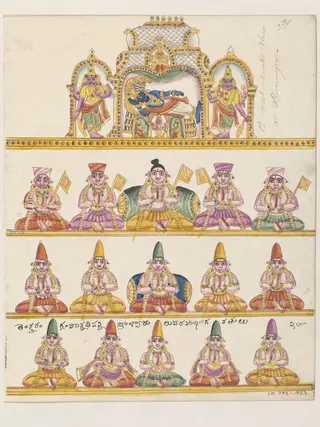 The shrine of Vishnu and the fifteen alvars and bhaktas of the Vaishnava cult.
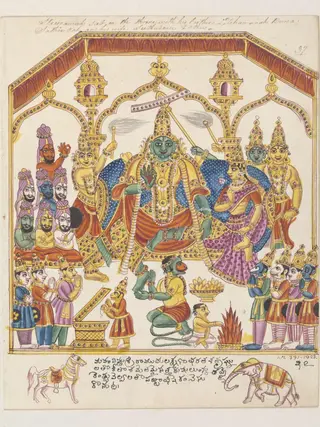 Coronation of Rama and Sita.
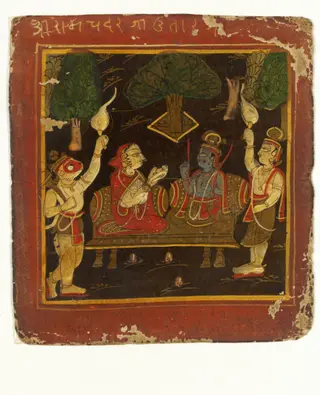 Rama and Sita, Lakshman and Hanuman
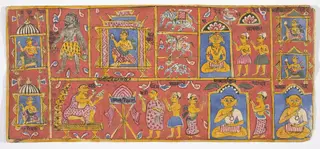 Tantric Manuscript "Sangrahani Sutra"
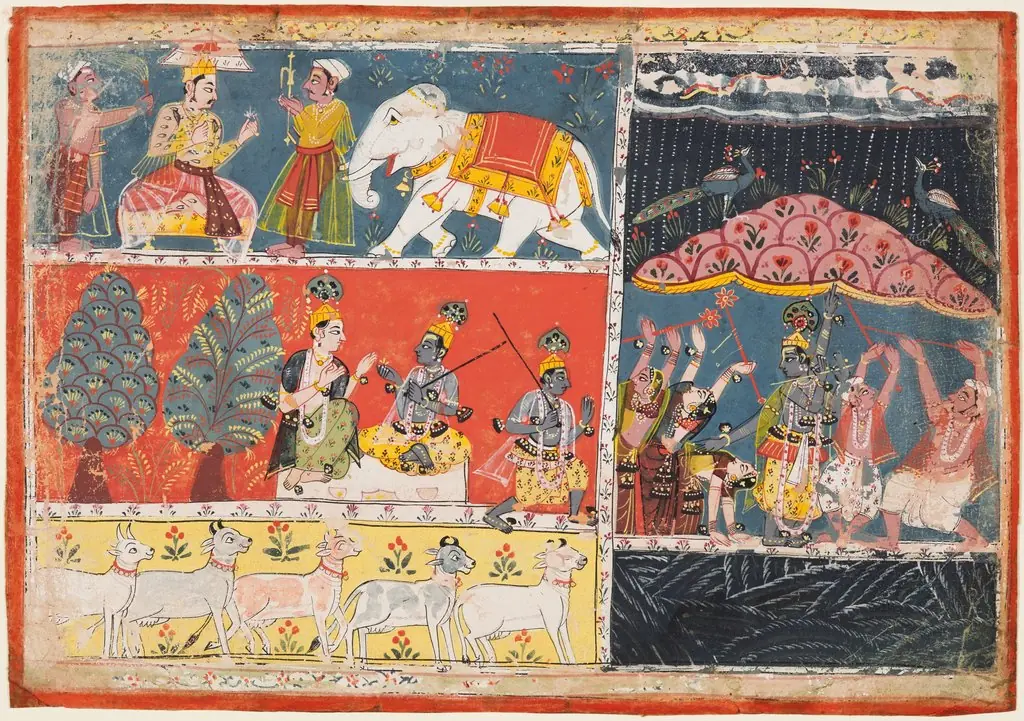 Krishna Lifts Mount Govardhan, from a Bhagavata Purana
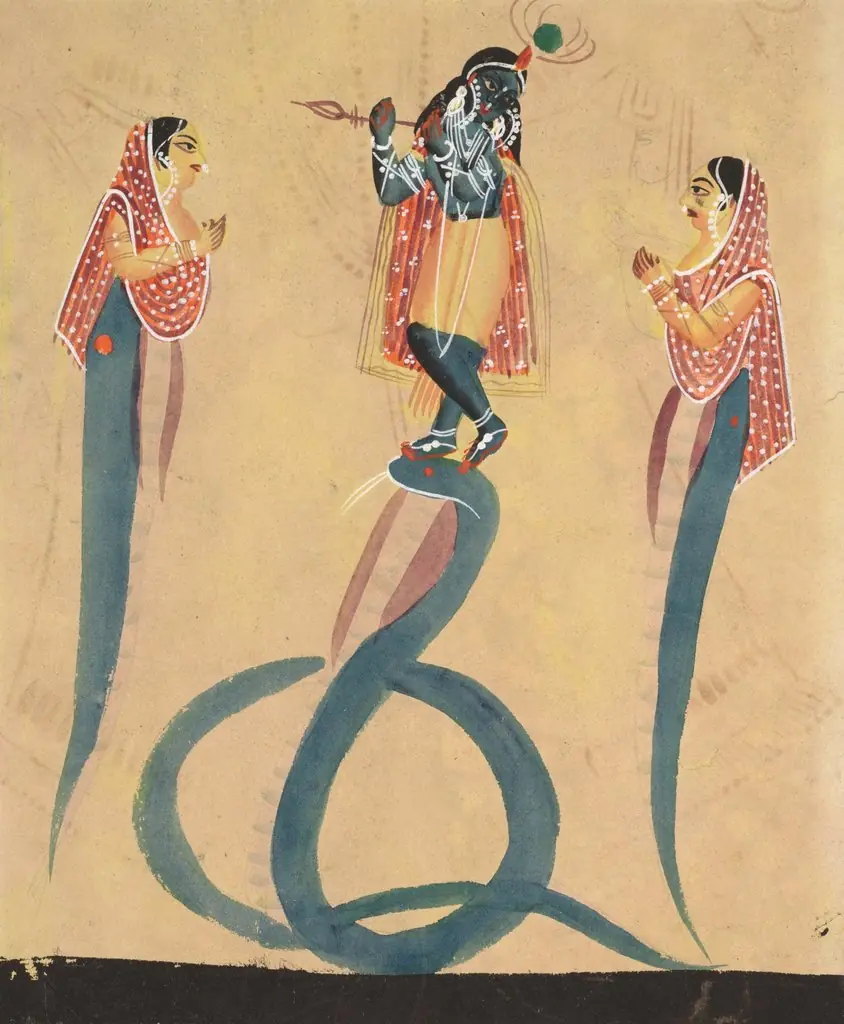 Krishna quells the serpent Kaliya (verso), from a Kalighat album
- Das Avataras, Ten Incarnations of Vishnu (verso), from a Kalighat album
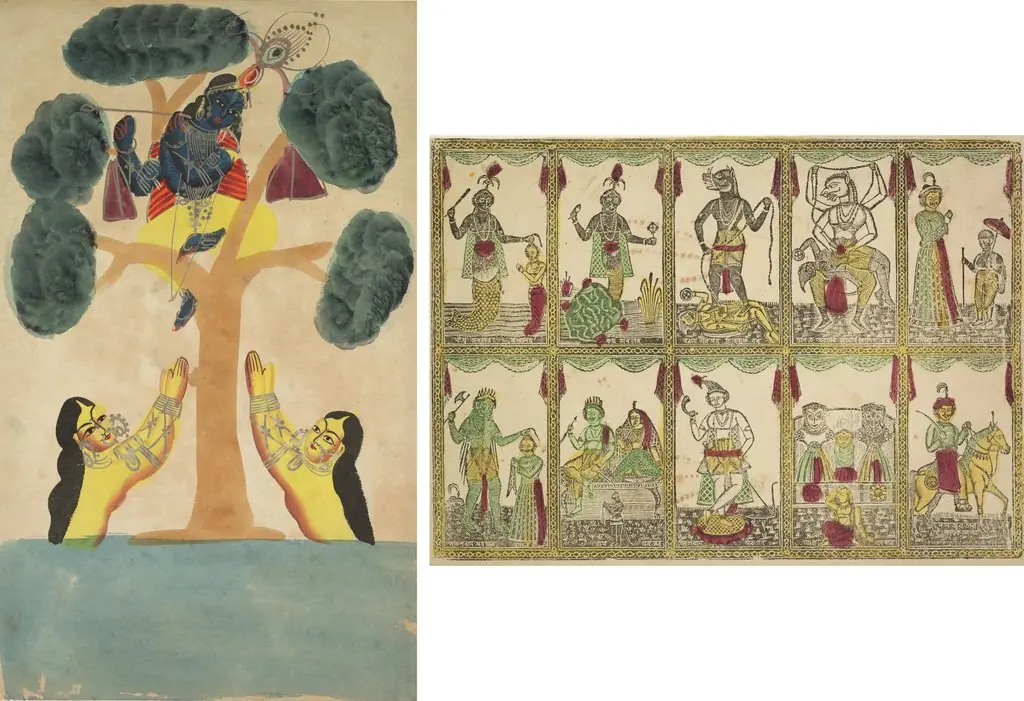 Leaf from a Kalighat album: Krishna Steals the Clothes of the Cowgirls (Gopis) (recto); Das Avataras, Ten Incarnations of Vishnu (verso)
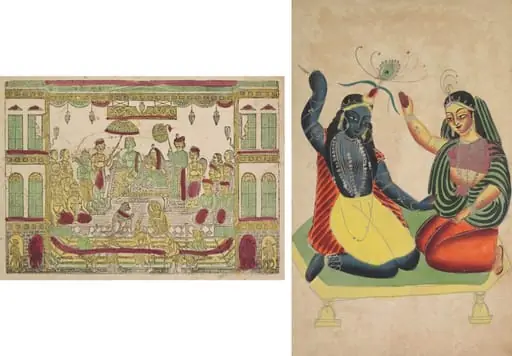 Leaf from a Kalighat album: Rama and Sita in the Royal Palace (recto); Radha and Krishna (verso)
 Ten avataras of Vishnu