Artwork
The shrine of Vishnu and the fifteen alvars and bhaktas of the Vaishnava cult.
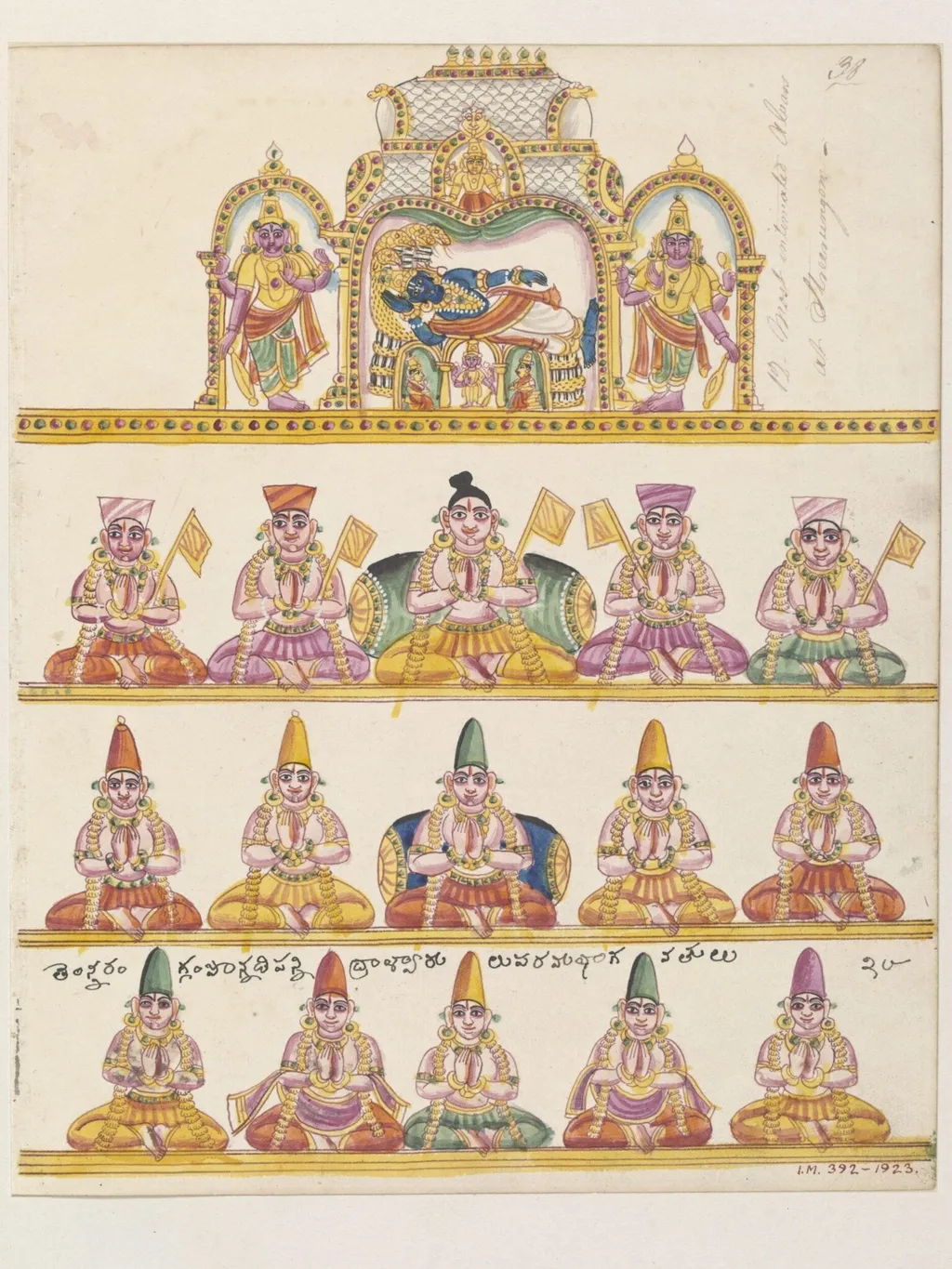
The shrine of Vishnu and the fifteen alvars and bhaktas of the Vaishnava cult. is a paint painting by the Patna School of Painting artist Unknown. It dates from 1820 and is held in the collection of the Victoria and Albert Museum.
About this work
Overview
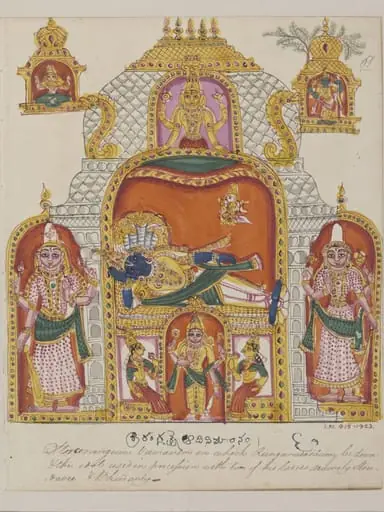
This painting depicts a Vaishnava shrine scene with multiple figures arranged in a layered composition, framed by a decorative golden border.
Subject & Meaning
The artwork shows the shrine of Vishnu as Shri Ranga Natha, reclining on the serpent Ananta, surrounded by attendants and below them, the fifteen alvars and bhaktas of the Vaishnava cult, distinguished by their attire and attributes.
Technique & Style
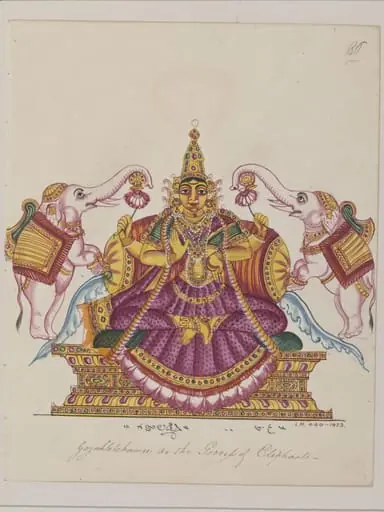
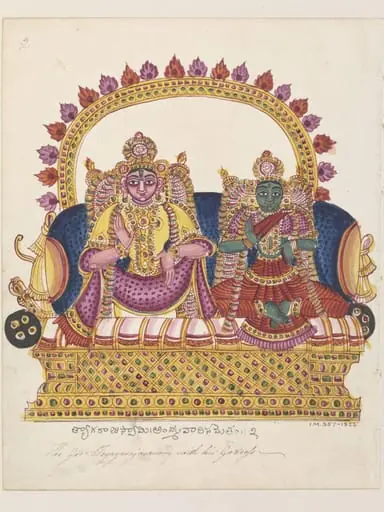
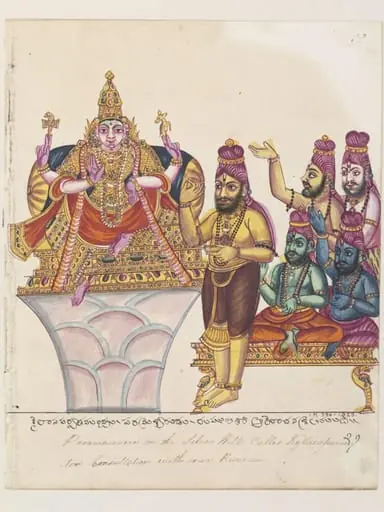
The painting features bright colors, intricate gold jewelry, and patterned details, with figures characterized by large eyes and distinctive headwear, rendered in a style that emphasizes ornate decoration and formal arrangement.
Context
The scene is likely set at Shrirangam near Trichinopoly, a significant site for Vaishnava worship, and incorporates Tamil text at the bottom, suggesting a connection to regional devotional practices.
Artist & collection