Artwork
Leaf from a Kalighat album: Krishna Steals the Clothes of the Cowgirls (Gopis) (recto); Das Avataras, Ten Incarnations of Vishnu (verso)
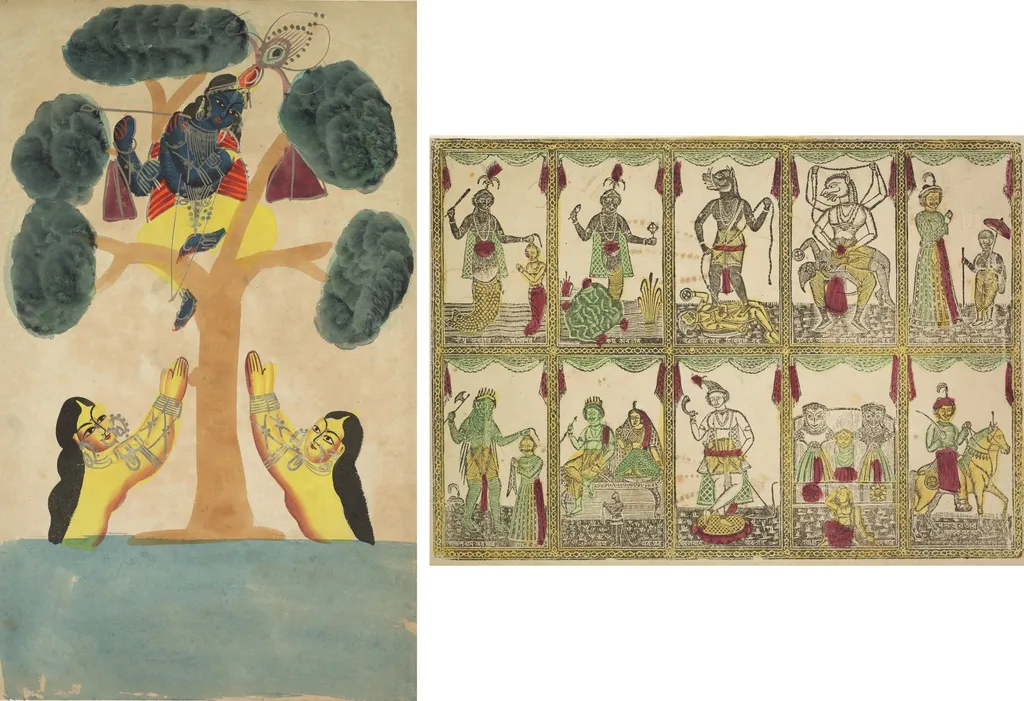
Leaf from a Kalighat album: Krishna Steals the Clothes of the Cowgirls (Gopis) (recto); Das Avataras, Ten Incarnations of Vishnu (verso) is an unspecified painting. It dates from 1896 and is held in the collection of the Cleveland Museum of Art. This painting, a leaf from a Kalighat album, presents two distinct Hindu mythological scenes.
About this work
Subject & Meaning
The recto depicts the Hindu god Krishna stealing the garments of cowherd maidens (gopis) while they bathe in the river.
The recto depicts the Hindu god Krishna stealing the garments of cowherd maidens (gopis) while they bathe in the river. According to the Bhagavata Purana, Krishna hides the gopis’ clothes on a tree branch to tease them, compelling their surrender and underscoring themes of divine play (lila) and the devotee’s longing for union with the divine. The verso lists the ten avatars (dasavatara) of Vishnu, a central concept in Vaishnavism enumerating Vishnu’s earthly incarnations from fish to Kalki, reinforcing the work’s religious narrative function within Hindu iconography.
Together, the scenes juxtapose Krishna’s mischievous yet spiritually charged act with the cosmic order of Vishnu’s avatars, merging playful devotion with theological structure.
History & Provenance
The leaf was created in 1890 in Kolkata, according to the Cleveland Museum of Art's cataloguing. It was produced as part of a Kalighat album, a format associated with the Kalighat painting tradition that flourished in the late nineteenth century around the temple precinct of that city.
The work subsequently entered the Cleveland Museum of Art's collection, where it is inventoried as accession number 2003.114. No prior ownership history, intermediate collectors, or circumstances of acquisition are documented in the available sources, and the artist responsible for the album leaf is recorded as unknown.
The leaf is held by the Cleveland Museum of Art, where it is recorded under the inventory number 2003.114. According to the cataloguing record, the work was produced in Kolkata in 1890 and entered the museum's collection as a painting by an unknown artist. No exhibition history is documented in the available sources.
Legacy
The 1890 leaf from a Kalighat album, depicting Krishna stealing the clothes of the gopis on the recto and ten avatars of Vishnu on the verso, entered the Cleveland Museum of Art collection, where it is catalogued as 2003.114. Its presence in a major Western museum has made it a reference point for scholarship on 19th‑century Bengali popular prints, highlighting the narrative richness of Kalighat imagery.
The work’s dual imagery of divine play and theological enumeration illustrates the syncretic visual culture of colonial Kolkata, influencing subsequent studies of folk religiosity and print circulation.
Overview
This painting, a leaf from a Kalighat album, presents two distinct Hindu mythological scenes. The recto illustrates Krishna's playful theft of the gopis' clothes, a vibrant and dynamic narrative. The verso features a series of eight panels depicting various forms of Vishnu, known as the Das Avataras. Together, these sides offer a glimpse into the diverse devotional and narrative traditions popular in 19th-century Bengal.
Technique & Style
The recto's composition is characterized by its bold forms and vivid colors, notably the dark-skinned Krishna, the red cloth, and the yellow hands of the gopis. Swirling clouds and a glowing sun animate the background, contributing to the scene's dynamic energy. In contrast, the verso employs a more structured approach, with each of the eight avataras contained within smaller, ornate borders, showcasing a distinct visual language for devotional representation.
Context
This leaf originates from a Kalighat album, a type of popular art produced by patuas (scroll painters) near the Kalighat Temple in Kolkata, India, during the 19th century. These paintings, often created with swift brushstrokes and bright pigments, served as affordable souvenirs for pilgrims and local patrons. They depicted a wide range of subjects, from mythological narratives to contemporary social commentary, reflecting the vibrant cultural milieu of the time.
Artist & collection

- Leaf from a Kalighat album: Krishna Steals the Clothes of the Cowgirls (Gopis) (recto); Das Avataras, Ten Incarnations of Vishnu (verso)
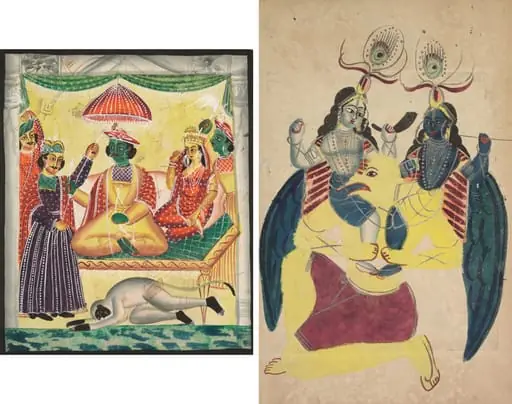 Leaf from a Kalighat album: Rama and Sita enthroned (recto); Garuda carrying Balarama and Krishna (verso)
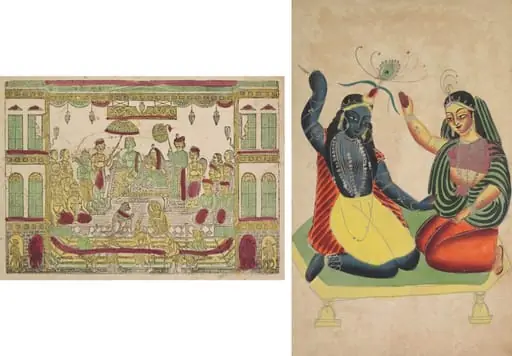 Leaf from a Kalighat album: Rama and Sita in the Royal Palace (recto); Radha and Krishna (verso)
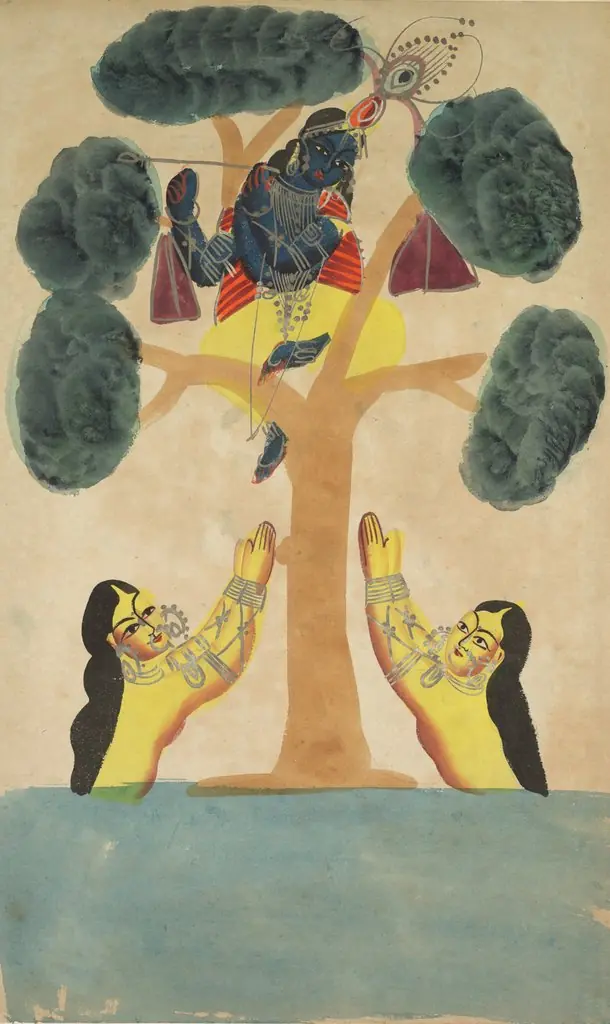 Krishna Steals the Clothes of the Cowgirls (Gopis) (recto), from a Kalighat album
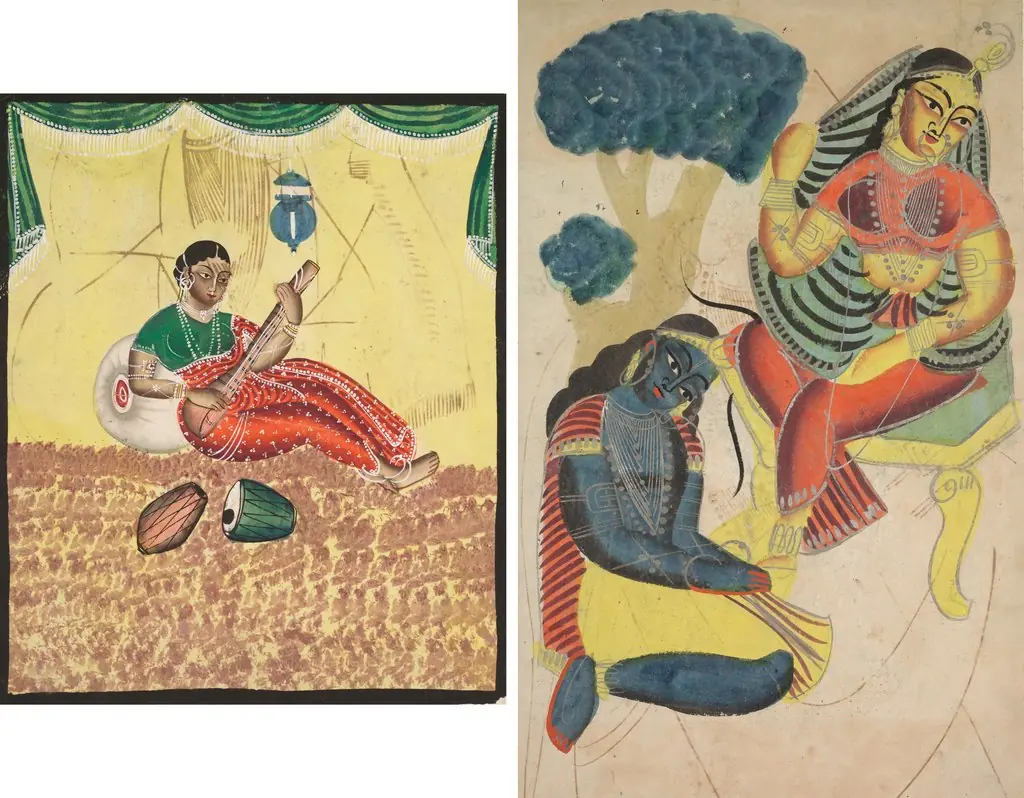 Leaf from a Kalighat album: Woman Playing Music (recto); Krishna Stroking Radha's Feet (verso)
 Leaf from a Kalighat album: Woman Playing Music (recto); Krishna Stroking Radha's Feet (verso)
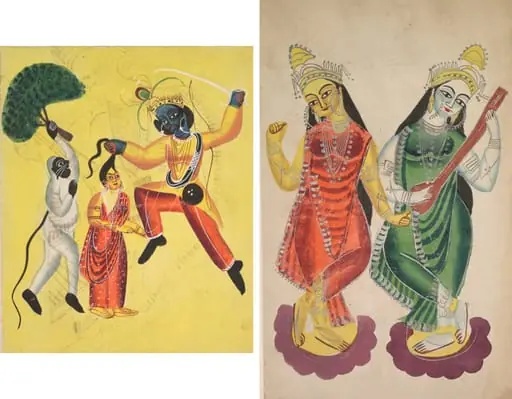 Leaf from a Kalighat album: Hanuman attacks Indrajit holding an apparition of Sita by the hair (recto); Goddesses Lakshmi and Sarasvati (verso)
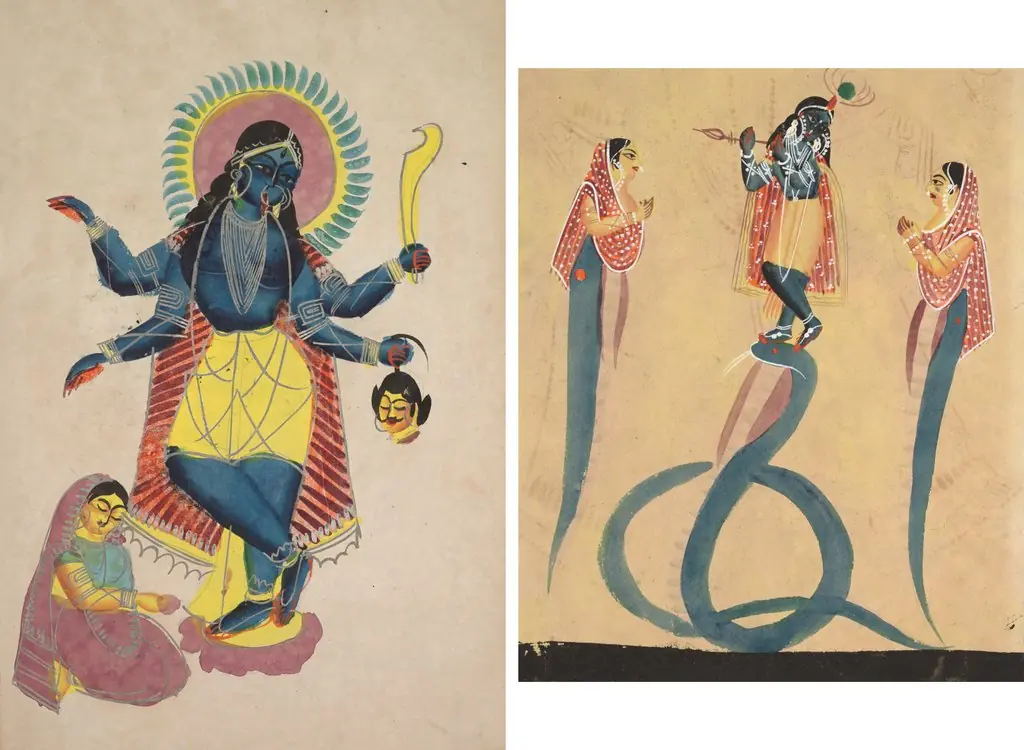 Leaf from a Kalighat album: Krishna as Kali worshipped by Radha (recto); Krishna quells the serpent Kaliya (verso)
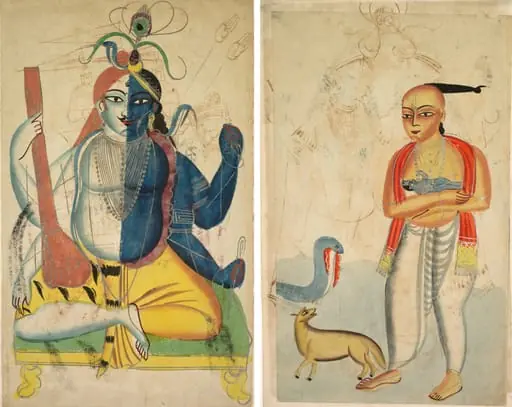 Leaf from a Kalighat album: Hari-Hara (recto); Vasudeva (Krishna's Father) Fleeing with Krishna Encounters a Cobra and a Jackal (verso)
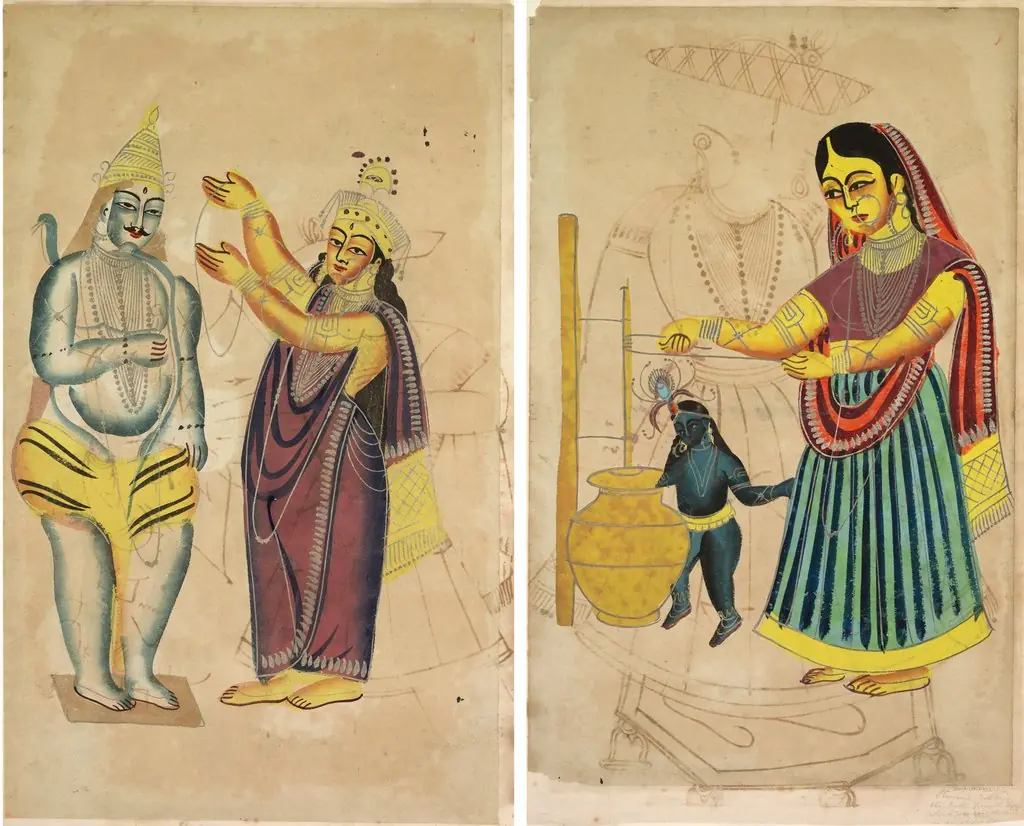 Leaf from a Kalighat album: Parvati Placing a Wedding Garland on Shiva (recto); Yasoda Churning Butter (verso)
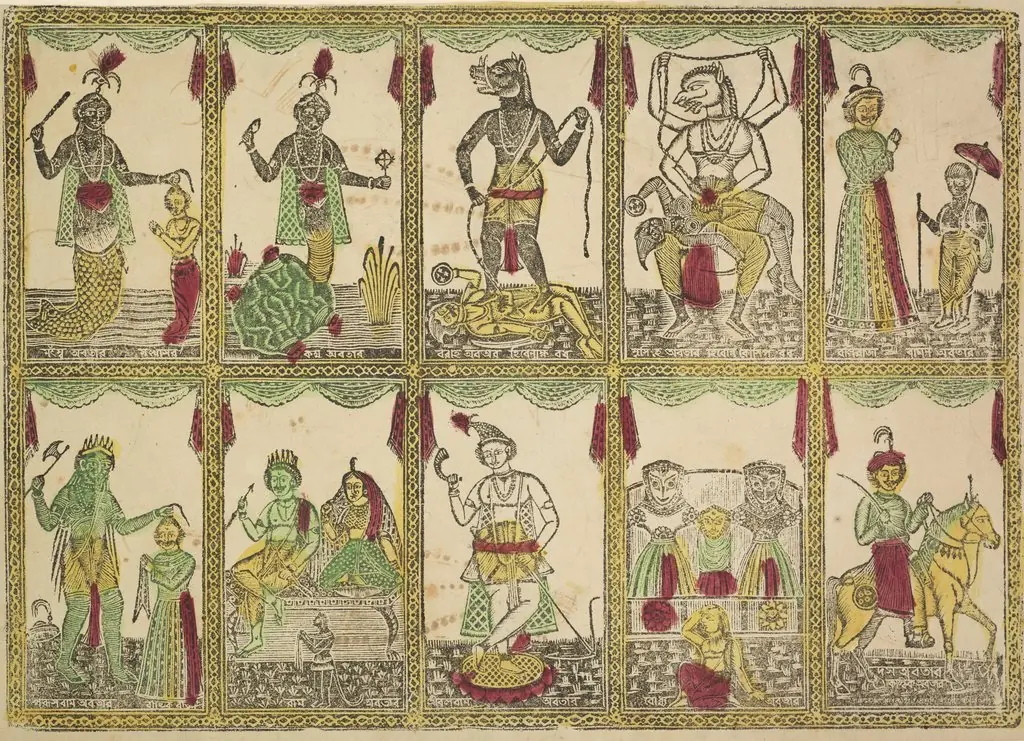 Das Avataras, Ten Incarnations of Vishnu (verso), from a Kalighat album
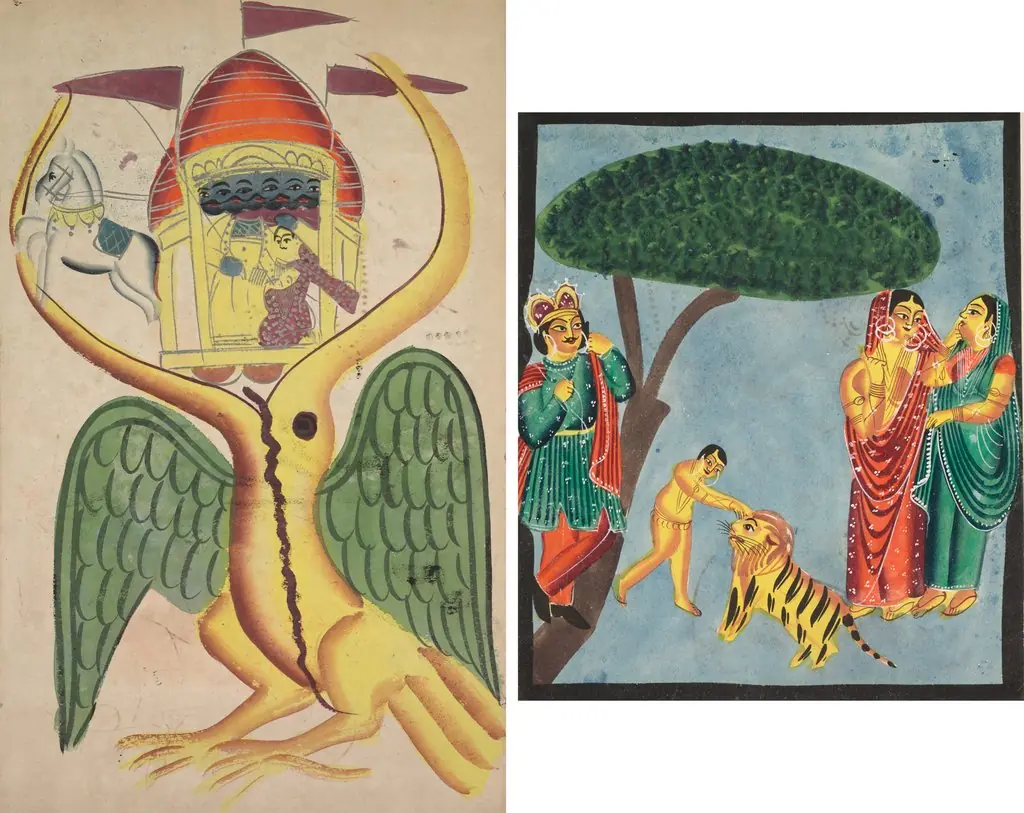 Leaf from a Kalighat album: Jatayu hinders Ravana’s chariot, trying to prevent the abduction of Sita (recto); Dushyanta watching his son Bharat playing with the tiger at the end of the Abhijnanashakuntalam (verso)
 Leaf from a Kalighat album: Jatayu hinders Ravana’s chariot, trying to prevent the abduction of Sita (recto); Dushyanta watching his son Bharat playing with the tiger at the end of the Abhijnanashakuntalam (verso)
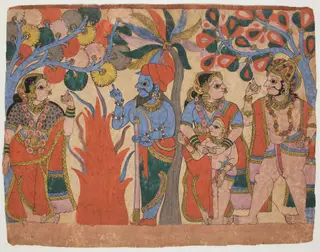 Scene from the Ramayana
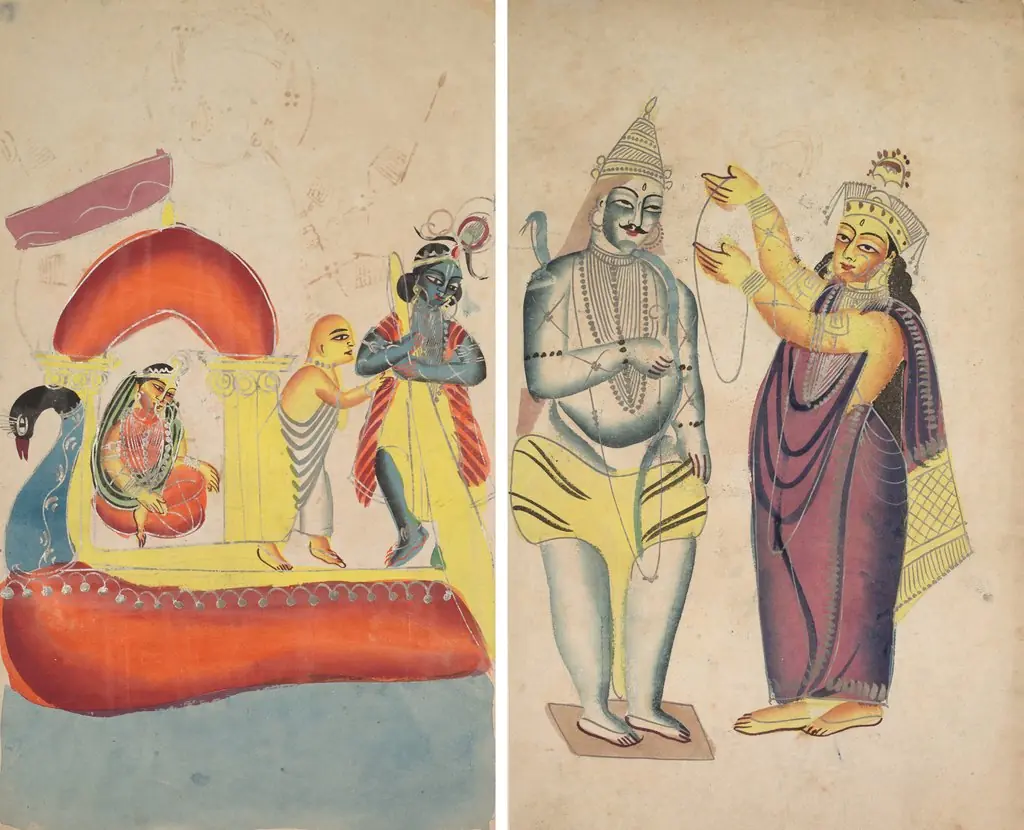 Krishna Ferrying Radha Across the Yamuna River (recto); Parivati Placing a Wedding Garland on Shiva (verso)