Artwork
Drie gezichten op de Parelrivier: Kanton, Macao, Whampoa
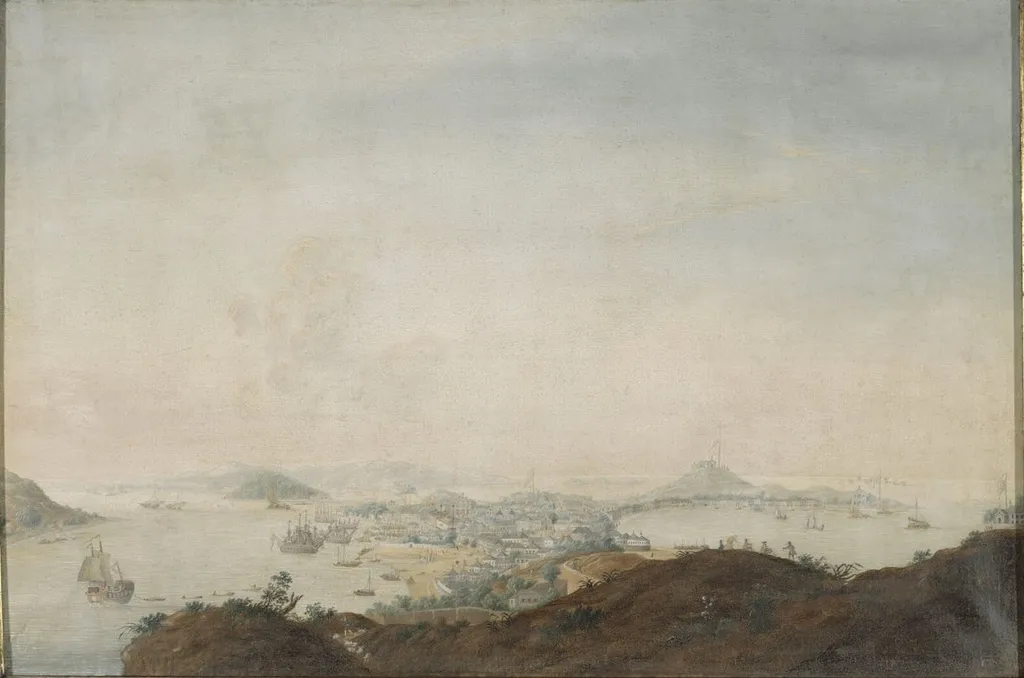
Drie gezichten op de Parelrivier: Kanton, Macao, Whampoa is an unspecified painting. It dates from 1790 and is held in the collection of the Rijksmuseum.
About this work
History & Provenance
The painting was created in 1790 and is classified as a marine genre work. It was produced by an anonymous artist and depicts a mountain, a boat, and a house. The work is part of the Rijksmuseum collection and is currently housed at the Rijksmuseum in Amsterdam. Its dimensions are 52 cm in height and 76 cm in width.
Context
The painting was created in 1790 and is classified as marine art, depicting a mountain, boat, and house.
The painting was created in 1790 and is classified as marine art, depicting a mountain, boat, and house. It is part of the Rijksmuseum collection and currently located in Amsterdam.
Scholarly attention focuses on its historical context within 18th-century Dutch maritime painting and its representation of Macao, Canton, and Whampoa along the Pearl River. The work's attribution to an anonymous artist is documented in museum records.
Legacy
The painting Drie gezichten op de Parelrivier: Kanton, Macao, Whampoa exerted influence through its marine genre representation, later attributed to the anonymous tradition documented in Dutch colonial art. Its legacy is anchored in the Rijksmuseum's collection, where it remains part of the marine art holdings and has been studied within the broader context of 18th-century maritime painting. The work's historical attribution to the anonymous artist reflects evolving scholarship on unattributed coastal scenes from Macau and Whampoa, contributing to narratives about European-Asian artistic exchange in the late 18th century.
Overview
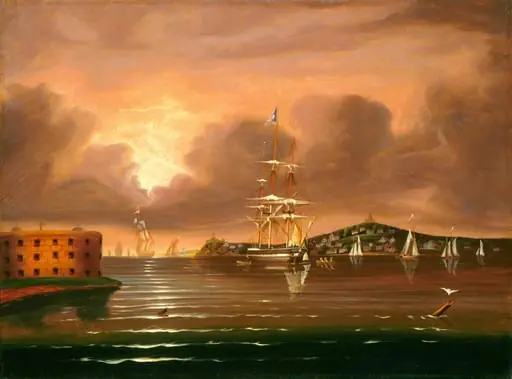
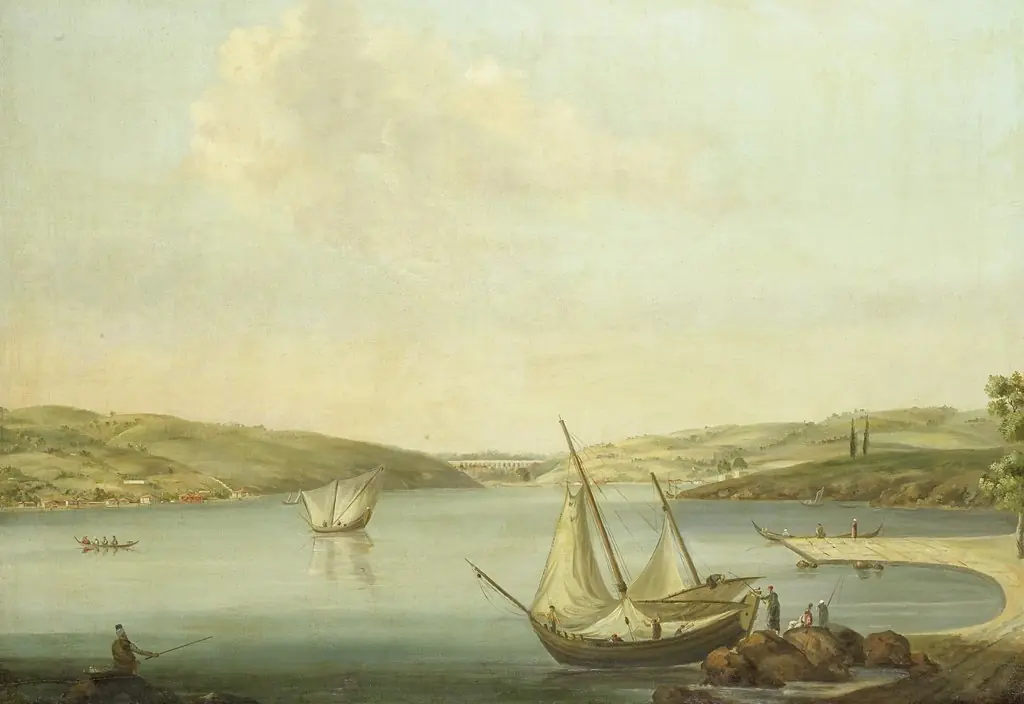
The work titled Drie gezichten op de Parelrivier: Kanton, Macao, Whampoa is a painted landscape that depicts a river scene extending toward a distant town. A multitude of vessels populate the waterway, while a handful of figures stand on the shoreline. In the foreground, low hills are dotted with trees and shrubbery, beneath a cloudy, gray sky.
Subject & Meaning
The composition presents three distinct views along the Pearl River, suggesting a panoramic survey of the region’s urban and rural aspects. The presence of bustling boats alongside modest human activity hints at the river’s role as a commercial artery and a daily thoroughfare for local inhabitants.
Technique & Style
Rendered in a restrained palette of browns and grays, the painting relies on chiaroscuro to model forms and convey spatial recession. The interplay of light and shadow across the hills, water, and architecture creates a sense of volume, guiding the eye from the immediate foreground toward the hazy horizon.
Artist & collection

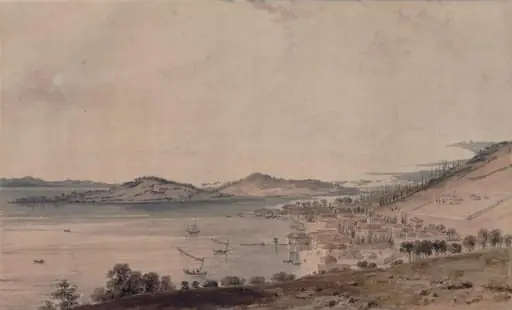
- Islands Khalxi and Prinkipos, Sea of Marmora
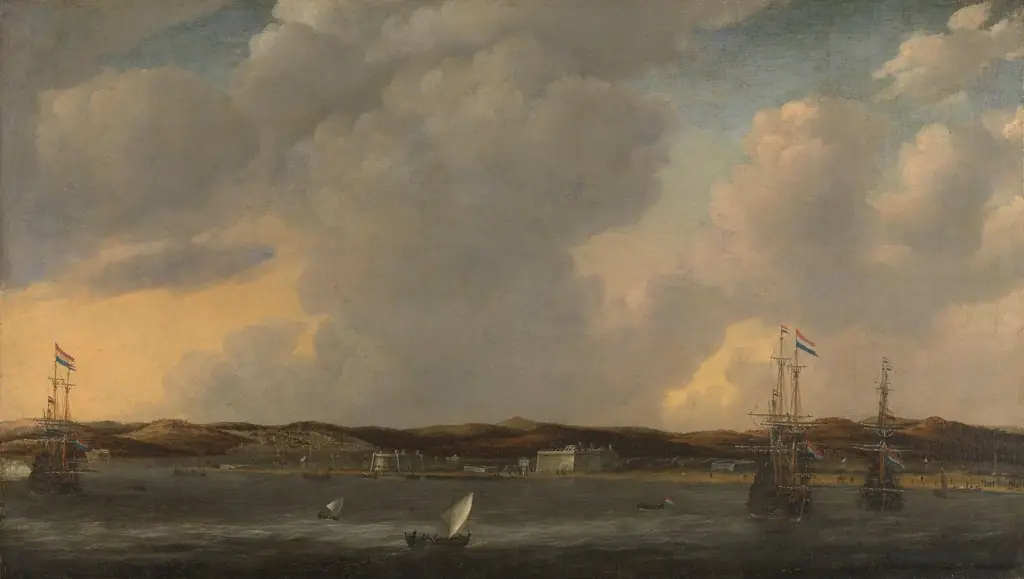 View of Tunis
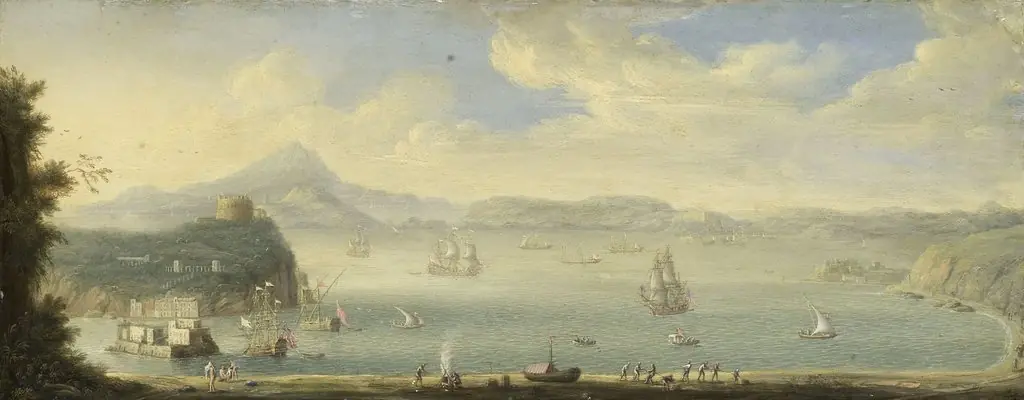 View of the Gulf of Naples
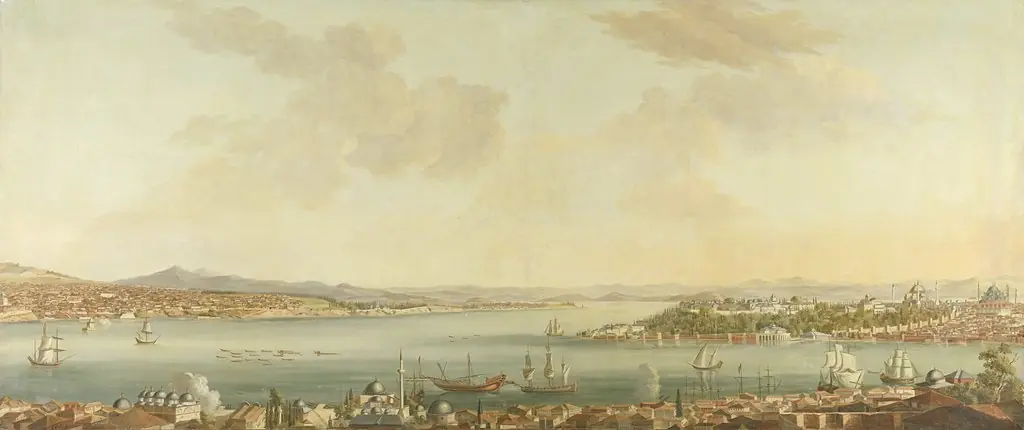 View of Constantinople (Istanbul) and the Seraglio from the Swedish Legation in Pera
 View of the Gulf of Naples
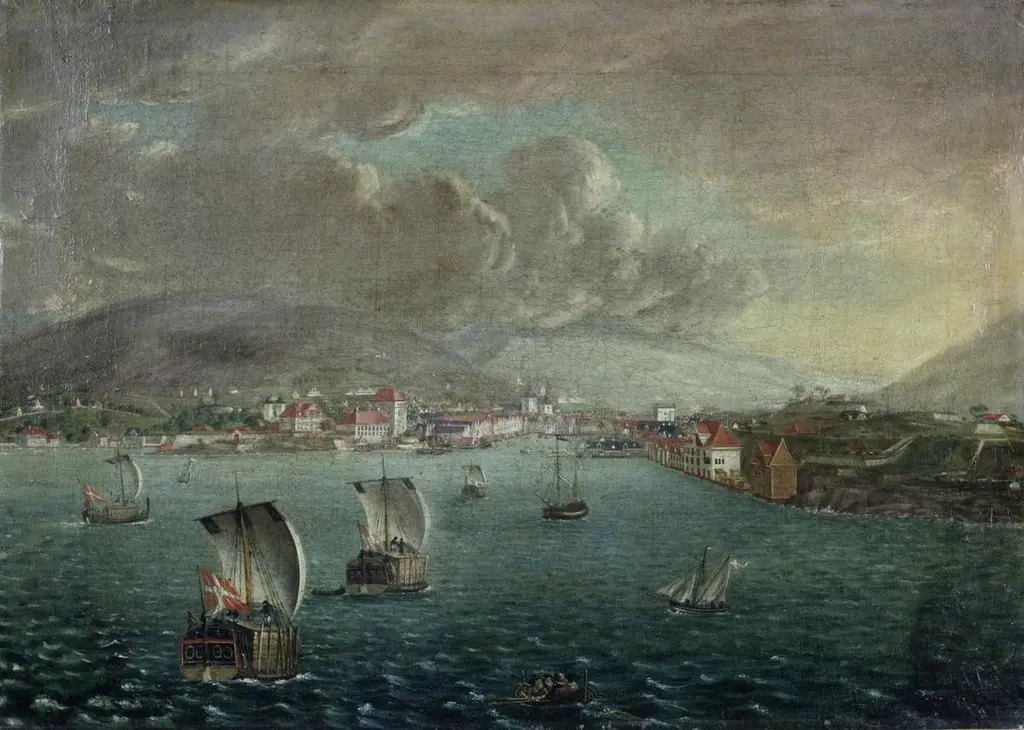 The Entrance to Bergen
 Udsigt over Frederikshald i Norge
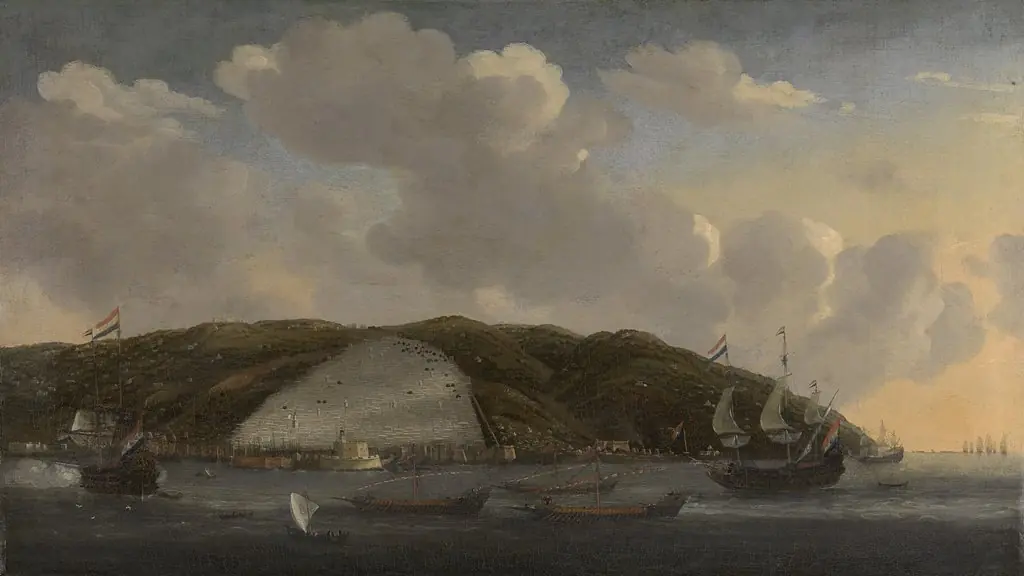 View of Algiers with de Ruyter's ship 'De Liefde', 1662
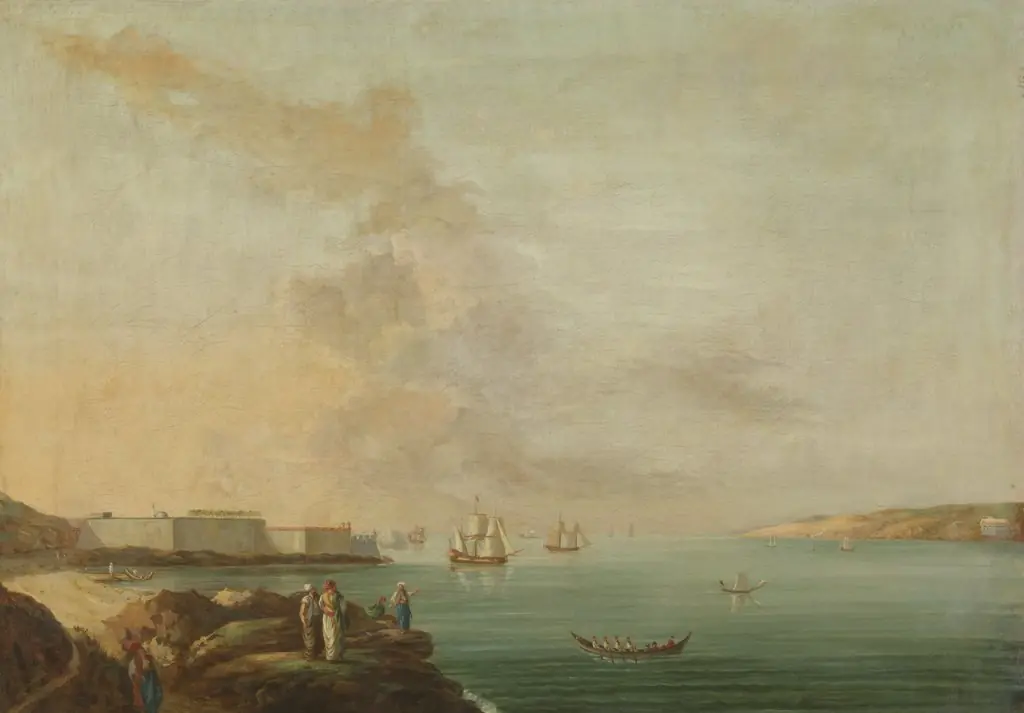 View of the Dardanelles
 Kasim Pasa, the former Ottoman Naval Arsenal, from the Golden Horn
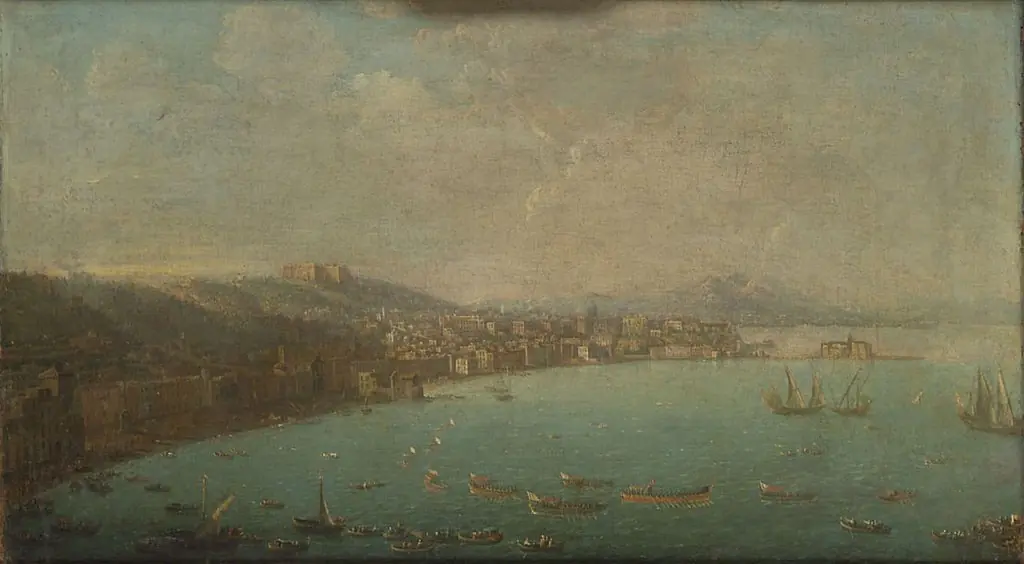 Ansicht von Posilippo auf Pizzofalcone in Neapel
 View of the Bosporus, taken from the Height of Beykoz to the northwest, with the Aqueduct of Justinian in the background