Artwork
Ecce homo
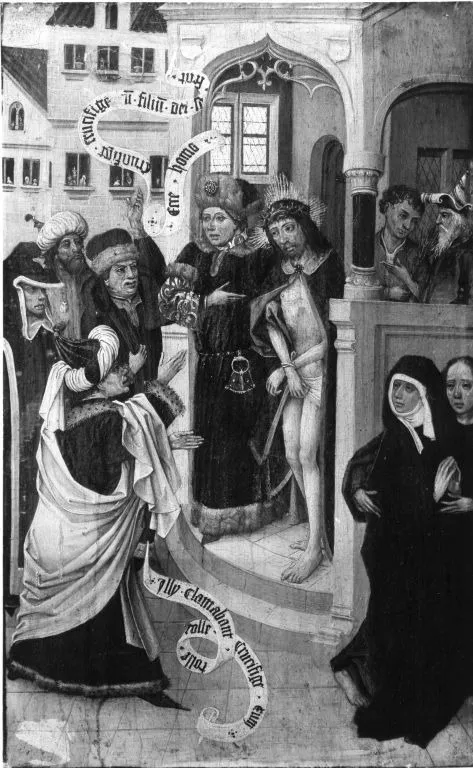
Ecce homo is an unspecified painting. It dates from 1490 and is held in the collection of the Bavarian State Painting Collections.
About this work
The people around him are dressed in clothing from the 15th century, and some of them are holding objects such as a cloth or a stick.
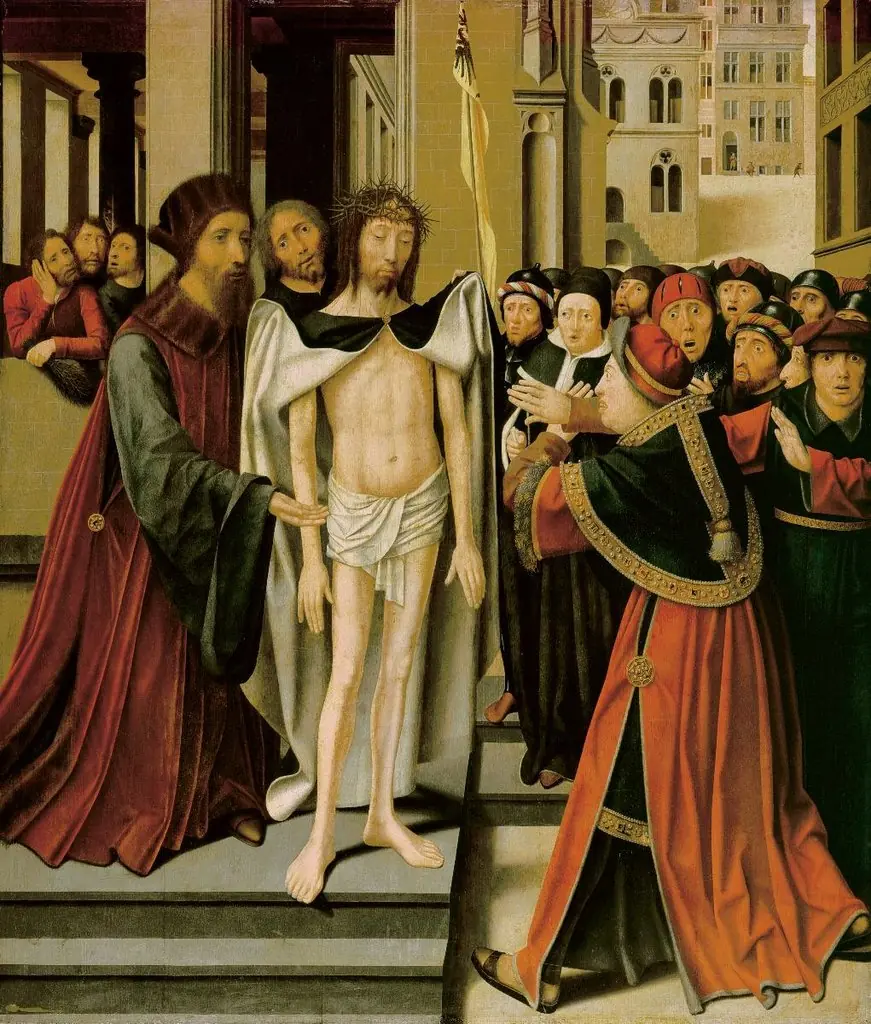
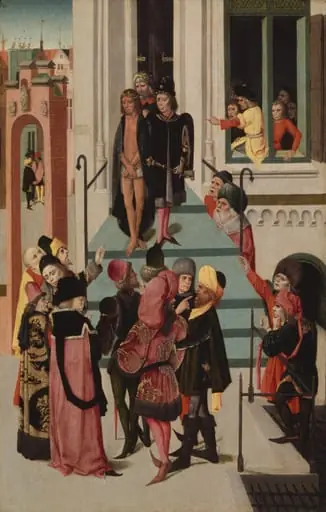
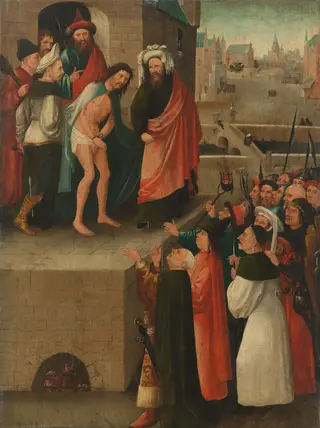
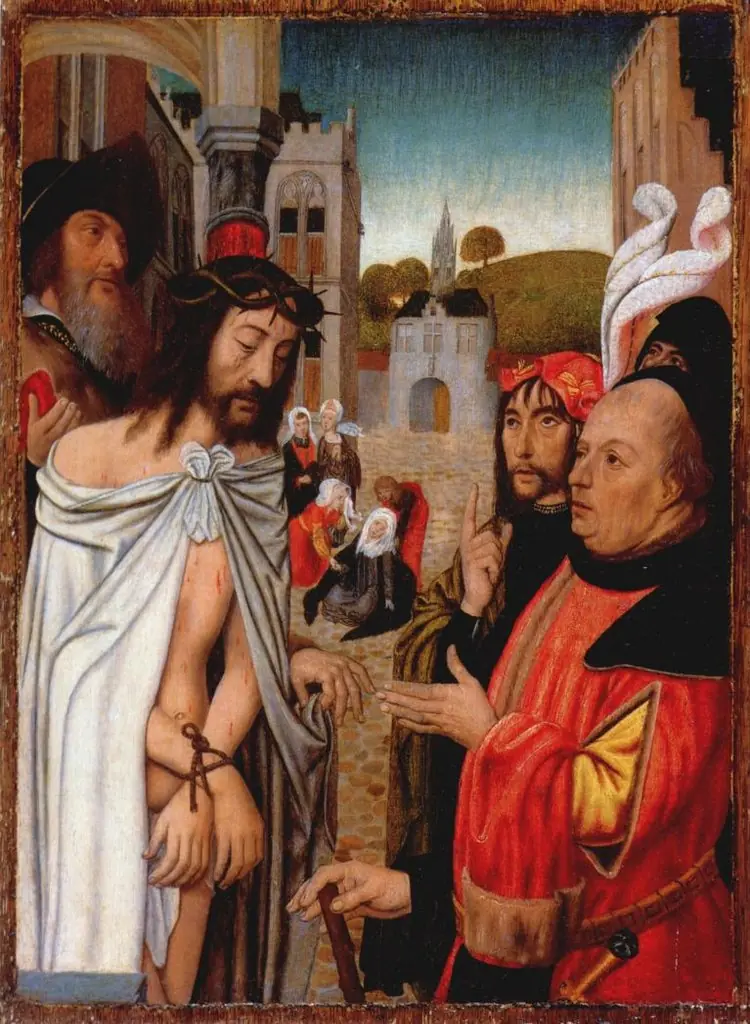
This painting shows a scene with several people gathered around a man who is standing in the center. He is wearing a crown of thorns and has his hands tied behind his back. The people around him are dressed in clothing from the 15th century, and some of them are holding objects such as a cloth or a stick.
In the background, there are buildings and windows that suggest a city or town setting. The painting is done in a style that is characteristic of the Northern Renaissance, with attention to detail and realism.
The artist who created this painting is the same one who painted other works during the Northern Renaissance.
Subject & Meaning
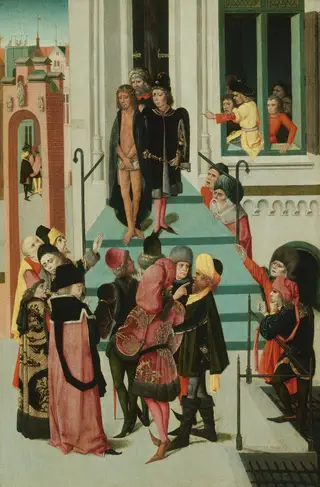
The painting portrays the moment of Christ being presented to the crowd after his condemnation, a scene drawn from the Passion narrative in which Pontius Pilate exhibits the scourged Christ to the Jews. This iconography emphasizes themes of suffering, injustice, and the humanity of Jesus, inviting contemplation of his sacrifice.
History & Provenance
The painting known as Ecce Homo was created around 1480. It is classified as a religious artwork depicting Jesus Christ. The work is currently held within the Bavarian State Painting Collections, specifically located at the Alte Pinakothek.
No specific commission details or a detailed chain of ownership prior to its current institutional home are provided in the available records.
The painting is held by the Bavarian State Painting Collections and is on display at the Alte Pinakothek in Munich. No inventory or accession number is recorded in the available sources. The provided records do not document any exhibition history for the work.
Context
The work titled Ecce Homo was created in 1480 by an artist identified through Wikidata as part of the Swabian school, placing it within the religious painting genre of the late 15th century. It is housed in the Alte Pinakothek, part of the Bavarian State Painting Collections, where it remains on display. The painting depicts the moment of Christ being presented to the crowd, a subject drawn from the Passion narrative, and measures 30.3 centimeters in height by 19 centimeters in width.
Its creation date of 1480 situates it in the context of Southern German artistic production during the early Renaissance, reflecting devotional practices and stylistic traditions of the period.
Scholarly attention to the piece has focused on its iconography and regional significance, with recent studies contextualizing it within broader discussions of Passion imagery in Southern Germany. The work is recognized as part of the artist’s mature output, though specific details about the painter’s training or workshop influence remain subjects of ongoing research.
Overview
The work entitled Ecce homo depicts a central figure bound and crowned with thorns, surrounded by a group of onlookers dressed in 15th‑century attire. The setting includes architectural elements such as buildings and windows that suggest an urban environment, rendered with the detailed realism typical of the Northern Renaissance.
Technique & Style
Executed in the Northern Renaissance idiom, the painting employs meticulous attention to surface texture, fine brushwork, and a naturalistic palette. The artist renders fabrics, skin, and architectural details with a level of observation that emphasizes three‑dimensionality and spatial depth.
Artist & collection