Artwork
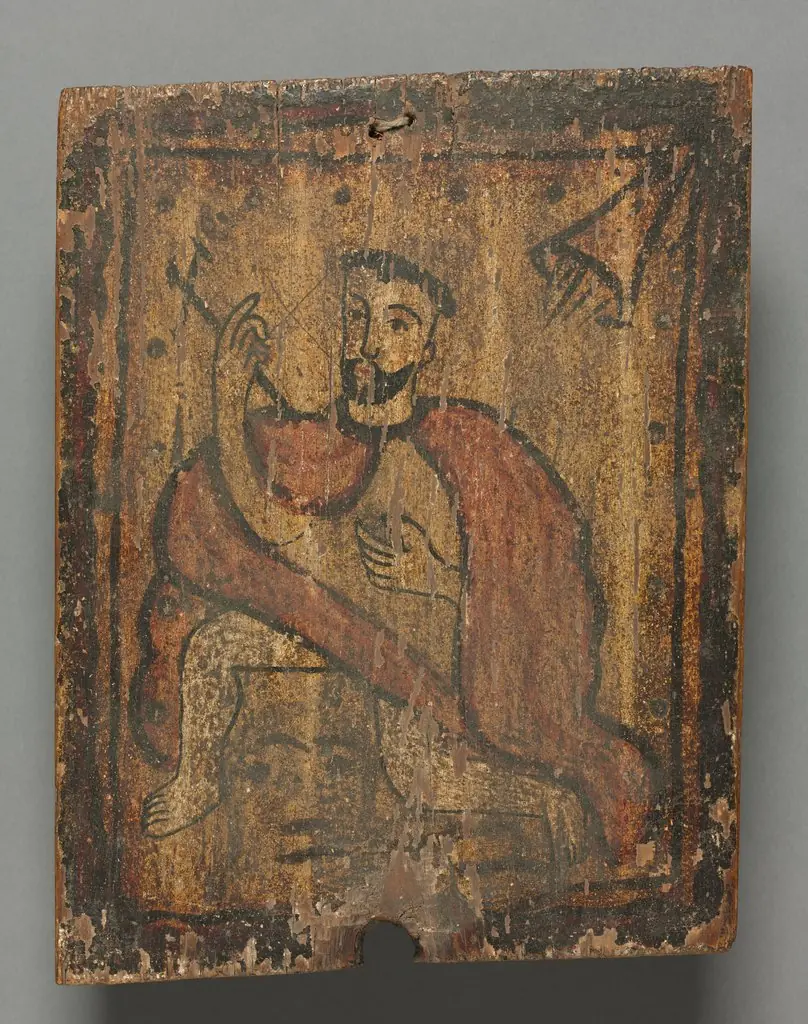
El Santo Nino de Atocha: santo de retablo
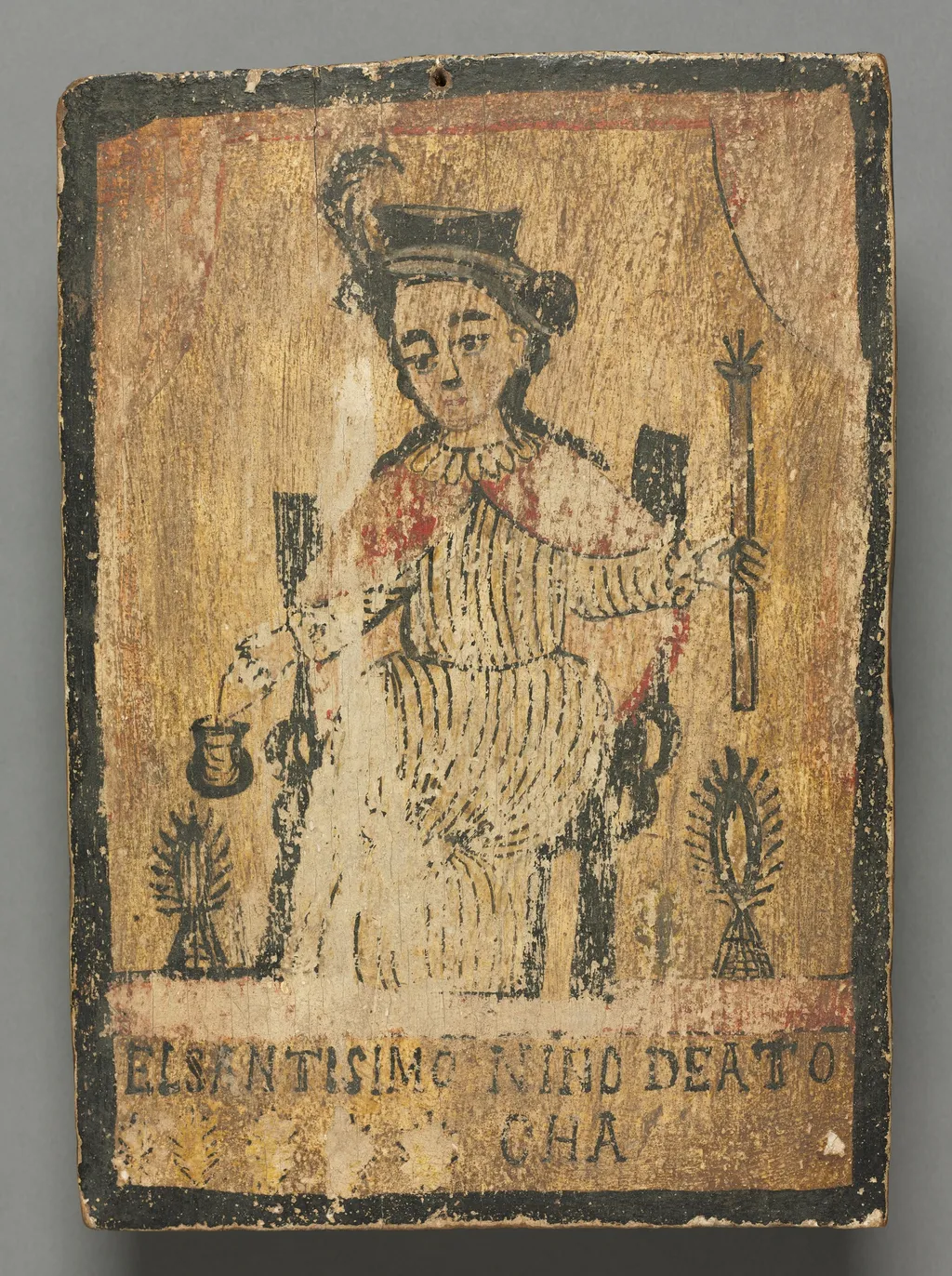
El Santo Nino de Atocha: santo de retablo is an unspecified painting. It dates from 1700 and is held in the collection of the Cleveland Museum of Art.
About this work
Technique & Style
It was painted around the turn of the 18th century and retains the characteristic flat modeling and bright palette typical of Spanish colonial religious art.
The work is a small devotional painting on wood panel, created as a retablo-style image of the infant Jesus. It was painted around the turn of the 18th century and retains the characteristic flat modeling and bright palette typical of Spanish colonial religious art.
The surface shows fine brushwork with delicate glazes that give subtle depth to the figure’s clothing, while the background remains minimally detailed to focus attention on the child. The panel’s handling suggests it was intended for private veneration rather than public display.
History & Provenance
The painting is held in the collection of the Cleveland Museum of Art, where it is cataloged under the accession number 1933.405. It has been exhibited in the museum’s Spanish Baroque gallery as part of rotating displays of colonial religious art.
Overview
The work titled El Santo Niño de Atocha presents a youthful holy figure, likely representing the infant Saint John, set against a warm, golden backdrop. Dressed in a simple white robe, the child holds a staff in one hand and a cup in the other, his expression calm and contemplative, inviting quiet devotion.
Subject & Meaning
The saint’s attributes, a staff and a cup, reference traditional iconography associated with the Santo Niño de Atocha, a figure venerated for providing aid and protection. The serene demeanor and intimate lighting suggest a focus on personal piety rather than grand narrative, emphasizing the saint’s role as a compassionate intercessor.
Context
During the colonial period, images of the Santo Niño de Atocha were popular among the faithful for their perceived protective powers, especially among travelers and miners. Such paintings functioned both as objects of worship and as visual reinforcement of Catholic doctrine in missionary settings.
Artist & collection

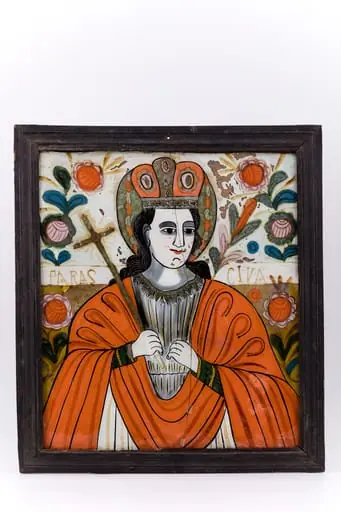 Sfânta Mare Cuvioasă Parascheva de la Iași are crucea în mâna dreaptă și ramură de finic verde brad, cu frunze roz și roșii în mâna stângă. Este îmbrăcată în veșmânt roșu vermillon, cu interiorul căptușit cu verde și galben, cu sacosul alb ivoriu, cu dungi crem-bej. Sacosul este alb ivoriu crem-bej, cu danteluță și guleraș galben. Sfânta Cuvioasă are părul negru lung, ondulat, lăsat pe umeri, coroană roșie și aureolă. Fondul icoanei este cerul albastru bleu-ciel-alburiu senin, în registrul superior și un câmp înalt luminos de grâu galben-copt, în registrul mediu și inferior, de culoare ocru-muștar. Întreaga compoziție iconografică este încadrată de un chenar decorativ fitomorf, format dintr-o ghirlandă de 6 ruje - trandafiri sălbatici și bujori roșii, cu petale și pistil alternativ colorate cu albastru cobalt, roz și roșu vermillon. Ghirlanda excelează prin delicatețea desenului și bogăția cromatică armonioasă. Inscripția din româno-chirilică se traduce Paraschiva. Cromatica este armonioasă: roșu vermillon, roz, albastru bleu-ciel, cobalt, verde forest, bej-crem, negru, galben chihlimbar, ocru, muștar, negru, alb. Icoana este din Nordul Transilvaniei, Nicula.
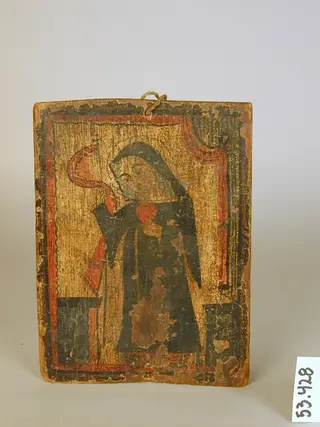 Saint Gertrude
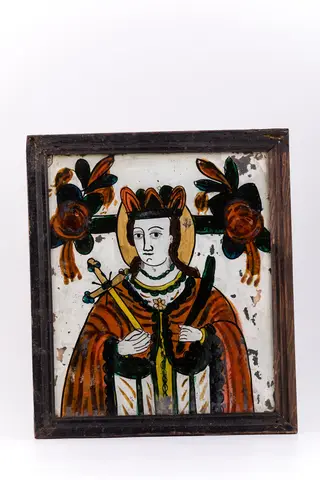 Sfânta Mare Cuvioasă Parascheva de la Iași are crucea în mâna dreaptă, binecuvântând, și o ramură de finic verde, în mâna stângă. Este îmbrăcată în veșmânt roșu vermillon-cărămiziu, cu interiorul căptușit cu verde-mușchi de pădure, verde de China, și brun-acajou. Sacosul este alb-crem cu danteluță și guleraș galben-chihlimbar. Sfânta Cuvioasă are părul negru lung, lăsat pe umeri, coroană roșie cu verde, ca de catifea și aureolă. Fondul icoanei este alb-zinc, cu o traversă în spațiul superior, înconjurându-o pe Sfânta Paraschiva cu doi trandafiri mari și roșii, bogați în frunze, de-a dreapta și de-a stânga Sfintei Cuvioase. Cromatica este armonioasă: roșu vermillon-cărămiziu, alb-zinc, crem-bej, galben-ocru, verde mușchi-de-pădure, verde de China, gri-verzui, bej-crem, bronziu, negru, alb zinc. Icoana este din Nordul Transilvaniei, Nicula.
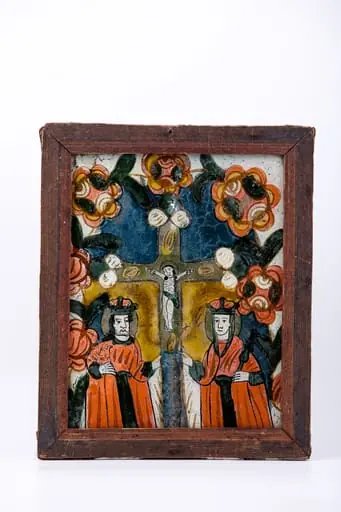 În centrul icoanei este Crucea albastră-galbenă, pe care este Răstignit Mântuitorul Iisus Hristos, iar în dreapta crucii este Sfântul Împărat Constantin și în stânga este Împărăteasa Elena, mama sa. În spatele Crucii este un spațiu galben izvorâtor de lumină. Crucea găsită este susținută cu bucurie de cei doi sfinți. Veșmintele Sfinților Constantin și Elena sunt într-o combinație de roșu vermillon și gri antracit. Spațiul galben de lumină duce gândul la Crucea de lumină apărută pe cer In hoc signo vinces - prin acest semn vei învinge. Icoana este bogat ornamentată de culoare, lumină și detalii semnificative, elemente decorative geometrizante - ovaluri galbene de lumină și brațele crucii au terminații trilobale albe. Fondul icoanei este cerul albastru ceruleum. Întreaga compoziție este încadrată armonios de un chenar fitomorf, format din rujele de Nicula, 7 trandafiri mari roșii cu striații galbene. Cromatica este armonioasă și senină: roșu vermillon, galben-chihlimbar, albastru cerulauml, gri antracit, alb, negru. Icoana este de Nicula. De menționat este că în icoană apare Mântuitorul Iisus Hristos Răstignit pe Crucea, susținută de Sfinții Constantin și Elena.
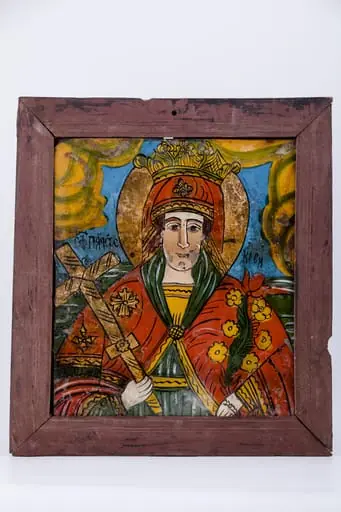 Sfânta Mare Cuvioasă Parascheva de la Iași are crucea în mâna dreaptă și ramură înflorită, cu 6 flori galbene și una roșie în vârf în mâna stângă. Este îmbrăcată în veșmânt roșu vermillon, cu interiorul căptușit cu verde și galben. Peste maforionul roșu, sfânta cuvioasă are aureolă. Fondul icoanei este cerul albastru regal, cu o arcadă de lumină galbenă, în registrul superior și bronziu, în jurul chipului și aureolei Sfintei Paraschiva și o alternanță de câmpuri verzi, dispuse paralel, în registrul mediu și inferior. Este o icoană cu aer cald, tomnatic, de octombrie 14, Praznicul Sfintei Cuvioase Parascheva. Inscripția din româno-chirilică se traduce Sf Paraschiva. Cromatica este armonioasă: roșu vermillon, albastru regal, verde văratic și forest, brun-cafeniu, negru, galben chihlimbar, ocru, bronziu, gri, negru, alb. Icoana este din Țara Oltului.
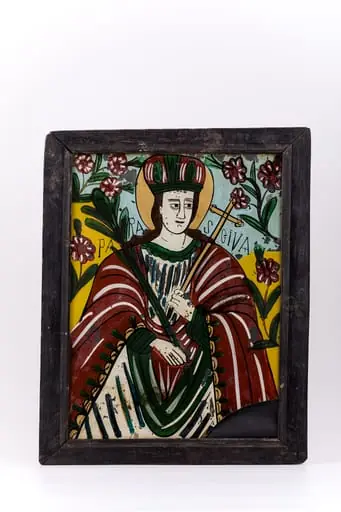 Sfânta Mare Cuvioasă Parascheva de la Iași are crucea brun-bronzie în mâna stângă și o ramură de finic verde în mâna dreaptă. Este îmbrăcată în veșmânt roșu vișiniu-stacojiu, cu interiorul căptușit cu verde-forest și franjuri brun-bronzii. Sacosul este alb-zinc cu danteluță, guleraș verde și dungi albastre. Sfânta Cuvioasă are părul negru lung, lăsat pe umeri, coroană roșie cu verde-brad și aureolă brun-bronzie. Fondul icoanei este cerul albastru bleu-ciel deschis, în registrul superior și un câmp galben-solar de grâu copt, în registrul inferior. Întreaga compoziție iconografică este încadrată de un chenar decorativ fitomorf, format dintr-o ghirlandă de 8 ruje vișinii, cu petale albe și frunze verzi. Inscripția din româno-chirilică se traduce Paraschiva. Cromatica este armonioasă: roșu vișiniu-stacojiu, albastru cobalt-ceruleum și bleu-ciel, verde forest, bej-crem, bronziu, galben-solar, negru, alb zinc. Icoana este din Nordul Transilvaniei, Nicula.
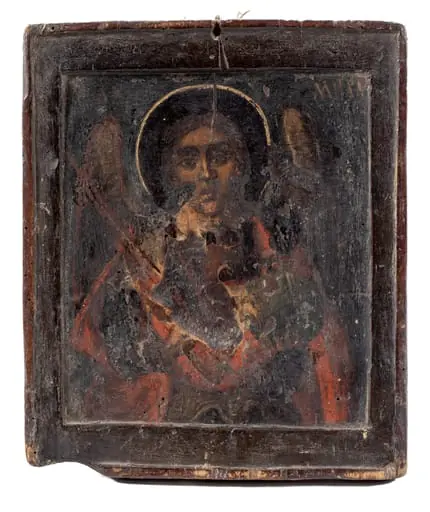 Arhanghelul Mihail
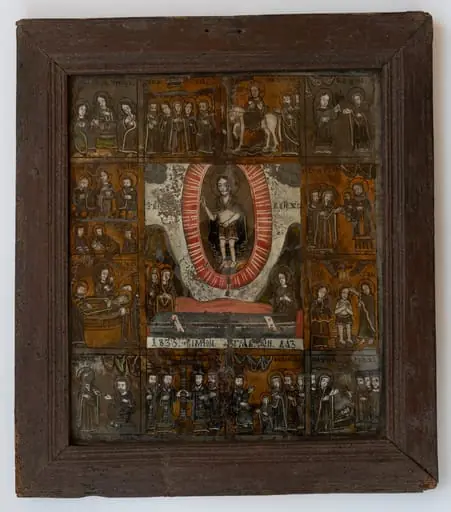 Învierea Domnului încadrată de praznice